What a North Carolina ATV Title Costs
You’ve finally found that perfect ATV or UTV, or maybe you’re just trying to get your existing machine’s paperwork in order here in North Carolina. It should be straightforward, right? But then you start digging, and terms like "Highway Use Tax" and "optional titling" pop up, leaving you scratching your head and wondering, "What is this actually going to cost me?" It's a common frustration, feeling like you're navigating a maze of fees and forms. This comprehensive guide is here to demystify every potential cost associated with titling your ATV or UTV in North Carolina, ensuring you can budget accurately and confidently handle the process without any nasty surprises.
The Mandatory North Carolina ATV Titling Fees
When you're looking at getting a title for your ATV or UTV in North Carolina, there are some pretty standard fees you’ll encounter, regardless of whether you’re buying a brand-new machine from a dealer or transferring ownership of a beloved used quad. These aren't the big scary taxes, but rather the administrative costs that keep the wheels of the Department of Motor Vehicles (DMV) turning. Understanding these upfront can save you a headache and help you budget more accurately.
The Initial Title Application Fee
This is perhaps the most fundamental fee you'll pay when seeking an ATV title in North Carolina. It's the cost associated with having the DMV process your application and officially issue a certificate of title in your name. Think of it as the basic entry ticket to getting your machine recognized as legally yours on paper. Without this, your application for a title on [North Carolina Title Application on Form MVR-1] simply won't move forward.
This fee is usually a flat rate, which means it doesn't change based on the value or size of your ATV. Whether you're titling a small youth quad or a massive, tricked-out side-by-side, the administrative fee for the title application itself tends to be the same. It covers the cost of reviewing your submitted documents, verifying the information, and printing out that official title document that proves you're the rightful owner. It’s a small but absolutely crucial part of the overall cost picture, and one that many folks sometimes overlook when focusing on the bigger tax numbers.
The fee schedule is set by the state, and while it might seem like just another small charge, it’s what funds the system that provides you with that valuable proof of ownership. This title, even though optional for ATVs in North Carolina, becomes incredibly important for many reasons we'll discuss later. So, while it's a fixed cost, it's also the gateway to securing the legal documentation for your off-road pride and joy.
Lien Recording and Release Fees
Now, let's talk about financing. Many of us don't pay cash for our ATVs, especially with the price tags on some of the newer, more powerful machines. If you've financed your ATV purchase through a bank, credit union, or even the dealer themselves, that lender will typically want to record a lien against your title. This means they have a legal claim to your ATV until you pay off the loan in full.
When this lien is recorded, there's a separate fee the North Carolina DMV charges for that administrative action. It's not usually a huge sum, but it's another distinct cost that gets added to your titling expenses. This fee ensures that the state's records accurately reflect who has an interest in your vehicle, protecting the lender in case of default and making it clear to any potential future buyers that there's an outstanding loan. It's all about transparency in ownership.
Once you’ve made that final payment and are officially debt-free, your lender will then need to formally release their lien. While the recording fee is usually something you pay upfront during the titling process, a separate release fee might come into play later if you need the DMV to update your title to show the lien has been satisfied. Sometimes the lender handles this, sometimes you do, but it’s an important point to be aware of. Having a clean title, free of any recorded liens, is essential if you ever plan to sell your ATV, and the administrative process for recording and releasing these liens does come with its own set of minor, but necessary, costs.
Duplicate or Corrected Title Fees
Life happens, right? Titles get misplaced, accidentally shredded, or even damaged beyond recognition. And sometimes, mistakes happen on the original title application that need to be rectified. In North Carolina, if you find yourself needing a new copy of your ATV title because the original is lost, stolen, or damaged, you'll need to apply for a duplicate title. This isn't a free service, as it requires the DMV to go through their records, verify your ownership, and issue a brand-new document.
The cost for a duplicate title is typically a flat administrative fee, similar to the initial application fee, but specifically for replacement purposes. It covers the effort involved in re-issuing an official document and helps prevent fraudulent claims. It's a small price to pay for the peace of mind that comes with having your official proof of ownership back in hand, especially given [Why a North Carolina Title Is Worth Having].
Similarly, if there was an error on your original title – perhaps a misspelling of your name, an incorrect VIN, or a wrong address – you’ll need to apply for a corrected title. While some minor corrections might be handled without a fee, often a new title must be printed, incurring a "corrected title" fee that mirrors the duplicate title fee. It’s always best practice to double-check all information meticulously before submitting your initial [North Carolina Title Application on Form MVR-1] to avoid these extra steps and costs down the line. But if you find yourself in this situation, rest assured there's a process and a small fee to get it sorted out correctly.
North Carolina's Highway Use Tax: The Big One
Alright, let's tackle the elephant in the room when it comes to titling an ATV in North Carolina: the Highway Use Tax (HUT). This is often the largest single cost you'll face, and it's where a lot of confusion arises, especially since ATVs aren't typically registered for road use in the traditional sense. It's not a direct sales tax, but for all intents and purposes, it functions very much like one when you acquire a vehicle here in the Tar Heel State.
Understanding the "Why" Behind the Highway Use Tax
It's natural to wonder, "Why am I paying a 'Highway Use Tax' on a machine I can't even ride on the highway?" This is a very common and valid frustration for ATV owners in North Carolina. The truth is, the Highway Use Tax, despite its name, serves as North Carolina's substitute for a sales tax on vehicles – and that includes ATVs and UTVs. The state opted for this specific tax structure many years ago to fund infrastructure projects and related services, encompassing more than just paved roads.
So, while your quad might spend its entire life tearing up trails in the Uwharrie or at Brown Mountain, the state still considers it a "motor vehicle" for taxation purposes when ownership changes hands. This tax is levied at the time of titling, which is why it becomes a direct cost associated with getting your ATV title. It's the state's way of collecting revenue on the transfer of vehicle ownership, rather than through a traditional sales tax that would apply to other goods. For a deeper dive into this, you might want to read [Highway Use Tax Instead of Sales Tax in North Carolina].
Essentially, it's a mandatory tax that applies to the privilege of having a vehicle titled in your name in North Carolina, regardless of where that vehicle will primarily be used. It might feel a bit counterintuitive for off-road machines, but it's a fixed part of the financial landscape for vehicle ownership here. Understanding this "why" helps to accept that it's just part of the process of getting your machine legally recognized and your title issued.
Calculating the 3 Percent of Retail Value
Now for the math! The North Carolina Highway Use Tax is typically assessed at 3 percent of the ATV's retail value, with certain caps depending on the type of vehicle. For most ATVs and UTVs, it's that 3 percent figure that you'll be focusing on. But what exactly does "retail value" mean, and how is it determined? This is crucial for accurately budgeting.
If you're buying a new ATV from a dealership, the retail value is usually straightforward: it's the purchase price you paid. The dealership will handle the paperwork and the calculation, often rolling it into your total cost. However, when you're buying a used ATV from a private seller, things can get a little more nuanced. The DMV will look at the purchase price listed on your bill of sale, but they also have their own methods for determining the fair market value of the machine. They often use industry guides or their own internal valuation tools to ensure the declared price isn't artificially low to avoid taxes. So, if you bought a machine for a steal, but its established retail value is much higher, the 3 percent could be assessed on that higher value. This is where getting your documentation right, especially the [A North Carolina Bill of Sale for an ATV], becomes critical.
For transactions involving lower declared values, such as a private sale where the ATV is older, or if there's no clear market value, you might need to submit an affidavit, like [What the All-Terrain Vehicle Affidavit Actually Proves]. This form, often MVR-60, helps the DMV determine an appropriate value for tax purposes. It's all designed to ensure fairness and consistency in tax collection, but it does mean you need to be prepared for the 3 percent to be calculated on what the state deems the machine is truly worth, not just what you might have paid or written on a casual receipt. This is why it's so important to be honest and accurate in your paperwork. You can learn more about how this is applied in [3 Percent of Retail Value in North Carolina].
Scenarios for Highway Use Tax Exemption or Reduction
While the 3 percent Highway Use Tax is a significant part of titling an ATV in North Carolina, there are specific scenarios where you might be exempt from it entirely or qualify for a reduced rate. These aren't super common for typical purchases, but it's vital to know if one applies to your situation, as it could save you a substantial amount of money.
One of the most frequently discussed exemptions is for machines transferred between immediate family members as a genuine gift. If your parent gifts you their old quad, or you gift one to your child, the Highway Use Tax might not apply. However, there are strict rules for what constitutes a "gift," and you'll typically need to submit specific affidavits, such as the [North Carolina Form MVR-59 Requirements] (Affidavit of Gift), to prove it. This prevents people from falsely claiming a gift to avoid the tax. The DMV will be looking for clear evidence that no money or other valuable consideration changed hands.
Another common scenario where the tax might be reduced is when you trade in an existing ATV as part of a new purchase at a dealership. In these cases, the Highway Use Tax is often calculated only on the difference between the trade-in value and the price of the new machine, rather than the full price of the new machine. This can offer a decent saving. Other less common exemptions might include transfers to certain tax-exempt organizations, or very specific estate transfers, where [Titling an Inherited Machine in North Carolina] becomes relevant. It’s always best to check with the North Carolina DMV directly or consult with a qualified professional if you believe your situation qualifies for an exemption or reduction, as the rules can be quite specific and detailed. Don't assume; verify, because the savings can be considerable!
Paperwork & Processing: Indirect Costs of Titling
Beyond the direct fees and taxes, there are often indirect costs associated with gathering and processing the necessary paperwork for your North Carolina ATV title. These might not be charged directly by the DMV, but they are essential expenses that add to your total outlay. Being prepared for these can prevent last-minute scrambling and unexpected hits to your wallet.
Notary Public Fees for Essential Documents
One often-overlooked cost comes from the need for a notary public. Certain forms required for titling your ATV in North Carolina must be notarized to attest to the authenticity of signatures and the identities of the signers. This adds an extra layer of legal verification to important documents, protecting both you and the state.
For example, if you're acquiring an ATV with no previous title, you’ll likely need to complete a Certification of Builder or Mechanic on [North Carolina Form MVR-60 Explained] or a similar affidavit regarding prior ownership history. These forms often require notarization. A notary public is a state-appointed individual authorized to witness signatures and administer oaths. They charge a small fee for their services, which varies but is usually a fixed amount per notarized signature. While these fees are minimal, perhaps just a few dollars, if you have multiple documents requiring notarization or if both a buyer and seller need to have forms notarized, these costs can add up.
It’s always a good idea to identify which documents require notarization ahead of time. You can often find notaries at banks, credit unions, law offices, or even some shipping centers. Plan ahead to avoid rushing to find one at the last minute, and factor these minor charges into your overall titling budget. They're a small but necessary part of ensuring your paperwork is legally sound and accepted by the DMV.
Costs Associated with Securing a Bill of Sale
A clear and comprehensive bill of sale is absolutely paramount when buying or selling a used ATV in North Carolina, even if [Titling an ATV in North Carolina Is Optional]. It's your primary record of the transaction and critical for establishing the purchase price for the Highway Use Tax. While you might think of a bill of sale as just a piece of paper, ensuring it's properly drafted and legally sound can incur some minor, yet valuable, costs or considerations.
For simple transactions, a handwritten bill of sale might suffice, but if you want to ensure all the necessary legal language is included to protect both parties, you might consider using a template. Online services, such as LawDepot, offer customizable bill of sale templates that can be tailored to your specific ATV transaction, ensuring all the required details, like VIN, purchase price, date, and seller/buyer information, are accurately captured. While some basic templates are free, more comprehensive or legally reviewed versions might come with a small subscription fee or one-time purchase cost from such services.
The peace of mind that comes from using a professional template, or even having a simple one reviewed by a legal expert (though this would be a larger cost), can be well worth it. It clearly outlines the terms of the sale, helps prevent disputes down the road, and provides the documentation needed for the DMV when you go to title the machine. If you're [Buying a Used ATV in North Carolina] or [Selling an ATV in North Carolina], investing a little time or a small amount into a robust bill of sale means less hassle later on.
Expedited Processing and Third-Party Service Fees
Sometimes, you need things done quickly, or you simply don't want the headache of navigating the DMV yourself. In North Carolina, while the DMV aims for reasonable processing times, "reasonable" can sometimes feel like a lifetime when you're eager to get out and ride. For those who need their title faster than the standard mail delivery, or who prefer professional assistance, there can be additional costs.
Some third-party tag and title services offer expedited processing. These businesses typically charge an extra fee on top of the standard DMV fees to handle your paperwork, ensure it's correct, and often submit it directly to the DMV on your behalf, sometimes cutting down on mailing times or processing delays. They act as an intermediary, saving you the trip to the DMV office and often the wait times. While convenient, this service comes with its own fee, which can range from a modest amount to significantly more depending on the complexity of your situation and how quickly you need the title.
It's important to weigh the cost against the convenience. If you have a straightforward titling situation and aren't in a rush, handling it yourself is usually the most cost-effective option. However, if you're short on time, find the paperwork daunting, or have a complex case (like an out-of-state title transfer with missing documents), these services can be invaluable. Always get a clear breakdown of their fees versus the actual DMV costs so you know exactly what you're paying for.
Titling a "Non-Standard" ATV: Special Circumstances, Special Costs
Not every ATV titling situation is as simple as buying a new machine from a dealer. Sometimes, you're dealing with a unique scenario – maybe a machine you built yourself, one that's been recovered after theft, or a quad that's traveled across state lines to get to you. These "non-standard" circumstances often come with their own set of specific requirements and, you guessed it, additional costs.
Homebuilt, Salvage, or Recovered Machines
Imagine piecing together your dream off-road machine from scratch, or perhaps you've salvaged a quad that was once thought lost or damaged beyond repair. While the satisfaction of creating or restoring something is immense, the titling process for these types of ATVs in North Carolina can be more involved and, consequently, more expensive.
For homebuilt machines, since there's no manufacturer's VIN or previous title, you'll need to go through a process to have the DMV assign a Vehicle Identification Number (VIN) to your creation. This typically involves an inspection by law enforcement or a certified VIN inspector to verify the components and ensure the machine meets certain safety standards. The inspection itself might incur a fee, and the administrative process for assigning a new VIN is another distinct charge. It's a necessary step to bring your unique machine into the official titling system, but it adds layers of time and cost compared to titling a factory-built quad.
Similarly, if you're trying to title a salvage or recovered machine, expect additional hurdles and associated fees. Salvage titles indicate that a vehicle has been declared a total loss by an insurance company, and to get a new "rebuilt" title, it will often require rigorous inspections to ensure it's safe and roadworthy (or trail-worthy, in this case). Recovered stolen machines also have their own verification processes to ensure legal ownership. These inspections and administrative steps are designed to protect against fraud and ensure safety, but they undeniably contribute to the overall cost of getting that title in hand.
Out-of-State or Imported ATVs
Bringing an ATV into North Carolina from another state or even another country often adds complexity and cost to the titling process. Each state has its own titling and registration rules, and while North Carolina doesn't require registration for ATVs, it still needs to verify the history of a machine coming from elsewhere.
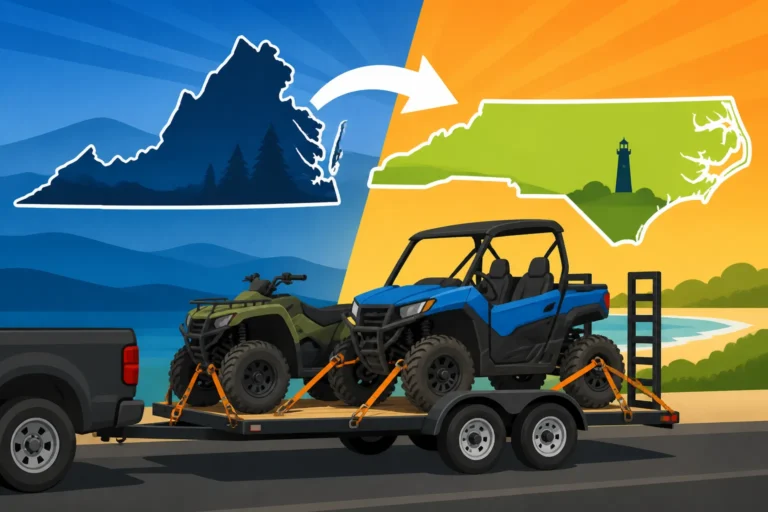
If you're bringing an ATV from a state that does require registration and titling, you'll need to provide its out-of-state title and any relevant registration documents. The North Carolina DMV will then verify this information. If the previous state had a sales tax or similar vehicle acquisition tax, you might be given credit for that tax already paid, reducing your North Carolina Highway Use Tax burden. However, if no such tax was paid, or if the previous state's tax was less than North Carolina's 3 percent, you'll likely pay the difference. This requires careful documentation and sometimes additional affidavits.
For imported ATVs (machines brought into the U.S. from another country), the process is even more stringent. You'll need customs clearance documents, proof of duty paid, and potentially federal emissions and safety certifications. These require specific paperwork and might involve fees at the federal level before North Carolina will even consider titling the machine. The complexities of verifying foreign documents and ensuring compliance with federal import laws can lead to significant delays and additional costs, making it a much more involved process than titling a machine purchased locally. Always do your homework if you're planning on [Buying an Out-of-State Machine for North Carolina].
Titling an Inherited or Gifted Machine
Receiving an ATV as an inheritance or a gift can be a wonderful thing, but even these heartwarming scenarios come with their own specific titling requirements and potential costs in North Carolina. While you might be exempt from the Highway Use Tax in certain gift situations, the administrative steps still require attention and sometimes, minor fees.
For inherited machines, you'll need to provide documents that prove you are the rightful heir or executor of the estate. This could include a copy of the will, letters of administration, or a small estate affidavit. The North Carolina DMV needs to ensure the machine is legally transferred from the deceased owner to you. While the Highway Use Tax might be waived for direct inheritance, there will still be the standard title application fee. Gathering the necessary estate documents and potentially consulting with an attorney for complex estates can also add to the overall "cost" in terms of time and professional fees, though these aren't DMV-specific charges.
As we touched on earlier, genuine gifts between immediate family members can be exempt from the Highway Use Tax. However, you must complete specific forms, such as [North Carolina Form MVR-59 Explained], and sometimes additional affidavits to certify that the machine truly was a gift and no money changed hands. There's still the standard title application fee to contend with, and ensuring all the gift affidavits are correctly filled out and notarized (which incurs notary fees) is critical. The DMV scrutinizes these transactions to prevent tax evasion, so accuracy and complete documentation are key. While the emotional value of a gifted or inherited machine is priceless, the administrative costs for titling still need to be considered.
Budgeting and Financial Planning for Your ATV Title
Navigating the various fees and taxes for titling an ATV in North Carolina can feel a bit like forecasting the weather – you know there will be certain elements, but predicting the exact combination and intensity can be tricky. However, with a clear understanding of the components, you can create a much more accurate budget and avoid those dreaded financial surprises. This section is all about arming you with the knowledge to plan effectively.
A Realistic Cost Breakdown: How to Estimate Your Total Outlay
To truly get a handle on what your North Carolina ATV title will cost, it’s helpful to create a simple checklist or spreadsheet of potential expenses. Don’t just think about the big numbers; remember all those smaller fees we’ve discussed.
Here’s a typical breakdown of what you might expect to include in your estimate:
- Title Application Fee: This is a fixed amount, generally consistent. You can usually find the current fee on the North Carolina DMV website.
- Highway Use Tax: This will be your largest cost for most purchases. Take 3% of the purchase price, or if you bought privately, 3% of the fair market value (which the DMV might determine using their own resources). If you have a trade-in, remember to calculate 3% of the difference.
- Notary Fees: Estimate a small fee per document that needs notarization. If you're using forms like MVR-60 or MVR-59, budget for at least one or two notarizations.
- Lien Recording Fee: If you're financing, your lender will likely have this cost included, but confirm it.
- Bill of Sale Template/Legal Review: If you use a paid template service like LawDepot or seek any legal counsel, add that in.
- Expedited Services (Optional): If you choose to use a third-party service for faster processing, add their fee.
Let's illustrate with an example: Say you buy a used ATV for $8,000.
| Fee/Tax Category | Calculation | Estimated Cost |
|---|---|---|
| Title Application Fee | Fixed DMV fee | Typically low |
| Highway Use Tax | $8,000 (purchase price) * 0.03 | $240 |
| Notary Fees | For MVR-60 (if needed) | Small, ~$5-10 |
| Lien Recording Fee | If financed | Small, ~$20-30 |
| Total Estimated Cost | (Sum of above) | ~$270 – $300+ |
This table provides a concrete way to approach your budgeting. Remember, your exact costs will depend on your specific situation, but this framework helps you cover all the bases.
Common Pitfalls and Unexpected Expenses
Even with the best planning, sometimes little things can throw a wrench into your budget. Being aware of these common pitfalls can help you avoid them, or at least be prepared if they crop up.
One of the biggest unexpected expenses can arise from underestimating the fair market value for the Highway Use Tax. If you picked up an ATV for a bargain price from a private seller, and you put that low price on your bill of sale, the North Carolina DMV might still assess the 3% tax based on what they determine is the machine's actual retail value. This can mean a higher tax bill than you initially budgeted for. Always be prepared for the possibility that the DMV may question a significantly low sale price. This is why having a robust [A North Carolina Bill of Sale for an ATV] is so important.
Another pitfall is incomplete or incorrect paperwork. If your forms are missing signatures, not notarized when required, or contain errors, your application will be rejected. This means delays, potentially multiple trips to the DMV, and in some cases, additional notary fees if you have to get new documents signed. Double-check everything, then double-check it again! When [North Carolina ATV Title Paperwork] is submitted correctly the first time, you save yourself a lot of headaches and potential re-submission costs.
Lastly, don't forget the costs associated with getting your ATV ready for inspection if it's a homebuilt or salvage machine. These aren't titling fees, but they're indirect costs that go hand-in-hand with the special titling process. Factor in any repairs or modifications needed to meet inspection standards, as these can easily become significant expenses if you're not prepared.
The Long-Term Value of a Properly Titled ATV
While all these fees and taxes might feel like a burden, it’s important to remember that the cost of titling your ATV in North Carolina is an investment in its legal standing and your peace of mind. A properly titled ATV carries significant long-term value, far outweighing the initial outlay of fees.
First and foremost, a title serves as undeniable proof of ownership. If your ATV is ever stolen, having a title makes it much easier to report it to law enforcement and increases the chances of recovery. Without it, proving that the machine belongs to you can be incredibly difficult, leaving you vulnerable. This is [Why a Title Matters After Your Quad Is Stolen].
Secondly, a title greatly simplifies any future transactions. When you go to [Selling an ATV in North Carolina], a clean title in your name makes the process smooth and trustworthy for potential buyers. Most buyers, and certainly any lender, will insist on a title to ensure they are acquiring a machine with a clear ownership history. Trying to sell an ATV without a title can drastically reduce its market value and limit your pool of potential buyers, often leading to lower offers.
Finally, while North Carolina ATVs don't require insurance by law, if you ever need to finance an ATV, lenders will almost always require the machine to be titled with their lien recorded. This means the costs you incur now facilitate future financial flexibility. So, view these titling costs not as an expense, but as a crucial part of securing your investment and ensuring hassle-free ownership for years to come.
Disclaimer
This article is for general informational purposes only and does not constitute professional advice. Laws, prices and regulations vary by location and change over time. Consult a qualified professional for guidance on your specific situation.