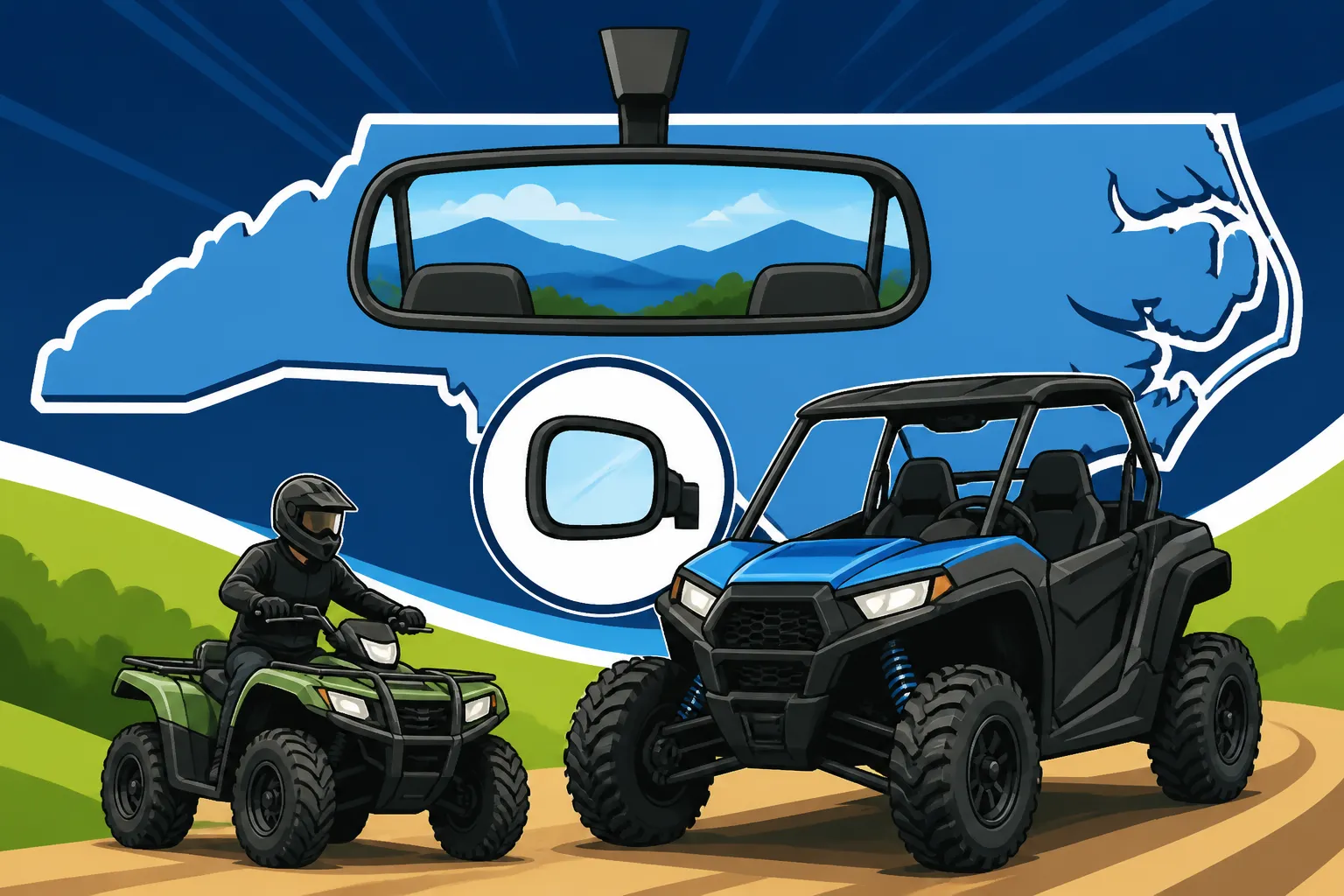
North Carolina MUV Mirror Requirement
You've bought that shiny new UTV, dreaming of hitting the trails and maybe even running a quick errand on a rural road without fear. But then the reality sets in: making it truly street-legal in North Carolina is a maze of specific requirements, and one of the most commonly overlooked details is the mirror. It's not just about having a mirror; it's about having the right mirror in the right place for the North Carolina Department of Motor Vehicles (NCDMV) to consider your machine a legitimate Modified Utility Vehicle (MUV). This guide will break down exactly what North Carolina expects for mirrors on your MUV, so you can navigate the path to road-legality with confidence.
Understanding the MUV Distinction and Why Mirrors Matter
Let's face it, the world of ATVs and UTVs in North Carolina can feel like a linguistic and legal labyrinth. You hear "off-road vehicle" and immediately think "not for the street." And for most ATVs and UTVs, that's absolutely true. However, North Carolina carves out a special category for certain machines called Modified Utility Vehicles, or MUVs, which can be made street-legal if they meet a very specific set of criteria. This distinction is crucial because it's the gateway to operating your machine on public roads, and with that privilege comes a host of safety equipment requirements, including mirrors.
The frustration often stems from the fact that your machine might look perfectly capable of handling the road, but the state has a very precise definition. An MUV isn't just any side-by-side; it's a utility vehicle that's been modified—or manufactured to meet—certain standards, effectively bridging the gap between an off-road beast and a low-speed road vehicle. Understanding [What Makes a Machine an MUV in North Carolina] is your first step. Without this fundamental qualification, all the mirrors in the world won't get you on the blacktop legally.
Why Equipment Rules Matter for MUVs
The moment your utility vehicle transitions from a trail-only machine to an MUV, the rules of the game change entirely. When you're solely on private land or designated off-road trails, the equipment you choose is largely up to you, within reasonable safety limits. But when you venture onto public roadways, your machine becomes subject to the same kind of scrutiny as any other vehicle. This isn't just bureaucratic red tape; it's about public safety. Cars, trucks, and motorcycles have specific equipment standards for a reason: to ensure visibility, control, and the ability to signal intentions to other drivers.
Mirrors are a prime example. On a tight trail, you might rely on turning your head or the shouts of a spotter. On a paved road, where traffic moves faster and in multiple directions, you need clear, consistent rear and side visibility to react safely to changing conditions. The NCDMV isn't trying to make your life harder; they're trying to prevent accidents by ensuring that MUVs operate with the same fundamental safety tools as other road vehicles. Ignoring these rules can lead to citations, fines, and potentially even more serious legal trouble if you're involved in an accident while operating a non-compliant machine.
The Broader MUV Equipment Package
It's important to remember that mirrors are just one piece of a much larger puzzle when it comes to making your UTV a bona fide MUV. North Carolina has a comprehensive list of equipment that must be present and functional for your machine to be considered road-ready. This includes everything from proper lighting to safety restraints.
For instance, your MUV will need working headlights, taillights, and brake lights that are visible from appropriate distances. Turn signals are also a must, allowing you to clearly indicate your intentions to other drivers. And, of course, seat belts are required to keep occupants safely restrained. A properly functioning speedometer is essential for maintaining legal speeds, and a parking brake is crucial for securing your vehicle when stopped. You can learn more about [North Carolina MUV Inspection Requirements] and delve into specifics like the [North Carolina MUV Turn Signal Requirement] or the [North Carolina MUV Speedometer Requirement] to get a full picture. The NCDMV looks at the MUV as a complete package, not just a sum of its parts. Every element, from the engine size, which must be [More Than Twenty-Four Hundred Cubic Centimeters], to the physical dimensions like the [The 58-Inch Width Requirement] and [The 70-Inch Height Requirement], plays a role in its classification and legal operation.
North Carolina's Specific Mirror Requirement for MUVs
Now, let's get down to brass tacks: what exactly does North Carolina require for mirrors on your MUV? The general rule, as outlined in North Carolina motor vehicle statutes for vehicles operating on public roads, is that a vehicle must be equipped with a mirror so located as to reflect to the driver a view of the highway for a distance of at least 200 feet to the rear of the vehicle. For many MUVs, especially those with a cab or windshield, a single, properly positioned rearview mirror might satisfy this requirement. However, to ensure maximum safety and compliance, many MUV owners opt for additional side mirrors.
While the letter of the law often speaks to a "rearview mirror," the spirit of it demands adequate rearward visibility. Imagine pulling out into traffic or changing lanes on a rural road. Without clear sightlines behind and to the sides of your machine, you're putting yourself and others at risk. The NCDMV wants to see that you can safely operate your MUV as you would any other vehicle on the road.
Types of Mirrors and What Works
When it comes to mirrors for your MUV, you have a few options, and understanding what's acceptable is key.
- Center Rearview Mirror: For MUVs with a cab or windshield, a standard center-mounted rearview mirror, similar to what you'd find in a car, is often the primary way to meet the 200-foot rear visibility requirement. It needs to be securely mounted, provide an unobstructed view through the rear, and be adjustable by the driver.
- Side Mirrors: While not always explicitly mandated as additional requirements beyond the primary rearview, side mirrors (one on each side) are highly recommended for MUVs, especially those without a clear rear window or those with cargo beds that might obstruct a center mirror's view. These mirrors offer critical peripheral vision, helping you see vehicles in your blind spots or approaching from the sides. They also provide redundancy, which is always a good thing when safety is concerned. Many MUV owners find that mounting sturdy, adjustable side mirrors to their roll cage or existing door frames offers the best visibility and helps avoid potential arguments during an inspection.
The key is clarity and field of view. The mirrors should be made of durable materials that can withstand the vibrations and potential bumps of MUV use, even if you're only using them on paved roads. They need to stay in place once adjusted, offering a consistent view. Aftermarket options are plentiful, but make sure they are designed for the rigors of your machine and that their size and placement allow for the required visibility. A small, flimsy mirror that constantly vibrates out of position isn't going to cut it.
Practical Considerations for MUV Mirrors
Mounting mirrors on an MUV isn't always as straightforward as bolting them onto a car. You're dealing with a different vehicle structure, often an open cab, and the reality that your MUV might still see some dirt action.
- Vibration and Durability: MUVs vibrate more than your average car. Choose mirrors that are robust and designed to handle constant vibration without becoming loose or falling apart. Look for strong clamps or bolt-on options rather than adhesive-only solutions.
- Placement and Obstruction: Consider where you'll mount side mirrors. Ensure they don't obstruct your forward view or become easily damaged when maneuvering in tight spaces or through brush (if you're using your MUV to connect trails, for example). The goal is maximum visibility with minimal interference.
- Adjustability: Mirrors need to be easily adjustable. This is especially true if multiple people drive the MUV or if you carry different loads that might impact your rear view. Once adjusted, they should hold their position firmly.
- Maintenance: Keep your mirrors clean! Mud, dust, and rain can quickly obscure your view. Regularly inspect them for cracks or damage, replacing them promptly if their functionality is compromised.
A good mirror setup makes a huge difference not just for compliance, but for your safety and confidence when mixing it with other traffic.
Ensuring Your MUV is Road-Ready Beyond Mirrors
While having the correct mirrors is a vital component of making your MUV street-legal, it's really just one piece of a much larger puzzle. North Carolina's MUV designation comes with a comprehensive list of requirements, and if you miss even one, your efforts to get on the road legally could be thwarted. You can't just slap on some mirrors and call it a day; you need a holistic approach to ensure full compliance. This means understanding the entire process, from titling to registration, and making sure all other equipment is up to snuff.
The NCDMV has clear guidelines, and it's your responsibility to meet them all. Before you even think about hitting the pavement, it’s critical to go through every single requirement. Don't assume anything. If you're unsure about a specific rule, err on the side of caution and seek clarification. A little bit of proactive research now can save you a lot of headache and potential fines down the road.
The Titling and Registration Process
Getting your MUV legally on the road in North Carolina involves more than just equipment. You’ll need to officially title and register your machine with the NCDMV. This process is similar in many ways to titling a car or truck, but with specific nuances for MUVs.
- Title Application: You'll need to submit a title application, which is typically North Carolina Form MVR-1. This form establishes legal ownership of your MUV. If you bought your machine from a dealer, they might handle this paperwork for you, but if you purchased it privately, this task falls on your shoulders.
- Proof of Ownership: This is critical. You'll need a proper bill of sale or previous title to prove you legitimately own the MUV. If you're purchasing from a private seller, ensure you get a robust [A North Carolina Bill of Sale for an ATV] that clearly states all relevant details. Websites like LawDepot can provide excellent, legally sound templates for these crucial documents, ensuring all necessary fields are covered.
- Highway Use Tax: North Carolina imposes a [North Carolina's 3 Percent Highway Use Tax] on vehicle transactions in lieu of a traditional sales tax. This tax is typically collected when you title the machine, so be prepared for this expense.
- Inspection and Certification: Your MUV will likely need to pass a safety inspection to confirm it meets all the MUV equipment requirements, including those mirrors we’ve been discussing. You might need to secure a VIN assigned by the NCDMV if your machine doesn't already have one recognized for highway use.
Understanding [How to Title an ATV in North Carolina] and familiarizing yourself with [North Carolina ATV Title Paperwork] beforehand can really streamline your visit to the DMV.
Why a Bill of Sale and Affidavits Matter
When you're dealing with titling and registration, especially for an MUV that might have been primarily an off-road machine, documentation is everything. A well-crafted bill of sale isn't just a receipt; it's a legal document proving the transfer of ownership, and it's absolutely essential for a smooth titling process.
If you’re buying a used MUV, always insist on a comprehensive bill of sale. Make sure it includes the seller's and buyer's full names and addresses, the date of sale, the purchase price, and a detailed description of the MUV, including its Vehicle Identification Number (VIN). Before you hand over any cash, you should always be [Checking a VIN Before a North Carolina Purchase] to ensure the machine hasn't been stolen or rebuilt from salvage. Using a reputable template, perhaps one found on a legal document platform like LawDepot, can help ensure all pertinent legal details are included, reducing potential headaches later. This can save you from a situation where the NCDMV questions your ownership, leading to delays or even denial of your title application.
Additionally, depending on the MUV's history or how it was acquired, you might encounter situations where specific affidavits are needed. These sworn statements provide additional verification for the NCDMV regarding the machine's history, value, or ownership circumstances. Having all your ducks in a row with proper, clearly executed documents makes the entire process far less stressful.
The Benefits of a Compliant MUV and Avoiding Pitfalls
Going through the effort to make your MUV fully compliant with North Carolina's requirements, including the mirror regulations, might seem like a lot of hoops to jump through. But once you've successfully navigated the process, the benefits are clear: expanded riding opportunities, enhanced safety, and the peace of mind that comes with legal operation. Conversely, cutting corners or simply hoping for the best can lead to significant problems down the road.
The Freedom and Responsibility of Road-Legal Riding
Imagine this: you've been riding the trails at Badin Lake all morning, and you just need to run into Troy for some gas and lunch. With a street-legal MUV, you can simply drive it to town, without the hassle of loading it back onto a trailer. That's the kind of convenience and freedom that proper MUV registration offers. Being able to connect trails via public roads, run errands, or simply enjoy a leisurely drive on a scenic rural route becomes a reality. [Which North Carolina Roads Are Open to an MUV] are typically those with a posted speed limit of 55 mph or less, giving you a lot of options.
However, with this freedom comes significant responsibility. Operating an MUV on public roads means you're sharing the space with cars, trucks, and motorcycles, and you must abide by all traffic laws. This includes obeying speed limits, yielding to traffic, and signaling appropriately. You'll also need to ensure you carry adequate [Insurance a Registered MUV Carries], just like any other road-going vehicle. The legal framework isn't just about what you can do, but also about what you must do to ensure safety for everyone.
Common Mistakes and How to Avoid Them
Even with the best intentions, it's easy to stumble on the path to MUV compliance. Here are some common pitfalls and how to steer clear of them:
- Underestimating the "M" in MUV: Many people assume their side-by-side qualifies as an MUV simply because it's a utility vehicle. Remember, the "Modified" part is key. Your machine must meet all the specific dimensional, engine, and equipment criteria. Don't just assume; verify every single requirement before you invest time and money.
- Insufficient Mirrors: This is the core of our discussion. Don't rely on tiny, flimsy mirrors meant for off-road visibility. Invest in robust, properly sized, and correctly positioned mirrors that provide the required 200-foot rear view. If in doubt, add side mirrors for extra safety and compliance.
- Incomplete Documentation: Missing a bill of sale, having an improperly filled-out title application, or not having proof of highway use tax payment can bring your titling process to a screeching halt. Always double-check your [North Carolina ATV Title Paperwork] and consider using reliable sources like LawDepot for any necessary forms to ensure accuracy.
- Neglecting Other Equipment: Remember the broader MUV package. A missing turn signal, non-functional brake light, or lack of a parking brake can be just as problematic as inadequate mirrors. Do a full walk-around and inspection of all required equipment before your MUV goes for its official check.
- Ignoring the VIN: If your MUV doesn't have a VIN that the NCDMV can track for road use, you'll need to get one assigned. This is a crucial step that can be overlooked if you're coming from an exclusively off-road background.
By being thorough and proactive, you can avoid these common mistakes and enjoy the full capabilities of your street-legal MUV in North Carolina.
| MUV Equipment Requirement | Specific Details for North Carolina | Importance |
|---|---|---|
| Mirrors | At least one mirror reflecting 200 ft to the rear. Side mirrors highly recommended for comprehensive visibility. | Critical for safe lane changes and rear visibility on public roads. |
| Headlights | Must have working headlights for visibility, especially after dark. | Essential for seeing and being seen by other drivers. |
| Taillights/Brake Lights | Must have working taillights and brake lights for rear visibility and signaling stops. | Crucial for preventing rear-end collisions. |
| Turn Signals | Must have functional front and rear turn signals to indicate intended turns. | Mandatory for communicating intentions in traffic. |
| Seat Belts | All seating positions must have securely mounted and functional seat belts. | Required for occupant safety in case of collision. |
| Speedometer | Must have a working speedometer to monitor and maintain legal speeds. | Necessary for adhering to posted speed limits. |
| Parking Brake | Must have a functional parking brake to secure the vehicle when stopped. | Prevents accidental rolling when parked or stopped on inclines. |
| Horn | A working horn for signaling other drivers. | For warning other road users of your presence or intentions. |
| Muffler | Equipped with a muffler to reduce exhaust noise. | To comply with noise regulations for road vehicles. |
| Tires | Road-appropriate tires in good condition. | Ensures proper traction and control on paved surfaces. |
| Engine Size | Must be more than 2,400cc. | Fundamental for MUV classification in NC. |
| Dimensions | Max 142 inches length, 58 inches width, 70 inches height. | Key for fitting the MUV definition and road compatibility. |
| Speed Capability | Capable of exceeding 40 mph. | Ensures it can keep up with traffic on lower-speed roads. |
Disclaimer
This article is for general informational purposes only and does not constitute professional advice. Laws, prices and regulations vary by location and change over time. Consult a qualified professional for guidance on your specific situation.