North Carolina Trails With a Staging Lot
Finding a North Carolina ATV trail is only part of the plan. You also need somewhere suitable to unload, park a truck and trailer, check permits, and start riding without blocking a gate or narrowing a road. This guide explains what to look for at a staging lot and how to prepare for riding areas such as Brown Mountain, Badin Lake, and Wayehutta.
What to Check Before Choosing a Staging Lot
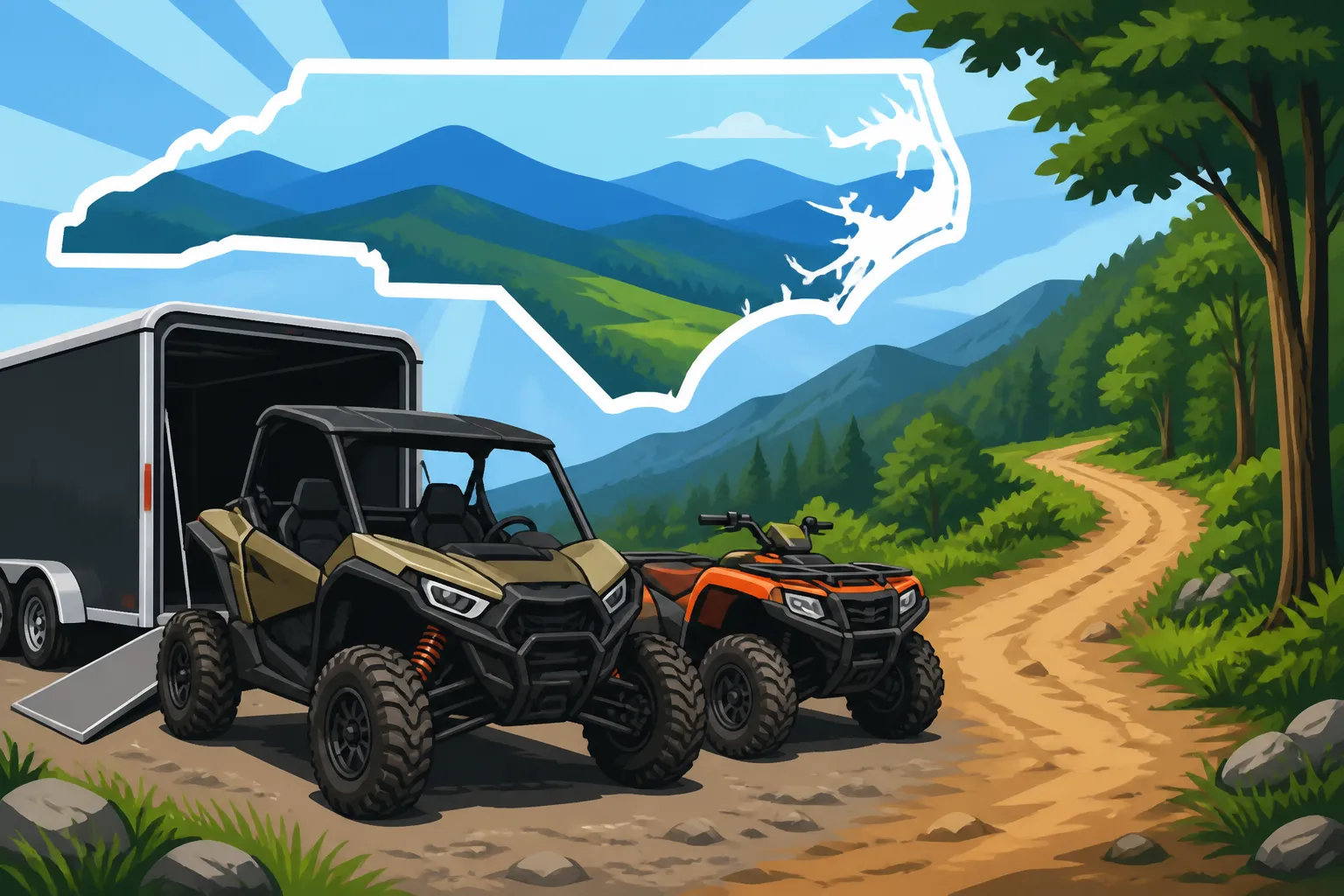
A staging lot is more than a place to leave your truck. It is where you unload safely, get your gear sorted, and confirm that your machine and planned route are allowed. A trail entrance may have limited parking, while a nearby campground or roadside pull-off may not be intended for staging at all.
Confirm the lot is meant for OHV use
Start with the land manager’s information for the riding area. A signed OHV staging area or designated trailhead is a much safer choice than an open-looking space beside a forest road. Parking in the wrong place can block other visitors, interfere with forest operations, or put your vehicle where it could be ticketed or towed.
This matters at places like the [Brown Mountain OHV Trail System] and the [North Carolina's Badin Lake Trailheads]. Both are associated with established riding areas, but the parking situation, access points, and available facilities can vary. Don’t assume that every trail entrance has room for a long truck-and-trailer combination.
Before leaving home, check current information from the relevant forest district or land manager. Look for the specific trailhead or staging location, any access restrictions, and notices about closures. A map app can help you understand the general layout, but it should not be treated as confirmation that a parking area is open or suitable for your vehicle.
Match the lot to your truck and trailer
A spot that works for a pickup may be awkward or unusable when you arrive with a long trailer. Consider whether there is enough room to turn around, back into a space, and unload without blocking other vehicles. If you are traveling with friends, agree on where to meet before anyone starts unloading; a busy lot can become congested quickly when several rigs arrive at once.
Think about the ground surface, too. A gravel lot can be practical in dry weather but may become soft or rutted after rain. A narrow entrance can be difficult to navigate with a trailer, especially if vehicles are queued near the gate. If the location is unfamiliar, check the route and parking details in advance rather than relying on a last-minute turn from a busy road.
The article [Parking a Trailer at a Badin Lake Trailhead] can help you think through the practical questions involved in arriving with a trailer. When there is doubt about parking capacity, ask the land manager or a local riding-area contact rather than treating a roadside shoulder as overflow parking.
North Carolina Riding Areas With Staging Options
The best staging area depends on where you plan to ride, what kind of machine you have, and how you are transporting it. North Carolina’s established OHV areas are not interchangeable: each has its own access points, trail network, operating conditions, and management rules. Check the details for your destination before setting out.
Brown Mountain in the Grandfather District
Brown Mountain is a familiar destination for off-highway vehicle riders in western North Carolina. If you are heading there, identify the official staging area and trail access before driving into the forest. That small bit of planning can save you from pulling a trailer down an unsuitable road or discovering that your intended entrance is not the right place to unload.
On arrival, take a moment to read posted notices and orient yourself before riding away from the lot. Confirm which trails are open and whether any routes have restrictions that apply to your machine. If the staging area is busy, unload efficiently, keep your gear contained, and leave room for arriving vehicles to maneuver.
Brown Mountain’s conditions can be affected by weather, maintenance, and closures. A trail that appears on a map is not automatically open on the day you visit. For planning, use [North Carolina Forest Trail Maps] alongside current forest notices, and check [North Carolina Trail Conditions Before You Ride] before loading your machine.
Badin Lake and the Uwharrie area
Badin Lake is another popular riding destination, with access points around the OHV trail complex. Because visitors may approach from different directions and use different trailheads, choose your staging location based on the route and trails you actually intend to ride. Don’t assume that the closest parking area to a road is the right place to unload.
A simple arrival routine helps keep the lot usable: park within marked spaces where available, unload without spreading equipment across the travel lane, and make sure your trailer is secure before leaving it. If you’re meeting a group, decide who will park where before the lot fills up. For more area-specific planning, see [North Carolina's Badin Lake Trailheads] and [Badin Lake OHV Trail Complex].
Badin Lake access and trail conditions can change, so check notices before you travel. Rain can affect both the drive into a staging area and the trails themselves. If recent weather has been heavy, review [Riding North Carolina After Heavy Rain] and confirm whether the land manager has posted a closure or other restriction.
Wayehutta and other western riding areas
Wayehutta OHV in western North Carolina is another destination where it pays to confirm the entrance and parking details in advance. Don’t rely on a pin alone: verify that the location is the correct public access point and that the riding area is open. The page [Wayehutta OHV in Western North Carolina] is a useful starting point for learning about the area.
At any forest riding area, distinguish between a designated OHV trailhead and a general forest-road pull-off. A pull-off may be intended for passing, maintenance, or other forest users, and it may not provide safe trailer parking. Use signs and official information to confirm that you’re staging in an appropriate place.
If you are visiting a less familiar area, allow extra time to find the lot and read the posted information. It is much easier to sort out a permit question, check your map, or adjust your plan while parked than after you have unloaded and reached a closed trail.
Parking, Permits, and Trail Access
A staging lot gets you ready to ride, but parking does not itself authorize trail use. Forest OHV areas may have separate permit, vehicle, rider, or trail-use requirements. Before starting the engine, make sure you understand the rules that apply to your destination.
Check permit and machine requirements
Review [North Carolina Forest OHV Permits] before your trip. Permit rules can depend on the riding area and the type of visit, so check the land manager’s current instructions rather than assuming that a permit from another location will work. The article [Where to Buy a North Carolina OHV Permit] can help you plan how to obtain one.
Read the posted requirements at the staging area, too. If a permit must be displayed on the machine, place it where the instructions say. Keep any required proof or safety documentation accessible, rather than buried under riding gear in the truck. A quick check before unloading is easier than repacking after you discover something is missing.
The machine must also be appropriate for the trail and permitted use. Do not assume that an ATV, UTV, dirt bike, or other off-highway vehicle can use every route shown on a map. Pay attention to posted restrictions, trail signs, and official descriptions. If a route’s status or vehicle rules are unclear, pause and verify before riding it.
Use maps as a planning aid, not the final authority
Digital maps can make it easier to estimate distances, understand trail connections, and plan where your group will regroup. Tools such as onX Offroad can be useful for preparing a route and viewing mapped riding areas. Still, mapping information is not a substitute for current land-manager notices, signs at the trailhead, or posted closures.
A practical approach is to check the official information first, then use onX Offroad or another mapping tool to help visualize your plan. Download or save what you need before entering areas where cell service may be limited. Share the planned route with your group so everyone knows where the ride begins and which trail junctions require attention.
Use onX Offroad as a navigation aid, not as permission to ride a road or trail. A line on a screen does not override a closed gate, a posted restriction, or a land boundary. If a route shown on your device conflicts with a sign or official closure notice, follow the sign and confirm the status with the land manager.
A Staging Lot Checklist for a Smoother Ride
A little preparation makes a busy trailhead less stressful. It also helps protect your machine, your group, and other visitors from avoidable problems. Use this checklist before driving to the riding area and again when you arrive.
Before you leave home
- Confirm the riding area is open and check for trail, weather, or access notices.
- Identify the official staging area and check whether it can accommodate your vehicle and trailer.
- Review permit rules and make sure you have any required permit or documentation.
- Check that your machine is suited to the trails you plan to ride.
- Save the route and key location details in case cell service is unreliable.
- Agree on a meeting point and regrouping plan if your group gets separated.
For a first visit, give yourself more time than you think you’ll need. Unfamiliar roads, a slow trailer turn, or a busy parking area can make a tight schedule feel rushed. Arriving with enough time to read signs and sort out gear is much better than trying to unload while everyone else is waiting to enter the lot.
When you arrive at the lot
- Read the signs before unloading, including any parking, permit, or trail notices.
- Park so that you do not block gates, travel lanes, turnaround space, or other vehicles.
- Keep ramps, tools, bags, and personal gear out of the way of moving traffic.
- Secure your truck and trailer, and keep valuables out of sight.
- Confirm the route is open before leaving the staging area.
- Tell someone in your group which route you are taking and where you plan to regroup.
A good staging lot is part of a good ride, but it is only one part. The safest plan is to confirm access, park in a designated area, follow posted rules, and be ready to change your route if conditions or closures require it. That preparation helps you spend less time sorting out logistics and more time enjoying North Carolina’s riding areas.
Disclaimer
This article is for general informational purposes only and does not constitute professional advice. Laws, prices and regulations vary by location and change over time. Consult a qualified professional for guidance on your specific situation.