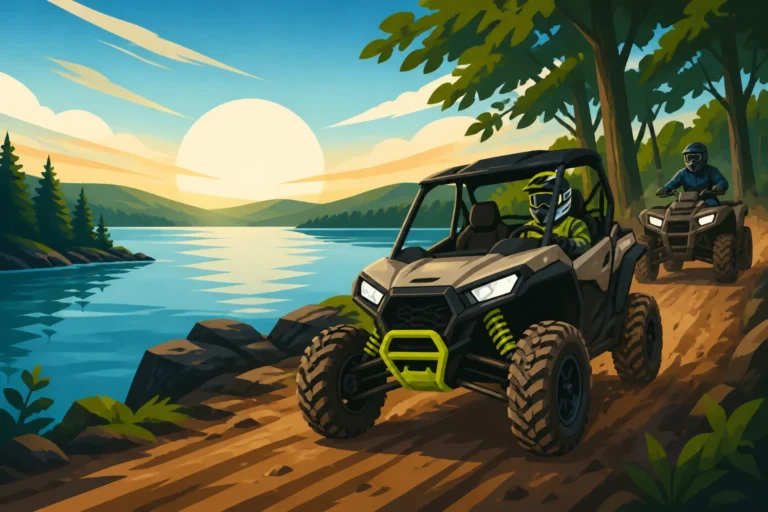
North Carolina Riding Near a Lake
A lake-side vacation does not automatically mean you can ride an ATV along the shore or on nearby public roads. In North Carolina, the clearest option for combining lake scenery with off-road riding is the Badin Lake area of the Uwharrie National Forest. This guide explains where riding is allowed, how to plan your day, and what to check before unloading your machine.
Where to ride near a lake in North Carolina
Badin Lake is the strongest starting point
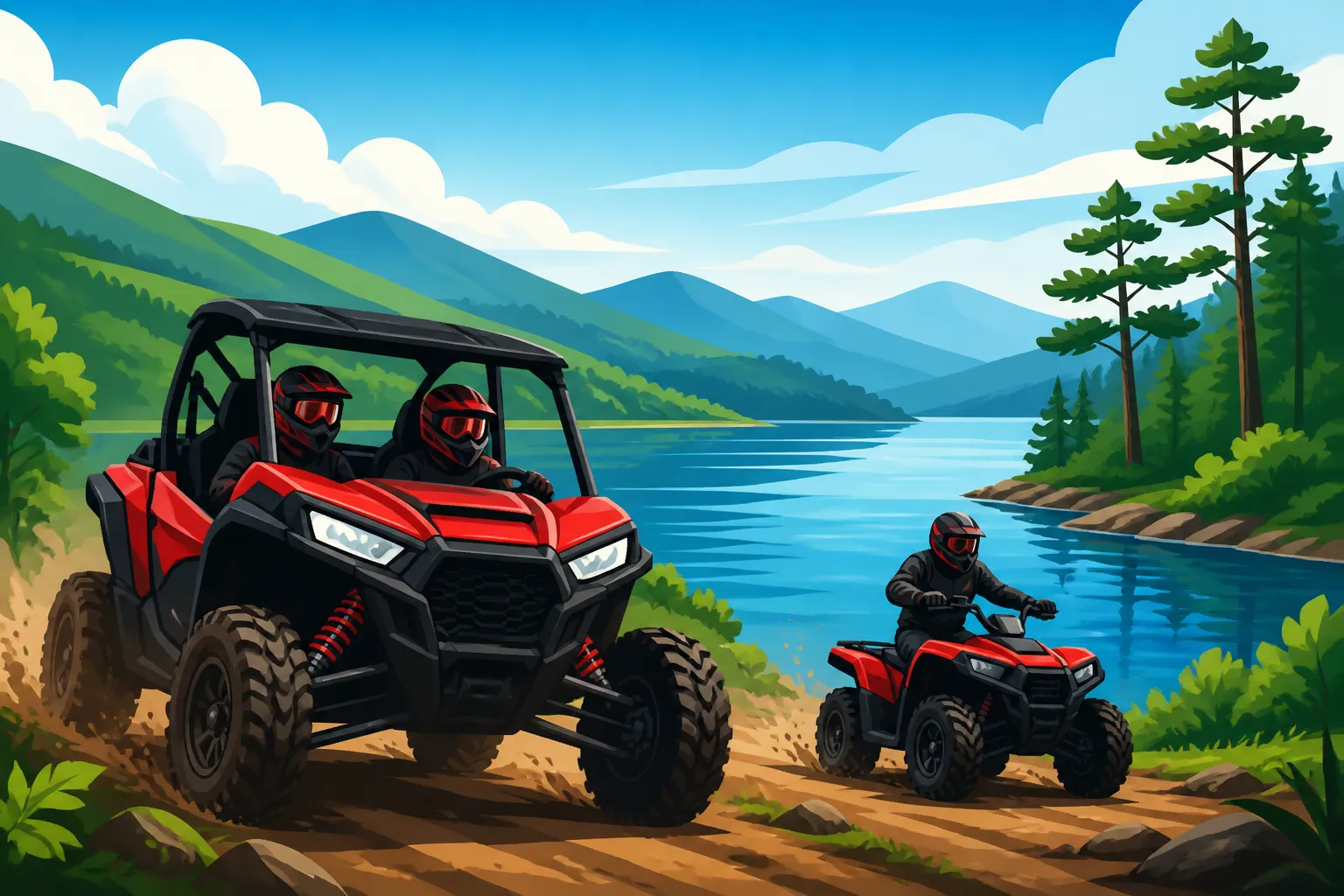
The Badin Lake OHV Trail Complex sits in the Uwharrie National Forest, near Badin Lake and the communities around Troy and Mount Gilead. It is one of the more practical places in North Carolina to pair a day of off-road riding with a separate outing by the water. The key distinction is that the trails and the lake are nearby, but that does not make the shoreline, beaches, or every road between them open to ATVs and UTVs.
Start with the official information for [Badin Lake OHV Trail Complex](Badin Lake OHV Trail Complex) and the current forest map. Trailheads and routes can put you within reach of the lake area, but you should not assume that a trail leads directly to a legal swimming spot, boat ramp, or picnic area. Park your machine only where permitted, and use a road-legal vehicle or another lawful route to reach lake facilities.
The area suits riders who want a forest trail day with a lake-centered weekend nearby. You can ride in the morning, then head to a designated recreation area for boating, fishing, or a picnic. Treat those as separate activities in your plan: the fact that the trip is marketed as a “lake weekend” does not create permission to ride on a road, beach, or access path.
For a broader look at legal places to ride around the state, see [Where to Ride an ATV in North Carolina]. It helps to compare the riding area itself with the lake or campground you want to visit, rather than choosing a campsite first and assuming there will be a public trail at the water’s edge.
Understand what “near the lake” does and does not mean
A lake can be surrounded by several different kinds of land: national forest, private property, developed recreation areas, boat-access roads, and public roads. Each can have different rules. An OHV trail may be open to certain machines while a nearby campground road is not; a shoreline may be managed for swimming or boating rather than motorized riding.
That’s why a map view can be misleading. A trail line that appears close to the water does not prove you can ride to the water. Check the forest’s trail map and signs at the trailhead, and follow posted boundaries. onX Offroad can help you visualize routes and plan a general approach, but use official land-manager information to confirm that a trail is open and legal for your machine.
The same caution applies to private land. A logging road, farm lane, or path beside a lake is not public riding access just because it looks established. Get the landowner’s permission before entering private ground, and do not use a road as a shortcut unless signs or official information clearly allow your machine there. For more detail, [North Carolina Landowner Permission Requirements] explains why permission matters.
How to plan a Badin Lake riding day
Match the route to your machine and experience
Badin Lake’s trail system has different routes and difficulty levels, so don’t treat the whole area as one uniform ride. Review [North Carolina's Badin Lake Trailheads] and [Badin Lake's Eight Named Trails] before you choose a starting point. A route that feels manageable for an experienced rider on a compact ATV may be a frustrating or unsafe choice for a new rider, a wide side-by-side, or a stock machine with limited ground clearance.
Think about who is riding and what they are driving. A beginner may be more comfortable choosing a shorter, straightforward route and leaving enough daylight to turn around without rushing. A group with mixed experience should agree on a conservative pace and regroup at safe stopping points. If your side-by-side is wider than a typical ATV, verify that the trail and any posted restrictions accommodate its width. Do not rely on another rider’s memory of a past trip; trail conditions and access can change.
A planning app such as onX Offroad can be useful for checking your general route, saving a map for reference, and helping your group stay oriented. It should supplement—not replace—official forest maps, signs, and closure notices. Cell coverage may be limited in wooded or hilly areas, so download or carry the information you need before you leave service.
| Planning question | What to check | Why it matters |
|---|---|---|
| Is the trail open? | Current forest notices and signs at the entrance | A familiar route may be closed or restricted |
| Is my machine allowed? | Trail rules and any width or vehicle restrictions | Not every route suits every ATV or UTV |
| How difficult is the ride? | Official trail descriptions, map symbols, and recent conditions | Difficulty can feel very different after rain |
| Do I need a permit? | Forest OHV permit rules for the riding area | A permit may be required for each machine |
| Can I reach the lake by ATV? | Specific legal route and posted access rules | Nearby does not mean connected or authorized |
Check permits, seasons, and trail conditions
Before loading up, review [North Carolina Forest OHV Permits] and confirm the requirements for the specific riding area. A trail permit is not the same thing as vehicle registration, and having a title or registration from another state does not automatically replace a local forest permit. Check whether your machine needs its own permit and where permitted riders can buy or display it.
The riding season and individual trail openings can also vary. A trail may be closed for maintenance, weather damage, or resource protection even when other routes in the forest are open. Make [North Carolina Trail Conditions Before You Ride] part of your trip checklist, and check again close to departure. If a gate is closed or a trail is posted as unavailable, don’t ride around the barrier or assume the closure applies only to other vehicles.
Rain deserves special attention. Wet clay, loose rock, and runoff can make a route more difficult, increase the chance of getting stuck, and cause trail damage. If the forecast or recent conditions look rough, choose a shorter outing, postpone the ride, or select another legal activity. A lake weekend is easier to salvage when you have a backup plan that does not depend on riding every mile you had hoped to cover.
Make the lake part of the trip without riding illegally
Plan separate riding and waterfront stops
The simplest itinerary is often the safest: unload at a designated OHV staging area, ride the trails that are open to your machine, return to the trailer, and then drive to a permitted lake recreation area. This avoids the common mistake of trying to connect trail riding to a boat ramp, picnic area, or shoreline on an unapproved route.
If your group is camping, check whether the campground allows trailers, where they can be parked, and how far it is from the trailhead. Do not assume that a campground’s proximity to Badin Lake means ATVs can be ridden through it. Look for established routes and clear permission, and keep machines on approved trails rather than cutting across campsites or forest ground.
A map app can help you compare the general location of campgrounds, trailheads, and lake access, but treat that as trip-planning context rather than legal authorization. onX Offroad may make it easier to see how far apart stops are, while official maps and local signs determine where you may ride. If you are splitting time between riding and boating, plan the road transfer in a truck or with a properly equipped trailer.
Respect public-road boundaries
Many riders see a short stretch of pavement between a trailhead and the lake and wonder whether they can simply ride it. Don’t assume that a forest permit makes an ATV or UTV street legal. North Carolina’s rules for public-road use are specific, and ordinary off-road machines generally cannot use public streets as a convenient connector. Read [North Carolina Rules for Riding a Public Street] before building a route around paved roads.
Even when a road appears quiet, it may carry local traffic, have blind curves, or be subject to restrictions that are not obvious from a phone map. A route that crosses a road is different from riding along it, and the rules can depend on the location and circumstances. Follow official signs and do not use road shoulders, private drives, or utility corridors as improvised trail links.
For a lake trip, the practical solution is usually to trailer the machine to the authorized riding area and drive separately to waterfront facilities. It may feel less spontaneous than riding straight from camp, but it prevents a relaxing outing from turning into a trespass or road-use problem.
Gear, safety, and a simple trip checklist
Prepare for changing terrain and limited service
Pack for the ride you are actually taking, not just the lake day you imagined. Bring a properly fitting helmet and eye protection, suitable footwear, gloves, water, and clothing for changing conditions. Carry basic recovery and repair supplies appropriate to your machine, but do not attempt a repair on a steep or exposed section where stopping would put the group at risk.
Tell someone where you plan to ride and when you expect to return. Keep your group together, set a turnaround time, and agree on what to do if a rider gets separated. In areas where phone service is unreliable, a charged phone alone may not be a dependable navigation or emergency plan. Keep a map available offline or in printed form, and make sure at least one person in the group knows how to read it.
For overnight planning, [Camping Near North Carolina OHV Trails] can help you think through the relationship between a campsite and the riding area. Confirm the campground’s own rules directly, especially for trailer parking, quiet hours, and where machines may be operated. A campground can be close to a trail system without allowing riding within its boundaries.
Run through this checklist before leaving home
A little checking before you load the trailer can prevent the most aggravating surprises—arriving at a closed gate, discovering your machine does not fit a route, or realizing the lake access is miles away by road.
- Confirm the riding area is open and review current trail notices.
- Check the permitted vehicle types, machine dimensions, and trail difficulty.
- Verify permit requirements and arrange a permit for each machine if required.
- Choose a legal staging area and confirm parking or trailer arrangements.
- Plan lake access separately from the trail route.
- Save official maps and any useful navigation information before losing service.
- Pack protective gear, water, basic tools, and recovery equipment.
- Set a route, regrouping plan, and turnaround time for your group.
- Follow closures, posted boundaries, and landowner restrictions throughout the trip.
The best North Carolina lake-and-trail weekend is one where the two activities complement each other without being confused. Use Badin Lake as a convenient regional base, ride only the authorized OHV routes, and travel to lake facilities by a lawful vehicle route. That approach gives you more time to enjoy the forest and the water—and less time worrying about whether the path you chose was actually open to your machine.
Disclaimer
This article is for general informational purposes only and does not constitute professional advice. Laws, prices and regulations vary by location and change over time. Consult a qualified professional for guidance on your specific situation.