Brown Mountain in December
December can be a rewarding time to ride Brown Mountain, but the shorter days and changeable mountain weather make preparation especially important. The OHV area near Morganton is seasonal, and a trail that looks manageable on a sunny morning can turn cold, slick, or difficult after rain. This guide covers what to check before you go, what to pack, and how to plan a safer winter ride.
What to expect at Brown Mountain in December
The riding season is not the same as a guaranteed open day
Brown Mountain OHV Trail System sits in the Grandfather Ranger District of Pisgah National Forest, within reach of Morganton, Lenoir, and Collettsville. Its usual seasonal window runs from spring through the end of December, but seasonal dates are only part of the picture. Weather, trail damage, maintenance, or other forest conditions can affect access on a particular day.
That distinction matters when you’re driving in with a trailer and counting on a full day of riding. Before leaving home, check current notices from the U.S. Forest Service and the Grandfather Ranger District for closures, restrictions, and access updates. A trail shown on a map is not proof that it is open today. For a broader look at timing and seasonal access, see [Brown Mountain's April to January Season] and [North Carolina Trail Closures to Check].
December can also bring a mix of conditions within a single outing. A sunny start near Morganton does not guarantee that shaded sections will be dry or comfortable later. If rain, freezing temperatures, or strong winds are in the forecast, be ready to shorten the ride or postpone it rather than treating the planned route as fixed.
Expect winter conditions, not summer riding conditions
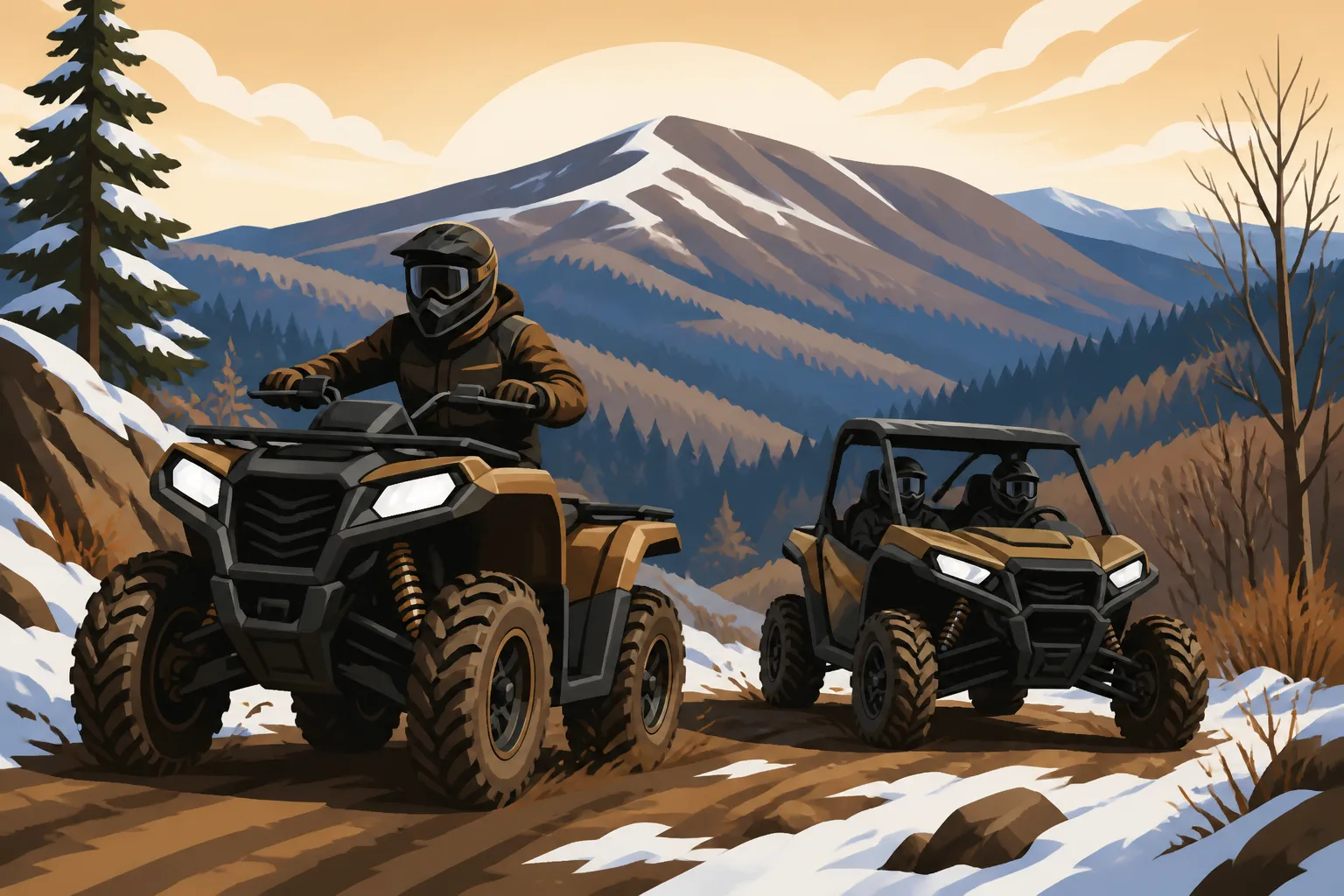
Cold air, wet leaves, muddy ground, and early darkness can all change how a familiar trail feels. In shaded hollows, damp patches may stay cold throughout the day; exposed sections can feel warmer, then quickly turn uncomfortable when the sun drops behind the ridges. Even when there is no snow, slick rocks and wet roots can make climbs and descents more demanding.
The practical takeaway is to ride with a margin. Avoid setting a pace based on how quickly you might cover the same distance in July. A group that stops for a repair, takes a wrong turn, or waits out a shower can lose daylight faster than expected. Build turnaround time into the plan, and don’t push deeper into the system just because the first few miles went smoothly.
If you are new to the area, review [Riding Brown Mountain for a Day] before choosing a route. It helps to think of the ride as a series of manageable sections rather than an all-or-nothing attempt to cover as much ground as possible.
Prepare before you load the machine
Check access, maps, and permit details
A useful pre-trip check has three parts: confirm the area is open, understand the applicable permit requirements, and decide how you’ll navigate if phone service is weak. Forest OHV permits and trail rules can vary by riding area, so make sure you are looking at information specific to Brown Mountain rather than assuming a permit or rule from another North Carolina trail system applies here. Start with [North Carolina Forest OHV Permits] and [Brown Mountain's Season Permit].
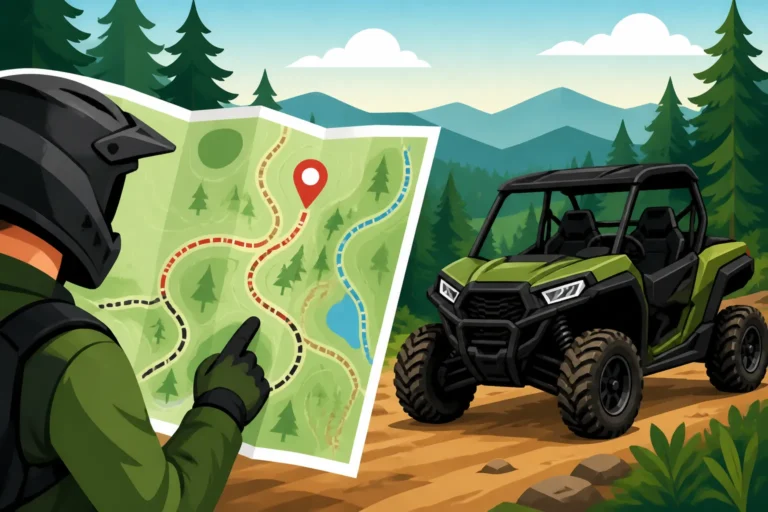
Plan to carry a map that remains usable when reception drops. The onX Offroad app can be useful for reviewing a route and keeping location information available, but it should be a supplement to—not a replacement for—official Forest Service notices and posted signs. Download the information you need before driving into an area with limited service, and bring a backup navigation option if you have one.
Before the trip, share your route and expected return time with someone who is not riding with you. That person should know which trail system you’re visiting and when to follow up if you have not checked in. It is a simple precaution, but it matters when a group is delayed by weather, a mechanical issue, or a navigation mistake.
Check the machine and your winter gear
Cold-weather preparation starts with the machine. Check the tires, brakes, lights, battery, fluid levels, and any equipment you rely on for recovery. Make sure your machine is appropriate for the routes you intend to ride, and do not assume that an accessory such as a winch can compensate for a route that is beyond your group’s ability or the day’s conditions.
Dress for the ride you may have to stop on, not just the ride you expect while moving. A warm base layer, wind-resistant outer layer, gloves that still let you operate controls, and dry spare clothing can make a long delay much more manageable. Keep spare layers in a sealed bag, because damp clothing can become a serious comfort problem once you are no longer moving.
Pack food, water, a first-aid kit, a basic tool kit, and a charged phone. A small light source is worth carrying even if you plan to finish well before dusk. If the group includes newer riders, review [North Carolina Trails for Beginners] and agree in advance that anyone can call for a stop or turnaround without being pressured to continue.
Plan a ride that fits December’s shorter days
Use a conservative route and set a turnaround time
For a December visit, choose a route that leaves room for slow sections and unexpected stops. Decide when the group will turn back before setting out, and make that time early enough to allow for a careful return. This is more dependable than using an estimated finish time that assumes every trail segment is clear and every machine runs perfectly.
A practical plan might be to start with a modest loop, check how the group is handling the terrain, then decide whether there is enough time and daylight to continue. If a section is wetter, rougher, or more difficult than expected, turn around rather than letting the original plan dictate the ride. At Brown Mountain, the point is not to finish a particular route at any cost; it is to have a manageable day and get everyone back safely.
Use onX Offroad or another navigation tool to help track your position, but keep checking the terrain and signs around you. Map lines can be helpful when deciding where you are, yet they do not tell you whether a route is open, freshly damaged, or suitable for your machine. Official updates and on-the-ground signage take priority.
Ride with the group you have, not the group you wish you had
A mixed-experience group should plan around the least experienced rider and the least capable machine. Keep riders within sight or agree on clear regroup points, especially at junctions. If someone stops, the rest of the group should know whether to wait nearby or return to them rather than continuing until the group becomes separated.
In colder conditions, frequent short checks can prevent small problems from turning into a long delay. Ask whether anyone is getting chilled, whether a machine is handling normally, and whether the group still has enough daylight for the return. If someone is uncomfortable or struggling, slowing down is a sensible adjustment—not a failure to keep up.
Keep trail etiquette in mind as well. Stay on designated routes, follow posted directions, and give other trail users room. For additional planning help, [North Carolina Trail Conditions Before You Ride] and [North Carolina Trail Etiquette on Narrow Trails] cover considerations that are useful across the state’s forest riding areas.
A simple December ride checklist
Use this table as a last-minute check before heading toward Brown Mountain. It is not a substitute for current official notices, but it can help catch the things that are easiest to overlook when you are loading in the dark.
| Check | What to confirm | Why it matters in December |
|---|---|---|
| Trail access | Check official notices and posted closure information | Seasonal access does not guarantee every trail is open on your visit |
| Permit | Confirm the permit requirements for Brown Mountain | Requirements may differ between forest riding areas |
| Weather | Review the forecast for the area and likely changes during the day | Rain, wind, and cold can affect traction and comfort |
| Daylight | Set a turnaround time and plan to finish with daylight left | Short winter days leave less room for delays |
| Navigation | Download maps and carry a backup way to orient yourself | Phone coverage may be unreliable in forest areas |
| Machine | Check tires, brakes, lights, battery, and recovery equipment | Cold, wet conditions can make a minor issue more complicated |
| Clothing | Pack warm layers and dry spares | A stopped group gets cold quickly |
| Group plan | Agree on regroup points and what to do if separated | Clear expectations help prevent riders from becoming scattered |
A second onX Offroad check before you leave can help you review the route you intend to use and keep navigation information available offline. Still, make your final decision based on official access notices and signs at the trail system. If those sources indicate a closure or restriction, do not ride the affected area.
If your outing is part of a longer trip, give yourself flexibility in the schedule. A December ride should not depend on squeezing in a late start, riding through worsening weather, or returning after dark. The best backup plan may be as simple as choosing a shorter loop, taking a break, or calling it early.
Common mistakes to avoid
Assuming the whole system will be open
A seasonal trail system can have individual closures or temporary restrictions. Do not treat an old trip report, a saved route, or a third-party map as confirmation of current access. Check official notices shortly before departure and pay attention to signs once you arrive.
The same caution applies after bad weather. If a route appears damaged or conditions are unsafe, do not try to force your way through or create a new path around an obstruction. Turning back protects both your group and the trail system.
Leaving the return trip until sunset
It is easy to underestimate how long the return will take when the group has stopped for photos, a minor repair, or a route check. Set a turnaround time before you start and stick to it. If the group is already behind schedule, shorten the ride rather than trying to make up time by riding faster.
Late starts are particularly risky in winter because they leave little room for the unexpected. Load the trailer the night before when possible, check your gear, and know where you are going before you begin the drive. That leaves more usable daylight for riding.
Relying on one navigation or communication option
A phone may lose signal, run low on battery, or become difficult to use in cold weather. Download maps ahead of time, keep the phone protected, and bring a backup navigation method when practical. Tell someone outside the group where you expect to ride and when you plan to return.
For added trip-planning context, [North Carolina Forest Trail Maps] and [North Carolina Trail Closures to Check First] can help you prepare, while current Forest Service information should guide your final access decision. Make sure every rider understands the route and the plan for regrouping before the machines start moving.
December riding at Brown Mountain can be enjoyable when the group treats weather, daylight, and access as part of the route plan. Check official conditions, carry the right gear, choose a conservative ride, and be willing to turn around. Those choices make for a safer day than trying to squeeze in every mile before winter sunset.
Disclaimer
This article is for general informational purposes only and does not constitute professional advice. Laws, prices and regulations vary by location and change over time. Consult a qualified professional for guidance on your specific situation.