Sharing a Forest With Bear Hunters
A fall ride in the Uwharrie or Nantahala can put you on the same public land as people hunting bear, and that changes what “sharing the trail” means. Hunters may be positioned near roads, crossings, or quiet areas where machines are allowed. This guide explains how to plan a safer North Carolina ATV or UTV ride, recognize hunting activity, and avoid disturbing hunters or wildlife.
What Sharing a Forest With Bear Hunters Means
Public forest does not mean every route is open to every user
North Carolina’s national forests, state game lands, and public roads can sit close together, but they do not all follow the same access rules. A forest road may be open to motor vehicles while a nearby trail or game-land route is closed to them. The fact that you see tire tracks, a gate, or another rider is not proof that a route is legal to use.
Before you unload, identify the land manager and check the current rules for the exact area you plan to ride. That matters around places such as the Uwharrie National Forest, where forest roads, OHV routes, and hunting areas can overlap geographically without having identical rules. For a closer look at access boundaries, see [North Carolina Rules for Riding Game Lands](North Carolina Rules for Riding Game Lands).
It also helps to remember that hunting activity can take place beyond a marked OHV route. A hunter may walk in from a parking area or forest road and set up away from the trail. Do not assume an area is free of hunters just because you do not see a truck, a posted notice, or a person carrying equipment.
Hunters often depend on quiet and predictable access
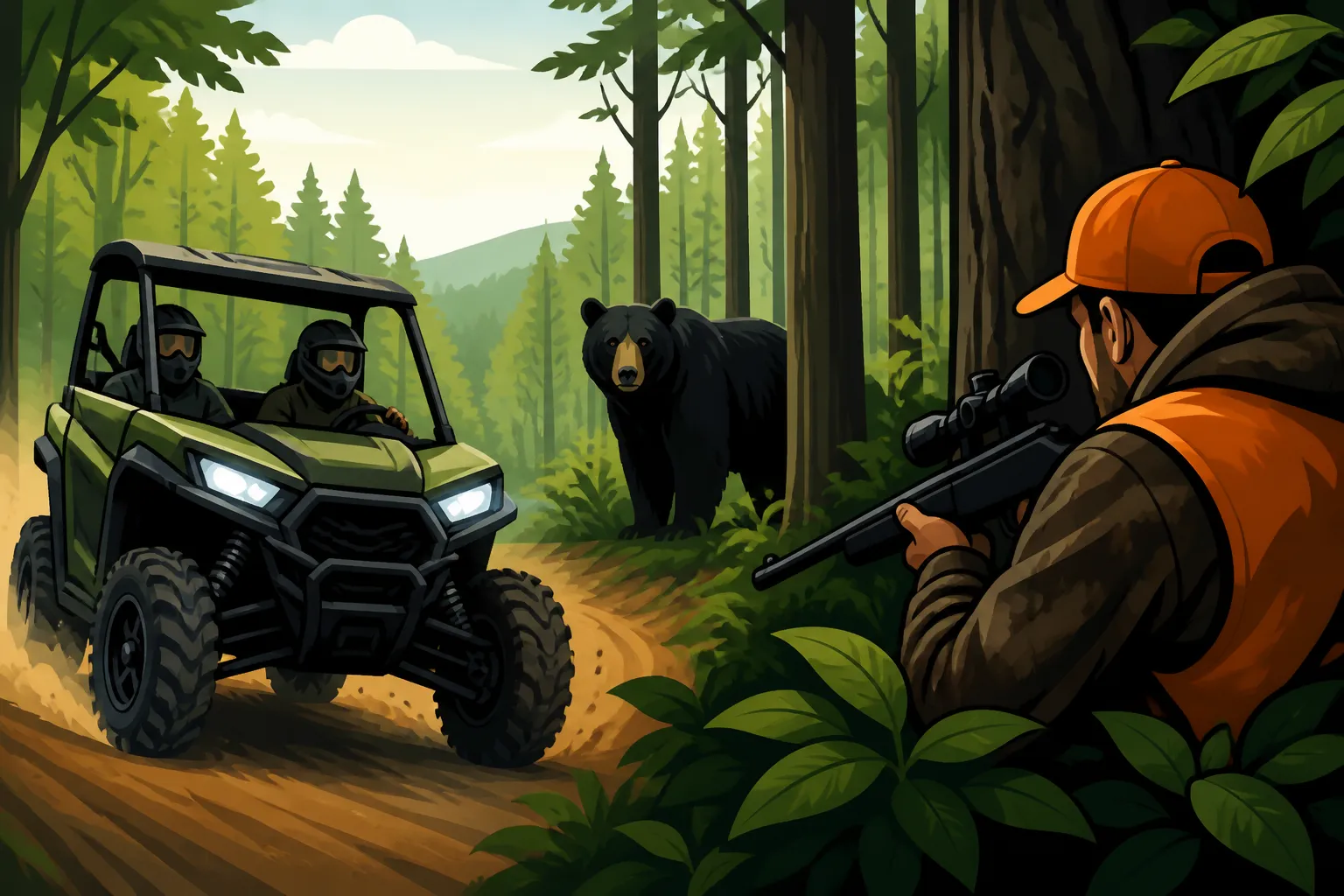
Bear hunters may be walking, waiting, or working with dogs, depending on the method and location permitted by the applicable rules. A passing ATV or UTV can create noise that travels well beyond the trail itself. It can also surprise a hunter who is focused on the woods rather than expecting a machine to come around a bend.
That does not mean riders must avoid every public forest during hunting seasons. It means being deliberate: stay on routes open to motorized use, keep your group together, slow down near trailheads and road crossings, and avoid stopping beside a hunter or hunting party. If you hear voices, dogs, or other signs of activity, give the area room rather than riding closer to investigate.
For a wider seasonal overview, read [Riding in Hunting Season](Riding in Hunting Season). Hunting dates and access restrictions can vary by location and season, so check the current information for the specific district or game land before setting out.
Know which land rules apply to your planned route
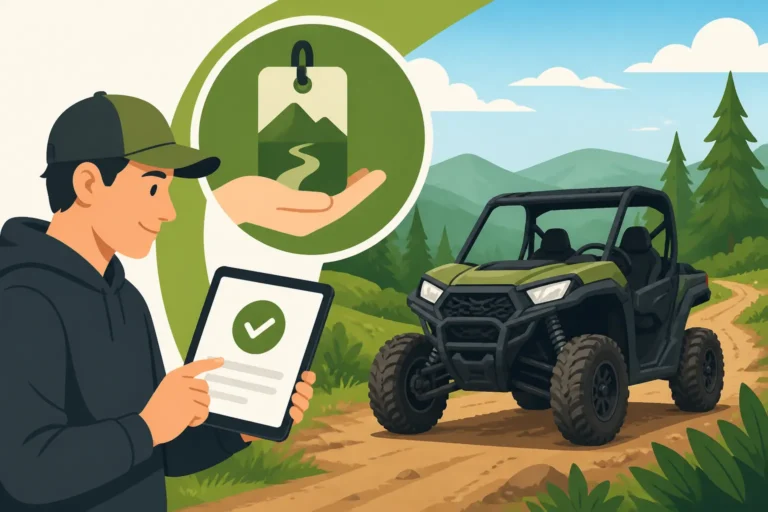
A route shown on a phone map is useful for planning, but it is not a substitute for current land-manager notices or posted signs. Some mapping apps display roads and trails without explaining whether a route is open to ATVs, UTVs, or other motor vehicles. A line on a screen can also be outdated or difficult to interpret at a boundary.
Apps such as onX Offroad can help you review route options and understand the general layout before you arrive. Use that information as a planning aid, then confirm access with official forest or wildlife-area information and obey signs on site. When a route is marked closed, do not ride around the barrier or take an unofficial detour.
A simple check before loading can prevent a frustrating drive to a closed gate. Review [Checking a Forest Alert Before You Drive] and [North Carolina Trail Closures to Check] as part of your trip planning.
How to Plan a Ride During Bear Season
Check the route, the land manager, and the timing
Start with the specific trail system or forest district you plan to visit. Confirm that your chosen route is open to your type of machine, and look for seasonal restrictions, closures, or notices that could affect access. If your route crosses between different jurisdictions, check each one rather than assuming one set of rules covers the whole trip.
Timing matters, too. A weekday ride may be quieter than a busy weekend, but it does not guarantee that no one is hunting. In fall, hunting activity can begin early in the day, so a morning trailhead arrival may put riders and hunters in the same parking or access area. Keep noise down while unloading, and avoid revving engines or testing equipment near a trailhead where people may be preparing to head into the woods.
| Before the ride | What to check | Why it matters |
|---|---|---|
| Route | Officially open motorized roads and trails | A visible road or mapped line may not be open to your machine |
| Land boundary | Forest, game land, private parcel, or mixed access | Rules can change when a route crosses onto different land |
| Notices | Closures, hunting information, and temporary restrictions | Conditions and access instructions can change |
| Group plan | Meeting point, route, and turnaround time | A clear plan reduces unnecessary stopping and confusion |
| Equipment | Quiet, well-maintained machine and required safety gear | Mechanical problems and excessive noise can create avoidable trouble |
If you use onX Offroad to compare routes, download or review the information before leaving an area with dependable cell coverage. Then compare it with official notices and signs when you reach the trailhead. A map can help you prepare, but the posted closure at a gate takes precedence over a route you saved earlier.
Choose a route that reduces unnecessary encounters
If a trail system has several open routes, choose one that lets your group stay on designated motorized trails without repeatedly passing through hunting access points or stopping near likely staging areas. Do not cut through brush to bypass a crowd, a closed trail, or a slow section. Leaving the route can damage vegetation and put you in a place where hunters or wildlife may not expect a machine.
Before the ride, agree on a simple group protocol. Decide where to stop, how to regroup if someone falls behind, and what to do if you encounter a hunter or hunting party. A designated pull-off is better than stopping in a narrow section where another trail user has little room to pass.
Good route planning can also make the day less stressful for everyone. Check your map before you start rather than gathering around a phone at every junction. onX Offroad may help you organize a route in advance, but do not let a map display distract the driver while the machine is moving. Pull over in a safe, legal spot before checking directions.
Prepare for limited service and changing conditions
Cell coverage can be unreliable in wooded or mountainous areas. Save the route and important contact details before you leave, and tell someone at home where you expect to ride and when you plan to return. If your group separates, a prearranged meeting point is more useful than assuming everyone can call or message from the trail.
Weather can make a route harder to ride and can change how quickly a group moves. Wet leaves, mud, low visibility, and washed-out sections may require slower travel. If you encounter a closure or an unsafe condition, turn around rather than trying to find a way around it through the woods.
A current forest notice is especially useful after storms or other disruptions. For practical trip preparation, [North Carolina Trail Etiquette on Narrow Trails] offers helpful guidance on sharing space and passing safely.
How to Ride Considerately Around Hunters
Slow down and make your presence predictable
Reduce speed as you approach blind corners, trail intersections, bridges, parking areas, and forest-road crossings. A hunter walking along a route may not hear your machine until you are close, particularly if terrain or vegetation blocks the sound. Slow, controlled riding gives both parties more time to notice each other and respond.
Avoid sudden acceleration, unnecessary horn use, or repeated engine revving. If you need to stop, pull completely off the travel surface where it is safe and permitted. Keep the engine off while waiting rather than idling beside a person who is trying to use the woods quietly.
If you encounter a hunter, give them space and pass slowly when the route and conditions allow. Do not ride toward a person, dog, vehicle, or sound simply to find out what is happening. If the trail is too narrow to pass safely, wait at a reasonable distance until the other person can move clear.
Make yourself easier to see without assuming a clothing rule
Bright clothing can help other forest users notice you, especially in shaded woods or during low-light conditions. A visible outer layer in blaze orange is a practical choice for riders sharing public land during hunting season. It is a precaution, not a reason to assume every ATV rider is subject to the same clothing rules that apply to hunters.
For a seasonal example focused on the Uwharrie area, see [Blaze Orange on a November Uwharrie Ride]. Visibility is only one part of safe riding: use appropriate lights when needed, keep windshields and goggles clean, and do not rely on clothing color to make a fast approach safe.
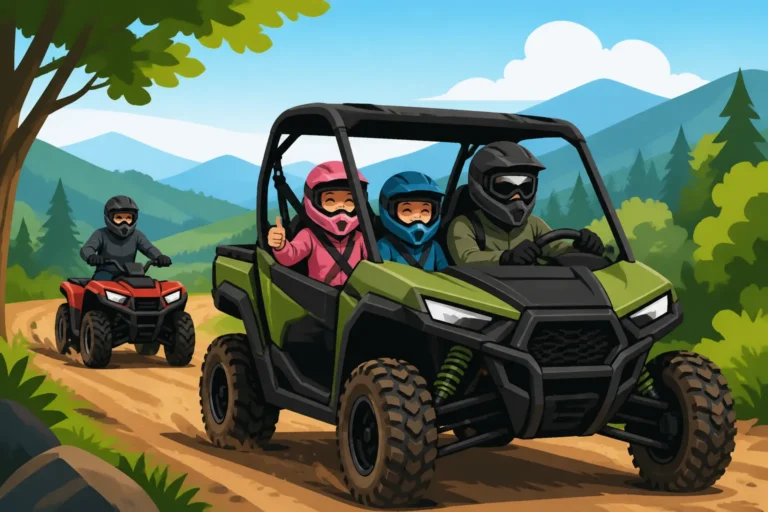
Keep children and passengers close to the group and explain what to do if they see a person on foot or hear dogs. Young riders may be tempted to stop, wave, or move toward an unfamiliar sound. Tell them instead to stay with the machine, wait for the adult leading the ride, and avoid approaching anyone they do not know.
Be especially careful with dogs, firearms, and roadside encounters
If you come across hunting dogs, do not chase, call, feed, or attempt to handle them. Keep your machine under control and give the animals room. Dogs may be working away from their handler, and a fast approach or sudden engine noise can cause confusion or create a dangerous situation.
If you see someone carrying a firearm, remain calm, keep a respectful distance, and do not make sudden movements toward the person. A brief, polite greeting from a safe distance is generally more considerate than stopping close by or trying to start a long conversation. If a hunter asks you to wait while they move clear, cooperate when it is safe and lawful to do so.
If there is a conflict about access or someone asks you to leave an area, do not turn it into an argument on the trail. Move to a safe location and verify the route rules with the relevant land manager. For detailed route-sharing practices, [North Carolina Trail Etiquette on Narrow Trails] can help riders think through passing and spacing in places where there is little room.
What to Do When You Find Hunting Activity
Pause, assess, and keep a safe distance
When you notice a hunter, dogs, or an active hunting setup, stop in a place that does not block the route and assess the situation. Do not approach a hunting party to take photos, ask questions, or inspect equipment. Give people enough space to continue safely, and keep your group quiet while deciding whether to wait or turn back.
If the route remains open and there is room to pass safely, proceed slowly and predictably. If you cannot tell whether it is safe to continue, wait at a distance or choose another legal route. Avoid riding into thick brush or onto an unmarked path to get around the activity; that can put you in a more dangerous position and may violate access rules.
If you are unsure whether a road or trail is open, follow the posted signs and contact the appropriate land manager when practical. Do not treat a disagreement with another trail user as permission to ignore a closure or access restriction.
Change plans when conditions call for it
Sometimes the best choice is to turn around. That can feel disappointing after trailering across the state, but it is better than pushing into an uncertain situation or disturbing people using the forest. Keep a backup route in mind before the trip so that a closure, busy trailhead, or unexpected hunting activity does not leave your group improvising.
A backup plan should be legal and realistic for your machine. Check whether the alternate route is open, whether it has the width and difficulty your group can handle, and whether you have enough fuel and daylight to complete it. Do not assume a nearby road is a suitable substitute just because it appears on a map.
After the ride, report a genuine safety concern or unclear access issue through the appropriate official channel. Stick to what you observed: the location, time, sign or barrier involved, and what happened. Clear details are more useful than speculation about someone’s intentions.
Leave the forest in good shape for the next visit
Stay on marked routes, pack out trash, and avoid disturbing camps, vehicles, equipment, or wildlife. Do not leave a trail to investigate hunting activity, and do not share sensitive locations online if doing so could draw unwanted attention to a hunter, animal, or access point.
The same courtesy applies when loading up. Keep engines quiet near other visitors, use established parking areas, and leave room for people arriving or leaving on foot. A respectful ride helps preserve access and keeps the forest more comfortable for hunters, riders, hikers, and other visitors alike.
Good preparation is the easiest way to share public land well: verify the route, pay attention to signs, keep a safe distance, and be ready to adjust your plans. A map tool such as onX Offroad can support that preparation, but sound judgment and current official access information should guide the ride.
Disclaimer
This article is for general informational purposes only and does not constitute professional advice. Laws, prices and regulations vary by location and change over time. Consult a qualified professional for guidance on your specific situation.