North Carolina Sound Limits on Forest Trails
A loud ATV or side-by-side can turn a ride into a frustrating trip back to the trailer, especially if a forest trail has a posted sound limit. The key is that there isn’t one simple number to assume applies everywhere in North Carolina. Learn what sound rules may cover, how enforcement can work, and what to check before you ride.
How sound limits work on North Carolina forest trails
Sound rules for off-highway vehicles can come from more than one place. A forest may post requirements for a particular riding area, while state or federal rules and temporary orders can also affect what’s allowed. That means a number seen on one trail sign or in an online discussion shouldn’t automatically be treated as the rule for every forest route.
A commonly encountered posted standard for some off-highway vehicle riding areas is 96 dB(A). Treat that as a possible local limit, not a universal North Carolina allowance. The responsible land manager’s current rules and the signs at the riding area are what matter for your planned trip. If the limit or test method is not clear, contact the managing ranger district before you haul your machine.
It also helps to understand what a decibel figure does—and doesn’t—tell you. Decibels measure sound pressure on a logarithmic scale. A difference of a few decibels can be noticeable, but a reading depends on how and where it was taken. Engine speed, distance, microphone angle, nearby surfaces, and background noise can all affect the result. A sound reading taken beside a running machine on a driveway may not match a reading made with a designated test procedure.
A sound limit is not the same as a muffler requirement
A posted maximum sound level and a requirement to have a muffler are related, but they are not interchangeable. A machine could have a muffler and still be too loud under a particular limit. Conversely, a sound meter reading below a posted threshold does not necessarily excuse missing or altered equipment when a rule requires a muffler.
Forests may also require an approved spark arrester. That is a separate safety requirement intended to reduce the chance of sparks escaping from the exhaust. Don’t remove or modify an exhaust component to make the machine sound different without checking whether the change affects required equipment. See North Carolina Muffler Requirements for ATVs and North Carolina Spark Arrester Rules on Forest Land for related equipment issues.
The limit can depend on the riding area
North Carolina’s national forests include different OHV areas, trail systems, and roads, each with its own access rules. Rules posted for Brown Mountain, Badin Lake, or Wayehutta may not be identical, and forest roads can have restrictions that differ from an OHV trail. A rider should confirm the rules for the exact place and route—not just the forest name.
A sound limit can also appear in a temporary notice or be emphasized during particular operating conditions. A closure, event, maintenance notice, or other direction may affect which routes are open and what requirements apply. Check the current North Carolina Forest OHV Permits information and North Carolina Trail Conditions Before You Ride before setting out. A permit does not override an equipment or sound restriction.
| What you’re checking | What it tells you | What it doesn’t guarantee |
|---|---|---|
| Posted sound limit | The stated maximum for the area or test method | That the same limit applies in another forest or riding area |
| Muffler requirement | Whether the machine must have a muffler | That the exhaust meets a separate decibel standard |
| Spark-arrester rule | Whether required spark-control equipment must be fitted | That the machine is quiet enough |
| Trail permit | Whether access requires a permit | That every machine or route is permitted |
| A phone sound-meter app | A rough comparison of sound levels | A reliable compliance result under an official test |
The practical takeaway is simple: check the applicable rule, keep the exhaust system intact, and don’t rely on a generic number as proof that your machine is allowed.
What can make an ATV or UTV too loud
Many noisy machines are not loud because of one dramatic failure. Small changes to the exhaust, worn components, or a poor fit can combine to make a machine noticeably louder. If you’re unsure whether your machine will meet a posted requirement, inspect it before the ride rather than waiting to find out at a trailhead.
Common causes of excessive exhaust noise
- A modified exhaust: An aftermarket system may produce a different sound from the original equipment. A product described as “performance” or “high flow” isn’t necessarily designed to meet a trail’s sound limit.
- A missing, damaged, or altered baffle: Internal parts that help reduce noise may be loose, damaged, removed, or replaced.
- A worn muffler: Packing and other sound-absorbing materials can wear out. A muffler that looks intact from the outside may not work as intended.
- A leaking joint: A loose connection or damaged gasket can create a sharp, metallic exhaust note and may make the machine louder.
- A cracked pipe or muffler: Even a small crack can change the sound and may worsen as the machine heats up or vibrates.
- A poorly matched replacement part: A muffler that physically fits may not be designed for the machine’s engine, exhaust layout, or intended use.
- Unusual engine operation: A machine running at high RPM, misfiring, or under heavy load can sound louder than it does at idle. That does not automatically mean the exhaust is compliant when running normally.
Noise can also come from more than the tailpipe. Tire choice, engine guards, loose panels, cargo, and drivetrain wear can add rattles or mechanical sounds. Those noises may not be measured as exhaust sound under a particular test, but they still affect how disruptive the machine is on a shared trail.
Don’t assume an aftermarket part is approved
Part descriptions can be vague. A claim that a muffler is “quiet,” “trail ready,” or compatible with an ATV does not establish that it meets a specific forest sound limit. Check whether the manufacturer provides a sound rating and whether the riding area recognizes the test method behind that rating. If the part changes required emissions, spark-arrester, or noise-control equipment, it may create a separate compliance problem.
When looking for replacement parts, match the part to the exact machine and check the manufacturer’s installation and maintenance directions. A retailer such as Amazon may offer sound meters or replacement exhaust parts, but a product listing is not a substitute for the forest’s rule or an official test. Confirm the fit, specifications, and return conditions before buying, and have a qualified mechanic inspect an exhaust system if you’re not sure how it should be installed.
A louder machine can affect more than the rider
Noise carries beyond the immediate trail. It can disturb other riders, campers, nearby residents, and wildlife, particularly when machines are operated in groups or revved repeatedly. Even when a machine is under a posted sound limit, considerate riding makes a difference:
- Avoid unnecessary revving in the staging area.
- Keep to a steady pace instead of accelerating hard between short trail sections.
- Don’t idle close to campsites or other groups when you can shut the engine off.
- Keep the exhaust pointed away from other riders when parked.
- Avoid testing a machine early or late near homes or campsites.
These habits don’t replace compliance with a posted limit. They help keep noise down and reduce conflict on public land.
How sound checks and enforcement may work
The exact inspection process can differ by location. Some riding areas may post a sound requirement without testing every vehicle. At other times, an employee or officer may respond to a complaint, inspect equipment, or check machines during an event or enforcement activity. Don’t assume that a lack of a sound test at the gate means there is no rule.
If a sound test is used, the result depends on the prescribed method. A test may specify the meter’s position, the engine speed, and the surrounding conditions. Measuring from a different distance or angle can produce a different result. A rider who wants to understand a local requirement should ask the responsible office what test method applies, rather than comparing an informal reading with a posted maximum.
Why a phone app is not a compliance test
Phone apps can help identify whether one machine sounds louder than another in similar conditions. They are not a dependable way to prove legal compliance. The phone’s microphone may not be calibrated, the case can affect the reading, and background noise can distort it. Different apps may process the same sound differently.
A handheld meter may be more useful for a rough comparison, but its reading still may not match the procedure used by land managers. If you use one at home, treat it as a maintenance aid: test in a consistent, safe location and compare the same machine before and after repairs. Don’t present that number as official proof unless the land manager confirms that the meter and method meet its requirements.
For a more formal check, ask the ranger district or the office responsible for the specific OHV area. Find out whether it uses a particular test standard, whether the limit applies to all vehicle types, and whether any local guidance is available. Make a note of the answer and check again before later trips, since rules and operating notices can change.
What can happen if a machine does not meet the rule
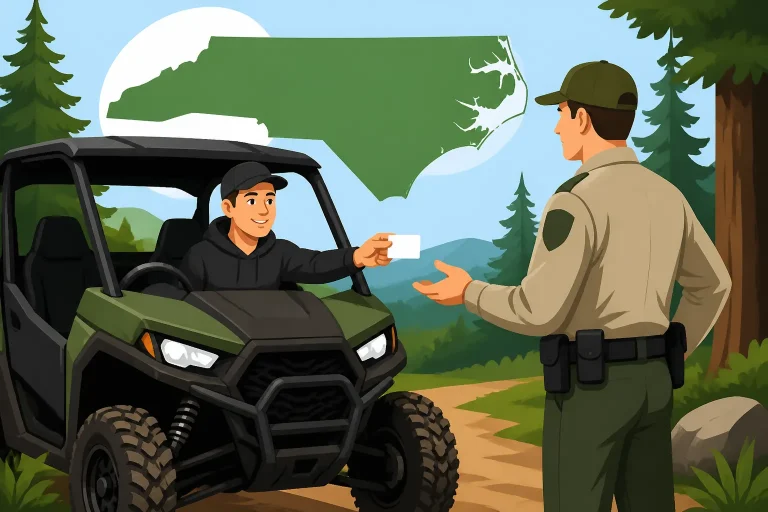
The response can depend on the applicable rule and circumstances. A rider might be told to leave the area, correct a problem, or stop operating the machine. A violation could also lead to a citation or another enforcement action. The safest assumption is that a posted sound or equipment requirement applies even when no one has tested your machine yet.
If a ranger, officer, or other authorized person raises a concern:
- Stop safely and follow instructions.
- Ask which rule or posted requirement applies.
- Don’t argue by relying only on a phone app or a reading taken somewhere else.
- If the issue is a repairable exhaust problem, ask whether you may make the repair or whether the machine must be removed.
- Keep any citation or written direction and follow the instructions for next steps.
Requirements about permits and sound are separate. Having a valid permit does not make a loud machine compliant, and a quiet machine does not grant access to a closed or restricted trail. Review North Carolina Trail Closures to Check First along with the sound and equipment rules before leaving home.
How to prepare your machine before a forest ride
A short inspection can catch common exhaust problems before they become a trailhead issue. Do it while the machine is cool, and follow the owner’s manual. Exhaust parts can become hot enough to burn skin, and some repairs require tools or skills best left to a mechanic.
Use this pre-ride checklist
- Check the area’s rules. Confirm which OHV route you plan to ride and look for the current sound, muffler, and spark-arrester requirements. Check for closures or temporary notices as well.
- Inspect the exhaust system. Look for cracks, loose fasteners, missing parts, signs of leaks, and damage around joints. Don’t touch a hot exhaust.
- Confirm required equipment is present. Verify that the muffler and any required spark arrester are installed and have not been altered in a way that conflicts with local rules.
- Listen for changes. Compare the machine’s sound with what is normal for it. A sudden increase, metallic rattle, or sharp hiss can point to a loose part or leak.
- Check repairs and replacements. Make sure parts are intended for the specific make and model, and that installation follows the manufacturer’s instructions.
- Ask before you ride if anything is uncertain. Contact the managing office for the trail area. Don’t count on a repair shop, online forum, or another rider to know the current local requirement.
If your machine has an adjustable or removable insert, use only a configuration permitted by the manufacturer and the riding area. Do not carry a removable noise-reduction component in the vehicle and assume that is equivalent to having it installed.
When comparing machines
A quieter machine is often easier to live with on a shared forest trail, but advertised sound levels are difficult to compare unless they were measured under the same test conditions. Consider more than a brochure figure:
- Does the machine have its original exhaust system?
- Is the muffler serviceable, and are replacement parts available?
- Does the manufacturer describe the test method for any sound rating?
- Will an accessory exhaust change the machine’s sound or required equipment?
- Can the local trail office clarify whether a particular configuration is acceptable?
When buying a used ATV or UTV, listen for leaks and rattles, inspect for missing components, and ask whether the exhaust has been modified. A machine that sounds loud at a private seller’s property may create practical trouble on a public trail, even if it runs well. If ownership paperwork is also part of the purchase, Checking a VIN Before a North Carolina Purchase can help with a separate part of the due diligence.
Keep records, but don’t treat them as permission
Keep receipts and installation details for exhaust repairs, along with any manufacturer documentation about the part. These records can help a mechanic identify what was installed and when. They do not override a land manager’s requirements, and they don’t guarantee that the machine meets a sound limit.
Before a trip, save or write down the phone number for the relevant ranger district. If a rule is unclear, ask a specific question: “What sound limit and test method apply to this riding area?” That is more useful than asking whether ATVs are generally allowed in the forest. For permit questions, see Where to Buy a North Carolina OHV Permit; for trail access, verify the exact riding area rather than relying on an old map or a previous visit.
Frequently Asked Questions
Is 96 dB(A) the sound limit for every North Carolina forest trail?
No. A 96 dB(A) figure is a commonly encountered posted standard for some OHV areas, but it should not be assumed to apply statewide or to every trail. Check the current rules for the specific riding area and confirm the required test method.
Does having a muffler mean my ATV meets the sound limit?
Not necessarily. A muffler may be required, while a separate maximum sound level may also apply. A muffler can be damaged, modified, or poorly matched to the machine and still produce excessive noise.
Can I use a phone app to prove my machine is quiet enough?
A phone app can provide a rough comparison, but it is not a dependable compliance test. Its readings may differ from an official result because of the phone’s microphone, background noise, and test setup.
Does a forest permit cover sound-rule compliance?
No. A permit may be required for access, but it does not waive sound or equipment requirements. Check permits, closures, and machine rules separately before riding.
Disclaimer
This article is for general informational purposes only and does not constitute professional advice. Laws, prices and regulations vary by location and change over time. Consult a qualified professional for guidance on your specific situation.