Titling an ATV in North Carolina Is Optional
There’s a common misconception swirling around the trails and workshops of North Carolina when it comes to ATVs and UTVs: do you really need to title them? It’s a question that trips up many riders, especially those new to the off-road scene or folks buying a machine privately. The simple truth is, for most machines used strictly for recreation, titling an ATV in North Carolina is completely optional. But before you breathe a sigh of relief and skip the DMV, there are some very compelling reasons why you might want to get that piece of paper, even if the law doesn't force your hand. This guide will walk you through the nuances, dispel myths, and help you decide if an optional title is the right move for your quad or side-by-side.
The Core Truth: Titling Is Optional for Most ATVs in North Carolina
Let's cut right to the chase because this is where a lot of the confusion originates. When you buy a car or a truck in North Carolina, getting a title is non-negotiable. It's just part of the deal. But ATVs, for the most part, exist in a different regulatory space. The state's primary concern with vehicle titling and registration often revolves around machines operating on public roads. Since the vast majority of ATVs and UTVs are designed and intended for off-highway use, the state takes a much more hands-off approach to their ownership documentation.
Why No Mandatory Title for Off-Road Use?
Think about it this way: the Department of Motor Vehicles (DMV) is primarily set up to regulate vehicles that interact with public roadways. This includes ensuring they're safe, that their owners are identifiable, and that taxes are collected efficiently for road maintenance and public services. ATVs, in their pure off-road form, typically don't fall into this category. They're meant for trails, private land, farms, and dedicated riding parks. Because their operational footprint largely stays off the paved public infrastructure, the urgent need for mandatory state oversight, like titling, diminishes significantly.
This doesn't mean the state doesn't acknowledge their existence or that there aren't any rules. It simply means that the fundamental act of proving ownership, which is what a title does, is left more to the discretion of the owner for these off-road machines. There's a recognition that these are recreational or utility tools, not primary modes of transportation on highways. This philosophy is why you won't find a blanket requirement to title every single quad you own, especially if it's only ever going to see dirt.
Distinguishing Titling from Registration in North Carolina
This is another point of frequent misunderstanding. Many people use "titling" and "registration" interchangeably, but in North Carolina, they are distinct processes, especially concerning ATVs. When we talk about registration for an ATV, North Carolina simply doesn't have a system for it for general off-road use. You won't find an "ATV registration" office or a special sticker to put on your quad if you're just riding it on trails. This can be quite a shock to riders coming from states with mandatory ATV registration programs. North Carolina has intentionally chosen not to implement a statewide registration system for ATVs for recreational use. We actually have an article on [Why North Carolina Has No ATV Registration] that dives deeper into this specific policy.
Titling, on the other hand, is purely about establishing and recording legal ownership. A title is a document that says, unequivocally, "This machine belongs to [Your Name]." It doesn't give you permission to ride on public roads or even on specific trails. It's a foundational document for property ownership, much like the deed to a house. For many ATVs, this document is optional. The state relies on other proofs of ownership, like a bill of sale, for off-road machines that don't have a formal title. However, as we'll explore, relying solely on a bill of sale can leave you vulnerable in certain situations, which is why many savvy riders choose to get a title anyway, despite it being optional.
Why You Should Consider Titling Your ATV Anyway
Okay, so titling is optional. Great! But hold your horses before you decide to skip it entirely. Just because something isn't legally mandated doesn't mean it's not a smart move. In the world of ATVs, having an official North Carolina title can save you a world of headaches, protect your investment, and simplify future dealings. Think of it as a layer of robust protection that costs a little time and money upfront but offers significant peace of mind down the line.
Proving Ownership and Deterring Theft
Imagine this scenario: you're out riding your pride and joy on a sunny Saturday, stop for a quick lunch, and when you return, your ATV is gone. Your heart sinks. Now, you call the sheriff's office. They'll ask for a description, a VIN, and, crucially, proof of ownership. If all you have is a crumpled bill of sale from a private seller you barely remember, proving that the ATV is yours can become an uphill battle. This is where a title shines. A state-issued title is the ultimate, irrefutable proof of ownership. It's on file with the DMV, officially tying you to that specific machine by its unique Vehicle Identification Number (VIN).
Without a title, recovering a stolen ATV can be significantly more complicated. Law enforcement agencies have a harder time tracing ownership, and even if your machine is found, proving it's yours beyond a reasonable doubt without a formal title can be difficult. A title also acts as a deterrent. While it won't stop every thief, it makes it much harder for them to illegally resell your machine, especially if a buyer does their due diligence and requests to see a clear title. In essence, a title gives your ATV a clear identity and a documented owner, making it less appealing for thieves to try and fence. We’ve covered this more in-depth in our piece, [Why a Title Matters After Your Quad Is Stolen].
Navigating Sales and Purchases with a Title
Have you ever tried to sell something valuable without proper documentation? It can be a nightmare. Buyers get suspicious, they want assurances, and you often end up taking a lower price because of the perceived risk. The same absolutely applies to ATVs. When you're selling a titled ATV in North Carolina, the process is straightforward: you sign over the title to the new owner, they take it to the DMV, and they get a new title in their name. This clear chain of ownership reassures the buyer that they're getting a legitimate machine with no hidden liens or ownership disputes.
Conversely, as a buyer, seeking out a titled ATV offers immense peace of mind. You know exactly who the legal owner is, and you can verify the VIN against the title to ensure it's not stolen or a Frankenstein machine. If you're buying an ATV without a title, you're essentially relying on the seller's word and a handwritten bill of sale. While a well-drafted bill of sale is crucial even with a title, and services like LawDepot can help you create one that includes all the necessary details, it's still secondary to a state-issued title when it comes to irrefutable proof of ownership. It’s always wise to get a strong [A North Carolina Bill of Sale for an ATV] document, but having the title to back it up provides unparalleled security for both parties. Without a title, a seller might have to sign an affidavit swearing they are the rightful owner, adding a layer of bureaucracy and potential skepticism to the transaction.
Securing Loans and Insurance
Let's talk money, because for many riders, financing an ATV purchase is the only way to get the machine they truly want. If you plan on taking out a loan to buy your ATV, you can pretty much guarantee that the lender will insist on titling the machine. Why? Because the title is how they secure their interest in your purchase. They'll record a lien on the title, making it clear to anyone who looks that they have a financial claim on the ATV until you pay off the loan. Without a title, there's no official way for them to record their lien, which means they're unlikely to lend you the money. It's a fundamental aspect of securing collateralized loans. Our article [Why a Lender Insists on a Titled Machine] goes into more detail on this.
Similarly, insurance companies often prefer or even require a title, especially for comprehensive or collision coverage. While liability insurance might be available without a title, if you want full protection against theft, damage, or other incidents, an insurance provider will feel much more comfortable underwriting a policy for a machine with a clear, state-documented title. It simplifies their claims process and reduces their risk. If you ever have to file a claim for a total loss, proving you owned the machine to the insurance company without a title can introduce unnecessary delays and complications. Having that title makes the whole process smoother and ensures you get the full benefit of your insurance policy when you need it most.
When Titling Becomes Effectively Required in North Carolina
While we’ve established that titling is generally optional for pure off-road ATVs in North Carolina, there are specific situations where that "optional" quickly turns into "pretty much mandatory." These scenarios usually involve taking your machine beyond private land or using it in a way that falls under different state regulations. Ignoring these distinctions can lead to fines, legal issues, or simply an inability to use your machine as intended.
Modified Utility Vehicles MUVs and Road Use
This is perhaps the biggest "gotcha" for many UTV owners. Your side-by-side might look like a beefed-up ATV, but if you intend to make it street-legal, even for limited road use, then titling is no longer optional. North Carolina has a specific category for these machines: Modified Utility Vehicles, or MUVs. To qualify as an MUV and be able to be registered for road use, your machine must meet a very specific set of criteria. These criteria include certain engine size requirements, maximum length, width, and height dimensions, and the ability to achieve a minimum speed.
If your UTV meets all these requirements and you plan to register it with a license plate for use on public roads (which is still heavily restricted to roads with speed limits of 55 mph or less, outside of interstates), then you absolutely must title it. The title is the gateway to registration and the legal ability to operate on designated public roads. Without a title, you cannot even begin the process of getting that street-legal plate. For a full breakdown of these requirements, check out [What Makes a Machine an MUV in North Carolina] and our comprehensive guide on [North Carolina's Modified Utility Vehicle Route]. It's a complex topic, and many standard side-by-sides actually don't meet all the MUV criteria, so it's crucial to understand these rules before you get your hopes up about street legality.
Machines with a Lien or Joint Ownership
Another crucial instance where a title becomes essential is when there's a financial lien on your ATV. As mentioned earlier, if you took out a loan to purchase your machine, the lender will require the title to record their lien. This officially documents that they have a claim on the ATV until the loan is paid in full. When you eventually pay off the loan, the lender will release the lien, and you’ll receive a clear title. Without a title, this entire system of secured lending and lien release simply doesn't work. So, if you're financing your purchase, plan on titling your ATV from day one. You can read more about this in [Titling a Machine With a Lien in North Carolina].
Joint ownership also makes a strong case for a title. If you've bought an ATV with a spouse, a family member, or a riding buddy, having both (or all) names clearly listed on an official title provides undeniable proof of shared ownership. This can prevent misunderstandings or disputes down the road, especially if one owner passes away, or if you decide to sell the machine. While a detailed ownership agreement is always a good idea, having the state-issued title with both names on it adds a layer of legal clarity and protection that a simple handshake agreement or bill of sale cannot provide. For specifics on how this works, see [North Carolina ATV Title With Two Owners]. It ensures everyone's interest is documented and protected.
The Titling Process: Paperwork and Steps
So, you’ve decided to go ahead and title your ATV in North Carolina, even though it’s optional for your specific use case. Smart move! Now, what exactly do you need to do? Like any bureaucratic process, it involves forms, some fees, and a trip to the right place. Don't worry, it's not as daunting as it might seem, especially if you arrive prepared. Gathering your documents beforehand will make the experience much smoother.
Essential Forms and Documentation
The primary form you'll need for titling your ATV is the Form MVR-1, Application for Certificate of Title. This is the standard title application form used for most vehicles in North Carolina, including ATVs. On this form, you'll provide details about yourself as the owner, information about the ATV (make, model, VIN, year), and details about how you acquired it. You'll need to fill this out completely and accurately, so double-check those VINs and mileage (if applicable) before you go.
Another crucial piece of paperwork, specific to ATVs, is Form MVR-60, Affidavit of Ownership for an All-Terrain Vehicle. This form is essentially your sworn statement that you are the legal owner of the ATV and provides details about its acquisition. It’s a key component because, as we've discussed, many ATVs don't have a prior title history in North Carolina. This affidavit helps establish that initial chain of ownership when a title is first being issued. Think of it as bridging the gap for machines that might have only had a bill of sale before. Our article [North Carolina Form MVR-60 Explained] goes into detail on what this form entails. Along with these forms, you’ll need supporting documents:
- Manufacturer's Statement of Origin (MSO): If the ATV is brand new, your dealer will provide this. It's like the "birth certificate" for your machine.
- Previous Title: If you bought a used ATV that was already titled in North Carolina or another state, you'll need the original signed-over title.
- Bill of Sale: Even if you have an MSO or previous title, a bill of sale is always a good idea, especially for private party purchases. This provides details of the transaction, purchase price, and seller/buyer information. You can use a customizable template from a service like LawDepot to ensure it covers all the necessary legal points.
- Proof of Identity: A valid driver's license or state ID.
Make sure you have all these documents filled out and ready to go. You can find blank forms on the NCDMV website to print out and complete at home. For guidance on filling out the main application, refer to [North Carolina Title Application on Form MVR-1].
Understanding the Highway Use Tax
Here's where another financial consideration comes into play: the North Carolina Highway Use Tax (HUT). Even though your ATV might never touch a public highway, you still pay this tax when you title it. It's important to understand that this is not a sales tax in the traditional sense, but rather a tax levied at the time of titling. It’s essentially the state's way of collecting revenue on vehicle transactions, regardless of their eventual use on public roads.
The HUT is calculated as a percentage of the ATV's purchase price or its fair market value, whichever is higher. So, if you bought a used ATV for a steal, but its market value is considerably more, the state might base the tax on the higher market value. You'll typically pay a standard percentage, up to a certain maximum amount. This tax is a one-time fee paid at the time of titling. It’s crucial to be honest about the purchase price on your forms, as providing false information can lead to penalties. To learn more about how this tax works, check out [North Carolina's 3 Percent Highway Use Tax] and our detailed explanation on [3 Percent of Retail Value in North Carolina]. This tax applies whether you bought the ATV new from a dealer or used from a private party, and it’s a non-negotiable part of the titling process.
Where and How to Submit Your Application
Once you have all your forms filled out and your supporting documents in order, you have a couple of options for submitting your title application. The most common method is to visit a local NCDMV License Plate Agency (often called a tag office). These are authorized agents of the NCDMV that handle vehicle registrations and titling. You can usually find one in most towns and cities across North Carolina. When you go, be prepared for a potential wait, especially during peak hours. Bring all your original documents, as the clerk will need to review them. They will process your application, collect the title fee and the Highway Use Tax, and give you a receipt.
Alternatively, you may be able to mail your application directly to the NCDMV in Raleigh, especially if you live in a rural area far from a tag office. However, this method can take longer and carries a higher risk of delays if any paperwork is incorrect or incomplete. For first-time titling, especially with an MVR-60 affidavit, it’s often recommended to go in person if possible. This way, any questions can be answered on the spot, and you can ensure everything is correctly submitted. Regardless of how you submit, make sure you keep copies of everything for your records. The NCDMV will typically mail your new title certificate to you within a few weeks after processing.
Specific Scenarios and Titling Nuances
The world of ATV ownership isn't always a straight line from dealer to trail. There are specific situations that pop up which can make the titling process a little more complex, or at least require some extra attention. Whether you're buying used, bringing a machine from out-of-state, or dealing with missing papers, knowing the specific nuances can save you a lot of grief.
Titling a Used ATV in North Carolina
Buying a used ATV can be a great way to save money and get a machine with some character. However, it also comes with its own set of considerations, particularly regarding titling. When you buy a used ATV from a private seller, your first and most crucial step is to verify the VIN. Make sure it matches any existing paperwork, and that it hasn't been tampered with. A quick VIN check can sometimes reveal if the machine has been reported stolen or salvaged.
If the used ATV was already titled in North Carolina, the seller should sign over the existing title to you. This means they fill out the "Assignment of Title" section on the back, providing their signature, the date of sale, and the selling price. You, as the buyer, will then take this signed-over title, along with your MVR-1 and MVR-60 forms, to the DMV to apply for a new title in your name. If the ATV was never titled in North Carolina, or if the seller simply never got around to it, you'll rely heavily on a strong bill of sale. For this, a detailed document, perhaps customized through a service like LawDepot, outlining the sale, condition, and full details of both parties and the ATV, becomes absolutely paramount. Our article on [Buying a Used ATV in North Carolina] offers more tips for this process, including a deeper dive into [North Carolina Bill of Sale Requirements]. Always ask to see proof of ownership from the seller before you hand over any cash.
Titling an ATV from Out-of-State
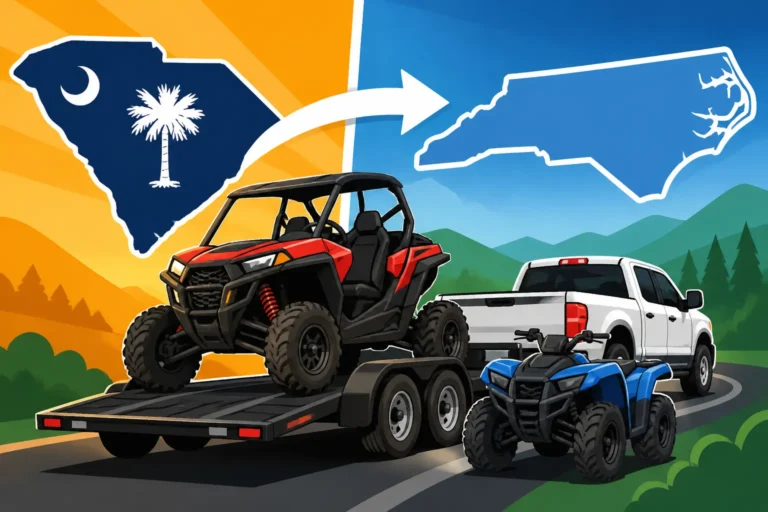
Moving to North Carolina with your beloved ATV, or buying a machine from a seller in a neighboring state like South Carolina or Virginia? The process is very similar to titling a used ATV purchased within North Carolina, but with a few extra steps. If your ATV was titled in another state, you'll bring that out-of-state title to the NCDMV. They will use this document to establish the ownership chain and issue you a new North Carolina title.
The key here is ensuring the out-of-state title is clear and properly assigned to you. If that state had a registration system, ensure any liens are released and that all previous owners have properly signed it over. You'll still need to complete the MVR-1 and MVR-60 forms, as well as pay the North Carolina Highway Use Tax based on the purchase price or fair market value. The DMV may also want to verify the VIN, especially if it's an older machine or one coming from a state with less stringent titling requirements for ATVs. Our detailed guide, [Buying an Out-of-State Machine for North Carolina], can walk you through the specific considerations for these transactions. Don’t assume because it was legal in one state, all documentation will transfer without question.
Dealing with Lost Titles or Missing Paperwork
This is arguably one of the most frustrating situations for an ATV owner: you've got the machine, but the title is nowhere to be found, or perhaps it was never issued in the first place, and the original bill of sale is lost to the ages. What do you do then? Don't panic, but prepare for a bit more legwork.
If you were the last titled owner in North Carolina and simply lost your title, you can apply for a duplicate title using Form MVR-4, Application for Duplicate Title. This is relatively straightforward as your ownership is already on file with the NCDMV. Read more about this process in [Replacing a Lost North Carolina ATV Title].
However, if you bought a used ATV and the seller never provided a title, or if the ATV was never titled, and you don’t have robust proof of ownership like an MSO or a strong bill of sale, things get trickier. In such cases, the NCDMV may require additional documentation or a surety bond to establish ownership before issuing a new title. This often involves filing additional affidavits, sometimes even requiring a certified inspection of the VIN by law enforcement. You might need to swear under oath that you're the rightful owner and explain the lack of documentation. It’s always best to try and track down the original seller or any previous owner to get a proper chain of documentation, but if that’s not possible, the DMV does have processes in place – they just require more effort and proof from you. This is precisely why obtaining a title, even when optional, is such a good safeguard against future headaches.
Costs and Considerations for Titling Your ATV
Okay, so you’re convinced that titling your ATV is a smart move, even if it's technically optional. Now, let’s talk practicalities: what’s it going to cost you, and how do you weigh those costs against the benefits? While I can't give you exact dollar figures (those can change and vary!), I can certainly explain the shape of the expenses involved and help you make an informed decision.
Breaking Down the Fees Involved
When you decide to title your ATV in North Carolina, you'll typically encounter two main financial components:
- The Title Fee: This is a relatively modest, flat fee charged by the NCDMV for processing your application and issuing the Certificate of Title. It’s a standard administrative charge for the service of creating and maintaining your ownership record.
- The Highway Use Tax (HUT): As we discussed earlier, this is the larger financial component. It's calculated as a percentage of the ATV's purchase price or fair market value. While this isn't an ongoing tax like property tax, it is a significant one-time expense at the time of titling.
In addition to these, there might be very minor fees for things like notary services if any of your forms require notarization, or for printing copies of documents. The actual specific amounts for these fees are published by the NCDMV and can be found on their official website or by calling a local license plate agency. It’s always a good idea to check the current rates just before you head to the tag office. For a detailed breakdown of what to expect, refer to our article on [What a North Carolina ATV Title Costs]. While these costs aren't exorbitant, they are something to factor into your budget when you acquire an ATV.
Weighing the Pros and Cons of Optional Titling
Now for the big decision point: is the investment in time and money for an optional title truly worth it for your situation? Let's quickly recap the upsides and downsides.
Pros of Titling Your ATV (Even When Optional):
- Irrefutable Proof of Ownership: This is the biggest one. A title provides clear, state-backed documentation that you own the machine, which is invaluable for peace of mind.
- Theft Deterrent and Recovery Aid: Makes it harder for thieves to resell your ATV and significantly easier for law enforcement to help you recover it if it's stolen.
- Smoother Sales and Purchases: Buyers are more confident when a title is available, potentially allowing you to command a better price and avoid lengthy explanations when you sell.
- Access to Financing: Absolutely essential if you plan to get a loan to purchase your ATV, as lenders require it to secure their interest.
- Easier Insurance Claims: Simplifies the process of proving ownership to your insurance company if you need to file a claim for damage or theft.
- Clarity for Joint Ownership or Estates: Clearly delineates ownership for multiple parties or when passing the machine through an estate.
Cons of Titling Your ATV (When Optional):
- Upfront Costs: You'll pay the title fee and the Highway Use Tax, which can add a notable amount to your initial investment.
- Time and Effort: It requires gathering paperwork, filling out forms, and potentially making a trip to the NCDMV, which takes time out of your day.
- Bureaucracy: Dealing with government paperwork, however straightforward, can be perceived as a hassle.
Ultimately, the decision comes down to your individual circumstances. If you're buying a very inexpensive, older machine purely for occasional farm work on private land, and you don't foresee ever selling it or needing a loan, perhaps the optional title isn't a high priority for you. However, for most riders who view their ATV as a significant investment, plan to sell it eventually, or want the absolute best protection against theft and complications, getting that North Carolina title is a no-brainer. It's a small administrative step that offers a massive amount of security and convenience for the lifespan of your machine. For many, the peace of mind alone is worth the modest fees and effort.
Disclaimer
This article is for general informational purposes only and does not constitute professional advice. Laws, prices and regulations vary by location and change over time. Consult a qualified professional for guidance on your specific situation.