Bringing a Machine From South Carolina
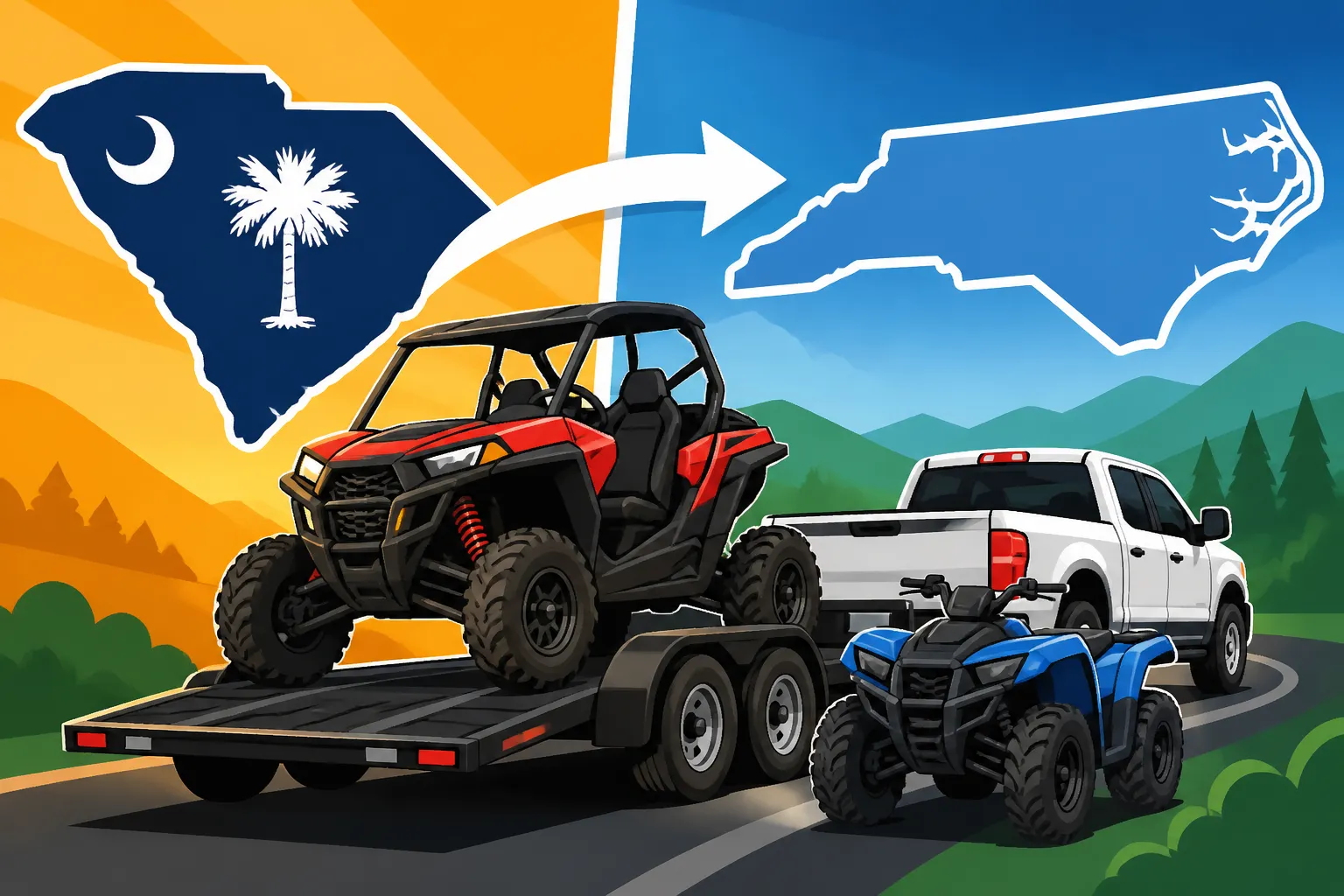
It can be incredibly frustrating to buy an ATV or UTV in a neighboring state like South Carolina, thinking you've snagged a great deal, only to hit a wall of confusion when you try to get it squared away back home in North Carolina. You might assume the process would be simple, especially since South Carolina has a different approach to off-road machine paperwork. This guide is here to walk you through exactly what you need to do to bring your new-to-you South Carolina ATV or UTV into North Carolina and get it properly titled, saving you headaches and potential legal hassles down the road.
Why Bringing a South Carolina Machine to North Carolina Can Be Tricky
Many riders assume that because North Carolina doesn't require ATVs or UTVs to be registered for off-road use, the paperwork for machines coming from other states will be a breeze. This assumption is particularly common when buying from South Carolina, where the rules for off-road vehicles can seem quite relaxed compared to other states. But here in the Tar Heel State, we have our own way of doing things, and understanding those nuances is key to a smooth transition.
South Carolina's Different Approach to ATV Ownership
One of the biggest sources of confusion stems from the fact that South Carolina typically doesn't title or register ATVs or UTVs that are exclusively used for off-road riding. For many folks in South Carolina, buying and selling an ATV can be as simple as a handshake and a cash exchange, with a basic bill of sale being the only documentation. This can give buyers the impression that the machine is "paperwork-free," or that a minimal receipt is all that's ever needed. You might have found a fantastic quad in a small town just over the border in South Carolina, and the seller hands you a simple, handwritten note, assures you it’s all you need, and sends you on your way.
The problem arises when you bring that machine across the state line into North Carolina. While that "paperwork-free" experience might work for continued off-road use within South Carolina, it often creates significant hurdles for North Carolina residents who want to establish clear ownership and protect their investment. Without proper documentation that meets North Carolina's standards, you can find yourself in a bind when you try to sell the machine later, secure a loan against it, or even prove it's yours if it ever goes missing.
Understanding North Carolina's Titling Mandate for ATVs
Here in North Carolina, while we don't have mandatory registration for ATVs used solely off-road, we absolutely have a robust system for titling them. In fact, obtaining a title for your ATV or UTV in North Carolina is highly recommended, even if it's not strictly mandated for every single off-road machine. The state offers and encourages titling as a way to formally record ownership. This becomes incredibly important for a number of reasons: for proving you actually own the machine, making it easier to sell down the line, and perhaps most critically, for protecting your asset in case of theft. Imagine trying to report a stolen ATV to law enforcement without any official document proving it belongs to you. It's an uphill battle no one wants to fight.
So, while your South Carolina seller might tell you that "ATVs don't need titles," they're speaking within the context of South Carolina law. North Carolina operates differently, and you'll want to bridge that gap with the right paperwork to protect yourself. Think of it as solidifying your ownership in a way that North Carolina understands and recognizes. For more details on this, you can look into [Titling an ATV in North Carolina Is Optional].
Essential Paperwork for a South Carolina to North Carolina Transfer
Bringing an ATV or UTV from South Carolina into North Carolina requires careful attention to documentation. Because South Carolina often doesn't issue titles for off-road machines, your success in North Carolina hinges almost entirely on the quality and completeness of your bill of sale and your subsequent interactions with the North Carolina Division of Motor Vehicles (NCDMV).
The Bill of Sale: Your Most Crucial Document
If your ATV or UTV doesn't come with an existing South Carolina title (which is common), the bill of sale becomes the single most important document you possess. This isn't just a casual receipt; it's your proof of purchase and the foundation of your North Carolina title application. A vague or incomplete bill of sale can grind your titling process to a halt at the NCDMV. You absolutely need a detailed, well-crafted bill of sale that leaves no room for ambiguity.
Here’s what your bill of sale must include to satisfy the North Carolina DMV:
- Full Names and Addresses: Of both the buyer (you) and the seller. This ensures clear identification of all parties involved in the transaction.
- Detailed Machine Description: This means the make, model, year, and crucially, the Vehicle Identification Number (VIN) of the ATV or UTV. Without a correct VIN, the DMV cannot process your application.
- Sale Date: The exact date the transaction took place.
- Purchase Price: The agreed-upon amount you paid for the machine. This is vital for calculating the [North Carolina's 3 Percent Highway Use Tax]. Even if it was a gift, the bill of sale should state that clearly and list a nominal value or fair market value.
- Signatures: Both the buyer's and the seller's signatures. If there are multiple sellers (e.g., co-owners), all must sign.
Imagine you bought a used side-by-side in Spartanburg from a private seller, and they scribbled "UTV, $5000" on a piece of notebook paper with just their first name. When you try to title that in North Carolina, the DMV clerk will likely reject it outright. They need to see all the details to ensure a legitimate transfer of ownership. Many riders find it incredibly helpful to use a standardized template for a bill of sale, ensuring all necessary fields are covered. Resources like LawDepot offer templates that can be customized for vehicle sales, helping you avoid these pitfalls and create a document that stands up to DMV scrutiny. This ensures that you have a comprehensive [A North Carolina Bill of Sale for an ATV] right from the start.
If a South Carolina Title Does Exist (Rare, But Possible)
While less common for off-road-only machines, it's not entirely out of the realm of possibility that a South Carolina ATV or UTV might actually have a title. This could happen if the machine was previously titled for some specific use, or perhaps was part of a street-legal conversion effort (though street-legal ATVs are rare). If you're lucky enough to acquire a machine with a South Carolina title, the process becomes a bit more straightforward, aligning more with how you'd title a car or truck.
In this scenario, you'll need the original South Carolina title, properly signed over to you by the seller. This typically involves the seller signing in a designated area to transfer ownership, and you signing as the new owner. It’s absolutely critical to ensure there are no active liens listed on the South Carolina title. If a lien is present, you'll need a lien release document from the lender before the North Carolina DMV will issue a clear title to you. Dealing with a [Titling a Machine With a Lien in North Carolina] can add extra steps and time, so always check for this upfront. Make sure all the information on the title matches the machine perfectly, especially the VIN.
The North Carolina Title Application (MVR-1) and Affidavit (MVR-60)
Regardless of whether you have a South Carolina title or just a bill of sale, you will be initiating a new title application in North Carolina. This primarily involves two key forms, which you can usually pick up at your local NCDMV tag agency or sometimes download online.
First up is the Form MVR-1, the North Carolina Title Application. This form is essentially your request to the state to issue a title in your name. You'll fill in all your personal details as the owner, along with comprehensive information about the ATV or UTV, matching everything exactly as it appears on your bill of sale (or the South Carolina title, if you have one). This includes the VIN, make, model, year, and purchase date. Be meticulous with this form; any discrepancies can cause delays. You can learn more about [North Carolina Title Application on Form MVR-1].
Next, and this is where the bill of sale truly becomes your hero for machines without a prior title, you’ll need Form MVR-60, the All-Terrain Vehicle Affidavit. This form is specifically designed for ATVs and UTVs that are being titled for the first time in North Carolina, especially those coming from states where titling isn't standard. On the MVR-60, you'll swear under penalty of perjury that you are the rightful owner of the machine, that it was not previously titled in North Carolina, and provide details about how you acquired it (i.e., through that comprehensive bill of sale). This affidavit essentially bridges the gap created by the lack of an official title from South Carolina, allowing the NCDMV to establish a new ownership record. Understanding [North Carolina Form MVR-60 Explained] is crucial for this process.
Navigating the North Carolina DMV Process
Once you've gathered all your essential paperwork, the next step is to visit a North Carolina NCDMV license plate agency. This can sometimes feel like a daunting task, but being prepared will make the experience much smoother.
What to Expect When You Visit a Tag Office
When you head to your local NCDMV license plate agency, make sure you have every single document in hand. This includes:
- Your completed North Carolina Title Application (Form MVR-1).
- Your completed All-Terrain Vehicle Affidavit (Form MVR-60), if you don't have a prior title.
- Your original, detailed bill of sale (or the properly signed-over South Carolina title, if applicable).
- A valid North Carolina driver's license or state ID.
- Proof of North Carolina residency (e.g., utility bill, lease agreement).
- Any lien release documents, if a previous lien was on an SC title.
- The necessary funds for the titling fee and the Highway Use Tax.
When you present your documents to the clerk, they will review everything meticulously. They'll verify the VIN, check the completeness of your bill of sale or South Carolina title, and ensure all forms are filled out correctly. One of the significant costs you'll encounter is the [North Carolina's 3 Percent Highway Use Tax], which is applied to the purchase price (or fair market value if the price seems unusually low or it was a gift). This tax is collected at the time of titling, similar to how sales tax is handled on other vehicle purchases. Be prepared for this calculation, as it's a mandatory part of the process. The titling fee itself is a separate, smaller charge, which you can learn more about in [What North Carolina Charges for an ATV Title].
Overcoming Potential Hurdles (No Title, Missing Info)
It’s not uncommon for riders to encounter a snag or two when trying to title an out-of-state ATV, especially one from a state with different rules like South Carolina. The most common hurdle, as we've discussed, is an insufficient bill of sale. If your bill of sale lacks crucial information, like a clear VIN, specific dates, or complete buyer/seller details, the NCDMV clerk will likely reject your application. They need to be able to trace the machine's ownership history accurately. This is another reason why using a structured document from a service like LawDepot for your bill of sale can prevent many headaches down the line. It's designed to prompt you for all the necessary information, including the all-important VIN.
Another potential issue could be a VIN discrepancy or a VIN that appears to be altered. The DMV takes VIN verification very seriously to prevent theft and fraud. If there's any question about the VIN, your application could be delayed, or you might be asked for further verification. Always double-check the VIN on your paperwork against the physical VIN on the machine before you even start the titling process. Read more about [Checking a VIN Before a North Carolina Purchase].
If you run into issues, don't get discouraged. Often, the solution is simply to obtain a more complete bill of sale from the seller, or to provide additional sworn statements if certain information is legitimately unavailable. It’s always a good idea to contact the NCDMV directly or visit their website for the most current forms and requirements, especially if you anticipate any unusual circumstances with your machine’s documentation. Being proactive and having all your ducks in a row can save you multiple trips to the tag office.
| Document Type | Required if SC Title EXISTS | Required if SC Title DOES NOT EXIST | Purpose |
|---|---|---|---|
| SC Title | Yes (Original, Signed Over) | No (not applicable) | Proof of previous ownership, transfer |
| Bill of Sale | Recommended | Yes (Detailed & Comprehensive) | Proof of purchase, value, and ownership transfer without a title |
| NC Title App. (MVR-1) | Yes | Yes | Your official request for an NC title |
| NC ATV Affidavit (MVR-60) | No | Yes | Sworn statement of ownership when no prior title exists |
| Proof of NC Residency | Yes | Yes | Confirms you are an NC resident |
| Valid NC ID | Yes | Yes | Identifies the applicant |
| Lien Release | Yes (if applicable) | No (not applicable) | Removes any previous financial claims on the machine |
| Funds for Fees/Tax | Yes | Yes | Covers titling fees and Highway Use Tax |
Why a North Carolina Title is Worth the Effort
You might be thinking, "This is a lot of work for a machine I'm only going to ride off-road!" And yes, it can feel like a bit of a bureaucratic maze, especially if you're coming from a state like South Carolina where the attitude towards ATV paperwork is generally more casual. However, putting in the effort to get your South Carolina-purchased ATV or UTV properly titled in North Carolina provides invaluable benefits that go far beyond just satisfying state requirements. It's about protecting yourself and your investment for the long haul.
Protecting Your Investment and Ensuring Legitimate Ownership
The most significant advantage of titling your ATV or UTV in North Carolina is establishing undeniable proof of ownership. Without a state-issued title, your ownership is largely based on a bill of sale, which, while crucial, can be easier to dispute or lose than a formal government document. This official record from the NCDMV offers a layer of protection that is simply unparalleled. Consider these real-world scenarios:
- Theft Recovery: Imagine your prized side-by-side disappears from your garage or a remote hunting camp. Reporting it stolen to law enforcement is a critical first step. But without a title, proving that the machine legally belongs to you can become incredibly difficult. A North Carolina title provides clear evidence, making it much easier for authorities to track, recover, and return your machine to you. You can understand more about [Why a Title Matters After Your Quad Is Stolen].
- Resale Value and Ease: When it comes time to sell your ATV or UTV, having a clear North Carolina title will make the process infinitely smoother and potentially increase its resale value. Buyers in North Carolina are savvy; they know that an untitled machine can be a headache, raising questions about its provenance and legitimacy. A clean title demonstrates that you are the rightful owner and that the machine has a clear history, instilling confidence in potential buyers. Selling a quad with no paperwork can significantly limit your pool of interested buyers and force you to accept a lower price.
- Securing a Loan: If you ever need to use your ATV or UTV as collateral for a loan, a lender will almost certainly require a title. Without it, the machine cannot be legally encumbered, making it impossible to use as security. This is a common reason why lenders insist on seeing a titled machine.
Ultimately, investing the time and effort into titling your South Carolina-sourced ATV or UTV in North Carolina is an investment in your peace of mind and the long-term security of your machine. It’s about ensuring that your hard-earned money is protected, and that you have all the necessary documentation to navigate any future situations, from routine sales to unforeseen emergencies. It's truly [Why a North Carolina Title Is Worth Having].
The Modified Utility Vehicle (MUV) Exception
While the primary focus for most ATVs and UTVs brought into North Carolina from South Carolina will be off-road titling, there is an important exception to be aware of: the Modified Utility Vehicle (MUV). If your machine meets very specific criteria and you intend to operate it legally on certain public roads in North Carolina, it must be fully titled and registered as an MUV. This is a far more involved process, requiring the machine to meet stringent equipment, dimension, and engine size requirements. These machines undergo a full titling process and receive a license plate, much like a conventional vehicle.
Most standard ATVs and UTVs will not qualify as MUVs, but if you happen to have a larger side-by-side that you are looking to modify for limited road use, understanding [The Modified Utility Vehicle in North Carolina] becomes critical. This path involves additional inspections, equipment modifications (like turn signals, a speedometer, and seat belts), and a much more comprehensive registration and titling process through the NCDMV. It’s not a route for the faint of heart, or for machines that don't precisely fit the state's narrow definition.
Bringing an ATV or UTV from South Carolina to North Carolina involves more than just crossing the state line. While South Carolina may have a relaxed approach to off-road machine documentation, North Carolina offers a clear titling process that, while optional for strictly off-road use, is highly recommended for protecting your investment. By securing a comprehensive bill of sale, diligently completing the North Carolina MVR-1 title application and MVR-60 affidavit, and navigating the NCDMV process with all your paperwork in order, you'll ensure legitimate ownership and peace of mind for years to come. Don't let differing state regulations catch you off guard; take the steps now to properly title your machine.
Disclaimer
This article is for general informational purposes only and does not constitute professional advice. Laws, prices and regulations vary by location and change over time. Consult a qualified professional for guidance on your specific situation.