Why a North Carolina Title Is Worth Having
It's a common scenario here in North Carolina: you've just bought an awesome ATV or UTV, or maybe you've had one for years, and you start wondering about the paperwork. Given that our state doesn't require registration for off-road machines, many folks naturally assume that means you don't need a title either. This assumption, while understandable, often leads to unnecessary headaches down the road. This comprehensive guide is here to shed light on why, even if it's optional, having a North Carolina title for your ATV or UTV is a profoundly wise decision that can save you from a whole lot of hassle and heartache later on.
Understanding North Carolina's Unique ATV Titling Situation
North Carolina has a somewhat distinctive approach when it comes to ATVs and UTVs. Unlike many states where these machines are required to be registered and titled much like a street-legal vehicle, our laws operate a little differently. This difference is often the source of confusion for riders, both seasoned and new.
The "No Registration" Confusion
One of the biggest misconceptions I hear from fellow riders is that because North Carolina doesn't require ATVs to be registered for off-road use, there's no need for a title either. It's a logical leap, right? If you don't need to register it, why bother with other paperwork? This line of thinking, however, often blurs the crucial distinction between registration and titling. Registration is typically about tracking a vehicle for operational purposes, often tied to road use or specific trail systems. It might involve annual fees, stickers, and compliance with certain equipment standards. But when it comes to ATVs here, we generally don't have that requirement for riding off-highway. If you're scratching your head about this, you might find our article [Why North Carolina Has No ATV Registration] really clarifies things.
However, a title is an entirely different beast. It's a legal document that primarily serves as irrefutable proof of ownership. Think of it like the deed to a piece of property, but for your machine. Without this fundamental document, proving that you are the rightful owner can become surprisingly difficult, especially if you ever face a situation where your ownership is challenged, like in the event of theft, a sale, or an insurance claim. The absence of a clear title can turn a straightforward situation into a convoluted legal tangle, leaving you feeling frustrated and vulnerable.
The Optional Nature of Titling an ATV in NC
It's true, for the vast majority of off-road ATVs and UTVs in North Carolina, obtaining a title is indeed optional. This means that if you buy a machine strictly for private land use and never plan to sell it, lend it, or use it as collateral, you could theoretically get by without a title. Many riders do, especially if they're buying an older, less expensive machine or one that's been in the family for generations. Our guide, [Titling an ATV in North Carolina Is Optional], dives into this in more detail.
However, the word "optional" doesn't mean "unnecessary" or "without benefit." While you might not be legally required to title your recreational ATV, there are specific circumstances where it becomes mandatory. For instance, if you're taking out a loan to purchase your machine, the lender will almost certainly require a title so they can record their lien. This protects their financial interest until the loan is paid off. Similarly, if your ATV qualifies as a Modified Utility Vehicle (MUV) and you intend to register it for limited public road use, then titling becomes a prerequisite. Beyond these specific legal requirements, the "optional" nature of titling simply offers you a choice, and that choice has significant implications for your peace of mind and financial security.
Protecting Your Investment: Proof of Ownership
Your ATV or UTV isn't just a toy; it's an investment, often a significant one. Just like you'd protect your car, home, or other valuable assets, a title provides a critical layer of protection for your off-road machine. It's the undisputed legal statement of who owns what, and that certainty is invaluable.
Establishing Clear Ownership for Future Sales
Imagine you've enjoyed your quad for years, and now it's time to upgrade or move on. You've cleaned it up, taken some great photos, and written a compelling advertisement. A potential buyer comes to look at it, kicks the tires, and asks the inevitable question: "Do you have the title?" If your answer is "no," you've just hit a major roadblock. For a buyer, purchasing an untitled machine is a huge red flag. They'll worry about its provenance: Was it stolen? Is there an undisclosed lien on it? Is the seller truly the rightful owner? This uncertainty can make it incredibly difficult to sell your ATV, or at the very least, you might have to significantly drop your asking price to entice a buyer willing to take the risk. You can learn more about this in [Selling an ATV in North Carolina].
Conversely, if you're the one looking to buy a used ATV and the seller tells you there's no title, proceed with extreme caution. Without a title, you have very little legal recourse if problems arise after the sale. You might write up a bill of sale, perhaps using a template from a service like LawDepot, but a bill of sale alone doesn't always provide the same legal weight as a state-issued title, especially if the machine's history is murky. A title, on the other hand, provides a clear chain of ownership, giving both buyer and seller confidence in the transaction and ensuring a smooth transfer of legal rights.
Safeguarding Against Theft and Recovery Challenges
One of every ATV owner's worst nightmares is waking up to find their beloved machine missing. The moment you realize your quad has been stolen, your mind races with questions: Can the police even track it? Will I ever see it again? This is precisely where a title proves its worth tenfold. If your ATV is titled in your name with the North Carolina DMV, that title links your ownership directly to the machine's Vehicle Identification Number (VIN).
When you report a theft, law enforcement officers can immediately enter the VIN into national databases, marking it as stolen. This makes it incredibly difficult for thieves to sell the machine through legitimate channels or title it in another state. Without a title, tracing ownership and proving that a recovered machine belongs to you becomes a much more arduous process, often involving affidavits and other proofs of purchase that might not be as ironclad. Our article, [Why a Title Matters After Your Quad Is Stolen], really emphasizes this point. A title acts as a verifiable fingerprint for your machine, significantly increasing the chances of its recovery and return to you.
Facilitating Financial and Legal Processes
Beyond simply proving ownership, a North Carolina ATV title opens doors to several financial and legal avenues that would otherwise be complicated or entirely closed off. It makes your machine a more tangible and recognizable asset in the eyes of institutions.
Securing Financing and Insurance
For many of us, buying a new or high-value used ATV means taking out a loan. Dealers, banks, and credit unions simply won't finance a purchase without a way to secure their investment. This is where the title becomes paramount. A title allows the lender to record a lien against the machine, legally establishing their interest until the loan is fully repaid. Without a title, there's no official mechanism for them to do this, making financing virtually impossible. So, if you're dreaming of that brand-new side-by-side but need a loan to make it happen, a title is a non-negotiable requirement. You can read more about this in [Why a Lender Insists on a Titled Machine].
Similarly, when it comes to insuring your ATV against damage, theft, or liability, many insurance providers prefer, and some even require, that the machine be titled. This isn't just about their internal policies; it's about verifying clear ownership. In the event of a claim – say, your ATV is damaged in an accident or stolen – the insurance company needs to confirm that you are indeed the legal owner before they pay out. A title streamlines this process, avoiding potential delays or complications during what is already a stressful time.
Simplifying Estate Planning and Inheritance
Life happens, and sometimes we need to plan for the future. An ATV title can greatly simplify estate planning. If you own a titled ATV, it's a clearly defined asset that can be seamlessly transferred to beneficiaries through your will or trust. The process for your heirs will be straightforward: they'll simply present the necessary probate documents and the existing title to the DMV to have it transferred into their name. Our post, [Titling an Inherited Machine in North Carolina], provides detailed steps for this.
Consider the alternative: you pass away, and your family discovers you owned an ATV but never titled it. Now, your heirs face the burden of proving ownership through old bills of sale, canceled checks, or sworn affidavits, perhaps even requiring additional legal steps. This can be a significant source of stress and additional expense during an already difficult time. By taking the simple step of titling your ATV, you provide a clear path for your loved ones to inherit and enjoy your machine without unnecessary bureaucratic hurdles.
Handling Liens and Co-Ownership
It's not uncommon for ATVs to be owned by more than one person, perhaps a couple, siblings, or even a small family business. A title provides the perfect legal framework for documenting co-ownership. Both names can be listed on the title, clearly defining who has an ownership stake. This foresight can prevent future disputes or misunderstandings, especially if one owner wishes to sell their share or if the machine's future needs to be decided.
Furthermore, if you've ever had a loan on your ATV, you're familiar with a lien. A title officially records the lender's interest in the machine until the loan is satisfied. Once you've paid off your loan, the lender will send you a lien release, and you can then apply to the DMV to have the lien removed from your title, making you the sole unencumbered owner. This clear documentation is essential for financial transparency and for managing your assets. Without a title, recording and releasing liens becomes a much more ambiguous and legally vulnerable process. For more specifics, check out [Titling a Machine With a Lien in North Carolina].
Avoiding Future Headaches and Transactional Hurdles
Think of your North Carolina ATV title as a long-term investment in convenience and peace of mind. While it might seem like just another piece of paper today, it can save you significant time, money, and stress down the line, especially when it comes to future transactions or even moving out of state.
Streamlining Future Resales and Trade-ins
When the time comes to sell your current ATV and upgrade to a newer model, a title makes the entire process incredibly smooth. A titled ATV is generally much more appealing to potential buyers. Why? Because the title provides instant verification of ownership, reduces the risk of buying a stolen machine, and simplifies the legal transfer. Buyers are often willing to pay closer to your asking price for a titled machine because they have confidence in the transaction. Trying to sell an untitled ATV can be a frustrating experience; you might encounter endless questions, requests for additional documentation, or outright refusal from serious buyers.
Similarly, if you're looking to trade in your ATV at a dealership, they will almost always prefer a titled machine. A clean title means less paperwork for them, less risk, and a quicker turnaround. An untitled machine, on the other hand, might be accepted for a significantly lower trade-in value, or they might even refuse to take it, leaving you to sell it privately with all the associated hassles. The process of [North Carolina ATV Title Transfer] is designed to be straightforward when a valid title is present, making your life much easier.
Navigating Out-of-State Travel and Potential Relocation
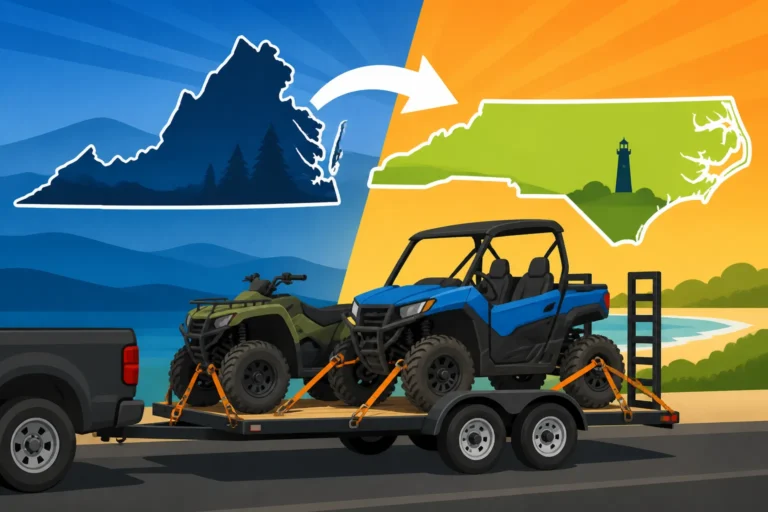
North Carolina's relaxed approach to ATV titling and registration is great if you plan to stay right here. But what happens if you decide to take your machine on a grand adventure to another state, or even move permanently? Many other states have much stricter laws regarding ATV ownership, often requiring mandatory titling or registration, even for off-road use. If you show up in a state like South Carolina or Tennessee with an untitled ATV from North Carolina, you could face significant delays, fines, or an inability to ride legally.
Having a North Carolina title in hand greatly simplifies the process of obtaining an out-of-state title or registration. It serves as your official proof of ownership from your previous state of residence, making the transition much smoother. Without it, you might be asked to jump through numerous hoops, provide affidavits, or even undergo vehicle inspections to verify ownership. This can be a huge headache, costing you time and money. Our article on [Buying an Out-of-State Machine for North Carolina] touches on similar issues from the other side, highlighting why clear titles are so important.
Proving Authenticity and Condition
A title isn't just about ownership; it can also be a valuable document for recording important details about your machine. In North Carolina, when you apply for a title, particularly for a used machine, there's a process for damage disclosure. This ensures that any significant damage (like flood damage or a salvage event) is noted, providing a more transparent history of the vehicle. This is formally documented on forms like [North Carolina Damage Disclosure on Form MVR-1A].
For a buyer, seeing a title with a clean history provides reassurance about the machine's past condition. For a seller, being able to present a clean, titled history adds credibility and value to their ATV. It helps verify the authenticity of the machine and can prevent disputes over undisclosed problems. While not all information is on a title, it's a foundational document that often helps piece together a more complete picture of your ATV's life.
The Titling Process: Demystifying the DMV
Okay, so you're convinced. You want to title your ATV in North Carolina. Don't let the idea of dealing with the Department of Motor Vehicles (DMV) intimidate you. While government offices can sometimes feel like a labyrinth, the process for titling an ATV in North Carolina is fairly straightforward, especially when you come prepared.
The Basic Paperwork and Steps
The first step is gathering the necessary forms and documentation. The primary form you'll need is the North Carolina Title Application, often referred to as Form MVR-1. This form is where you'll provide all the essential details about your ATV, including its make, model, year, and, crucially, its Vehicle Identification Number (VIN). Accurate reporting of the VIN is paramount, as this is the unique identifier that links your ownership to the specific machine. Our article on [North Carolina ATV VIN Requirements] explains why this number is so vital.
You'll also likely need an Affidavit of Fact, especially if you're titling a machine that has never been titled before or if you're missing some of the original ownership documents. This is typically Form MVR-60. This affidavit is a sworn statement affirming details about the machine's acquisition and ownership history. Sometimes, if you're missing key paperwork like a manufacturer's certificate of origin (MCO) or a previous title, you might need to submit additional supporting documents like a bill of sale, perhaps one created with the help of a service like LawDepot, or a statement from the previous owner. Always check the current requirements, as they can sometimes vary slightly depending on your specific situation.
Here's a simple breakdown of common forms you might encounter:
| Form Number | Description | Purpose |
|---|---|---|
| MVR-1 | Application for Certificate of Title | Main form for titling your ATV/UTV. |
| MVR-60 | Affidavit of Fact | Used when original proof of ownership (MCO/title) is unavailable. |
| MVR-1A | Damage Disclosure Statement | Required when titling a used vehicle to disclose major damage. |
| Bill of Sale | Proof of Purchase (optional, but highly recommended) | Documents the sale between private parties. Can be useful backup. |
Understanding Costs and Fees
Titling your ATV in North Carolina isn't free, but the costs are generally manageable and reflect the value you're gaining in legal protection. The main components of the cost typically involve a title fee and the North Carolina Highway Use Tax. While I can't give you exact numbers (these can change, and you should always verify current figures with the NC DMV directly), I can explain their nature.
The title fee is a relatively modest administrative charge for processing your application and issuing the certificate of title. Think of it as the cost of the legal paperwork itself. Then there's the Highway Use Tax, which often catches new ATV owners by surprise. Despite its name, this tax applies to the titling of vehicles that may never touch a public road, including ATVs. It's usually calculated as a percentage of the purchase price or the fair market value of your ATV. Our article, [North Carolina ATV Highway Use Tax], provides a more in-depth look at this. Essentially, it's a one-time tax assessed at the time of titling, similar to a sales tax in other contexts, and it goes towards the state's highway fund, even if your machine is purely for off-road fun. Specifically, it's [North Carolina's 3 Percent Highway Use Tax] on the machine's value. While it adds to the upfront cost, it's a necessary part of the titling process. You can find more details about the overall cost in [What a North Carolina ATV Title Costs].
Where to Go and What to Expect
Once you have all your forms filled out and your supporting documents in order, you'll need to visit a North Carolina DMV office or a authorized license plate agency. These agencies are equipped to handle title applications. It's always a good idea to check their website or call ahead to confirm their operating hours and any specific requirements, especially if you have a unique titling situation. You can find a nearby office to title your ATV by checking out [Where to Title an ATV in North Carolina].
When you arrive, make sure you have your completed forms, any original supporting documents (like a previous title, MCO, or notarized bill of sale), and payment for the applicable fees and taxes. Be prepared to answer questions about your ATV and its ownership history. The clerks are there to help, but they also need to ensure all legal requirements are met. Bringing a complete and organized packet of documents will make the process much smoother and faster. Sometimes, there might be a bit of a wait, but knowing you're walking out with that valuable piece of paper makes it all worth it.
Disclaimer
This article is for general informational purposes only and does not constitute professional advice. Laws, prices and regulations vary by location and change over time. Consult a qualified professional for guidance on your specific situation.