Filling Out the Title Application
Navigating the paperwork for your beloved ATV or UTV in North Carolina can feel like trying to cross a mud bog on a slick tire – confusing and a bit frustrating. Even though our state doesn't require registration for off-road machines, getting a title is a smart move that protects your investment and proves your ownership. This guide is here to help you conquer Form MVR-1, the official North Carolina Title Application, step by painstaking step, so you can title your machine with confidence.
Understanding the North Carolina Title Application (Form MVR-1)
When you're looking at that North Carolina Title Application, known officially as Form MVR-1, it can seem a little daunting. It's essentially the state's way of officially recognizing you as the owner of your ATV or UTV, even if it's not going to be street-legal. Think of it as the birth certificate for your machine in the eyes of the law. While you don't have to get a title for every off-road vehicle in North Carolina, it's almost always a good idea, providing a layer of security and legitimacy that you'll be thankful for down the road.
Why Titling Your ATV or UTV is a Smart Move in North Carolina
Many riders wonder why they should bother with a title if North Carolina doesn't require registration for their ATVs and UTVs. The truth is, a title is far more than just another piece of paper; it's your definitive proof of ownership. Imagine this scenario: your pride and joy disappears from your shed one night. Without a title, proving that machine belongs to you can become an absolute nightmare for law enforcement. A title provides that clear, indisputable evidence, making it much easier to recover a stolen machine and prosecute thieves.
Beyond theft protection, having a title significantly simplifies selling your ATV or UTV down the line. Buyers are often wary of machines without clear ownership documents, and for good reason. A clean title reassures prospective buyers that the machine isn't stolen, has no hidden liens, and that they're making a legitimate purchase. It also makes financing easier if you ever decide to take out a loan against your machine, as lenders almost always require a title as collateral. Essentially, a title adds value and peace of mind to your off-road adventures, making the effort of filling out the MVR-1 well worth it. You can learn more about this in [Why a North Carolina Title Is Worth Having].
What Makes the MVR-1 Different for Off-Road Vehicles?
The North Carolina MVR-1 form is primarily designed for vehicles that will be registered for highway use, like cars and trucks. However, it's also the form you'll use for titling your ATV or UTV, even though these machines generally aren't registered for the road in North Carolina. The key difference lies in what you don't do. For instance, you won't be paying annual registration fees or needing to pass a state inspection for your off-road machine, unlike a typical car.
When filling out the MVR-1 for an ATV or UTV, the focus shifts entirely to establishing ownership and calculating the [North Carolina's 3 Percent Highway Use Tax]. You'll still need to provide detailed vehicle information like the VIN, make, model, and year, but sections related to license plates, emissions inspections, or specific highway safety features will either be left blank or marked as "N/A" (Not Applicable). The DMV understands that these are specialized vehicles, but the MVR-1 is the foundational document for their record-keeping and for providing you with that crucial proof of ownership. This unique approach highlights how North Carolina handles off-road machines – recognizing their existence and ownership without forcing them onto the highway system.
Gathering Your Essential Documents Before You Start
Before you even think about putting pen to paper on that MVR-1 form, you absolutely need to get all your ducks in a row. Trying to fill out the application without all your supporting documents can lead to frustrating delays and multiple trips to the DMV. Trust me, you want to avoid that headache! This preparatory step is crucial for a smooth titling process, ensuring you have every piece of information and evidence the North Carolina Department of Motor Vehicles (DMV) will require.
The All-Important Bill of Sale or Previous Title
For most ATV and UTV titling situations, your journey begins with either a strong bill of sale or the machine's previous title. If you're buying a used machine from a private seller, a detailed bill of sale is your golden ticket. It should clearly state the buyer's name, seller's name, purchase date, purchase price, and a full description of the ATV or UTV, including the Vehicle Identification Number (VIN). Without this, the DMV might question the legitimacy of the sale. Services like LawDepot can be incredibly helpful for drafting a comprehensive and legally sound bill of sale, ensuring all the necessary details are covered. This protects both the buyer and the seller and makes your titling process much smoother. You can find more details in [A North Carolina Bill of Sale for an ATV].
If you're purchasing a new machine from a dealer, they'll typically provide you with all the necessary paperwork, including a Manufacturer's Statement of Origin (MSO) or Certificate of Origin (MCO), which serves the same purpose as a previous title. If you bought your machine out-of-state, you'll need its previous title from that state. For those rare instances where a previous title doesn't exist, perhaps for a very old machine or one that was never titled, North Carolina has a specific process involving an affidavit of ownership. This is when you'd look into [North Carolina Form MVR-60 Explained] as a potential solution, but always try to secure a title or robust bill of sale first.
Proof of Identification and Lien Information
When you head to the DMV, they need to verify who you are. This means bringing a valid, government-issued photo ID, such as your North Carolina driver's license or state ID card. Make sure it's current and clearly legible. This is a basic but often overlooked requirement that can hold up your application if you don't have it ready.
If you've financed your ATV or UTV, the bank or lending institution that holds the loan will have an interest, or "lien," on your machine. The DMV needs to know about this. You'll need to provide the full name and address of your lienholder on the MVR-1 form. This ensures that the state records their interest in the vehicle, and the title will typically be sent directly to the lienholder until the loan is paid off. Don't worry, once the loan is satisfied, the lienholder will release the lien, and you can then apply for a clean title in your name. This process is important for protecting the lender's interest and is a standard part of [Titling a Machine With a Lien in North Carolina].
Damage Disclosure and Affidavit of Ownership (If Applicable)
For any used ATV or UTV that you're titling, North Carolina requires a damage disclosure. This is typically handled on Form MVR-1A, the [North Carolina Damage Disclosure on Form MVR-1A]. This form asks if the vehicle has sustained any damage that cost more than 25% of its fair market retail value to repair. It's designed to protect buyers from unknowingly purchasing a heavily damaged vehicle, and you, as the titling owner, must complete it honestly.
In situations where you truly have no prior title or MSO for your ATV or UTV, you might need to complete the [North Carolina Form MVR-60 Explained], which is an Affidavit of Ownership. This form is used when other traditional proofs of ownership are unavailable. It allows you to attest under oath that you are the rightful owner and explain the circumstances. This usually involves providing additional supporting documentation, such as old registration cards (if applicable), repair receipts, or even sworn statements from previous owners, if you can track them down. It’s definitely a more involved process, so only go this route if you genuinely have no other options.
Step-by-Step Guide to Completing the MVR-1
Okay, you've gathered your documents, taken a deep breath, and you're ready to tackle the MVR-1. Remember, accuracy is key here. Any missing information or discrepancies can send your application right back to you, delaying your title. Let's walk through the important sections together, making sure you fill everything out correctly for your off-road machine.
Filling In Your Personal and Vehicle Information
The top sections of Form MVR-1 are pretty straightforward, but crucial. You'll need to accurately enter your full legal name, current address, and contact information. If there are multiple owners, ensure all names and addresses are included exactly as you want them to appear on the title. For instance, if you and a partner bought the UTV together, both your names should be listed.
Next up is the vehicle description. This is where your bill of sale or previous title really comes in handy. You'll need to provide:
- Vehicle Identification Number (VIN): This is the most critical piece of information. Double-check it against the VIN stamped on your ATV or UTV frame. Mistakes here will cause major problems. [North Carolina ATV VIN Requirements] details how important this is.
- Make and Model: For example, Polaris RZR, Honda Foreman, Kawasaki Teryx.
- Year: The model year of your machine.
- Body Style: Typically "ATV" or "UTV/Side-by-Side."
- Fuel Type: Usually "Gas" or "Electric."
- Odometer Reading: While ATVs and UTVs aren't usually known for high mileage like cars, you still need to provide the current odometer or hour meter reading. If your machine doesn't have one, you might indicate "Exempt" or "N/A" where appropriate, but if it has one, be precise.
It's common for folks to overlook a digit in the VIN or misspell a model name, causing unnecessary delays. Take your time, cross-reference with your other documents, and imagine a busy DMV clerk trying to decipher your handwriting!
Calculating the Highway Use Tax and Fees
This is the part that often catches people off guard when titling an ATV or UTV in North Carolina. While you're not paying traditional sales tax, you are subject to the [North Carolina ATV Highway Use Tax]. This tax is 3% of the purchase price or the fair market value of the machine, whichever is greater. For example, if you paid $10,000 for your UTV, your highway use tax would be $300. This tax is capped at a certain amount for highway vehicles, but for ATVs and UTVs, it generally applies to the full 3% of the value. If you purchased your machine for a very low price from a friend or family member, or as a gift, the DMV might use its own valuation guides to determine the fair market value, so be prepared for that possibility.
In addition to the highway use tax, there will be a standard title fee. This fee is generally a set amount per title application. Make sure you check the current fees on the DMV website or by calling your local tag office before you go, as these can change. You'll pay both of these amounts when you submit your application. To help you visualize the cost breakdown, here's a quick table:
| Item | Description | Cost Basis (Check Current Rates) |
|---|---|---|
| Title Fee | Standard fee for processing a new title. | Fixed amount per title application. |
| Highway Use Tax | State tax on the transfer of ownership of a vehicle. | 3% of the purchase price or fair market value, whichever is greater. |
| Lien Recording Fee | If a lienholder is recorded on the title. | Fixed amount, if applicable. |
| Plate Fee | Not applicable for most ATVs/UTVs, as they don't get license plates. | N/A |
Remember, the goal is to have all your figures ready and correct to avoid any hiccups at the counter. [North Carolina ATV Title Cost] breaks down these expenses further.
Signature Requirements and Notarization
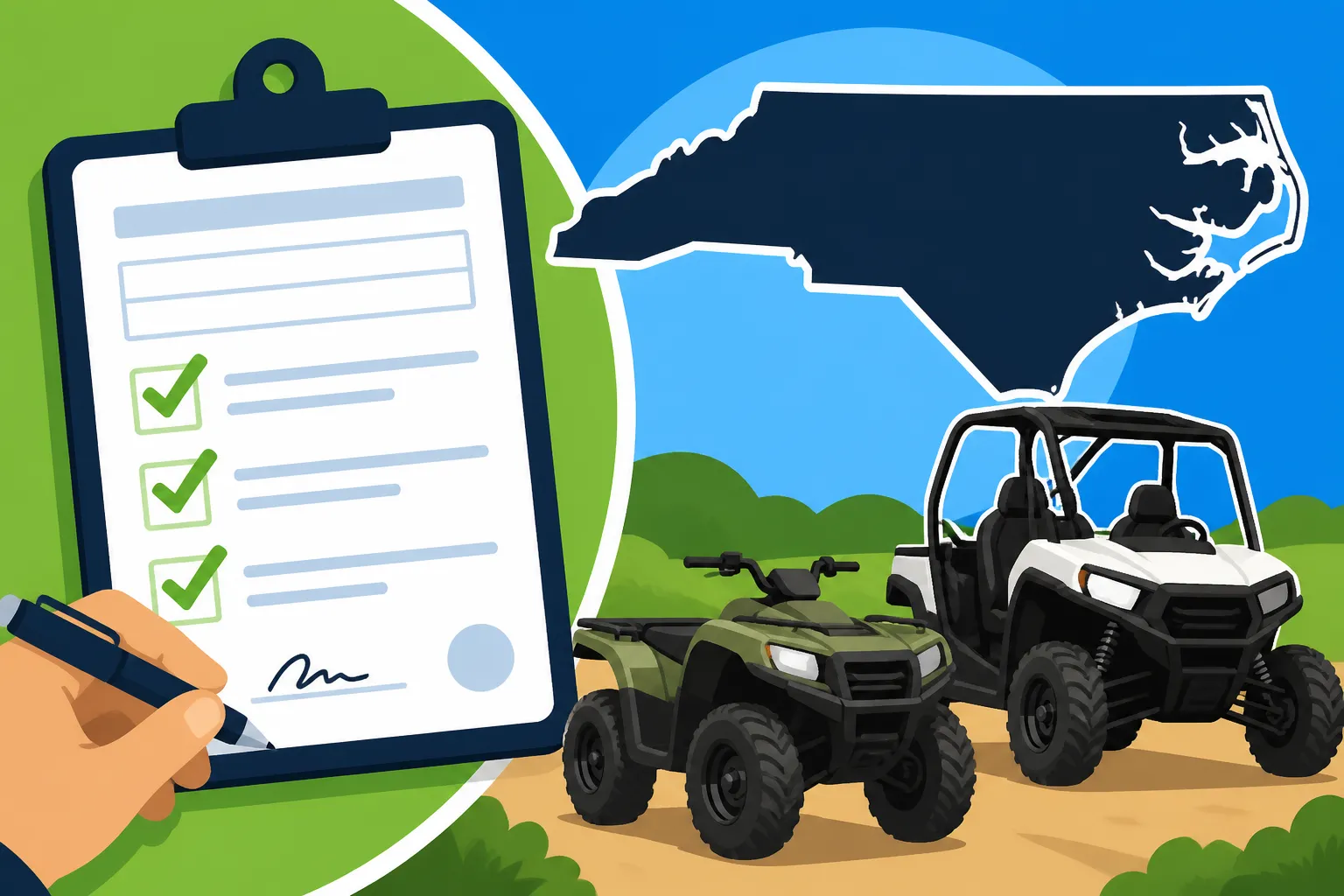
The final hurdle on the MVR-1 is ensuring all required signatures are present and, in some cases, notarized. For a standard title application, the owner (or all owners, if multiple are listed) must sign and date the form. Your signature is essentially your legal affirmation that all the information provided is true and accurate to the best of your knowledge.
There are specific circumstances where notarization comes into play. If you're using Form MVR-60 (Affidavit of Ownership) because you don't have a previous title, that document must be signed in the presence of a notary public. The notary will verify your identity and witness your signature, adding another layer of legal validity. Always read the instructions carefully for both the MVR-1 and any supplementary forms you're submitting to determine if notarization is required. While your primary goal is Filling Out the Title Application, sometimes other forms, like the affidavit, play a supporting role and have their own specific signature and notarization rules. Don't skip this step – a missing notary stamp when one is required is an instant denial of your application.
Submitting Your Application and What Comes Next
You've done the hard work of gathering documents and filling out the form. Now comes the moment of truth: submitting it to the North Carolina DMV. This isn't just about handing over paper; it's about ensuring your application is processed efficiently so you can get that title in your hands. Knowing what to expect during this final stage can save you a lot of anxiety.
Where and How to Submit Your MVR-1
In North Carolina, the most common way to submit your MVR-1 title application for an ATV or UTV is by visiting a local NCDMV license plate agency (often called a "tag office"). These offices are scattered throughout the state, from [Buying a Quad in Montgomery County] to those in the Piedmont region. It's usually best to go in person, especially for a first-time title application, because a clerk can review your documents and spot any issues immediately. This face-to-face interaction can save you the frustration of having your application mailed back for corrections.
When you go, make sure you have:
- Your completed MVR-1 form and any supporting documents (bill of sale, MSO, MVR-1A, MVR-60, etc.).
- Your valid photo ID.
- Payment for the title fee and highway use tax. Most offices accept cash, checks, and major credit/debit cards, but it's always wise to confirm their accepted payment methods beforehand.
While some simpler transactions might be possible by mail, for a new title application, particularly with a machine that isn't typically registered, an in-person visit is highly recommended to ensure everything is correct from the start. This allows you to walk out with peace of mind, knowing your application has been received and is being processed. [Where to Title an ATV in North Carolina] offers more guidance on locations.
What Happens After You Submit Your Paperwork
Once you've handed over your application and payment at the tag office, the clerk will typically give you a temporary receipt. This receipt serves as proof that you've submitted your application and paid the necessary fees. Hold onto this document! It's your only official record until your actual title arrives.
The North Carolina DMV then processes your application. This involves verifying the information, checking for any liens, and preparing the official title document. The processing time can vary, but generally, you can expect to receive your physical title certificate in the mail within a few weeks. It's usually not an instantaneous process, so don't expect to walk out with the title in hand on the same day. While waiting, you might wonder [How Long the DMV Takes to Mail a Title].
If there are any issues with your application that the clerk didn't catch, or if further information is required, the DMV will usually contact you by mail. This is why having accurate contact information on your MVR-1 is so important. Patience is key during this waiting period, but once that title arrives, you'll have the indisputable proof of ownership for your ATV or UTV, providing security and simplifying any future transactions involving your machine.
Disclaimer
This article is for general informational purposes only and does not constitute professional advice. Laws, prices and regulations vary by location and change over time. Consult a qualified professional for guidance on your specific situation.