North Carolina ATV Title Help
It’s a common scenario across the Tar Heel State: you’ve just bought an ATV or UTV, maybe from a local dealer in the Piedmont, or perhaps a sweet deal from a private seller near the Uwharries. You’re excited to hit the trails, but then you start hearing whispers about titles, registration, and highway use tax, and suddenly, what seemed like a simple purchase feels like a trip down a bureaucratic rabbit hole. Many riders find themselves scratching their heads, wondering if they even need a title for their off-road machine in North Carolina, especially when there’s no official ATV registration to worry about. This guide will cut through the confusion, explaining exactly why and how to title your ATV or UTV in North Carolina, outlining the paperwork you’ll need, and walking you through the process step-by-step.
Understanding North Carolina's Unique Approach to ATV Titling
North Carolina has a reputation for being a bit different when it comes to off-road vehicles. While many states require ATVs and UTVs to be registered for trail use or even for just owning them, North Carolina stands out. There’s no statewide registration system for ATVs, which often leads to the mistaken belief that there's no official paperwork at all. However, while you don't register your ATV, getting a title is a completely separate, and often highly recommended, process.
Why Titling Isn't Always Black and White
The core of the confusion for many riders stems from the fact that North Carolina does not require you to register your ATV. You won't find yourself needing to slap a license plate or a state decal on your machine just to ride it on designated trails or private land. This lack of registration sometimes lulls people into thinking they don't need any official documents from the state. But here's the kicker: while registration for general ATV use isn't a thing, the state does offer and manage titles for these machines through the Division of Motor Vehicles (DMV). So, you're not registering it, but you definitely can title it, and in many cases, you really should. It's an optional step, yes, but one with significant advantages that can save you a lot of headaches down the road. This distinction is crucial to grasp, as it explains why so many riders feel caught between conflicting pieces of advice. To learn more about this, you can look into [Why North Carolina Has No ATV Registration].
Without a clear registration mandate, the decision to title often falls to the individual owner, which can feel daunting. You might hear from seasoned riders that they've never bothered with a title, especially if they only ride on their own land. And while that might work for them, it's not always the best advice for everyone. The gray area surrounding the "optional" nature of titling means that unless you understand the benefits, it's easy to just skip it. This guide aims to clear up that ambiguity, making it easier for you to make an informed decision about your own machine.
The Benefits of Having a North Carolina ATV Title
So, if it’s not required, why go through the hassle of titling your ATV or UTV in North Carolina? The answer is simple: security and peace of mind. A title is the legal document that officially proves you own the machine. Think of it as your ATV's birth certificate and deed rolled into one. Without it, proving ownership can become incredibly difficult, especially in specific situations.
Consider the unfortunate event of theft. If your prized quad disappears from your garage or trailer, and you don't have a title, reporting it stolen and, more importantly, recovering it, becomes a much more complex ordeal. Law enforcement needs verifiable proof of ownership to help you, and a state-issued title is the gold standard. Without that piece of paper, it’s often just your word against a thief's, which is a position no one wants to be in. A title simplifies the entire process of involving the authorities and getting your machine back.
Beyond theft, a title is indispensable when you decide to sell your ATV. Most reputable buyers will insist on a clean title to ensure they're purchasing a legitimate machine and to avoid any future ownership disputes. Trying to sell an ATV without a title can drastically reduce its value and limit your pool of potential buyers. You might only attract cash buyers willing to take a risk, often at a significant discount. Conversely, if you're the buyer, always insist on seeing the title before money changes hands. This is a critical step in [Buying a Used ATV in North Carolina]. Furthermore, if you ever plan to finance an ATV purchase, whether new or used, lenders almost always require the machine to be titled in your name, allowing them to record a lien against it as collateral. Without a title, securing a loan for your off-road adventures becomes virtually impossible. Ultimately, [Why a North Carolina Title Is Worth Having] boils down to safeguarding your investment and streamlining future transactions.
The Essential Paperwork for a North Carolina ATV Title
Navigating the paperwork for titling an ATV in North Carolina can feel like deciphering an ancient scroll, but it's entirely manageable once you know which forms you need and what information they require. The North Carolina Division of Motor Vehicles (DMV) is the agency that handles all titling processes, and they have specific forms for specific situations. Don't worry, we'll break them down so you know exactly what to look for.
Getting Your Hands on the Right Forms
The primary form you'll need is the North Carolina Title Application, Form MVR-1. This is the foundational document for almost any titling process in the state. It asks for basic information about you, the owner, and the specifics of your ATV or UTV, including its Vehicle Identification Number (VIN), make, model, and year. You’ll also need to provide details about how you acquired the machine. This form is standard for all vehicle titles, not just ATVs, so you might recognize it if you've titled a car or truck before.
Next up, and often a source of confusion, is the North Carolina Form MVR-60, Affidavit of Ownership for an All-Terrain Vehicle. This form is specifically designed for ATVs and UTVs that are being titled for the very first time in North Carolina, or if you simply don't have a prior title or certificate of origin for your machine. This is your go-to form if you bought an older quad without any paperwork, or perhaps a homemade machine. It essentially allows you to swear under oath that you are the rightful owner, providing the necessary details to get a title issued. Understanding [North Carolina Form MVR-60 Explained] is crucial for many private sale scenarios.
You might also encounter North Carolina Form MVR-59, Affidavit of Exemption from Highway Use Tax. This form is vital if you believe your ATV purchase qualifies for an exemption from the state's Highway Use Tax (which we'll discuss in more detail shortly). And finally, if you're titling a used machine, you'll need to fill out North Carolina Damage Disclosure on Form MVR-1A. This form requires the seller (or you, if you're selling) to disclose any damage that exceeds certain thresholds. For general sales and ownership documentation, especially for private party transactions, online resources like LawDepot can be incredibly helpful for creating a thorough bill of sale or other agreements that complement the official DMV forms.
Navigating the North Carolina Highway Use Tax
Ah, the North Carolina Highway Use Tax (HUT). This is another aspect of vehicle ownership in the state that often catches people off guard. Unlike a traditional sales tax, the HUT is levied when a vehicle is titled in North Carolina, and it applies to ATVs and UTVs too. The standard rate is 3% of the machine's retail value, with a cap on the maximum amount for certain vehicles (though ATVs typically fall below this cap). So, when you go to title your machine, be prepared to pay this tax. It's often misunderstood because it's collected at the titling point, not necessarily at the point of sale, especially for private transactions. This is where [North Carolina's 3 Percent Highway Use Tax] comes into play.
The tricky part for many is figuring out the "retail value." If you bought your ATV from a licensed dealer, the retail value will generally be the purchase price you paid. For private sales, the DMV might use a recognized valuation guide or the declared purchase price on your bill of sale. It's always a good idea to have a realistic purchase price documented, especially if you used a template from LawDepot for your bill of sale, as it will be the basis for your tax assessment.
However, there are exemptions to the Highway Use Tax, and this is where [North Carolina Form MVR-59 Explained] becomes your friend. Common exemptions include vehicles transferred between immediate family members (spouse, parent, child, grandparent, grandchild), gifts, or machines that have already had the tax paid on them in North Carolina (like a trade-in where the tax was paid on the new machine). If you believe your purchase falls under one of these categories, you'll need to fill out the MVR-59 affidavit, certifying your exemption. Make sure you understand the criteria for these exemptions thoroughly, as incorrect claims can lead to delays or penalties.
Step-by-Step: How to Title Your ATV in North Carolina
Once you’ve gathered your forms and wrapped your head around the Highway Use Tax, the actual titling process in North Carolina is fairly straightforward. It largely depends on whether you're buying a brand-new machine from a dealer or a used one from a private seller, and critically, whether there's a previous title in existence.
Preparing for Your DMV Visit or Mail-In
Before you even think about heading to a North Carolina DMV office or dropping an envelope in the mail, meticulous preparation is key. This step can save you countless hours of frustration and multiple trips. First and foremost, you'll need your identification, typically a valid North Carolina driver's license or state ID. Then, gather all relevant purchase documentation. This will include a bill of sale (even if handwritten, though a professional template from a site like LawDepot can add credibility), any previous title certificate from the seller (if applicable), or a Manufacturer's Certificate of Origin (MCO/MSO) if you're the first owner. Make sure your bill of sale clearly lists the buyer and seller, the purchase price, the date of sale, and the complete Vehicle Identification Number (VIN) of the ATV. Don't forget to get signatures from both parties!
For used machines, you absolutely must verify the VIN on the paperwork matches the VIN stamped on the ATV itself. A mismatch is an immediate red flag and will halt your titling process. This is why [Checking a VIN Before a North Carolina Purchase] is such a critical step. Also, ensure you have proof of payment for the machine. If you're relying on the MVR-60 affidavit for machines without previous titles, you'll want any supporting evidence of your ownership history you can muster, such as a previous bill of sale, even if it's informal. Finally, make sure all your chosen DMV forms are filled out completely and accurately. Any blank fields or errors can lead to your application being rejected.
The Titling Process for New and Used Machines
The path to a North Carolina ATV title varies slightly depending on your purchase.
-
New Machines from a Dealer: This is usually the easiest route. When you buy a brand-new ATV or UTV from a licensed dealer in North Carolina, they typically handle all the titling paperwork for you. They’ll collect the necessary information, process the Highway Use Tax, and submit everything to the DMV on your behalf. You'll usually receive your title in the mail several weeks later. However, don't assume they'll do everything. Always confirm what services they're providing and what, if anything, you need to do yourself. Sometimes, especially with smaller dealers, they might only prepare the forms and expect you to submit them. Always clarify this at the point of sale.
-
Used Machines from a Private Sale (with a title): If you're buying a used ATV and the seller has a clean North Carolina title in their name, the process involves a title transfer. The seller will sign over the existing title to you. You'll then take this signed-over title, along with your completed Form MVR-1 (Application for Certificate of Title), and if applicable, the MVR-1A (Damage Disclosure) and MVR-59 (Highway Use Tax Exemption), to the DMV. The DMV will verify the signatures, collect the Highway Use Tax (unless exempt), and issue a new title in your name. Make sure the seller fills out their portion of the existing title accurately, including the sale date and price, and that their signature matches the name on the title.
-
Used Machines from a Private Sale (without a title): This is where it gets a bit more involved, and where [North Carolina Form MVR-60 Explained] really shines. If you purchase an ATV or UTV that has never been titled in North Carolina, or if the seller has lost the original title and cannot obtain a duplicate, you'll need to submit the MVR-60 Affidavit of Ownership. Along with this affidavit, you’ll submit the MVR-1 (Title Application), a bill of sale (even if informal, documenting the transfer of ownership), and any other supporting documents you might have, such as old registration cards from another state (if applicable), or a copy of the Manufacturer's Certificate of Origin (MCO) if you manage to track it down. The MVR-60 essentially allows you to attest to your ownership in the absence of a traditional title chain. The DMV will review your application and, if satisfied, issue you a new North Carolina title. This process may take a bit longer as the DMV might need to perform additional checks to confirm legal ownership.
What to Expect at the North Carolina DMV
Walking into a DMV office can sometimes feel like stepping into a waiting game. To minimize your wait and ensure a smooth experience when titling your ATV, here are a few tips. First, consider making an appointment online if your local DMV office offers that option – it can be a real time-saver. When you arrive, be prepared for queues, especially during peak hours. Bring all your paperwork, neatly organized, and multiple forms of payment, as some offices may have specific requirements or limitations on what they accept. You'll pay both the titling fee and the Highway Use Tax (if applicable) at the counter. [What a North Carolina ATV Title Costs] will generally include a flat title fee plus the 3% HUT.
The DMV clerk will review all your documents meticulously. They will look for complete forms, correct VINs, proper signatures, and ensure all taxes and fees are calculated. Don't be surprised if they ask you questions about your purchase or the information on your forms. Be patient and polite; their job is to ensure everything is legitimate and accurate. If anything is incorrect or missing, they will usually explain what needs to be fixed. It’s not uncommon for minor issues to arise, so having extra copies of documents or a fully charged phone to access digital records can be a lifesaver. Once everything is approved, they will process your payment, and you'll typically receive a temporary receipt. Your official title certificate will then be mailed to you, usually within a few weeks. It's important to keep that temporary receipt as proof until your title arrives.
Special Circumstances and Common Pitfalls in North Carolina ATV Titling
Even with a clear process, sometimes unique situations or unexpected roadblocks can pop up. Knowing how to handle these special circumstances can prevent delays and make your titling journey a lot smoother.
Dealing with No Prior Title or Missing Paperwork
This is arguably the most common headache for private buyers of older ATVs in North Carolina. Many older machines simply never had a title issued, or the paperwork has been lost over decades of ownership changes. As we discussed, the North Carolina Form MVR-60, Affidavit of Ownership for an All-Terrain Vehicle, is specifically designed for these situations. It allows you to formally declare your ownership under oath. It's crucial that you provide as much detail as possible on this form, including how and when you acquired the machine, from whom, and any supporting documentation, however informal. This is exactly [What the All-Terrain Vehicle Affidavit Actually Proves].
If you're dealing with a situation where the machine never had a VIN, or the existing VIN is unreadable, you might face an even greater challenge. The DMV generally requires a discernible VIN to issue a title. In very rare cases, if your ATV is a home-built machine or truly lacks any identifiable VIN, you might need to go through a process to have the North Carolina DMV assign a VIN. This is a complex procedure, usually involving an inspection and detailed paperwork proving the origin of parts, and it’s much more common for custom-built cars than for ATVs. For most factory-built ATVs, there will be a VIN, even if it's hidden or dirty, so do a thorough search before assuming one doesn't exist.
Titling a Machine with a Lien or Multiple Owners
When you buy an ATV that has an existing lien on its title, it means a lender has a financial interest in the machine. Before you can get a clean title in your name, that lien must be satisfied and released. Typically, the seller is responsible for paying off their loan, and once that's done, the lender will send a lien release document to the seller or directly to the DMV. You'll need this official lien release document when you go to title the ATV in your name. Without it, the DMV cannot transfer the title free and clear. Always confirm with the seller that any liens have been or will be cleared before you finalize the purchase. This is a crucial step in [Titling a Machine With a Lien in North Carolina].
If you're purchasing an ATV with another person, or if you simply want to add another name to your existing title, you'll need to ensure both names are correctly placed on the MVR-1 Title Application. You can choose to have ownership listed as "OR" (meaning either owner can sell or make decisions independently) or "AND" (meaning both owners' signatures are required for any transaction). This decision has significant legal implications, especially if one owner later wants to sell or if there's a dispute. For clarity in co-ownership, especially when buying privately, creating a formal agreement using a template from a service like LawDepot can prevent future misunderstandings. It's a good idea to discuss these options with anyone else who will be on the title.
Bringing an Out-of-State ATV to North Carolina
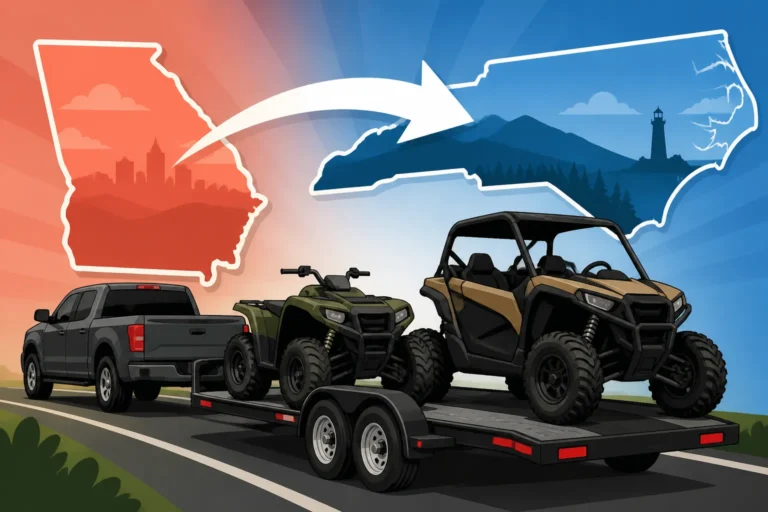
Moving to North Carolina with your ATV, or buying one from a neighboring state like Virginia or South Carolina, can introduce another layer of complexity. Different states have different rules for ATV registration and titling. Some states might issue titles that look different from North Carolina's, or they might not title ATVs at all.
If you're bringing an ATV from a state that does issue titles, you'll generally follow the process for titling a used machine with a title, as outlined above. You'll present the out-of-state title, along with your completed MVR-1, and pay the North Carolina Highway Use Tax (unless an exemption applies). The North Carolina DMV will then issue a new title. Ensure the out-of-state title is properly signed off by the previous owner, and that all details match. [Buying an Out-of-State Machine for North Carolina] often means doing a little extra homework.
However, if you're bringing an ATV from a state that does not title these machines, or if the previous owner never obtained a title (even if one was available in their state), you'll likely need to use the MVR-60 Affidavit of Ownership, just like for a North Carolina machine without a prior title. In such cases, having a clear bill of sale and any other documentation from the prior state (like old registration cards, if applicable) becomes even more vital to prove your legitimate ownership to the North Carolina DMV. The key is to be prepared for the fact that North Carolina won't simply "reciprocate" or automatically accept another state's approach, especially if that state doesn't issue a formal title for ATVs.
| Scenario | Key Forms Required | Key Action/Consideration |
|---|---|---|
| New ATV from Dealer | MVR-1 | Dealer usually handles all paperwork; confirm what they submit. |
| Used ATV with NC Title | MVR-1, Signed-off NC Title, MVR-1A, (MVR-59 if exempt) | Ensure seller signs title correctly, pay HUT. |
| Used ATV, No Prior Title | MVR-1, MVR-60, Bill of Sale | Provide detailed ownership history on MVR-60, DMV scrutiny possible. |
| Used ATV, Out-of-State Title | MVR-1, Out-of-State Title, MVR-1A, (MVR-59 if exempt) | Verify out-of-state title integrity, pay NC HUT. |
| Used ATV, Out-of-State (No Title Issued in Origin State) | MVR-1, MVR-60, Bill of Sale, any other ownership proofs | Be prepared to justify ownership without a traditional title chain. |
Disclaimer
This article is for general informational purposes only and does not constitute professional advice. Laws, prices and regulations vary by location and change over time. Consult a qualified professional for guidance on your specific situation.