Titling a Homebuilt Machine in North Carolina
You've poured your heart, sweat, and probably a fair bit of wrench grease into building your custom ATV or UTV. It's a true masterpiece, a unique machine born from your vision. But now you're staring at it, feeling that familiar sigh of frustration because you know the next hurdle isn't mechanical – it's the dreaded paperwork. How on earth do you title a machine that didn't roll off a factory line with a shiny VIN sticker? This guide is here to walk you through the often-confusing process of getting a legitimate North Carolina title for your homebuilt off-road creation, ensuring your blood, sweat, and gears are legally recognized.
Why Titling Your Custom Creation Matters in North Carolina
Even though North Carolina doesn't require registration for off-road use of ATVs and UTVs, don't let that lull you into thinking a title for your homebuilt machine is optional or unnecessary. For custom builds, a title goes far beyond just proving you can ride it in the woods. It's the official badge of ownership, and without it, you could face a whole heap of headaches down the line.
Establishing Legal Ownership and Protection
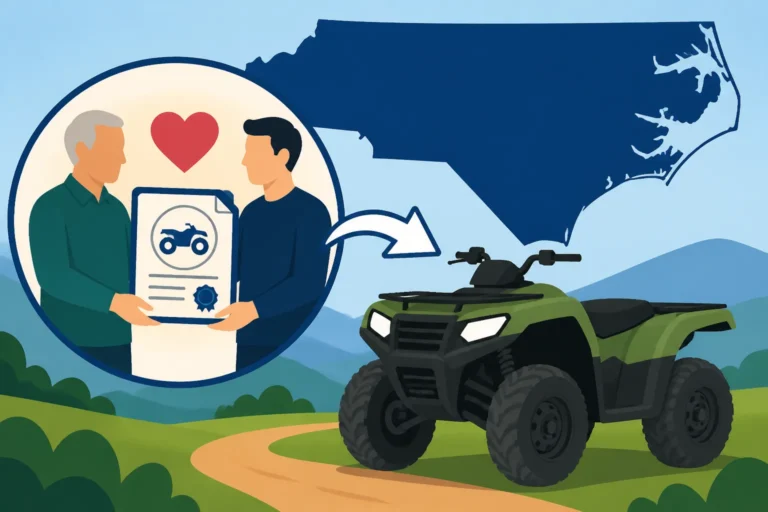
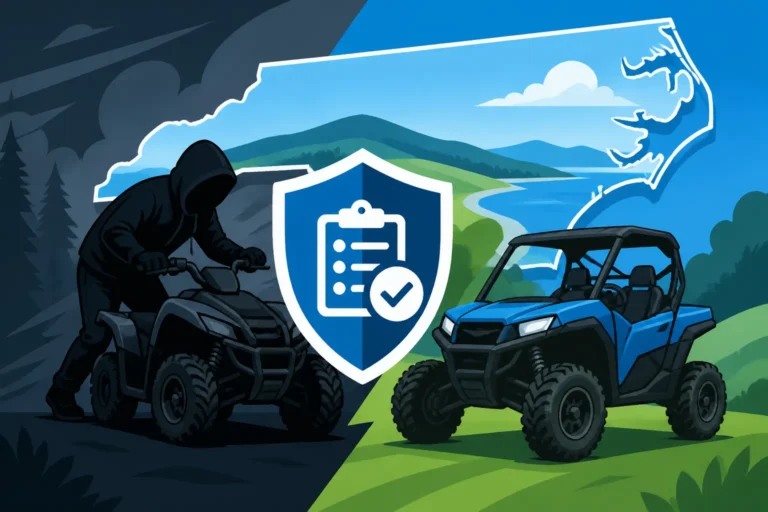
Imagine spending countless hours meticulously fabricating, welding, and assembling your dream machine, only to have it stolen. Without a title, proving that machine is legally yours becomes an uphill battle of epic proportions. The North Carolina DMV, law enforcement, and insurance companies rely heavily on official titles to establish who the rightful owner of a vehicle is. When your homebuilt creation has a title, it provides a clear, undeniable record of your ownership. This isn't just about peace of mind; it's about robust legal protection. If your prized possession ever goes missing, a title makes it significantly easier for authorities to track it, recover it, and return it to you. It's a foundational document, much like the deed to your house, that solidifies your claim. Even though [Titling an ATV in North Carolina Is Optional] for some, for a homebuilt, it transforms "optional" into "essential" if you want full legal security.
The Importance for Future Sales and Insurance
Let's be real: no one builds a machine thinking they'll sell it tomorrow, but circumstances change. When that day eventually comes, trying to sell a homebuilt ATV or UTV without a title is like trying to sell a house without a deed. Most reputable buyers will be wary, if not outright refuse, to purchase a machine without clear ownership papers. They'll have concerns about potential liens, previous owners, or even stolen parts. A title provides transparency and assures the buyer that they are getting a legitimate machine, making your custom build far more marketable and valuable.
Beyond sales, consider insurance. If you've invested heavily in your homebuilt project, you'll likely want to protect that investment with insurance. Insurance companies, much like buyers, need clear proof of ownership before they'll issue a policy. Without a title, getting comprehensive coverage for theft, damage, or liability could be incredibly difficult, if not impossible. They need a verifiable vehicle identification number (VIN) on a title to properly identify and cover your machine. Without this, your custom pride and joy is essentially an uninsured, unproven asset, leaving you vulnerable to financial loss. This is precisely [Why a North Carolina Title Is Worth Having], especially for a unique, homebuilt machine.
Navigating the Unique Challenges of a Homebuilt VIN
This is where the rubber meets the road, or rather, where your custom frame meets the paperwork. When you've built a machine from the ground up, you don't have the luxury of a manufacturer-stamped VIN. This particular challenge is often the biggest hurdle for custom builders, but it's not insurmountable.
What Happens When There's No Manufacturer VIN
A factory-produced ATV or UTV comes with a 17-character Vehicle Identification Number (VIN) that tells a whole story about the machine: its manufacturer, country of origin, engine size, model year, and more. This VIN is the machine's fingerprint, unique and universally recognized. When you're building a machine in your garage, obviously, you don't get that. Your frame might be custom-fabricated, or perhaps it's a heavily modified frame from an older, untitled machine. This absence of a manufacturer's VIN means the standard titling process needs a detour.
The North Carolina Division of Motor Vehicles (NCDMV) can't title a vehicle without a unique identifier. So, for your homebuilt machine, the solution is to apply for a state-assigned VIN. This isn't just a formality; it's a critical step that officially brings your creation into the system. You can't just make one up or stamp random numbers on your frame. The state has a specific process for [Getting a VIN Assigned by the DMV] that involves proving the machine's origin and undergoing an inspection. This assigned VIN will then be permanently affixed to your machine and recorded on your title, making it a legitimate, trackable vehicle in North Carolina.
Proving the Provenance of Your Parts
One of the DMV's main concerns when titling a homebuilt machine is ensuring that no stolen parts were used in its construction. This is where your meticulous record-keeping comes into play. You need to be able to show where the major components of your build came from. Think of it like an investigation: the DMV wants to trace the lineage of your custom creation.
This means you should hold onto every single receipt for every major component you've purchased. Engine, transmission, frame materials, axles, suspension components – anything significant should have a paper trail. If you've bought used parts from an individual, a detailed bill of sale is crucial. You can find templates for these online from resources like LawDepot, which can help ensure all necessary information is captured, including seller and buyer details, part descriptions, and purchase price. Even if you fabricated parts yourself, keep records of the raw materials. The more documentation you have proving legitimate acquisition of parts, the smoother your titling process will be. Without this, the DMV may question the legitimacy of your build and hesitate to issue a title. It's all about demonstrating due diligence and honesty in your build.
Your Step-by-Step Guide to Titling a Homebuilt ATV or UTV
Getting a title for a homebuilt machine might seem like a bureaucratic maze, but by breaking it down into manageable steps, you can navigate it successfully. It requires organization, patience, and attention to detail.
Gathering Your Documentation Arsenal
Before you even think about stepping foot into the DMV, you need to compile a comprehensive file of documents. This is your proof, your story, your machine's birth certificate. Here's what you'll need:
- Receipts for Major Components: As mentioned, hold onto every receipt for parts you've bought new. Categorize them if it helps: engine, transmission, frame material, suspension, etc.
- Bills of Sale for Used Parts: If you acquired parts from private sellers, a [North Carolina ATV Bill of Sale Requirements] document is vital. Ensure it includes the seller's full name, address, contact information, signature, date of sale, a clear description of the part (e.g., "Honda TRX450R engine, serial #XYZ"), and the purchase price. Again, online templates from services like LawDepot can be invaluable here for creating professional and legally sound documents.
- Affidavits of Construction: This is where you, the builder, provide a sworn statement detailing the construction process. It should list all major components, where they were sourced, and confirm that no stolen parts were used. While there might not be a specific NCDMV form for this exact purpose, a general affidavit of facts, often available through legal document services, can be adapted. This document helps to provide a narrative for your paper trail.
- Photos of the Build Process: Sometimes, visual proof can supplement your written documentation. Photos of your machine at various stages of construction can help demonstrate that it truly is a homebuilt project and not just a rebranded, existing vehicle.
- Proof of Identity: Your valid North Carolina driver's license or state ID.
- Proof of Residency: Utility bills, lease agreements, etc., to prove you reside in North Carolina.
The more detailed and organized your "arsenal" is, the better. Any gaps can lead to questions and delays, so try to anticipate what the DMV might ask and have the answers ready in your file.
The Essential DMV Forms You'll Need
Once your documentation is in order, you'll need to fill out the appropriate NCDMV forms. These are the official requests that kick off the titling process.
- Form MVR-1, Application for Certificate of Title: This is the primary form for any title application in North Carolina. You'll fill out your personal information and details about the machine. For a homebuilt, you'll indicate that it's a "custom" or "assembled" vehicle and leave the VIN section blank initially, as the DMV will assign one. Be meticulous in filling this out; errors can cause significant delays. You can learn more about this on the [North Carolina Title Application on Form MVR-1] page.
- Form MVR-60, All-Terrain Vehicle Affidavit: Although often used when there's no previous title for a purchased machine, it serves a similar purpose here in attesting to ownership and construction details. You'll need to declare under oath that you are the rightful owner of the components and the assembled machine. This form is especially critical because it acts as your sworn statement regarding the legitimacy of your homebuilt project. Understanding [North Carolina Form MVR-60 Explained] will be very helpful.
- Request for VIN Assignment/Inspection Form: The specific form might vary slightly or be initiated by the inspector, but you will need to formally request a VIN be assigned to your machine. This usually triggers the inspection process, which is the next crucial step.
It's always a good idea to call your local NCDMV office or tag agency ahead of time to confirm any specific forms they might require for homebuilt vehicles, as the process can sometimes have nuances.
The All-Important Inspection Process
This is perhaps the most unique part of titling a homebuilt machine. Since there's no manufacturer VIN, the NCDMV needs to verify your machine in person.
-
What the Inspection Entails: A certified NCDMV inspector or a law enforcement officer (often from the State Highway Patrol, specifically their VIN verification unit) will need to physically examine your machine. Their primary goals are:
- Verify Components: To check that the parts listed in your affidavits and receipts roughly match the physical components of the machine. They're looking for consistency.
- Confirm No Stolen Parts: This is paramount. They'll be checking any identifiable part numbers (engine serials, etc.) against stolen vehicle databases. This is why having receipts and bills of sale for every significant component is so vital.
- Ensure It Meets ATV/UTV Definition: They'll confirm that your machine falls within North Carolina's definition of an ATV or UTV and not some other type of vehicle.
- Assign and Affix the VIN: Once satisfied, the inspector will assign a unique, state-issued VIN. This VIN will then be permanently attached to your machine, usually by a special sticker or stamping in a visible, non-removable location on the frame. This becomes your machine's official identity.
-
Scheduling the Inspection: You'll typically need to schedule this inspection. It might be done at an NCDMV inspection station or, in some cases, they might allow a mobile inspection, though this is less common for unique builds like yours. Be prepared to trailer your machine to the inspection site.
Submitting Your Application and Awaiting Your Title
Once your machine has successfully passed inspection and received its state-assigned VIN, you're in the home stretch.
- Complete All Forms: Double-check that all your forms (MVR-1, MVR-60, any inspection paperwork) are fully and accurately completed, with the newly assigned VIN clearly marked where appropriate.
- Calculate Fees and Taxes: You'll need to pay the title fee and the North Carolina Highway Use Tax. This tax is 3% of the machine's retail value. For a homebuilt, the "value" can be a point of discussion. The DMV will likely assess its value based on your documented parts costs, or a fair market assessment of similar custom builds. Be ready to discuss and justify your machine's value. More details can be found on [North Carolina's 3 Percent Highway Use Tax] and [What North Carolina Charges for an ATV Title].
- Submit Your Application: Take all your compiled documents, forms, and payment to your local NCDMV tag agency. The clerks there will review everything.
- Processing Time: Once submitted, there will be a processing period. It can vary, but expect to wait a few weeks for your physical title to arrive in the mail. During this time, the DMV is verifying all your information and printing the official document. Keep copies of everything you submitted for your records. This is similar to [How to Title an ATV in North Carolina] generally, but with the added complexity of the VIN assignment.
Common Pitfalls and Smooth Solutions for Homebuilt Titling
It's rare for any titling process to be completely seamless, and with a homebuilt machine, there are specific areas where you might hit a snag. Knowing these ahead of time can help you prepare and avoid unnecessary delays.
When Receipts Go Missing: Alternatives and Affidavits
Let's face it, who keeps every single receipt for every nut, bolt, and piece of tubing over months or even years of a build? It happens. Perhaps you bought a used engine at a swap meet years ago, or a friend gifted you some parts. The absence of receipts or a formal bill of sale for certain components can raise red flags for the DMV.
- Solution 1: Detailed Affidavits: If you truly cannot produce a receipt for a specific part, you'll need to write a detailed affidavit explaining how you acquired it. For example, "I, [Your Name], obtained a [Part Description, e.g., Kawasaki KFX400 rear axle assembly] from [Source, e.g., 'a private seller at the Denton FarmPark swap meet'] on [Approximate Date] for [Approximate Cost]. To the best of my knowledge, this part was legitimately acquired and not stolen." You can use a service like LawDepot to create a legally sound general affidavit. Have it notarized to lend it more weight. This written declaration under oath provides a level of legal accountability in lieu of a direct receipt.
- Solution 2: Photos and Other Corroborating Evidence: While not a replacement for receipts, if you have old photos of the parts before installation, or can identify unique markings, it might help support your claim. The more information you can provide, even if indirect, the better.
- Solution 3: Part Identification & Stolen Property Check: If a major component like an engine has a serial number, you might be able to request a stolen property check through local law enforcement. While this doesn't prove your ownership, it helps prove the part isn't stolen, which is a major concern for the DMV.
Avoiding Delays with Correct Paperwork
One of the most common reasons for delays at the DMV is incomplete or incorrect paperwork. With a homebuilt machine, the stakes are even higher due to the unique nature of the application.
- Double-Check Everything: Before you leave home, sit down and go through every single line on every form. Is your name spelled correctly? Is your address accurate? Are all required fields filled in? Is the newly assigned VIN correctly transcribed everywhere it needs to be?
- Clear and Legible Information: While digital forms are often printed, if you're handwriting anything, ensure it's neat and clearly readable. Illegible handwriting can lead to misinterpretations and rejection.
- Prepare for the Highway Use Tax Assessment: Be ready to discuss the value of your machine. The DMV assesses the [3 Percent of Retail Value in North Carolina] based on the information you provide. If your documented costs are very low, they might still apply a fair market value for the type of machine you've built. Have a clear, itemized list of your major expenses to help justify your proposed value, especially if you're trying to keep the tax reasonable. The more prepared you are to justify your machine's worth, the smoother this conversation will go.
Dealing with Inspection Specifics
The inspection is a critical gateway. Be prepared for it thoroughly.
- Machine Ready for Inspection: Ensure your homebuilt ATV or UTV is assembled, structurally sound, and in a state where it can be clearly inspected. It doesn't need to be pristine, but it shouldn't look like a pile of parts. The inspector needs to see a completed, functional machine.
- Accessibility of Components: If an engine serial number or other crucial identifier is difficult to access, make arrangements to have it reachable for the inspector. They won't disassemble your machine.
- Understand What They're Looking For: As discussed, the inspector is verifying the build's legitimacy and the absence of stolen parts. They are not conducting a safety inspection for roadworthiness (unless you were trying to register it as a Modified Utility Vehicle (MUV), which is a different, much more stringent process). Focus on having your documentation ready to support the origin of your parts.
By addressing these potential pitfalls proactively, you'll significantly increase your chances of a smooth, successful titling process for your one-of-a-kind homebuilt machine. It's a testament to your hard work, and getting that title is the final, essential step in making it officially yours.
Disclaimer
This article is for general informational purposes only and does not constitute professional advice. Laws, prices and regulations vary by location and change over time. Consult a qualified professional for guidance on your specific situation.