Closing a Sale at a Tag Office
Selling or buying an ATV or UTV privately can feel like navigating a maze of paperwork, especially when you want to make sure everything is absolutely by the book here in North Carolina. It’s easy to feel overwhelmed by which forms to use, how to correctly transfer ownership, and how to avoid future headaches. This guide is here to simplify that process, walking you through how to confidently close your ATV or UTV sale right at a North Carolina tag office, ensuring a smooth and legally sound transaction for both parties.
Why the Tag Office Can Be Your Best Friend for an ATV Sale
When you're dealing with a significant purchase or sale like an ATV or UTV, the last thing anyone wants is lingering doubts or future legal snags. That's where your local North Carolina tag office truly shines as a neutral, authoritative ground for closing the deal. It's more than just a place to hand over money and keys; it’s a vital step to ensure peace of mind.
Avoiding Future Headaches for Both Buyer and Seller
Think about it: when you process the sale directly at the tag office, you're not just hoping the paperwork is correct; you're getting a state official to verify it on the spot. For sellers, this means immediate relief knowing that the ATV or UTV is officially out of their name. No more worrying about liability if the new owner somehow gets into trouble, because the date and time of transfer are recorded in the state's system. It’s a clean break, preventing situations where you might unknowingly be held responsible for an incident that happened after you sold the machine.
For buyers, the benefits are equally clear. You walk away with the assurance that your purchase is legitimate, the title is transferred correctly, and you've completed all necessary steps to become the legal owner. There's no waiting game wondering if the seller will actually mail in the forms or if there was a hidden issue with the paperwork. It’s securing your [North Carolina ATV Title] right there and then, mitigating any risk of delays or errors that could crop up if you handled the transfer privately without official oversight. Plus, having both parties present ensures identities are verified, adding another layer of security to the transaction.
Instant Verification of Paperwork and Payments
One of the biggest advantages of a tag office closing is the immediate verification process. The knowledgeable clerks at the DMV (or the designated tag office, which acts on behalf of the DMV) are trained to spot any issues with titles, forms, or potential liens. They can instantly verify the validity of the existing title, ensure it's free of any undisclosed liens, and confirm that all required fields – like seller signatures and dates – are properly filled out. This eliminates the uncertainty that often accompanies private sales where you're left to trust that everything has been done correctly.
Moreover, the tag office visit simplifies the financial aspects, especially regarding taxes. The clerk will calculate the [North Carolina ATV Highway Use Tax] right then and there, ensuring the correct amount is paid based on state regulations. This tax is typically 3% of the purchase price or fair market value, whichever is greater, and is a mandatory part of [North Carolina's 3 Percent Highway Use Tax]. Having a well-prepared [A North Carolina Bill of Sale for an ATV] is incredibly helpful here, as it clearly documents the agreed-upon sale price. You can even find reliable templates from resources like LawDepot to ensure your bill of sale is comprehensive and legally sound for both parties. This ensures you're paying exactly what's owed and avoids any surprises later. Finally, conducting the financial exchange at a public tag office provides a safer, more transparent environment for handling payment, whether it's a cashier's check or another agreed-upon method, rather than meeting in an unfamiliar parking lot.
Essential Documents to Bring to the North Carolina Tag Office
Heading to the tag office prepared is key to a smooth transaction. You don't want to show up only to realize you've forgotten a crucial piece of paper, forcing you to reschedule or make another trip. Both the buyer and seller have specific responsibilities when it comes to documentation, and having everything in order before you walk through the door will save a lot of stress.
The Seller's Checklist
As the seller, your primary responsibility is to prove clear ownership and transfer it legally. The most critical document you'll need is the original North Carolina title for the ATV or UTV. Make sure it's completely filled out on the back: your signature, the date of sale, and the buyer's name should all be clearly legible. While ATVs typically don't require an odometer reading, if you're selling a machine that could potentially qualify as a [The Modified Utility Vehicle in North Carolina] and might have been titled as such, be prepared to provide one.
Always bring your valid photo ID, like a North Carolina driver's license, as the clerk will need to verify your identity. If, for some reason, your ATV or UTV doesn't have a traditional title, you'll need to prepare the [North Carolina Form MVR-60 Explained], also known as the All-Terrain Vehicle Affidavit. This form is crucial for establishing ownership when a machine hasn't been previously titled in the state, essentially acting as your proof of ownership. Additionally, if the machine has sustained significant damage, you may need to complete the [North Carolina Damage Disclosure on Form MVR-1A]. Lastly, if there was a lien on the machine that you’ve paid off, bring the lien release documentation from the lender. Even though it's not always strictly required by the DMV for an ATV, a comprehensive bill of sale is always a good idea for your records and for proving the transaction details. Services like LawDepot offer excellent templates to create a solid bill of sale that protects both parties.
The Buyer's Checklist
As the buyer, your goal is to secure legal ownership and properly title the machine in your name. You'll need your valid photo ID, and if you’re new to the state, proof of North Carolina residency might be requested. Of course, you’ll need the funds for the purchase itself, typically a cashier's check or money order made out to the seller, as well as separate funds for the state fees and taxes.
You'll be responsible for filling out the [North Carolina Title Application on Form MVR-1]. This is where you’ll provide all your personal information and details about the ATV or UTV. Be prepared to pay the [North Carolina ATV Highway Use Tax], which, as mentioned, is 3% of the purchase price or fair market value. You'll also pay the [North Carolina ATV Title Cost] at this time. If you're financing your purchase, your lender will likely require you to complete [North Carolina Form MVR-59 Explained], which is used to record their lien on the new title. Just like the seller, having a detailed bill of sale for your records, perhaps using a template from LawDepot, is highly advisable. Before you even get to this stage, it's always smart to perform due diligence, like [Checking a VIN Before a North Carolina Purchase], to ensure the machine isn't stolen or doesn't have a hidden history.
The Step-by-Step Process at the Tag Office
Navigating the tag office can sometimes feel like a waiting game, but understanding the steps involved in an ATV or UTV title transfer can make the experience much smoother and more efficient. Knowing what to expect allows you to be prepared and confident as you move through the process.
Arriving and Initiating the Transfer
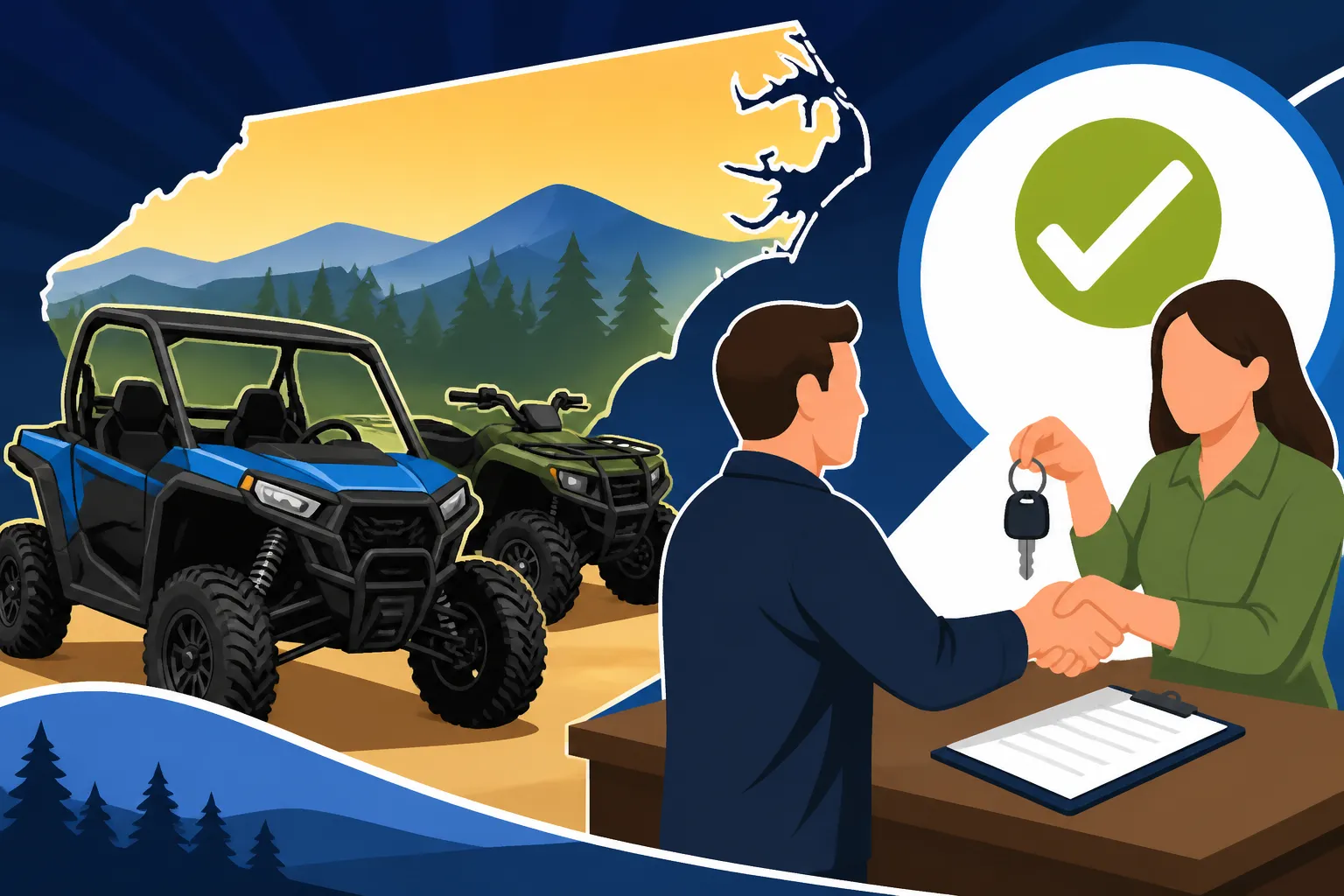
The first step, and perhaps the most important, is for both the buyer and the seller to arrive at a North Carolina tag office together during their regular business hours. This joint presence is crucial, as the clerk will need to verify the identities of both parties and confirm their consent to the transaction. Once inside, you'll typically take a number. When your number is called, approach the counter and clearly state to the clerk that you are there to complete a private party ATV or UTV title transfer.
At this point, you will present all your meticulously gathered documents: the signed-over title from the seller (or the MVR-60 affidavit), the buyer's completed [North Carolina Title Application on Form MVR-1], both parties' valid photo IDs, the bill of sale, and any other relevant paperwork like a lien release. The clerk will then meticulously review all these documents. They'll check for completeness, accuracy, and ensure all signatures are present and correct. They will also verify the VIN (Vehicle Identification Number) against the paperwork to ensure it matches the machine being transferred. This thorough review is exactly why coming to the tag office is so beneficial – it catches potential errors before they become problems.
Calculating Taxes and Fees, Making Payments
Once the clerk confirms that all the paperwork is in order, they will proceed to calculate the fees and taxes associated with the transfer. For ATVs and UTVs in North Carolina, the primary tax is the Highway Use Tax. This is generally [3 Percent of Retail Value in North Carolina] or the agreed-upon purchase price, whichever is higher, to ensure fairness and prevent under-reporting. The clerk will refer to your bill of sale for the purchase price, but they also have resources to assess the machine's fair market value if the purchase price seems unusually low.
In addition to the Highway Use Tax, there will be a modest [North Carolina ATV Title Cost] for issuing the new title, and potentially a small lien recording fee if the buyer is financing the purchase and a lien needs to be filed. The clerk will provide you with the total amount due. It's important to have these funds ready, typically payable by cash, check, or debit/credit card, though accepted payment methods can vary by tag office. Making these payments directly to the state ensures everything is officially recorded and eliminates any ambiguity about the financial aspects of the transfer.
Finalizing the Transfer and What to Expect Next
After all documents are confirmed as correct and all necessary payments have been made, the clerk will finalize the transfer process in their system. For the seller, this is the moment of truth. You should receive a receipt or confirmation that the ATV or UTV has been officially transferred out of your name, effectively ending your legal ownership and associated liability. Keep this receipt in your records.
For the buyer, the process culminates with receiving a temporary registration or receipt confirming that the title application has been accepted and processed. The actual physical title will not be issued on the spot; instead, it will be mailed to you. The [North Carolina ATV Title Processing Time] can vary, but typically you can expect to receive your new title in the mail within a few weeks. It is absolutely crucial to keep all receipts, temporary documents, and copies of your paperwork until you have the official title in your hands. These documents serve as your proof of ownership and application while you await the permanent title.
Common Questions and Potential Hurdles
Even with the best preparation, questions and unique situations can arise when dealing with ATV and UTV title transfers. North Carolina's rules, while straightforward for many, can have nuances, especially when dealing with older machines or those coming from out of state. Knowing how to navigate these common hurdles can save you a lot of grief.
What If the ATV Has No Title?
This is a very common scenario, particularly with older ATVs or those that have changed hands many times in private sales where titling wasn't seen as a priority. In North Carolina, while [Titling an ATV in North Carolina Is Optional] for off-road use, it becomes incredibly important for establishing legal ownership, especially during a sale. If the ATV you're buying or selling has never been titled in North Carolina, or if the title has been lost and the seller can't produce it, you'll need to utilize the [North Carolina Form MVR-60 Explained] – the All-Terrain Vehicle Affidavit.
This affidavit serves a critical purpose: it allows the current owner (the seller in this scenario) to legally attest to their ownership of the machine when a traditional title isn't available. It’s a formal declaration that, when accepted by the DMV, allows a new title to be issued to the buyer. It's vital to understand [What the All-Terrain Vehicle Affidavit Actually Proves]; it's not a substitute for a title but rather a pathway to obtaining one by establishing a clear ownership chain. The tag office clerk will guide you through this process, but having the form filled out to the best of your ability beforehand will speed things up. Just be aware that proving ownership without a title can sometimes require additional scrutiny or documentation, so be patient and provide as much detail as possible.
Dealing with Out-of-State Machines or Liens
Bringing an ATV or UTV into North Carolina from another state for sale or purchase can introduce additional steps. If you are [Buying an Out-of-State Machine for North Carolina], you'll need to present its out-of-state title. The North Carolina DMV will then process this to issue a new North Carolina title. Be prepared for the clerk to review the out-of-state title carefully, looking for proper endorsements and any signs of tampering. They want to ensure a clear chain of ownership before issuing a new North Carolina document.
Another hurdle can be dealing with a machine that still has a lien against it. If the seller has a loan on the ATV or UTV, the lender holds the title. Before a sale can be completed, that lien must be released. This usually involves the seller paying off the loan, and the lender providing a lien release document. It’s crucial to have this official lien release in hand when you go to the tag office. Without it, the DMV cannot transfer the title to the new owner, as there's still a claim against the machine. The tag office can often answer questions about these more complex scenarios, but coming prepared with as much documentation as possible will always facilitate the process. For any transaction, especially those involving unique circumstances, having a robust and detailed bill of sale, perhaps generated using a platform like LawDepot, can be an invaluable asset to document all aspects of the agreement.
Here's a quick look at the documents you'll want to have on hand:
| Document Type | Seller Must Bring | Buyer Must Bring | Notes |
|---|---|---|---|
| Identification | Valid Photo ID (NC Driver's License preferred) | Valid Photo ID (NC Driver's License preferred) | Both parties' presence and ID verification are mandatory. |
| Proof of Ownership | Original NC ATV Title (signed over to buyer) | N/A (Receives signed title from seller) | Or [North Carolina Form MVR-60 Explained] if no title exists. |
| Title Application | N/A | Completed [North Carolina Title Application on Form MVR-1] | This form puts the machine in the buyer's name. |
| Bill of Sale | Recommended (e.g., LawDepot template) | Recommended (e.g., LawDepot template) | Clearly states purchase price, critical for Highway Use Tax. |
| Lien Release | If applicable (from prior lender) | N/A | Required if the seller had a lien that has been satisfied. |
| Lien Recording | N/A | [North Carolina Form MVR-59 Explained] (if financing) | Used to record a new lien if the buyer is taking a loan. |
| Damage Disclosure | [North Carolina Damage Disclosure on Form MVR-1A] (if applicable) | N/A | Required for certain types of damage to the machine. |
| Funds | N/A | Funds for purchase price, Highway Use Tax, Title Fee, etc. | Be prepared for cash, check, or card, depending on office policy. |
Disclaimer
This article is for general informational purposes only and does not constitute professional advice. Laws, prices and regulations vary by location and change over time. Consult a qualified professional for guidance on your specific situation.