Street Legal ATVs in North Carolina: The Short Answer
It’s a common dream for many ATV and UTV enthusiasts in North Carolina: the freedom to hop on your machine and cruise down the road from your home to the trails, or even just to the corner store. But the reality can be a confusing maze of rules, exceptions, and outright prohibitions. This guide is here to untangle North Carolina's complex regulations regarding off-road vehicles on public roads, helping you understand what's truly possible and what could land you in hot water.
The Big Question: Can You Really Ride Your ATV on North Carolina Roads?
You’ve probably seen folks on side-by-sides or even quads driving around town in other states, or perhaps you’ve heard a rumor from a buddy about a certain road that’s “okay.” It’s easy to get your hopes up about using your off-road machine for a quick trip on asphalt. However, the short and often frustrating answer in North Carolina is a resounding “no” for most conventional ATVs and UTVs. The state's Department of Motor Vehicles (DMV) clearly defines these vehicles as being for off-highway use only, and for good reason.
The fundamental design of an ATV or UTV is centered around navigating rugged terrain, not sharing lanes with cars, trucks, and motorcycles. They often lack the standard safety features required for highway travel, such as specific lighting, turn signals, and mirrors. Their suspension and tire setups are optimized for dirt, mud, and rocks, which can make them unstable and unpredictable on paved surfaces, especially at higher speeds or when braking sharply. This general prohibition is rooted in public safety for both the ATV rider and other motorists.
The General "No" and Why It Exists
Let's be blunt: if your machine is a typical ATV or UTV as it comes from the factory, North Carolina law generally prohibits you from riding it on any public street or highway. This isn't just a suggestion; it's a legal restriction that carries real consequences. The state views these machines as recreational off-road vehicles, meant for private property, designated off-road trails, or specific exceptions we'll dive into shortly. The intention behind this rule is to prevent accidents stemming from the inherent differences between off-road vehicles and on-road vehicles.
Think about it from a safety perspective. Cars are designed with crumple zones, airbags, and reinforced cabins. Your ATV or UTV, while incredibly fun and capable off-road, offers a different level of protection, often relying more on the rider's skill and protective gear. The braking systems, steering response, and even the way they handle corners are optimized for loose surfaces, not sticky asphalt. This disparity in design is the primary driver behind the strict "no" for most machines. It's about minimizing the risk of severe injury or fatality in an accident involving a vehicle not built for public roads. If you're wondering about the specifics, you can dive deeper into [Are ATVs Street Legal in North Carolina?].
Understanding North Carolina's Core Stance on Off-Road Machines
North Carolina categorizes ATVs and UTVs primarily as off-highway vehicles (OHVs). This classification immediately sets them apart from vehicles designed and registered for road use, such as cars, trucks, and motorcycles. The state's stance is that if a vehicle is an OHV, its operational scope is limited to environments suitable for its design—which, again, does not typically include public thoroughfares. This foundational principle guides all the specific rules and exceptions you'll encounter.
This categorization means that your average Polaris Ranger, Can-Am Defender, or Honda Foreman, while perfectly legal and exhilarating on private land or designated trail systems, does not inherently possess the legal standing to drive down Main Street. The licensing and registration processes that apply to street-legal vehicles simply don't apply to these machines in the same way. The state understands their recreational value but prioritizes the safety of its citizens on its roadways. It's important to know [What North Carolina Counts as an ATV] to understand how your machine is classified under state law.
North Carolina's Modified Utility Vehicle MUV Exception: The Only Path
While the general rule is a firm "no," North Carolina does offer a very specific and challenging pathway for certain utility-style vehicles to become street-legal: the Modified Utility Vehicle, or MUV. This isn't a loophole; it's a highly regulated category designed for machines that can genuinely be modified to meet stringent safety and design standards, essentially bringing them closer to a traditional street-legal vehicle than a typical ATV. This exception is primarily aimed at larger UTVs, or side-by-sides, as the requirements are nearly impossible for a conventional quad.
The MUV designation is the state's recognition that some off-road utility vehicles could potentially function safely on public roads if they were built or extensively modified to specific criteria. It's not about making a regular UTV "street legal" with a few bolt-on parts. Instead, it’s about ensuring the vehicle meets a host of dimension, performance, and safety requirements that make it fundamentally different from the vast majority of off-road machines. If you're serious about getting your machine on the road, understanding the MUV route is paramount, as it's truly the [North Carolina's Modified Utility Vehicle Route] to consider.
The MUV: Your Gateway to Pavement Under Strict Conditions
For many UTV owners who dream of taking their machine beyond the trailhead, the MUV pathway represents the only realistic opportunity to do so legally. However, it's crucial to understand that this isn't a simple process, nor is it a guaranteed one. The conditions are incredibly strict, and most off-the-shelf UTVs will require significant and often costly modifications to even come close to qualifying. We're talking about more than just adding turn signals and a horn; it involves fundamental aspects of the vehicle's size, power, and safety equipment.
The MUV classification acknowledges the growing popularity and utility of side-by-sides, but it balances that with the undeniable safety concerns of mixing off-road vehicles with road traffic. The goal is to ensure that any MUV operating on public roads is as safe as possible and won't pose an undue risk to itself or others. Many riders looking to convert their UTVs into MUVs often explore aftermarket parts from companies like SuperATV, which offer a range of accessories to meet various road-legal requirements in other states, though specific North Carolina MUV compliance needs careful consideration beyond just generic "street legal kits."
Why Most Standard UTVs Don't Qualify Out of the Box
The reality for most UTV owners is that their factory-standard machine simply won't meet the MUV requirements without extensive, and often cost-prohibitive, modifications. This is particularly true for the crucial dimensional and engine size criteria. For instance, many popular side-by-sides, while wide and stable off-road, are too wide to meet the MUV's maximum width restriction. Others, despite their powerful engines, fall significantly short of the minimum cubic centimeter displacement required.
It's a common misconception that if your UTV is "big enough," it might qualify. However, the MUV definition is less about overall size and more about specific, very precise measurements and capabilities that are often contradictory to typical UTV design. For example, a wider stance is excellent for off-road stability but becomes a non-starter for MUV registration. This means that a standard side-by-side, even a large one, is very likely to [Why Most Side-by-Sides Miss the Mark] when held against North Carolina's strict MUV criteria.
What Makes a Machine a Modified Utility Vehicle MUV in North Carolina?
The heart of the MUV exception lies in its extremely specific criteria. These aren't vague guidelines; they are hard numbers and mandatory features that your machine absolutely must meet. Failing on even one of these points means your machine cannot be registered as an MUV, and therefore cannot be driven on public roads in North Carolina. This is where most off-road machines hit a brick wall, proving how truly exclusive this designation is.
These requirements are designed to bridge the gap between an off-road utility vehicle and a traditional low-speed vehicle or even a full-fledged automobile. The state isn't just asking for turn signals; it's asking for a vehicle that can safely interact with regular traffic, both in terms of its physical footprint and its performance capabilities. It requires a comprehensive overhaul or a very specific starting platform.
The Engine, Dimensions, and Speed Requirements
Let's break down the core physical and performance attributes that an MUV must possess:
First, the engine size requirement is a major hurdle. An MUV must have an engine with a displacement of greater than 2,400 cubic centimeters (cc). To put that into perspective, many powerful side-by-sides have engines in the 800cc to 1,000cc range. Even the largest factory UTV engines typically don't exceed 1,300cc or 1,500cc. This rule alone means that nearly every ATV and most UTVs on the market today are immediately disqualified. This specific requirement, [Why an MUV Needs More Than 2,400cc], is a testament to the state's intent for MUVs to be substantially more robust than standard off-road machines.
Next are the dimensions. An MUV must be at least 142 inches (11 feet, 10 inches) in length. While some larger UTVs with extended cabs or beds might approach this, many standard two- and four-seat models fall short. Conversely, the width requirement is also incredibly restrictive: an MUV must be not more than 58 inches (4 feet, 10 inches). This is perhaps the biggest disqualifier for modern side-by-sides. Many popular UTVs are 60 to 72 inches wide, making them instantly non-compliant. This precise [North Carolina's 58 Inch Width Limit] prevents almost all standard side-by-sides from qualifying.
The height requirement states that an MUV must be not more than 70 inches (5 feet, 10 inches). While some UTVs might fit this, especially if they don't have extensive lift kits or tall roll cages, others with significant ground clearance or cargo racks might exceed it. Lastly, an MUV must be capable of exceeding 40 miles per hour (mph). This speed requirement isn't typically an issue for most modern UTVs, as many can easily surpass this speed. However, meeting the speed requirement doesn't negate the need to meet all the other strict criteria, especially the challenging dimensional constraints.
VIN Assignment and Manufacturer Certification
Beyond the physical specifications, the administrative side of MUV conversion also presents its own challenges. Your machine needs a proper Vehicle Identification Number (VIN) that is recognized and accepted by the North Carolina DMV. For some manufacturers, their VIN might not fit the specific criteria the DMV is looking for in an MUV. In such cases, or for truly custom-built machines that meet the MUV criteria, the North Carolina DMV may need to assign a VIN. This isn't a quick process and involves an inspection to ensure the machine is properly identified and documented. Getting a [A VIN Assigned by the North Carolina DMV] means proving your machine's legitimacy and compliance to state standards.
Furthermore, the machine generally needs to have a manufacturer's certificate of origin that supports its classification, or you'll need to demonstrate through detailed documentation and inspection that it meets all the MUV requirements. This often means presenting receipts for all modifications, detailed measurements, and possibly even an affidavit from a qualified mechanic. Aftermarket accessories, even from reputable companies like SuperATV, need to be carefully chosen to ensure they don't inadvertently push your machine out of compliance with these strict dimensional rules, especially concerning width and height. The burden of proof rests entirely on the owner to demonstrate that their modified utility vehicle rigorously adheres to every single one of North Carolina's MUV criteria.
The Process of Registering and Plating Your MUV
So, you’ve somehow managed to build or modify a machine that you believe meets every single one of those incredibly demanding MUV specifications. Congratulations! You've cleared the biggest hurdle. However, the journey isn't over yet. The next step involves navigating the North Carolina Department of Motor Vehicles (DMV) to get your MUV officially recognized, registered, and issued a license plate. This process, while bureaucratic, is absolutely essential for legal road use and ensures that your vehicle is properly documented and taxed.
Remember, even with a compliant machine, you can't just slap a "street legal" sticker on it and hit the road. The state needs to verify its compliance and ensure all necessary paperwork is in order. This involves a series of inspections and documentation submissions designed to confirm that your MUV is, indeed, safe and legally capable of sharing the road with other registered vehicles.
Navigating the North Carolina DMV for MUV Registration
Registering an MUV is not like registering a typical car or truck; it's a specialized process that will likely require a visit to a full-service DMV office rather than just a local tag agency. You'll need to be prepared with all your documentation, including proof of ownership (like a manufacturer's certificate of origin or a bill of sale), any titles, and meticulous records of all modifications made to meet the MUV criteria. The DMV staff will need to review these documents to ensure everything is in order before proceeding.
Be ready for questions and potentially multiple visits, as the MUV category is less common than standard vehicle registrations. Patience is key. You'll also need to complete the necessary application forms, which may include specific MUV-related declarations or affidavits. It's highly advisable to call your local DMV office ahead of time to confirm what specific forms and documentation they will require for [North Carolina MUV Registration Requirements] to ensure you have everything prepared before you make the trip.
Essential Paperwork and Inspections for MUVs
Once at the DMV, expect a thorough review of your machine. This isn't just about paperwork; your MUV will likely need a physical inspection by a DMV official or an authorized inspection station to verify that it meets all the dimensional, engine, and equipment requirements. This means they will literally measure the length, width, and height, verify the engine size, and check for all required safety features like working lights, turn signals, mirrors, and seatbelts. They'll also check the VIN and ensure it matches your documentation.
In addition to the physical inspection, you'll need to pay the appropriate fees, which include the title fee, registration fee, and the North Carolina Highway Use Tax. This tax is applied when a vehicle is titled and is typically a percentage of the purchase price or appraised value of the machine. You'll also need to provide proof of liability insurance, as an MUV, once registered, is considered a road-legal vehicle and must carry proper coverage. Failing the inspection or missing any crucial documents will mean you'll have to go back to the drawing board, make the necessary corrections, and restart the inspection process. Understanding the [North Carolina MUV Inspection Requirements] is crucial to avoid delays.
Other Exceptions: When an ATV Can Touch a Public Road
Even though the MUV route is the only way for permanent street-legal status, there are a few very limited circumstances where an ATV or UTV can legally operate on certain public roads in North Carolina. These are not about making your machine "street legal" but rather specific statutory exceptions designed for particular activities or fleeting moments. It's incredibly important to understand these distinctions because misinterpreting them can lead to tickets, fines, and potentially dangerous situations. These exceptions are narrow in scope and do not grant general permission to ride on public roads.
Think of these as highly conditional permissions, not blanket passes. They exist to serve specific practical needs, like agriculture or accessing a small piece of private property, and are always tied to the direct fulfillment of that need. Recreational cruising is never covered by these exceptions. Always confirm local ordinances in conjunction with state law, as some municipalities might have even stricter rules or local permits required for specific activities, like beach riding.
Farm Operations and Highway Use
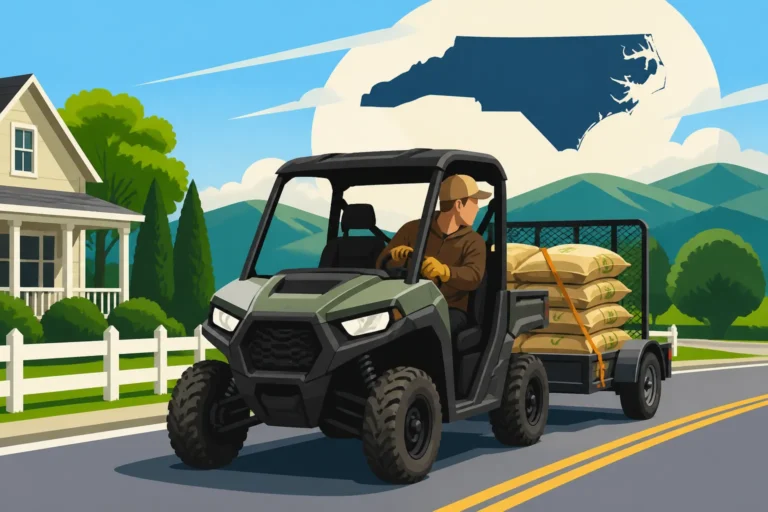
One of the most common exceptions people hear about is for farm use. North Carolina law allows ATVs and UTVs to be operated on public roads if they are being used for legitimate farming operations. This isn't a license to joyride from your farm to the local convenience store for snacks; it specifically refers to tasks directly related to the farm, such as transporting feed, checking fences, or moving equipment between fields that are separated by a public road. The machine must be directly engaged in agricultural work.
This exception is designed to help farmers carry out their essential duties efficiently. However, there are limits. The machine must be operated by a farmer or farm employee, and it should be operated on local roads, typically those less heavily trafficked. It's not intended for highway use. If you're riding an ATV or UTV on a public road under the [North Carolina's Farming Operations Exception], you must be actively engaged in farm business. Misusing this exception for recreational purposes is a quick way to get a ticket. Make sure you understand what constitutes [Riding a North Carolina Street on Farm Business].
Crossing Roads and Beach Access
Another very narrow exception allows ATVs and UTVs to cross a public road. This means exactly what it sounds like: a direct crossing from one side of a road to the other, usually to access another section of private property or a trail. It does not permit riding down the road for any distance. The crossing must be at approximately a 90-degree angle to the road, and the operator must yield to all oncoming traffic. It’s a momentary transition, not a travel method.
North Carolina also has specific rules regarding beach access, but these are highly localized and do not apply universally. Certain coastal areas and towns may permit ATVs or UTVs on designated sections of the beach, usually during specific seasons or hours, and often with a required permit. These permits are typically issued by the local municipality and are very strict about where and when you can ride. This is not a statewide free-for-all; it's a specific, localized privilege. You'll need to check with the local authorities in towns like Emerald Isle, Oak Island, or Hatteras to understand their precise regulations. Relying on [North Carolina's Ocean Beach Rule] without checking local ordinances is a gamble. Be sure to research [North Carolina Rules for Riding a Beach] for your specific destination.
Public Lands and Special Circumstances
While generally off-limits, some public lands might have specific designations for limited ATV or UTV use that could involve very short stretches of public road within the managed area, often to connect trail sections. For example, within national forests, certain designated forest roads might be open to OHVs, but these are clearly marked and managed by the U.S. Forest Service, not the state DMV. These are highly specific and often come with their own set of rules and required permits. It's crucial to consult with the specific land management agency before assuming any road within a park or forest is open to your machine.
Similarly, there might be very specific utility corridors or [North Carolina Rules for Riding a Logging Road] where private contractors use ATVs or UTVs on public access ways, but these are typically under specific contractual agreements and don't extend to the general public. For the average recreational rider, these types of "special circumstances" are rarely applicable or accessible. Always assume public roads are closed to your off-road vehicle unless you have explicit, documented proof from the relevant authority that an exception applies directly to your situation.
Equipment Requirements for Road Use
If you're going to use your machine on any public road in North Carolina, even under the limited exceptions, there are crucial equipment requirements you need to be aware of. For MUVs, these are extensive, turning your off-road machine into something much closer to a car. For temporary road crossings or farm use, while not as comprehensive, basic safety gear is still critical and often legally mandated. Ignoring these can not only lead to fines but also significantly compromise your safety.
The logic behind these requirements is straightforward: if you're interacting with other vehicles on a public thoroughfare, your machine needs to be visible, controllable, and equipped to signal your intentions. This isn't just about compliance; it's about minimizing risk in an environment your machine wasn't primarily designed for.
Mandatory Safety Equipment for MUVs
The list of mandatory safety equipment for an MUV is extensive and designed to bring the vehicle's capabilities in line with conventional road-going vehicles. An MUV must be equipped with:
- Headlamps: White in color, capable of illuminating the road for at least 200 feet.
- Taillamps and Brake Lights: Red in color, visible from 200 feet to the rear.
- Turn Signals: Front and rear, amber in color, allowing you to clearly indicate turns. This is often a significant modification for many UTVs. Ensuring you have functioning [North Carolina MUV Turn Signal Requirement] is paramount.
- Mirrors: At least one rearview mirror located to give the driver a clear view of the highway to the rear for at least 200 feet. Many MUVs will benefit from both a driver's side mirror and a passenger-side or central rearview mirror.
- Windshield: Made of safety glass and equipped with a windshield wiper if a top is installed.
- Seatbelts: For each occupant, designed for secure restraint.
- Speedometer: An accurate, operational device for measuring and displaying speed. Adhering to the [North Carolina MUV Speedometer Requirement] is non-negotiable.
- Brakes: Adequate braking system, including a parking brake capable of holding the vehicle on an incline. Meeting the [North Carolina MUV Parking Brake Requirement] is key during inspections.
- Horn: An audible warning device.
- Tires: Pneumatic tires that are DOT-approved for street use, not just off-road knobbies.
Many UTV owners looking to meet MUV equipment standards will turn to aftermarket providers like SuperATV for essential components such as turn signal kits, rearview mirrors, and windshields, which are crucial for road-legal compliance. Every single one of these items must be present and fully functional, as they will be checked during the MUV inspection process. The absence of even one item will result in a failed inspection and prevent registration.
What You Need Even for Temporary Road Crossings
Even for the very limited instances of temporary road crossings or farm use, certain basic equipment is crucial for safety and often legally required. While you won't need a full suite of MUV equipment, you must ensure your machine has:
- Brakes: Fully functional service brakes.
- Lighting: If operating after dark, you'll need at least one headlamp and one taillamp. While not always specified as "DOT-approved" for these temporary uses, they must be bright enough to be seen and to illuminate your path.
- Spark Arrester: This is not specifically for road use, but it’s a critical piece of equipment for any off-road machine and is often required for riding on public lands. A properly functioning [North Carolina Spark Arrester Requirement] prevents wildfires and is good practice universally.
- Helmet and Eye Protection: While not directly "vehicle equipment," these are crucial personal safety items. North Carolina has helmet and eye protection laws, particularly for younger riders, even off-road. It’s always safest to wear a DOT-approved helmet and appropriate eye protection when operating an ATV or UTV, regardless of where you are riding.
For these brief excursions onto public roads, visibility is key. Even if not mandated, consider adding flags or wearing bright, reflective clothing to make yourself as noticeable as possible to other motorists. These temporary uses are fraught with risk, and anything you can do to enhance safety is a wise investment.
Consequences of Illegal Road Riding in North Carolina
Riding an unregistered or non-compliant ATV or UTV on North Carolina’s public roads isn't just frowned upon; it carries serious legal and financial consequences. The state takes its road safety regulations very seriously, and off-road vehicles that don’t meet the specific requirements are seen as a significant hazard. Many riders mistakenly believe that "they won't get caught" or that fines are negligible, but the reality can be far more severe, impacting your wallet, your driving record, and even your freedom.
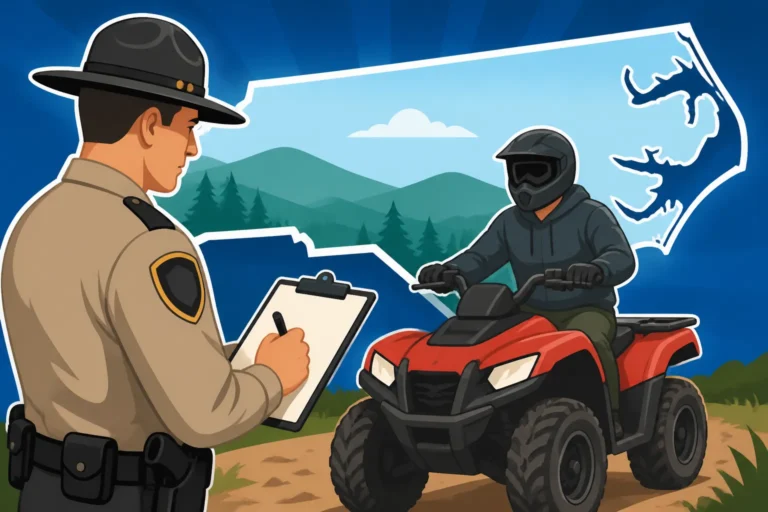
The enforcement of these laws often falls to local law enforcement, including county sheriffs and state troopers, who are well aware of the regulations concerning off-road vehicles. They are particularly vigilant in areas where trail systems or popular riding spots meet public roads, or in rural communities where the temptation to ride on roads might be higher. Don't assume you'll be given a warning; more often than not, an officer will issue a citation.
Fines, Penalties, and Machine Impoundment
If you are caught riding an ATV or UTV illegally on a public road in North Carolina, you can face a range of penalties. The specific fines can vary depending on the county and the discretion of the officer or court, but they are typically significant. These aren't just minor traffic tickets; they can often be comparable to or even exceed those for other serious moving violations. You can certainly expect a fine, which might be in the hundreds of dollars.
Beyond monetary penalties, illegal road riding can also lead to points being assessed against your driver’s license, even if you’re riding a vehicle that isn’t technically registered to you or for which you don’t need a specific license to operate off-road. Accumulating too many points can result in increased insurance premiums, or even the suspension of your driving privileges for your regular vehicle. In more egregious cases, or for repeat offenders, your ATV or UTV could even be impounded. The cost of towing and storage can quickly add up, and retrieving your machine can be a lengthy and expensive process. Understanding the potential [North Carolina Fines for an ATV Violation] is a strong deterrent.
Insurance Implications and Safety Risks
One of the most overlooked, yet potentially devastating, consequences of illegal road riding is the impact on your insurance. Your standard ATV or UTV insurance policy is almost certainly designed for off-road use only. If you're involved in an accident on a public road while operating your machine illegally, your insurance company will likely deny any claims. This means you would be personally liable for all damages, including medical bills for injuries to yourself or others, property damage to other vehicles or infrastructure, and legal fees. Without insurance coverage, these costs can quickly reach tens or even hundreds of thousands of dollars, leading to financial ruin.
Beyond the financial risks, there are profound safety implications. As discussed, ATVs and UTVs are not designed for road conditions. They handle differently, have different braking characteristics, and offer less protection in a collision with a car or truck. The risk of serious injury or fatality is significantly higher when an off-road vehicle is involved in a road accident. By riding illegally, you're not only breaking the law but also putting yourself, your passengers, and unsuspecting motorists at an unnecessary and severe risk. Proper [North Carolina ATV Insurance Requirement] is critical for any legal road use.
Navigating the Gray Areas and Common Misconceptions
The rules surrounding ATVs and UTVs on public roads in North Carolina are complex, and this complexity unfortunately breeds a lot of misinformation and urban legends. Riders often hear things from friends, read outdated online forums, or misinterpret specific exceptions, leading them to believe their machine is legal on certain roads when it absolutely is not. Navigating these gray areas and dispelling common myths is crucial for any responsible rider to avoid legal trouble and ensure their safety.
It's tempting to look for loopholes or to believe that "everyone else does it," but these attitudes can quickly lead to citations or worse. The legal landscape for off-road vehicles has evolved, and what might have been permissible decades ago, or what's allowed in a neighboring state, often no longer applies in North Carolina.
The "Local Road" Myth and Outdated Information
Perhaps the most persistent myth is the idea that it's okay to ride ATVs or UTVs on "local roads," "dirt roads," or roads with low-speed limits. This is a dangerous misconception. In North Carolina, unless explicitly designated as an MUV and registered, or falling under one of the very specific exceptions like farm use or a direct crossing, an ATV or UTV is generally prohibited from any public road, regardless of its surface, speed limit, or traffic volume. A dirt road maintained by the county or state is still a public road and falls under the same regulations as a paved highway.
This myth often stems from outdated local ordinances, misinterpretations of state law, or rules from other states. While some counties or towns may have had more lenient rules in the past, state law generally supersedes these for broad ATV/UTV road use. What a "county handout" or an old local pamphlet says might be completely [Why a County Handout May Be Out of Date] and no longer relevant. Always verify current state statutes directly, rather than relying on hearsay or historical practices.
Avoiding Misinformation and Relying on Official Sources
In an age where information spreads rapidly, it's more important than ever to rely on official, current sources when it comes to legal matters. For ATV and UTV regulations in North Carolina, your primary sources should always be the North Carolina Department of Motor Vehicles (NCDMV) website, current North Carolina General Statutes, and direct communication with law enforcement or DMV officials if you have specific questions. Do not take legal advice from online forums, social media groups, or even well-meaning friends.
Laws can and do change. A rule that applied five years ago might be different today. For instance, some age-related rules for riders have changed over time, illustrating that [What North Carolina Law Says About a Rider's Age] is not static. While aftermarket parts from companies like SuperATV can enhance your machine's capabilities, always ensure any modifications are compliant with North Carolina's specific MUV regulations, and don't assume a part advertised for "street legal conversion" in another state applies here. Always confirm current regulations before making assumptions about where and how you can ride your machine on North Carolina's roads. Your safety and legal standing depend on accurate information.
Disclaimer
This article is for general informational purposes only and does not constitute professional advice. Laws, prices and regulations vary by location and change over time. Consult a qualified professional for guidance on your specific situation.