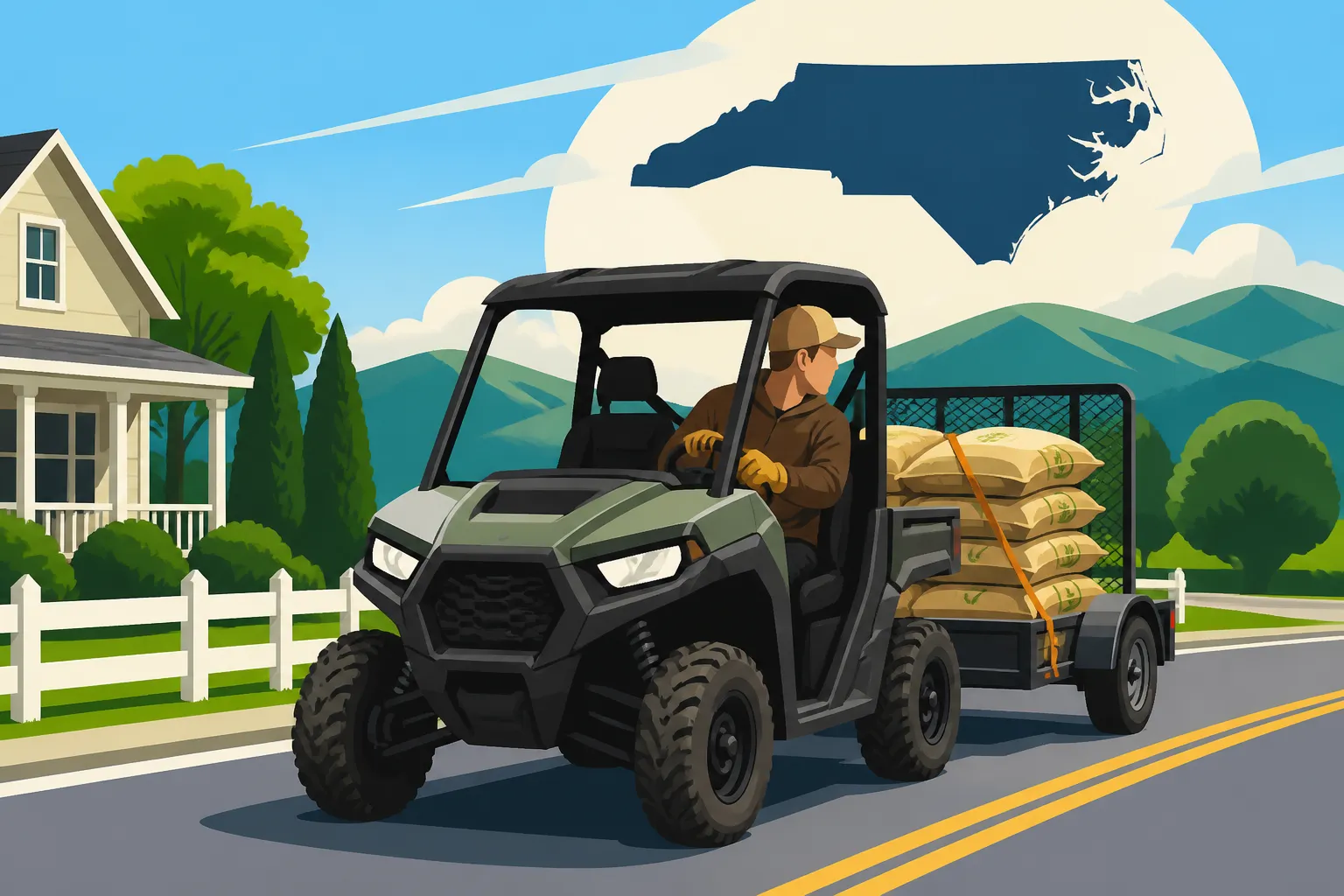
Hauling Feed Down a Public Street
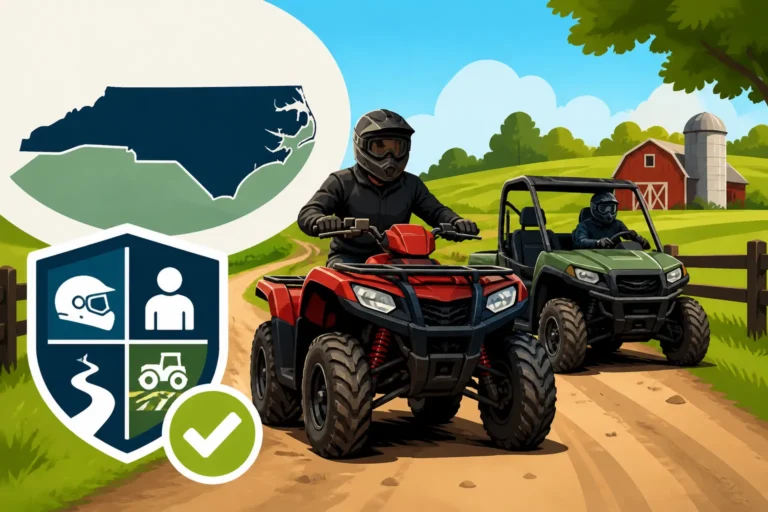
If you've got a farm, a sprawling property, or even just a few acres with animals in North Carolina, chances are your ATV or UTV is more than just a recreational toy—it's a workhorse. And sometimes, those workhorse duties, like hauling a fresh bag of feed from the barn to the pasture across the road, mean you need to briefly navigate a public street. This often leads to a lot of head-scratching and worry about legality. This guide will walk you through exactly what North Carolina law allows and requires when you need to take your off-road machine onto a public street for legitimate farming operations.
Understanding North Carolina's Farm Operations Exception
Let's cut right to the chase: North Carolina understands that farmers, homesteaders, and property owners with agricultural needs often use their ATVs and UTVs for practical, everyday tasks that might require a quick hop onto a public road. This isn't about making your quad street-legal for general cruising, but rather a specific carve-out for genuine farm work. It's a lifeline for folks who just need to get the job done, but it comes with clear boundaries.
What Qualifies as a "Farming Operation" in North Carolina
When we talk about a "farming operation" in North Carolina, the law casts a reasonably wide net, but it's not without its limits. It generally refers to tasks directly related to the cultivation of land, the raising of livestock, or the production of agricultural commodities. So, if you're hauling feed for your chickens, moving fencing supplies to mend a broken paddock, or even just checking on crops in a distant field, these activities typically fall under the umbrella of a bona fide farming operation. It's about the purpose of the trip: is it directly contributing to the operation of your farm or agricultural land? If the answer is yes, you're likely in the clear under this exception.
This isn't an excuse to ride your machine to the corner store for a soda or to visit a friend down the road for purely social reasons. The intent behind the travel must be tied to the agricultural work. The emphasis is on utility and necessity for farm maintenance and production. The key here is legitimate, verifiable farm business. If a law enforcement officer asks, you should be able to articulate why you're on the road and how it relates to your farm. For a deeper dive into this, you might find [North Carolina's Farming Operations Exception] helpful.
Permitted Roadways and Restrictions for Farm Use
So, you've established your trip is for a legitimate farming operation – great! But where can you actually ride? North Carolina's farm operations exception is generally quite specific about the types of public roads you can use. Typically, this exception applies to secondary roads, township roads, or even very low-traffic county roads. What you absolutely cannot do is take your ATV or UTV, even loaded with feed, onto interstates, controlled-access highways, or major primary routes. Those are strictly off-limits, no matter how much hay you're carrying.
The travel itself must also be incidental or occasional. It's not a green light for daily commutes of several miles. Think of it as bridging a gap: getting from one field to another, from a barn to a pasture, or to a nearby piece of property that's part of your farming operation. The distance should be reasonable and directly related to the need. You're traversing the public road because your farm is split, or you have adjacent property that requires access, not because it's a convenient shortcut for a long journey. Also, while there isn't usually a strict speed limit defined for this exception for ATVs, common sense and safety dictate you should operate at a speed appropriate for the road conditions and other traffic, certainly not exceeding posted limits. Remember, this isn't making your machine street legal, it's a very narrow exception. For a broader understanding of general ATV rules on roads, check out [North Carolina Rules for Riding a Public Street].
Who in the Household May Operate for Farm Business
It's natural to wonder if only the landowner or primary farmer can take advantage of this exception. Thankfully, North Carolina's interpretation of "farming operation" often extends beyond just the named owner of the land or machine. Family members who are actively involved in the farming operation—whether it's a spouse, an adult child, or another relative—can typically operate the ATV or UTV on public roads under this exception, provided their trip is for legitimate farm business. The same goes for employees directly involved in the farm's daily tasks.
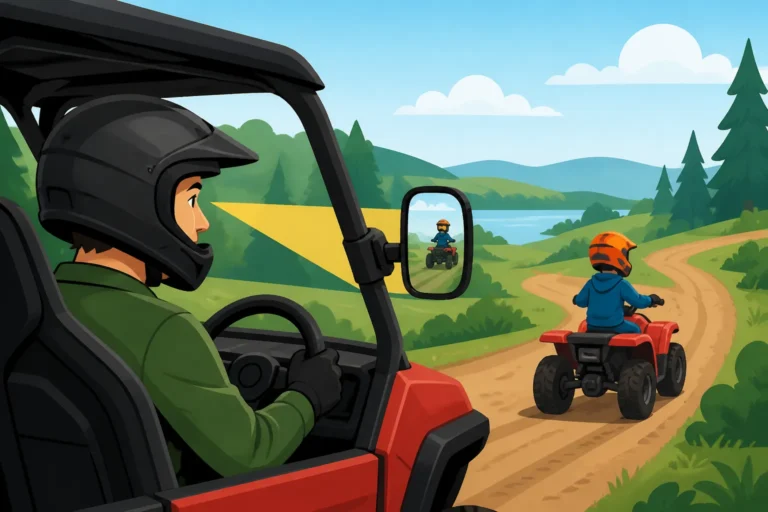
However, there's a crucial point regarding age. Even when operating under a farm exception, anyone driving on a public road, even briefly, should ideally be of legal driving age and possess a valid driver's license. While off-road machines have different age restrictions on private property, public road use introduces additional considerations. A law enforcement officer would expect a licensed operator. This is about minimizing risk and ensuring that anyone behind the wheel on a public thoroughfare has the necessary judgment and legal standing. It's always best to err on the side of caution here, ensuring that only experienced, licensed individuals handle these tasks.
Equipment Requirements for Street Use Under the Farm Exception
Navigating public streets, even for a quick farm-related task, means you need to be mindful of safety and visibility. While the farm exception doesn't demand a full "street legal" conversion, it does imply a certain level of preparedness. You're sharing the road with other vehicles, and their drivers expect certain basic signals and visibility from anything moving.
Essential Safety Gear and Machine Features
When you're rolling down a public street, even for a short distance with a bed full of feed, your ATV or UTV needs to be as visible and safe as possible. While the farm exception doesn't spell out every single piece of equipment like a full [North Carolina MUV Street Legal Requirements] list would, it's prudent to ensure your machine has functioning headlights and taillights, especially if there's any chance you'll be out around dawn, dusk, or in less-than-ideal weather. Good brakes are a given—you'll want to stop safely, particularly with a loaded cargo bed. A working spark arrester is also essential for all off-road machines in North Carolina, helping to prevent wildfires.
Beyond the machine itself, consider personal safety gear. While adults typically aren't mandated to wear helmets on private land, using a public road is a different ballgame. Wearing a DOT-approved helmet and eye protection (goggles or a face shield) is always a smart choice when riding, adding a layer of protection against unexpected events, whether it's a pothole or another vehicle. Even for a short trip, a helmet can be a lifesaver. You can read more about general ATV equipment rules in [North Carolina Equipment Rules for ATVs] and specific age-related helmet rules in [North Carolina Helmet Law for ATV Riders].
Why a Full MUV Conversion Is Not Required for This Specific Use
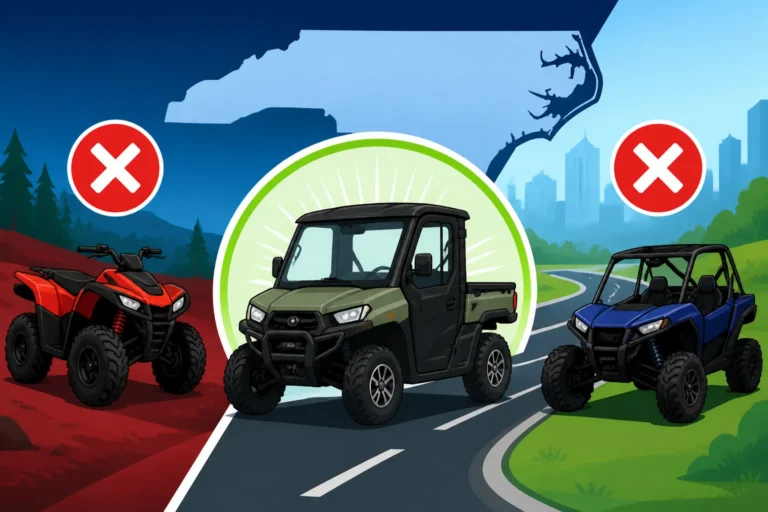
It's incredibly important to distinguish between using an ATV/UTV under the farm operations exception and fully converting a machine into a [Modified Utility Vehicle in North Carolina] (MUV). The farm exception is a limited, use-based allowance, whereas an MUV conversion is about permanently modifying and registering your machine to be street legal under specific, stringent criteria.
For simply hauling feed down a public street under the farm exception, you do not need to go through the extensive process of meeting MUV specifications. This means you won't need the MUV's required minimum 2,400cc engine, or specific dimensions like 142 inches in length, 58 inches in width, and 70 inches in height. You also won't need specialized turn signals, a horn, mirrors, a speedometer, or the other specific lighting and safety features that are mandatory for an MUV. The farm exception is designed to accommodate the existing utility machines farmers already have, not to force them into a costly and often impractical conversion for occasional, necessary road use. This distinction is key to understanding what's required and what isn't for your particular task.
Practical Considerations and Best Practices
Even with the legal framework in place, there are always practical steps you can take to make your brief excursions onto public streets safer and smoother. It’s about being a responsible operator and minimizing any potential issues with other drivers or local authorities.
Minimizing Risk and Ensuring Visibility
When you're carrying a load of feed and momentarily sharing a public street, making yourself as visible as possible is paramount. These machines often sit lower than cars and trucks, and a driver might not expect an ATV or UTV on a paved road. Consider attaching bright orange safety flags, especially if your machine is a darker color or the feed load obstructs your profile. Reflective tape on the front, rear, and sides can significantly improve your visibility, particularly around dawn or dusk. If your machine has turn signals, use them! If not, clear hand signals are your next best friend.
Driving defensively is crucial. Assume other drivers don't see you. Keep your speed down, leave plenty of space, and be extra cautious at intersections and when turning. A loaded cargo bed, even with something as simple as feed bags, changes your machine's center of gravity and braking dynamics. Many SuperATV accessories, like extended cargo beds, cargo nets, or even their LED light bars, can enhance both your machine's utility for farm tasks and its visibility on the road. Remember, a quick trip is still a trip where safety should be your number one concern. For those times you might be out when the light is low, review [North Carolina Rules for Riding After Dark].
Documentation and Local Enforcement Nuances
While North Carolina's farm exception is pretty clear, local interpretations or awareness of it among law enforcement can sometimes vary. It's always a good idea to be prepared, just in case you're stopped. Carrying proof that you own the land or are legitimately involved in a farming operation can be very helpful. This could be a property tax bill, a business license for your farm, or even just knowing the details of your operation.
Furthermore, even if not strictly mandated for this specific farm use, carrying your machine's proof of ownership (like a title or bill of sale) and your own driver's license is always a smart move. While ATVs don't have mandatory registration in North Carolina, if you’ve gone through the process of [A Farm-Only Quad and North Carolina Titling], having that documentation handy helps establish legitimate ownership. If a law enforcement officer, such as [Who Writes an ATV Ticket in North Carolina], pulls you over, being polite, clearly explaining your purpose, and providing any requested documentation can resolve misunderstandings quickly. It shows you're a responsible operator acting within the spirit of the law. Knowing [What a North Carolina Trooper Checks Roadside] can also help you prepare for common questions.
What This Exception Does NOT Allow
It’s just as important to understand what the farm operations exception doesn't cover as what it does. This isn't a loophole for general road use; it's a very specific allowance for a defined purpose. Misusing this exception can lead to tickets and fines, negating the convenience it's meant to provide.
No Recreational Riding on Public Roads
This is a critical point that cannot be stressed enough: the farm operations exception is strictly for legitimate farming and agricultural purposes. It does not, under any circumstances, grant you permission to use your ATV or UTV for recreational riding on public roads. That means no joyrides, no cruising through town, and no using public streets as shortcuts to get to your favorite trail system if it's not directly part of your farm business.
If you're stopped and you're not actively engaged in an agricultural task—like going to a friend's house for a party or just riding around for fun—the exception will not apply. At that point, you're operating an unregistered off-highway vehicle on a public road, which is illegal. Always remember the "why" behind your road travel. Is it for the farm? If so, you're likely okay. If not, stick to private land. This is distinct from simply [North Carolina Rules for Crossing a Road], which allows quick, direct crossings.
Limitations Beyond the Farm Property
The farm operations exception is intended to facilitate movement incidentally across public roads as part of your farm's contiguous operations. It's not a license to travel long distances across the county or state. For example, if you have one farm in Montgomery County and another 50 miles away in Stanly County, you cannot use your ATV to transport feed between them via public roads under this exception.
The spirit of the law focuses on situations where public roads bisect your property, or where an adjacent field requires access from your main farm. It's about overcoming a geographical separation within a localized farming context. If your trip involves significant travel or takes you far beyond the immediate vicinity of your farm, you're likely exceeding the scope of the exception. For more specific guidance on local farm use, consider referring to [North Carolina Rules for Riding a Farm Lane].
No Street-Legal Status for General Purposes
Even when operating legitimately under the farm operations exception, your ATV or UTV does not magically become "street legal" in the eyes of North Carolina law for general purposes. It retains its classification as an off-highway vehicle. The exception is a temporary, conditional allowance for specific tasks, not a change in the vehicle's legal status. This means you still don't have the same rights, privileges, or requirements as a car, truck, or even a properly registered and modified utility vehicle.
You can't expect other drivers to treat your ATV like a regular vehicle, and you won't be held to the same standards regarding things like yearly inspections or permanent street registration. The moment your agricultural task is complete, or you deviate from that purpose, the allowance ceases. So, use it for what it's intended: a practical solution for farm-related tasks that require brief, careful use of public roads, nothing more.
Disclaimer
This article is for general informational purposes only and does not constitute professional advice. Laws, prices and regulations vary by location and change over time. Consult a qualified professional for guidance on your specific situation.