North Carolina Rules for Riding a Bridge
It can be incredibly frustrating to be out enjoying the vast network of trails and rural roads in North Carolina on your ATV or UTV, only to come across a small bridge and wonder, "Can I even legally cross this?" This isn't just a minor inconvenience; it's a genuine point of confusion and anxiety for many riders. The rules around riding off-highway vehicles on public roads and, by extension, bridges, aren't always clear-cut, leading to a lot of guesswork and potential infractions. This comprehensive guide will clear up that confusion, explaining North Carolina's specific regulations regarding ATVs and UTVs on bridges, detailing the limited exceptions, and offering practical advice to keep you on the right side of the law.
The Core Challenge: Why Bridges Are Tricky for North Carolina ATV Riders
Let's be real, you're out there to have a good time, not to pore over legal texts. But the reality in North Carolina is that most public roads are off-limits for ATVs and UTVs, and that includes the bridges that are part of those roads. It’s a common scenario: you’re on a logging road, enjoying the peace and quiet, and suddenly you hit a paved section with a bridge, or a bridge that’s clearly part of a maintained public thoroughfare. Your heart sinks a little because you know this could be a problem. This isn't unique to North Carolina, but our state has some very specific nuances that can catch even experienced riders off guard.
Understanding What "Bridge" Means in the Eyes of the Law
When we talk about "bridges" in the context of ATV and UTV use, we're generally referring to any structure designed to carry traffic over an obstacle – be it a creek, a small river, a ravine, or even another road. The critical distinction here isn't the size of the bridge, but rather its classification. Is it part of a public highway, a private road, or a designated off-road trail system?
If a bridge is part of the public road system – maintained by the state, county, or municipality – then the general prohibition on ATV/UTV use on those roads extends directly to the bridge. It doesn't matter if it's a tiny, one-lane bridge over a ditch or a substantial structure spanning a river. If it's a public road bridge, it's generally off-limits. This is often where the frustration builds, because a short bridge might feel like an insignificant part of your ride, but legally, it's just as much a "road" as the pavement leading up to it. Understanding this distinction is the first step in avoiding potential issues.
The General Prohibition on Public Roads and Its Bridge Implication
North Carolina law is quite clear: ATVs and UTVs are primarily designed for off-highway use. This means they are generally prohibited from operating on public streets, highways, and the shoulders of such roads. Think about your average four-wheeler or side-by-side; they typically lack the standard safety equipment – like turn signals, rearview mirrors, and DOT-approved tires – required for on-road vehicles. Because bridges are integral components of these public road systems, they fall squarely under this general prohibition.
This can be a huge headache for riders. You might find yourself on a perfectly legal dirt or gravel road, perhaps a [Forest Road Meets Pavement] scenario, only to be forced to detour or turn back because a short bridge ahead connects two sections of that dirt road but is technically considered part of the public highway system. It’s a real buzzkill when you’ve planned a great route, maybe even for a weekend trip to [Badin Lake OHV Trail Complex], and then a tiny bridge becomes an insurmountable obstacle. Many riders invest in aftermarket parts from companies like SuperATV to enhance their off-road performance, but these upgrades don't magically make a machine street-legal for bridge crossings unless specific conditions are met.
Navigating Bridges Under North Carolina's Limited Exceptions
While the general rule is "no ATVs on public road bridges," North Carolina, thankfully, isn't entirely without options. There are a few specific, narrowly defined exceptions that allow ATVs and UTVs to operate on public roads, and therefore, potentially cross bridges. However, these aren't loopholes; they come with strict requirements and limitations that riders absolutely must understand and adhere to. Thinking you can just "get away with it" is a recipe for a ticket and a ruined day.
The Farm Operations Exception: Bridging the Gap for Agricultural Work
For those involved in agriculture, North Carolina offers a significant exception. An ATV or UTV can be operated on a public road, including bridges, if it is being used for farming operations. This isn't a carte blanche to joyride on public roads. It's specifically for legitimate agricultural purposes, such as transporting crops, livestock, or equipment between fields, or accessing parts of a farm that require crossing a public road.
The key here is "farming operations." This means the machine must be directly engaged in work related to a farm. Taking your quad out to check fences on your land, which might involve a quick hop across a small bridge on a [North Carolina Rules for Riding a Farm Lane], would likely fall under this exception. However, using the same machine to go to the grocery store or meet friends at a local diner, even if you happen to live on a farm, definitely would not. This exception is designed to support the agricultural community, not to provide general street access for recreational riders. It’s a crucial distinction, and law enforcement officers are typically quite adept at telling the difference between farm work and recreational riding.
The Modified Utility Vehicle MUV Route: A Street-Legal Path Across Bridges
Perhaps the most significant exception for recreational riders wanting some road (and thus bridge) access is the Modified Utility Vehicle (MUV) designation. North Carolina has a specific pathway to make certain UTVs, or side-by-sides, street-legal. This isn't for your typical sport quad, but rather for UTVs that meet a very particular set of criteria and are then registered with the DMV. You can dive deeper into [North Carolina's Modified Utility Vehicle Route] to get the full picture, but here's the gist as it relates to bridges:
- Size Requirements: The UTV must be between 58 and 80 inches wide, less than 142 inches long, and less than 70 inches high.
- Engine Size: It needs an engine larger than 2,400cc. This immediately rules out many standard UTVs.
- Speed: It must be capable of exceeding 40 mph.
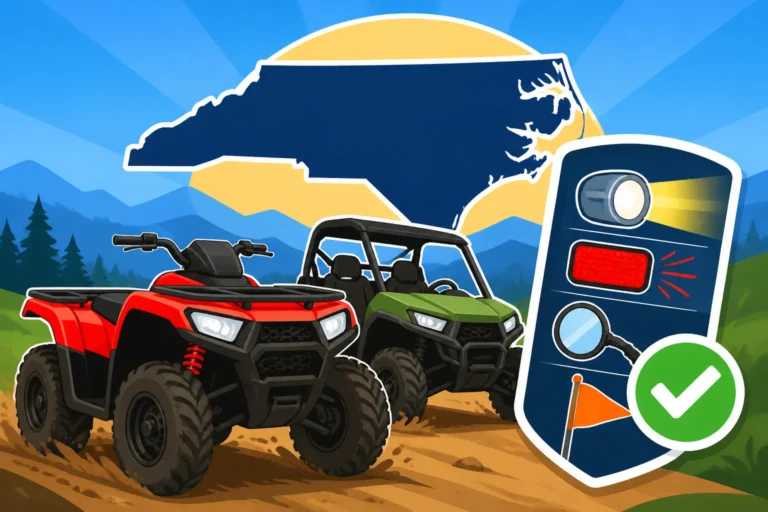
- Safety Features: This is where the real work comes in. To qualify as an MUV, a UTV must be outfitted with a litany of safety equipment: headlamps, taillamps, brake lights, turn signals, a rearview mirror, a parking brake, a speedometer, and DOT-approved tires. Many of these are items you might find in a SuperATV catalog for upgrades, but they need to meet specific legal standards for MUV certification.
- Registration: Once modified, the machine must be inspected and registered with the North Carolina DMV, much like a regular car or truck. It will then receive a license plate.
If your UTV meets all these stringent requirements and is properly registered as an MUV, then it can legally operate on public roads with a posted speed limit of 55 mph or less, and this includes crossing bridges on those roads. This is the only way a purely recreational side-by-side can gain general access to public road bridges. It's a significant investment in time and money, but for some riders, the freedom to connect trails or access certain areas without trailering is worth it. Just remember, an MUV still cannot be ridden on interstates or roads with speed limits above 55 mph.
Limited Beach Access and Bridge Crossings
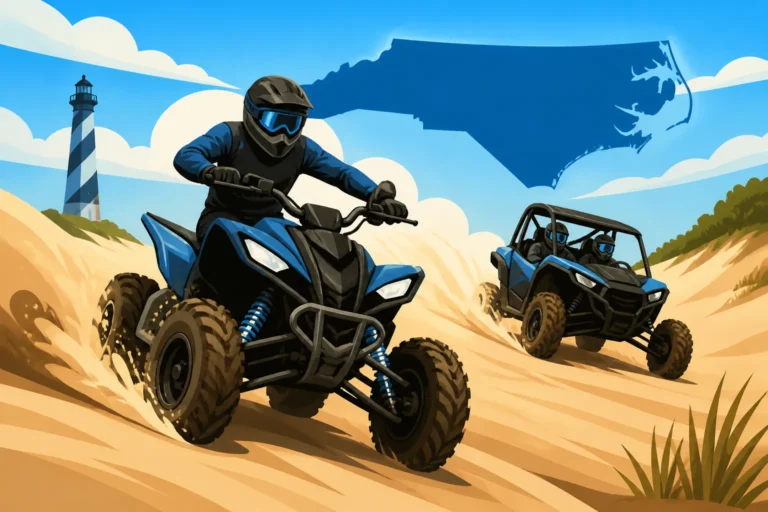
North Carolina's beautiful coastline offers some unique riding opportunities, but even here, rules apply, and bridges are a factor. Certain coastal communities permit ATV/UTV use on designated stretches of beach, often with specific permitting requirements and timeframes. If you're riding on an approved beach and encounter a bridge that connects two sections of that beach, or provides necessary access, it might be permissible.
However, this is highly localized. You'll need to check the specific ordinances of the town or county you're visiting. A bridge crossing that's fine in one coastal area might be strictly forbidden just a few miles down the coast. For example, some areas might have [North Carolina's Ocean Beach Rule] that allows certain vehicles, but even then, specific bridges might be explicitly excluded for ATV/UTV traffic. Always verify local rules before assuming beach access extends to any adjacent bridge structures.
Practical Considerations and Safety When Approaching a North Carolina Bridge
Even when you're legally allowed to cross a bridge, whether through an exception or by operating an MUV, there are always practical considerations and safety measures to keep in mind. The general rules for driving safely on any public road apply, but with an ATV or UTV, some aspects become even more critical. Ignoring these can lead to accidents, fines, or simply a less enjoyable ride.
Checking Local Ordinances and Posted Restrictions
This cannot be stressed enough: always check local ordinances. While state law provides the overarching framework, counties and municipalities often have the authority to enact stricter regulations regarding ATV/UTV use on roads within their jurisdiction. A road or bridge that appears open under state law might be closed by a local ordinance.
For example, a short county bridge might be part of a public road, and while a farm machine could cross it, a recreational MUV might find a "No OHVs" sign due to local traffic concerns. The onus is entirely on the rider to know these rules. Before heading out, especially if you're exploring a new area or planning a trip to a place like [Brown Mountain OHV Trail System], take a few minutes to look up the local traffic laws. A quick call to the county sheriff's office or town hall can save you a lot of grief. Remember, signs are there for a reason, and ignoring a "No ATVs" sign, even if you think you have an MUV, could land you a ticket.
Safety Practices for Any Bridge Crossing
Whether you’re legally crossing or in a moment of ambiguity (which you should try to avoid!), safety should be your number one priority. Bridges often present unique hazards:
- Pavement Changes: Many bridges are paved, even if the approach roads are gravel or dirt. This change in surface can drastically alter your machine's handling, especially if your tires are not designed for hard surfaces. Your knobby tires, which excel in mud and rock, can be less stable on smooth, wet pavement.
- Narrow Lanes: Many rural bridges are quite narrow, often allowing only one vehicle at a time. This significantly increases the risk of head-on collisions or side-swipes if you're not paying extreme attention.
- Guardrails and Obstructions: Bridges typically have solid guardrails, leaving no room for error or evasive maneuvers. There are no shoulders to pull off onto.
- Limited Visibility: Curves leading onto bridges or steep inclines can limit your view of oncoming traffic.
- Increased Traffic: Bridges are choke points, meaning traffic can be denser, even on otherwise quiet roads.
Here’s how to approach a bridge safely:
- Slow Down: Reduce your speed significantly as you approach and cross. This gives you more time to react to unexpected conditions or traffic.
- Stay Right: Hug the right side of the lane, especially on narrow bridges.
- Be Visible: Ensure your headlights and taillights are on, even in daylight. Wear brightly colored gear. If you’ve invested in aftermarket lighting from a brand like SuperATV, make sure it’s operational and visible.
- Scan for Hazards: Look for potholes, debris, or slippery patches on the bridge surface.
- Anticipate Oncoming Traffic: Assume there's a vehicle coming from the other direction, even if you can't see it.
- Avoid Distractions: Put away the phone, keep your focus entirely on the road.
Consequences of Ignoring Bridge Rules
It's easy to think that a quick hop across a bridge won't hurt anyone, especially if there's no traffic. But ignoring North Carolina's rules for riding ATVs and UTVs on public roads and bridges carries real, tangible consequences. These aren't just minor inconveniences; they can hit your wallet, your insurance, and even your ability to ride in the future.
Fines, Penalties, and Machine Impoundment
Getting caught riding an ATV or UTV illegally on a public road or bridge in North Carolina can lead to significant fines. These aren't just small slap-on-the-wrist tickets. Depending on the specific infraction and whether it's your first offense, you could be looking at several hundred dollars in fines. An officer could issue a citation for [What Is Illegal on an ATV in North Carolina].
But it can get worse. In some cases, law enforcement has the authority to impound your machine. Imagine being stranded miles from home, having to pay towing fees, storage fees, and then still facing the fines to get your ATV back. That fun ride suddenly becomes a very expensive nightmare. Beyond that, repeat offenses could lead to more severe penalties, including potential loss of driving privileges or more substantial legal ramifications. It's simply not worth the risk for a shortcut across a bridge.
Insurance Implications and Personal Liability
This is perhaps one of the most overlooked, yet critical, consequences. Your off-road vehicle insurance policy is designed to cover you when you're riding off-road. Operating your ATV or UTV illegally on a public road or bridge could completely void your coverage in the event of an accident.
Think about it: if you cause an accident on a public bridge while riding illegally, your insurance company might deny your claim, leaving you personally liable for all damages. This could include medical bills for injured parties, repairs to other vehicles, and even property damage. These costs can quickly escalate into tens or hundreds of thousands of dollars, a financial burden that could ruin you. [North Carolina ATV Insurance Requirement] doesn't apply to off-road machines unless they're registered as MUVs, which explicitly extends coverage to public roads. If your machine isn't an MUV, you're essentially riding uninsured on public pavement, and that's a gamble no responsible rider should take. Even if you have liability coverage for your ATV, operating it illegally on a public road could be a "breach of policy conditions," giving your insurer an out. Don't let a momentary lapse in judgment turn into a lifetime of debt.
Disclaimer
This article is for general informational purposes only and does not constitute professional advice. Laws, prices and regulations vary by location and change over time. Consult a qualified professional for guidance on your specific situation.