Dune Riding in North Carolina
Many folks dream of carving up vast sand dunes on their ATV or UTV, picturing those iconic desert landscapes with endless, towering hills of sand. It's a common image for off-road enthusiasts, but here in North Carolina, the reality of "dune riding" is a bit more nuanced than what you might imagine. If you're hoping for miles of open sand to conquer, you'll need to understand the very specific landscape and rules that govern our beautiful coastline and inland areas. This guide will dive deep into what sandy terrain riding truly means in the Tar Heel State, where you might find loose surfaces, and all the regulations you need to know to stay safe and legal.
The Short Answer: Is North Carolina Really for Dune Riding?
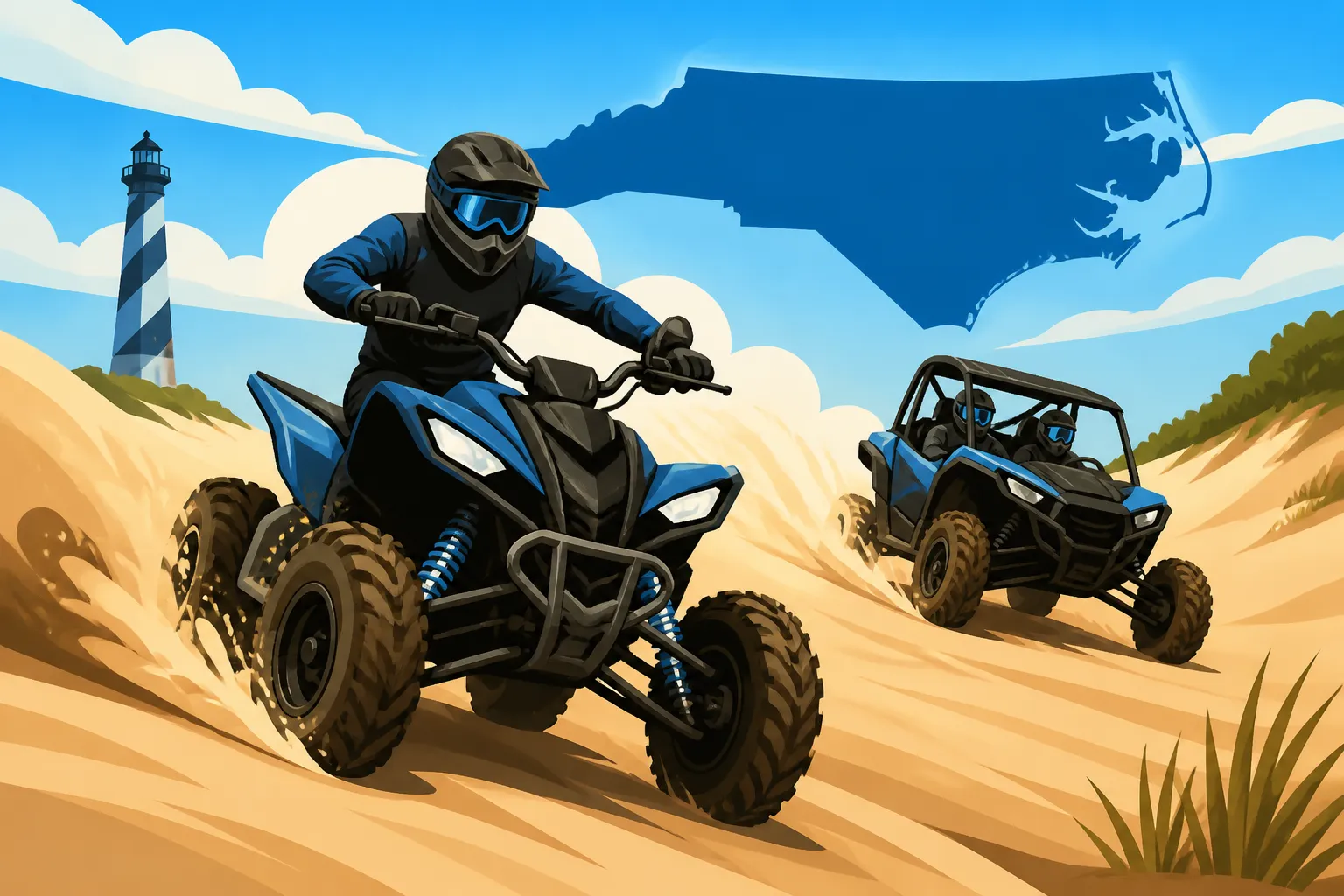
Let's address the elephant in the room right away: North Carolina is not a state known for its open, recreational sand dunes like you might find out west in places like Glamis or even across the border in states with large, designated off-road parks. That vision of vast, shifting sandscapes where you can freely climb and descend endless hills with your ATV or UTV simply doesn't exist here in the Tar Heel State for public recreational riding.
The allure of dune riding is incredibly strong. There's a thrill to tackling that soft, ever-changing terrain, feeling your machine dig in, and seeing the panoramic views from the top of a sand hill. It's a unique challenge that tests both rider skill and machine capability. Many riders, especially those new to North Carolina or visiting from other regions, naturally wonder if our extensive coastline and sandy soil offer similar opportunities. Unfortunately, when it comes to true, unrestricted dune riding, the answer is a pretty firm "no" for recreational ATVs and UTVs.
Our coastline, while undeniably beautiful and featuring plenty of sand, is characterized by delicate ecosystems, protective dunes that stabilize the land, and extensive conservation efforts. These dunes are vital barriers against storm surge and erosion, providing critical habitat for countless species of plants and wildlife. As such, they are heavily protected by state and federal laws, making them off-limits to vehicle traffic. Even on the beaches themselves, recreational ATV and UTV use is severely restricted, if not outright prohibited, in most areas.
North Carolina's Coastal ATV Rules: Where the Sand Is Fair Game (and Where It Isn't)
When people think of "dune riding" in a coastal state, their minds often drift to beach driving. And while North Carolina does have specific areas where vehicles are permitted on the sand, it's a very different experience than what you'd call "dune riding." This distinction is crucial to understand if you plan on bringing your machine anywhere near the ocean.
Beach Driving Versus Dune Riding: A Crucial Distinction
In North Carolina, when vehicles are allowed on the beach, it's almost always for "beach driving" – meaning you're operating on the flat, packed sand between the high tide line and the ocean, or in specific, designated access corridors. This is primarily for activities like fishing access, allowing residents and visitors to drive 4×4 trucks or SUVs directly onto the shore to set up their gear. It is generally not for recreational joyriding, and absolutely not for tearing through the delicate dune systems. In fact, driving on or over the dunes is strictly prohibited and can lead to hefty fines, as these fragile ecosystems are protected. Many of the rules governing beach access for vehicles, such as [North Carolina's Ocean Beach Rule] and [The 16-and-Over Rule on a North Carolina Beach], are geared towards traditional 4×4 vehicles, not necessarily ATVs or UTVs.
For recreational ATVs and UTVs, access to North Carolina's ocean beaches is extremely limited. You won't find designated "dune parks" or expansive stretches of coastline open for off-road vehicle play. Most towns and counties along the coast have strict ordinances prohibiting such use to protect the environment and ensure public safety. There might be rare exceptions for specific commercial or emergency services, but for the average rider looking to kick up sand, the beach is largely off-limits. If you do find a rare exception, be aware that strict rules about speed, operating hours, and designated zones will apply. The general guidance under [North Carolina Rules for Riding a Beach] is to assume recreational ATV use on the coast is not permitted unless explicitly stated otherwise by local authorities, and even then, it's not "dune riding."
The Strict Regulations for Coastal ATV Use (If Any)
Even in the extremely rare instances where an ATV or UTV might be allowed on a specific stretch of beach for a particular purpose (which is almost always official use, like by law enforcement, emergency services, or commercial fishers with permits), the rules are stringent. These machines are typically not permitted to ride on the dunes themselves, and often have speed limits or time restrictions. You'd also likely be subject to general ATV safety regulations, such as [North Carolina Helmet Law for ATV Riders] and [North Carolina Eye Protection Requirement], and strict age restrictions like [North Carolina Minimum Age to Ride an ATV] and [North Carolina Rules for a Rider Under 16].
For visitors, it's crucial to understand that North Carolina's approach to coastal areas prioritizes conservation. The beautiful landscapes we cherish are maintained through careful regulation, which includes restricting off-road vehicle use on beaches and dunes. This means that if you're traveling with your ATV or UTV, you'll need to leave your dreams of coastal dune blasting behind and focus on the inland opportunities the state offers. Always check with local authorities for the specific area you plan to visit, but be prepared for disappointment if your goal is recreational sand riding by the ocean.
Beyond the Ocean: Finding Sandy Terrain Elsewhere in North Carolina
While the vast, unrestricted sand dunes might be a fantasy in North Carolina, that doesn't mean you can't find enjoyable sandy terrain for your ATV or UTV. The state offers some fantastic opportunities on public forest trails and in private off-road parks where you can experience loose surfaces and challenges that evoke a similar feel, albeit in a different setting.
Forest Trails with a Sandy Twist
Head inland, particularly to the Piedmont region, and you'll discover that North Carolina's soil can be surprisingly sandy. This is especially true in areas like the Uwharrie National Forest. While you won't find towering dunes, the OHV trails there, such as those within the [Badin Lake OHV Trail Complex], often feature sections of loose, sandy soil and decomposed granite. After a dry spell, these areas can be incredibly dusty and soft, requiring good throttle control and appropriate tires – giving you that "loose terrain" experience without breaking any coastal protection laws.
The trails in national forests like the Uwharrie, the Pisgah National Forest (home to [Brown Mountain OHV Trail System]), and the Nantahala National Forest can provide a fantastic variety of terrain, including stretches that feel quite sandy. These aren't just flat, graded paths; you'll encounter climbs, descents, and twists through pine forests where the ground under your tires can shift and slide. It's a different kind of sandy adventure, focused on technical trail riding rather than open dune blasting, but it's exhilarating nonetheless. Just remember that you'll need the appropriate [North Carolina Forest OHV Permits] to ride on these public lands, and you should always adhere to designated trail boundaries.
Private Parks and Specialty Tracks
Beyond the national forests, North Carolina also boasts a growing number of private off-road parks. These parks are often designed to offer a wider variety of terrain features, and many include man-made sand pits, sandy motocross tracks, or dedicated sections that mimic the feel of riding on loose, soft ground. These parks are fantastic because they allow the owners to tailor the experience, and you might find opportunities for some controlled "dune-like" riding in a safe, managed environment.
When tackling these diverse terrains, including sandy sections in private parks or dusty forest trails, having the right setup on your machine makes all the difference. Companies like SuperATV offer a huge range of aftermarket parts that can enhance your ATV or UTV's performance in loose conditions. For instance, upgrading to more aggressive tires designed for soft terrain, or investing in a robust lift kit and stronger axles, can significantly improve your machine's capability and your confidence when navigating sandy climbs or washouts. Even something as simple as a heavy-duty winch from SuperATV can be a lifesaver if you find yourself bogged down in a particularly soft spot. These parks are generally pay-to-play, and you should always check their specific rules, requirements, and safety guidelines before you head out. [North Carolina's Private Off-Road Parks] are a fantastic option for those seeking diverse riding conditions.
Preparing for a Sandy Ride: Gear, Permits, and Etiquette
Regardless of whether you're tackling sandy forest trails or a dedicated sand pit in a private park, preparing properly is key to a safe and enjoyable experience. Riding on loose terrain presents its own unique challenges, and having the right gear and knowledge can make all the difference.
Essential Gear for Loose Terrain
When you're expecting sand, dust is going to be a major factor. Make sure you have good eye protection – goggles are usually better than glasses as they seal against dust. A dust mask or bandana can also make a huge difference in your comfort. For your machine, consider your tires. While specialized paddle tires are usually for very deep, soft sand dunes (which aren't common in NC), an aggressive all-terrain tire with good tread can still perform well on the sandy, loose dirt you'll encounter here. Check your tire pressure before you ride; slightly lowering it can sometimes give you more floatation, but always follow your manufacturer's recommendations and consider trail conditions.
Recovery gear is also crucial. A small shovel can help if you get bogged down. A winch, especially if you're riding alone or in a small group, is invaluable for self-recovery or assisting a buddy. Companies like SuperATV offer reliable winches and high-quality tow straps that are compact enough to carry. Make sure your air filter is clean and properly oiled, as sand and dust can quickly clog it, impacting performance and potentially damaging your engine. A spark arrester is also mandatory on all public lands, ensuring compliance with [North Carolina Spark Arrester Requirements].
Navigating Permits, Safety, and Environmental Respect
Before you head out to any public lands, always ensure you have the necessary permits. For North Carolina's national forests, a [North Carolina Forest OHV Permits] is typically required, whether it's a day pass or a season pass. Additionally, if you were born on or after January 1, 1990, you must possess a valid [North Carolina ATV Safety Certificate Requirements] to ride on public trails. Carrying proof of this certificate with you is mandatory.
Beyond the permits, always prioritize safety and environmental responsibility. Stick to marked trails; never forge new paths, especially in sensitive areas or on private land without explicit [North Carolina Landowner Permission Rules]. Off-trail riding can lead to significant erosion and habitat destruction, and it's also illegal. Keep your speed appropriate for the conditions and your skill level, and always be aware of other riders, hikers, or wildlife. Packing out everything you pack in, and perhaps even a little extra trash you find, helps keep our trails beautiful for everyone. By being a responsible rider, you help ensure that these precious riding opportunities remain open for future generations.
| Feature | Imagined Desert Dune Riding (e.g., Glamis) | North Carolina Coastal Beach Driving (If Permitted) | North Carolina Inland Sandy Trails (e.g., Uwharrie) |
|---|---|---|---|
| Terrain Type | Vast, towering, shifting sand dunes | Flat, packed, or soft beach sand (intertidal zone) | Sandy soil, decomposed granite, mixed dirt/rock |
| Primary Activity | Hill climbing, sand drags, open exploration | Beach driving (often for 4x4s), fishing access | Trail riding, technical sections, mud (sometimes) |
| Legal Status for ATVs | Generally permitted in designated areas | Highly restricted, often prohibited for recreation | Permitted on designated OHV trails |
| Environmental Impact | Managed for recreational use | Strict protection of dunes, vegetation, wildlife | Erosion control, trail maintenance, ecosystem care |
| Typical Vehicles | Sand rails, paddle-tired ATVs/UTVs | 4×4 trucks, SUVs, sometimes specialized utility ATVs | All-terrain ATVs/UTVs, dirt bikes |
Disclaimer
This article is for general informational purposes only and does not constitute professional advice. Laws, prices and regulations vary by location and change over time. Consult a qualified professional for guidance on your specific situation.