Reading an Age Warning Sticker
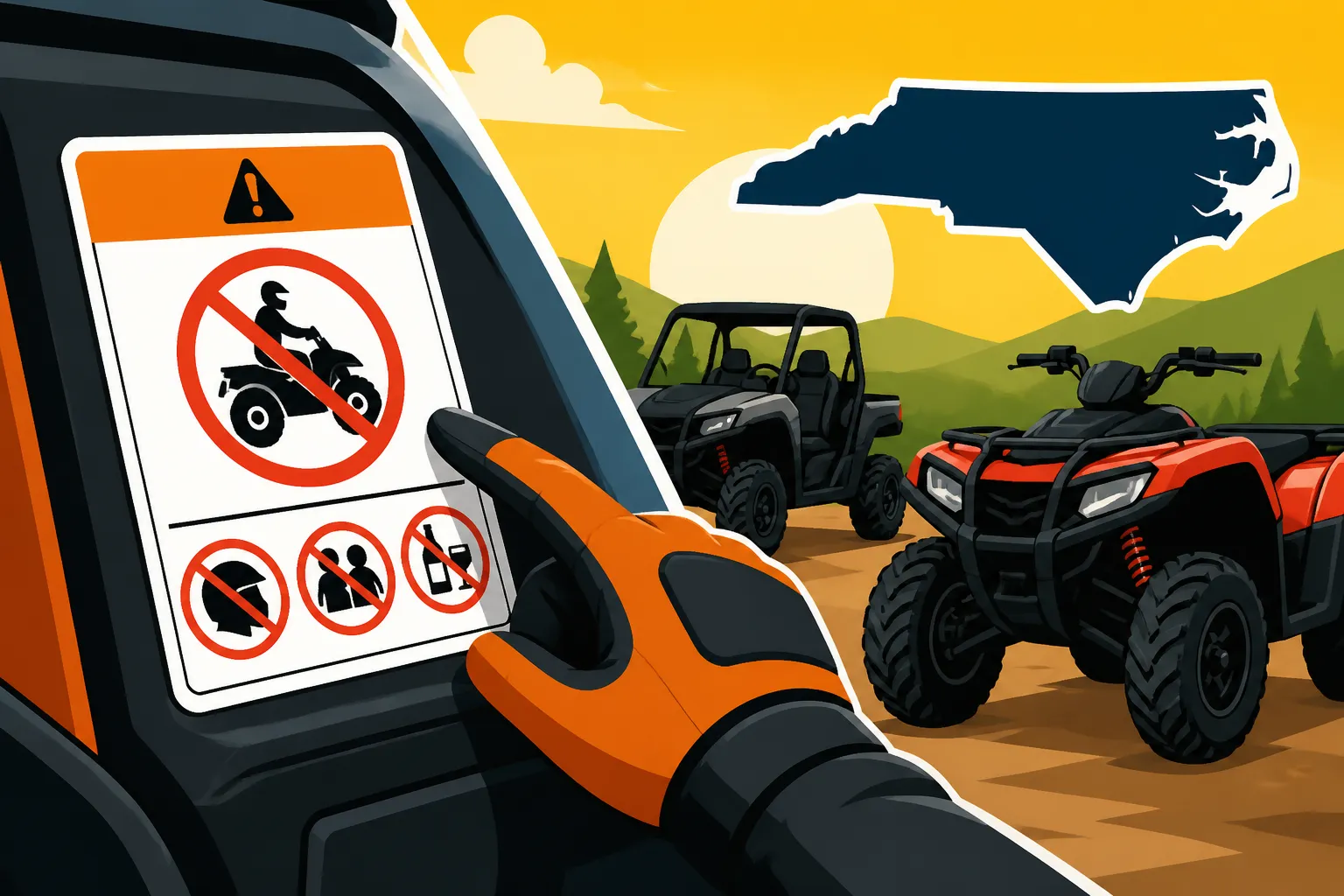
When you or your child hop on an ATV or UTV in North Carolina, one of the most overlooked, yet incredibly important, details is that little age warning sticker plastered right on the machine. It might seem like a mere suggestion or even an annoyance, but understanding what that sticker truly means – and how North Carolina law views it – can prevent serious accidents, legal headaches, and even hefty fines. This guide is here to unravel the mystery of those age warning labels, helping you navigate the rules and keep everyone safe on the trails and private lands of our beautiful state.
The Manufacturer's Age Warning Sticker: More Than Just a Suggestion
Let's face it, those stickers are everywhere on an ATV or UTV, often in multiple languages and featuring bold, stark warnings. For many years, riders and parents alike might have seen them as generic advice, easily ignored if they felt their child was "skilled enough" or "mature enough" for a larger machine. But that couldn't be further from the truth, especially here in North Carolina. These stickers are not just some marketing ploy or a casual suggestion from the manufacturer; they are a direct outcome of serious safety agreements and form a crucial part of how our state views responsible ATV operation.
These age warning labels are primarily designed to match a rider's physical and developmental capabilities with the machine's size, speed, and handling characteristics. A machine designed for a 16-year-old, with its higher center of gravity, more powerful engine, and quicker response, simply isn't appropriate for a 10-year-old, regardless of how many hours they've spent on a dirt bike. The manufacturer, often through agreements with regulatory bodies, places these specific warnings on each model to indicate the minimum age for safe operation. Ignoring these warnings isn't just a risk; it's often a direct contravention of the manufacturer's explicit safety guidelines, and in North Carolina, those guidelines carry significant weight. This is why [How a Manufacturer's Age Label Became Legally Binding] is such a critical topic for every ATV owner.
Deciphering the Age-Recommended Labels on Your Machine
The age warning stickers typically use a "minimum age" format, like 6+, 10+, 12+, or 16+. Each of these age recommendations corresponds to a specific class of ATV, designed with particular characteristics in mind. Understanding these distinctions is key to ensuring safety and compliance.
- 6+ Machines: These are generally the smallest and least powerful ATVs, often with engine sizes under 70cc (though the specific engine size rule has changed in North Carolina, the spirit of the age recommendation remains). They are designed for very young, beginner riders, focusing on stability and extremely limited speed. Their controls are simplified, and their weight is minimal, making them easier for a small child to manage.
- 10+ Machines: Stepping up slightly, these machines offer a bit more power and size, often in the 70cc to 90cc range. They are still designed for novice riders but require slightly more coordination and physical presence to operate safely. The suspension might be a bit more robust, and the overall machine can handle slightly rougher terrain, but still at very controlled speeds.
- 12+ Machines: These ATVs typically fall into the 90cc to 125cc range and represent a significant jump in power and capability. They demand more rider skill, strength, and judgment. They are faster and heavier than the younger models and can be more challenging to control, especially at higher speeds or on uneven ground. A rider on a 12+ machine needs a good understanding of weight transfer and throttle control.
- 16+ Machines (Adult-Sized ATVs): This category encompasses most standard adult ATVs and UTVs, often starting around 125cc and going up to several hundred cubic centimeters or more. These machines are built for adults, with substantial power, higher top speeds, and advanced suspension systems. They require a high degree of physical strength, balance, and advanced judgment. Allowing a rider under 16 on one of these machines is often the biggest point of contention and the most dangerous mistake, directly violating manufacturer warnings and North Carolina law.
It’s important to remember that while North Carolina once had a specific [The 70cc Engine Rule That No Longer Exists] tying engine size to age, the core principle of matching rider to machine, as outlined by the manufacturer's sticker, has not gone away. In fact, it has been strengthened through other legal mechanisms. While the 70cc rule might still circulate in old county handouts or conversations, [Why North Carolina's Repealed Rule Still Circulates] doesn't diminish the importance of the manufacturer's age recommendation.
North Carolina Law and Your ATV's Age Warning Sticker
Here's where it gets truly serious for riders and owners in the Tar Heel State. North Carolina General Statute 20-171.18, often referred to as [What North Carolina Law Says About a Rider's Age], directly incorporates the manufacturer's age warning labels into state law, making them legally binding in many crucial situations. This isn't just about general safety; it's about specific legal requirements that can lead to fines, citations, and significant liability in the event of an accident.
For any rider under 16 years of age, North Carolina law mandates adherence to the manufacturer's warning label. This means:
- A child under 8 years old is prohibited from operating an ATV, regardless of the machine's size or the manufacturer's recommendation. This is known as [North Carolina's Under-Eight Ban].
- A child between 8 and 15 years old can only operate an ATV if they are riding a machine specifically designated by the manufacturer's warning label for their age group. So, if your 12-year-old is on a machine with a "16+" sticker, they are breaking the law.
- Furthermore, riders under 16 must be under [Continuous Visual Supervision Under North Carolina Law] by an adult at all times when operating an ATV.
This legal framework means that removing or ignoring that sticker isn't just a casual oversight; it can be seen as knowingly allowing a minor to operate a machine in violation of state law. Parents, guardians, and even those who sell ATVs to others need to be acutely aware of these regulations. For instance, when it comes to [Selling an ATV in North Carolina], knowing the law surrounding these age warnings can protect both the seller and the new owner.
Consider the scenario: you've got a fantastic, powerful 450cc sport quad, a real blast to ride. Your 14-year-old, who's been riding dirt bikes since they were seven, feels perfectly capable of handling it. You might think, "They're experienced, they'll be fine." But if that quad has a "16+" sticker, and your child is caught riding it, or worse, is involved in an accident, you could be facing serious legal repercussions under [North Carolina Rules for Riders Under 16]. The law doesn't care about perceived skill; it cares about the manufacturer's designation, which is legally adopted.
Practical Implications for Riders, Owners, and Parents
Understanding these age warning labels and North Carolina's laws has widespread practical implications that go beyond just avoiding a ticket. It touches on safety, liability, and even how you think about purchasing and outfitting your machines.
For Parents and Guardians:
The primary responsibility falls on you. You need to ensure that any ATV your child operates is age-appropriate according to the manufacturer's sticker. This means taking the time to read those labels, even if they seem like "clutter." It also means resisting the urge to let a child "grow into" a larger machine too soon. The risks of injury are dramatically higher when a child is on a machine too heavy, too fast, or too powerful for their physical and cognitive development.
For Buyers and Sellers:
If you're buying a used ATV, always check for the age warning sticker. If it's missing, try to find the manufacturer's specifications online to determine the intended age group. If you're selling, be honest about the machine's intended rider age. Misrepresenting a machine as suitable for a younger rider when it clearly isn't could open you up to liability, especially if an accident occurs. This is vital whether you're dealing with a private sale or through a dealer.
Insurance and Liability:
In the unfortunate event of an accident, an insurance company or a court will absolutely look at whether the ATV was being operated according to the manufacturer's age recommendations and North Carolina law. If a minor was riding an age-inappropriate machine, it could significantly complicate insurance claims, potentially leading to denial of coverage or increased liability for the owner. It highlights why adhering to the rules on [North Carolina Rules for Riding Private Land] is just as important as on public trails.
Aftermarket Parts and Modifications:
Some riders love to customize their machines, adding performance parts from companies like SuperATV to enhance speed, power, or handling. While these modifications can be exciting for adult riders, they can drastically change a machine's characteristics. If you modify a machine, especially one that might be ridden by a minor, be aware that any performance enhancements will only further emphasize the importance of sticking to the original age warning. Boosting a youth machine's speed with a SuperATV performance exhaust, for example, makes it even less suitable for younger riders than its original, stock configuration. The age warning label isn't just about the stock machine; it's about the inherent risks it presents, and modifications can amplify those risks.
Renting an ATV:
If you're considering [Renting an ATV in North Carolina], pay close attention to the rental company's age policies. They are generally very strict about requiring riders to meet both the manufacturer's age recommendations and state law, often requiring specific safety certifications. This protects both the rental company and the rider.
Safety Gear:
Regardless of age, appropriate safety gear is non-negotiable. This includes a DOT-approved helmet, eye protection, sturdy boots, gloves, and long pants and sleeves. While this guide focuses on age, remember that [North Carolina Helmet Law for ATV Riders] and [North Carolina Eye Protection Requirement] are critical for everyone, especially those under 18.
Here’s a quick overview of common age warnings and what they generally imply:
| Age Warning | Typical Engine Size (approx.) | Typical Machine Characteristics | Risks for Underage Riders |
|---|---|---|---|
| 6+ | Under 70cc | Small, low speed, simple controls | Overconfidence, easily outgrown |
| 10+ | 70cc – 90cc | Slightly larger, more responsive | Difficulty with weight, speed |
| 12+ | 90cc – 125cc | Faster, heavier, more complex | Control issues, high-speed crashes |
| 16+ | 125cc+ (Adult size) | Powerful, fast, heavy, advanced | Loss of control, severe injury |
Always double-check the specific sticker on your machine, as these are general guidelines.
The manufacturer's age warning sticker isn't just a piece of plastic; it's a vital safety tool and a legal cornerstone in North Carolina for ATV operation. By understanding its meaning and respecting the laws built around it, we can all contribute to a safer riding environment for everyone, especially our younger riders, ensuring countless more years of fun on the trails.
Disclaimer
This article is for general informational purposes only and does not constitute professional advice. Laws, prices and regulations vary by location and change over time. Consult a qualified professional for guidance on your specific situation.