North Carolina Rules for Riding While Hunting
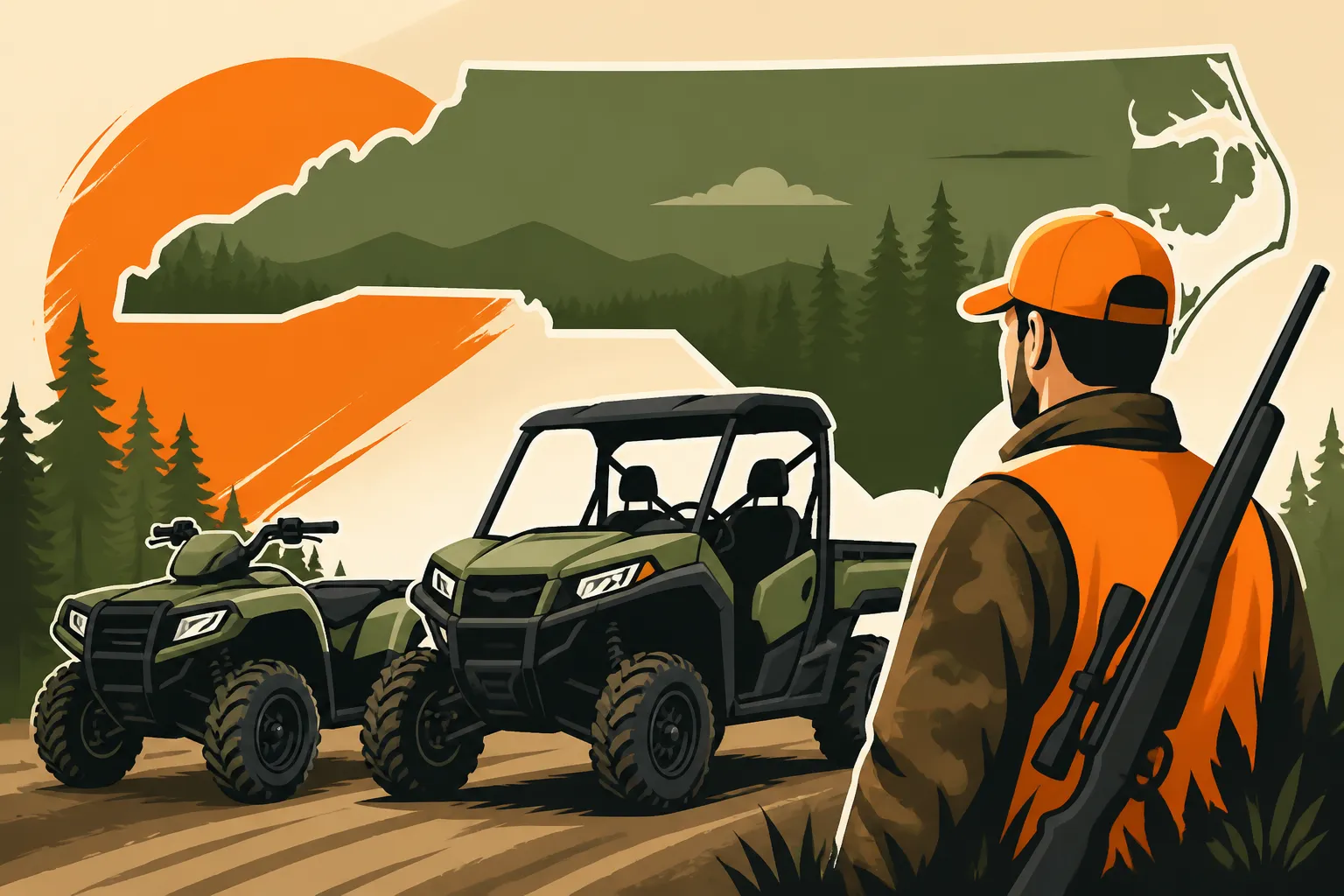
There's nothing quite like the crisp autumn air in North Carolina, the anticipation of a good hunt, and the convenience of having your ATV or UTV to help with gear and game. However, the excitement of the hunt can quickly turn to frustration if you're not absolutely clear on the rules for using your machine while you're out there. Many hunters wonder if their trusty quad or side-by-side can truly be an asset in the field or if it's just a ticket to a hefty fine. This guide will cut through the confusion, clearly laying out North Carolina's regulations so you can focus on the hunt, not the legalities.
The Basics: ATVs, UTVs, and North Carolina Hunting Regulations
When you're combining the thrill of the hunt with the utility of an ATV or UTV, it’s easy to get caught up in the moment and overlook specific regulations. North Carolina law draws some pretty clear lines, and understanding them is the first step to a successful and legal hunting trip.
General ATV/UTV Use in Hunting – What's Allowed and What's Not
It's a common misconception that because you own private land or have permission to hunt on it, your ATV or UTV can be used carte blanche for any hunting activity. While machines are incredibly useful for hauling stands, feeders, and even field-dressed game, their use must still adhere to general ATV/UTV operation laws, even on private property. For instance, reckless operation, damaging property, or operating under the influence are still strictly prohibited, regardless of whether you're hunting or just joyriding. The main distinction often lies in whether the machine is being used for transport versus actively aiding in the taking of game. You can generally use your machine to get to your stand or retrieve equipment, but using it to pursue game or directly assist in shooting an animal is typically where you'll run into trouble. Always remember that safety rules, such as those regarding helmets for younger riders, still apply. [North Carolina Rules for Riding While Hunting] delves into this further.
Understanding "Hunting" in the Eyes of North Carolina Law
The term "hunting" can sometimes be broader than just the act of pulling the trigger. North Carolina's wildlife resources commission regulations often define "take" or "taking" as including "hunting, trapping, fishing, possessing, capturing, killing, polluting, purchasing, selling, collecting, molesting, or attempting to hunt, trap, fish, possess, capture, kill, pollute, purchase, sell, collect, or molest." This is important because it means if your ATV or UTV is facilitating any of these actions beyond simple transportation, you could be in violation. For example, using a machine to drive deer toward other hunters, or to actively pursue an animal after it's been shot, would likely be considered "taking" and could lead to penalties. The key is to separate the machine's role as a utility vehicle for access and transport from its potential role in the actual act of hunting itself. This distinction is crucial, especially when you consider that [Riding While Hunting Outside the Chapter] of specific ATV regulations can still fall under broader wildlife laws.
Where You Can (and Cannot) Ride Your Machine While Hunting
Knowing how you can use your ATV or UTV while hunting is only half the battle; the other half is knowing where. North Carolina has diverse landscapes, from private farms to vast national forests and game lands, each with its own set of rules regarding off-road vehicle access.
Private Land and Landowner Permission
If you're fortunate enough to hunt on private land, whether your own or with explicit permission, you generally have more leeway with your ATV or UTV. However, "more leeway" doesn't mean "no rules." Your use is still subject to the landowner's specific permissions and any local ordinances. Always get clear, written permission from the landowner outlining what areas you can access and what activities are permitted with your machine. This isn't just about legality; it's about good stewardship and maintaining positive relationships. You might be allowed to create new trails for retrieving game on your own property, but on leased land, even existing logging roads might be off-limits if not specified. Remember that even on private land, federal regulations might apply if you're dealing with migratory birds or endangered species, though these typically don't restrict the method of ATV use for retrieval as much as where you can hunt. For a deeper dive into private land considerations, check out [Riding Private Ground in North Carolina].
Game Lands and National Forests: Specific Restrictions
This is where things get significantly stricter. North Carolina's Game Lands, managed by the Wildlife Resources Commission, and the state's National Forests (like the Uwharrie, Pisgah, and Nantahala) have very specific, often restrictive, rules for ATVs and UTVs. On most Game Lands, the use of motorized vehicles, including ATVs and UTVs, is generally prohibited for "taking" or "retrieving" game. You might be able to use designated forest roads or trails to access certain hunting areas, but actively going off-road into the woods to track or retrieve game with your machine is almost certainly forbidden.
Here's a quick breakdown of common public land rules:
| Aspect | Private Land (with permission) | Game Lands (WRC) | National Forests (USFS) |
|---|---|---|---|
| ATV/UTV Access | Generally permitted as per landowner agreement | Restricted to designated roads/trails only | Restricted to designated OHV trails/forest roads |
| Retrieving Game | Often allowed, check landowner permission | Generally prohibited for game retrieval off-road | Generally prohibited for game retrieval off-road |
| Carrying Firearms | Allowed, follow state laws (unloaded, cased) | Allowed on designated routes, follow state laws | Allowed on designated routes, follow state laws |
| Hunting Activity | Permitted as per state law & landowner terms | Prohibited to "take" game from a vehicle | Prohibited to "take" game from a vehicle |
| Permits Required | N/A (aside from hunting license) | Hunting license, game lands permit | Hunting license, forest OHV permit (for designated trails) |
It's critical to remember that [North Carolina Rules for Riding Game Lands] are designed to manage wildlife populations and preserve habitat, which means minimizing disturbance from vehicles. Similarly, in National Forests, even if there are [North Carolina Rules for Riding a State Park Road] that might seem lenient, the specific regulations for OHV use within the hunting areas are usually much tighter. Always check the individual game land or forest district's specific regulations before heading out. A quick call to the local ranger station or wildlife enforcement office can save you a lot of headache.
Crossing Roads and Accessing Hunting Spots
Getting to your prime hunting spot sometimes means crossing a public road. This is a common pain point for ATV and UTV owners in North Carolina. While [North Carolina Rules for Crossing a Road] might allow for a direct, perpendicular crossing of a public road to get from one section of private property to another, or to access a designated trail, it's generally a very limited allowance. You absolutely cannot ride your ATV or UTV down a public road to get to your hunting area, even if it's just a short distance. This includes shoulders and ditches. The machine must be trailered to the access point. The only exception for road use might be if your machine qualifies as a [Modified Utility Vehicle in North Carolina] and is properly registered, insured, and equipped for street legal use, but most hunting ATVs/UTVs won't meet these stringent requirements. Stick to trailering your machine to the designated access points for public lands, or to private land where you have permission to unload directly.
Specific Legalities: Carrying Firearms, Retrieving Game, and Equipment
Beyond where you ride, how you equip your machine and what you do with it during the actual hunt are equally important legal considerations. Hunters often outfit their machines with various accessories, but each addition and action must comply with the law.
Transporting Firearms and Bows on Your ATV/UTV
North Carolina law is generally clear: a firearm transported on an ATV or UTV must be unloaded. For shotguns and rifles, this means no round in the chamber and no loaded magazine inserted. For handguns, it typically means being unloaded and in a closed compartment or securely cased. Bows should also be unstrung or cased for transport to prevent accidental discharge or damage. This rule is designed for safety, reducing the risk of accidental shootings while traversing rough terrain.
Many companies, like SuperATV, offer excellent storage solutions specifically designed for ATVs and UTVs. These include rugged gun scabbards that securely hold your rifle or shotgun, and specialized bow racks that keep your equipment safe and protected from the elements and trail vibration. Investing in these can not only help you comply with the law but also protect your valuable hunting gear. Always ensure your chosen method of transport keeps your weapon secure, protected, and most importantly, unloaded and inaccessible for immediate use. You can find more details regarding this in [North Carolina Rules for Carrying a Firearm on an ATV].
Retrieving Harvested Game with Your Machine
This is often where hunters face the most confusion and run afoul of the law. The thought of dragging a heavy deer or bear out of a deep ravine by hand after a successful hunt is daunting, and naturally, many hunters look to their ATV or UTV for help. However, as mentioned earlier, on Game Lands and National Forests, using a motorized vehicle to retrieve game by going off designated trails is almost universally prohibited. This is to prevent habitat destruction, minimize disturbance to other wildlife, and ensure fair chase.
On private land, with explicit landowner permission, using your ATV or UTV to retrieve harvested game is generally acceptable. You might use a winch, a small utility trailer, or simply load the animal onto a cargo rack. Even here, however, ethical considerations apply. Avoid creating new, deep ruts, and be mindful of other hunters or landowners who might be nearby. If you're using a utility vehicle for hauling, ensure it's equipped for the task, perhaps with heavy-duty springs or a cargo box from a reputable brand like SuperATV to handle the weight without compromising safety or stability. For comprehensive information, consult [Retrieving Game by ATV in North Carolina].
Required ATV/UTV Equipment for Hunting Use (If Any)
While North Carolina doesn't have specific "hunting-specific" equipment rules for ATVs, general operating requirements still apply and are particularly important when hunting.
- Spark Arresters: If you're riding on public lands, especially National Forests, a properly functioning spark arrester is absolutely mandatory. This crucial piece of equipment prevents sparks from escaping your exhaust and potentially starting a wildfire. [North Carolina Spark Arrester Requirement] is not just a recommendation; it's a legal necessity that is strictly enforced.
- Muffler Requirements: While you might want a quiet machine for hunting, North Carolina also has general muffler requirements to prevent excessive noise. This is usually more about public nuisance than hunting strategy, but it's good practice to keep your exhaust system in good repair to minimize disturbance to wildlife and other hunters. Quiet operation also helps you be stealthier! See [North Carolina Muffler Requirements for ATVs] for more.
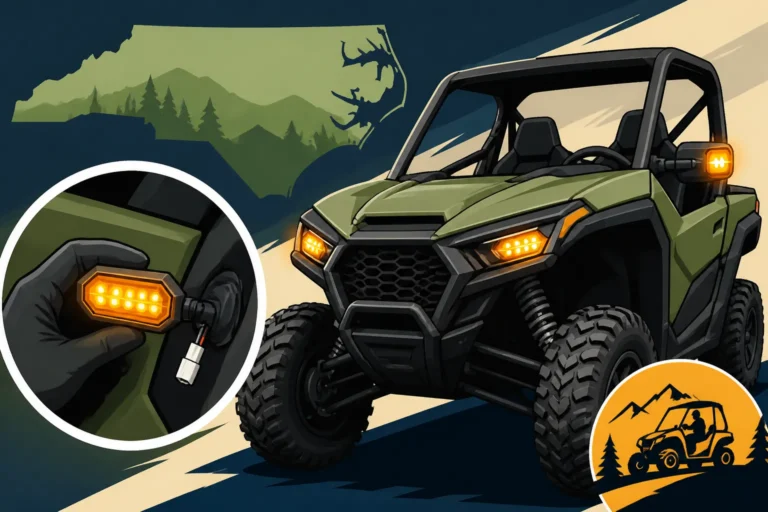
- Lighting: If you're going to be out at dawn or dusk, which is prime hunting time, proper lighting on your ATV or UTV is essential for safety and legal compliance. Many machines come with factory headlights and taillights, but consider adding auxiliary lights for better visibility on dark trails or during game retrieval. Ensuring your brake lights work is also crucial. [North Carolina Lighting Requirements for ATVs] apply to any operation after dark.
Equipping your machine with durable, well-maintained components, perhaps from SuperATV, not only enhances your hunting experience but also ensures you're ready for the varied terrain and conditions you'll encounter in the North Carolina backcountry.
Avoiding Violations and Best Practices for Hunters
The goal of any hunting trip is to enjoy the outdoors, pursue game ethically, and return home safely and legally. Understanding and adhering to North Carolina's rules for ATVs and UTVs while hunting is key to achieving this.
Understanding Penalties and Enforcement
Violating ATV/UTV regulations while hunting can lead to a range of penalties, from fines to more severe consequences. Minor infractions, like riding on a closed trail, might result in a significant fine. More serious offenses, especially those related to poaching or taking game illegally with the aid of a vehicle, could lead to loss of hunting privileges, confiscation of your machine, and even criminal charges. Wildlife enforcement officers, forest rangers, and local law enforcement all have the authority to issue citations and enforce these rules. They are often out in full force during hunting season. The financial cost of a violation, as highlighted in [North Carolina Fines for an ATV Violation], can be substantial and certainly isn't worth cutting corners.
Preparing for Your Hunt: Research and Permits
The absolute best way to avoid issues is to do your homework before you ever load your machine.
- Check Specific Regulations: Always consult the North Carolina Wildlife Resources Commission (NCWRC) regulations for the current hunting season and specifically for the game land or private property you'll be on. For National Forests, visit the specific district's website or call the ranger station. Regulations can change, so never rely on old information.
- Permits: If you plan to ride on designated OHV trails within a National Forest to access hunting areas (and remember, you can't typically go off those trails for hunting purposes), you will need the appropriate forest permit. This could be a day permit or a season permit. For more on this, check out [North Carolina Forest OHV Permits].
- Hunter Safety: While not directly tied to ATV use, completing a hunter safety course is mandatory for many hunters in North Carolina and instills a strong sense of ethical and legal responsibility.
Taking these preparatory steps ensures you're informed and compliant, allowing you to enjoy your hunt with peace of mind.
Respecting Wildlife and Other Hunters
Beyond the letter of the law, there's a strong ethical component to using ATVs and UTVs while hunting.
- Minimize Disturbance: Machines, even quiet ones, create noise and scent. Use your ATV or UTV sparingly in sensitive areas and always be mindful of disturbing wildlife or other hunters. Drive slowly and carefully.
- Stay on Designated Trails: This goes back to legal compliance but also shows respect for the environment. Going off-trail can damage habitat, erode soil, and create unnecessary conflicts.
- Consider Others: Hunting areas, especially public ones, are shared spaces. Be courteous to other hunters, hikers, and outdoor enthusiasts. Their experience shouldn't be negatively impacted by your machine use.
By combining thorough preparation, adherence to all regulations, and a strong sense of ethical responsibility, your ATV or UTV can indeed be a valuable tool to enhance your North Carolina hunting adventures without attracting unwanted attention from wildlife officers or other outdoor enthusiasts. Keeping your machine well-maintained with quality parts, perhaps from SuperATV, also contributes to a smoother, quieter, and more reliable experience.
Disclaimer
This article is for general informational purposes only and does not constitute professional advice. Laws, prices and regulations vary by location and change over time. Consult a qualified professional for guidance on your specific situation.