North Carolina Rules for Riding With a Dog
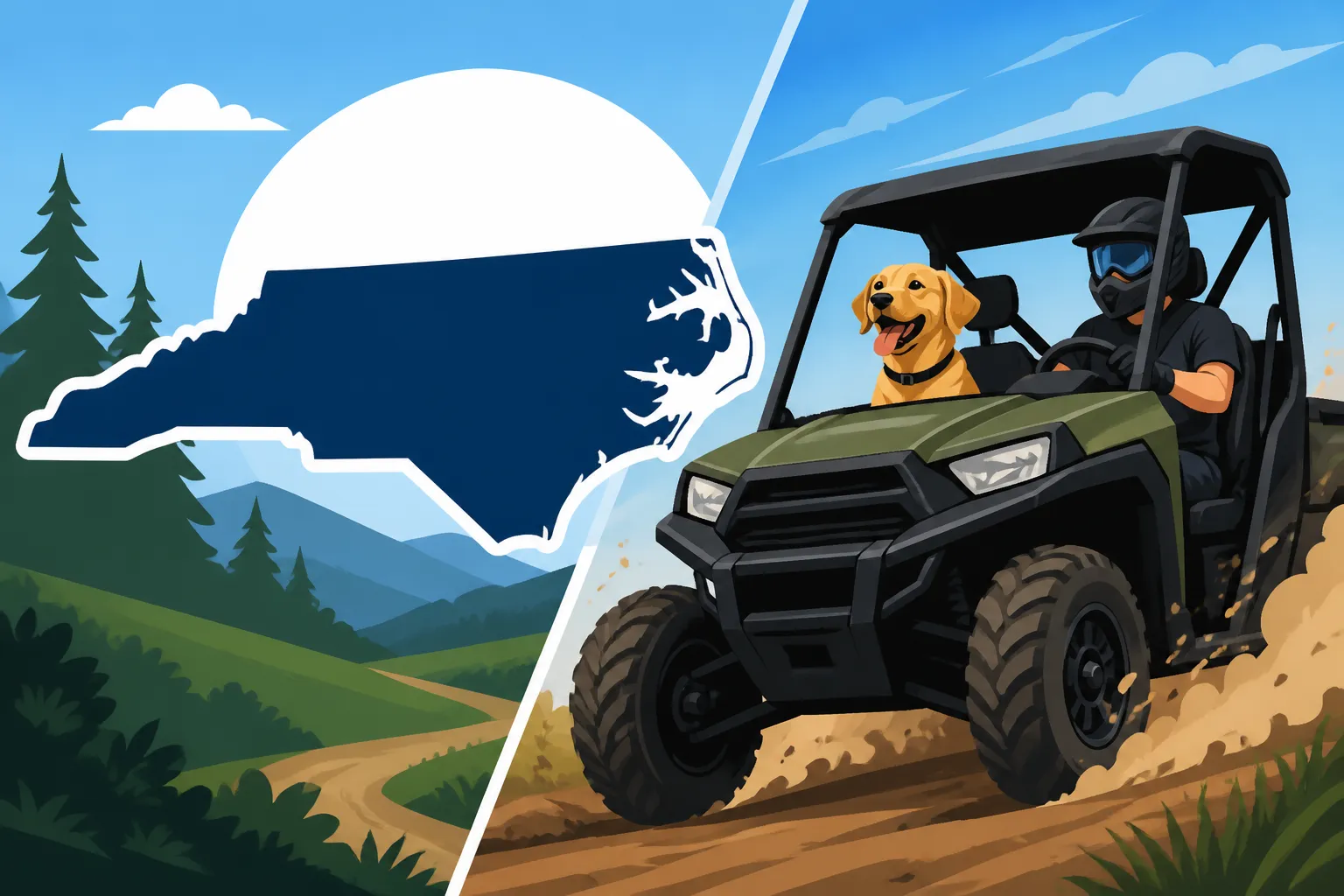
Many ATV and UTV riders across North Carolina dream of sharing their outdoor adventures with their best four-legged friends. There's nothing quite like hitting the trails or cruising a back road with your loyal canine companion by your side, taking in the sights and smells. However, the excitement of bringing your dog along often bumps up against a wall of questions: What are the actual rules? Is it even legal? What about safety? This guide will cut through the confusion and explain the specific considerations and regulations you need to know when riding your ATV or UTV with a dog in North Carolina, helping you keep everyone safe and on the right side of the law.
The General Absence of Specific ATV Dog Laws in North Carolina
When you start digging into North Carolina's statutes regarding ATVs and UTVs, you'll quickly notice a pattern: there aren't any laws specifically dictating whether or how you can ride with a dog on your off-road machine. This might seem like a green light for Fido to join every ride, but it's crucial not to mistake a lack of specific legislation for a lack of rules altogether. Instead, your canine co-pilot's presence will be governed by broader regulations concerning animal welfare, public land use, and general road safety, depending on where and how you're riding.
North Carolina's approach to ATVs and UTVs often focuses on where they can operate – primarily off-road on private land, designated trails, or under specific exceptions like farming operations. The state doesn't have a universal ATV registration system, nor does it issue trail stickers or decals for off-road use. This means that while the DMV isn't tracking your dog's presence on your quad, other authorities, like park rangers or local law enforcement, certainly can and will enforce relevant regulations. For instance, while you might be permitted to ride your ATV on private land with the owner's permission, that same landowner might have their own specific rules about dogs, especially if there's livestock or sensitive wildlife present. Always clarify these points before you unload your machine and your furry friend. Remember, the absence of an explicit "no dogs on ATVs" law doesn't mean "anything goes." It simply means you need to look at the situation through the lens of other, more general regulations that apply to pets and vehicles.
Public Land Rules and Your Canine Companion
This is arguably the most critical section for anyone planning to ride with their dog, as public lands are where most riders will encounter specific rules and potential enforcement. Whether you're heading to a national forest, a state park, or even certain beach access points, your dog's presence will almost certainly be regulated.
National Forests: Leash Laws and Respect for Wildlife
North Carolina is home to beautiful national forests like the Uwharrie, Pisgah, and Nantahala, which offer designated OHV (Off-Highway Vehicle) trail systems. These areas are governed by federal regulations, specifically those from the U.S. Forest Service. The overarching rule in all national forests is that dogs must be kept on a leash no longer than six feet, regardless of whether you're hiking, camping, or riding an ATV. This rule isn't just a suggestion; it's actively enforced.
Why the strict leash law? It's all about balancing recreation with conservation and ensuring the safety and enjoyment of all visitors. Unleashed dogs can harass wildlife, disturb other visitors, and even put themselves in danger from other animals, vehicles, or environmental hazards. Imagine your dog chasing a deer across an OHV trail, potentially causing an accident for another rider, or encountering a venomous snake or a territorial bear. Beyond the leash, you are also responsible for cleaning up after your dog. "Leave No Trace" principles apply to pet waste as much as anything else. While the OHV trails might be wide enough for your machine, the presence of your dog adds another dynamic. Dust and debris kicked up by your ATV can irritate your dog's eyes and lungs. Long rides can be physically taxing for a dog, leading to heatstroke or paw injuries. Always plan for frequent stops, offer plenty of water, and consider protective gear like doggles or paw boots. Before you embark on a multi-day trip or even a long afternoon ride, it's wise to consult [Where to Ride an ATV in North Carolina] to check specific forest regulations, as some areas might have additional restrictions or seasonal closures.
State Parks and Game Lands: Often More Restrictive
North Carolina State Parks generally have stricter rules regarding pets. While many parks allow leashed dogs in certain areas like picnic grounds or specified trails, they often prohibit them from swimming areas, park buildings, or environmentally sensitive zones. When it comes to ATVs, most North Carolina State Parks do not permit their use at all, let alone with a dog in tow. So, if you're thinking of combining a park visit with an ATV ride, chances are you'll need to reconsider.
Game Lands, managed by the North Carolina Wildlife Resources Commission, present another set of considerations. While hunting is often a primary activity on these lands, the rules for dogs can vary significantly, especially during different seasons. If you're on a game land during hunting season, your dog could be at risk if not properly identified and controlled, or even mistaken for game. Hunters with dogs might also be present. For specific details, it is always best to check the Wildlife Resources Commission's current regulations, especially if you're riding an ATV or UTV in one of these areas. It’s important to familiarize yourself with [North Carolina Rules for Riding Game Lands] before planning any adventure there. The general rule of thumb for both State Parks and Game Lands is to expect more restrictions than in national forests, and always verify before you go.
Ocean Beaches: Seasonal and Time-of-Day Limitations
Riding an ATV on North Carolina's beautiful ocean beaches is already heavily restricted, primarily limited to designated areas for specific purposes (like commercial fishing or emergency services) or during certain times of the year and day. Where ATVs are permitted, the rules for dogs are usually tied to local ordinances, which often impose seasonal bans or time-of-day restrictions, especially during peak tourist seasons.
For example, many coastal towns will prohibit dogs from beaches during daylight hours in the summer, or require them to be leashed year-round. Even if your ATV or UTV is legally on a beach (which is rare for recreational use), your dog is still subject to these local rules. Saltwater, sand, and heat can also be hard on dogs, leading to dehydration, paw irritation, or skin issues. Always check the specific rules of the town or county where you plan to ride, as outlined by [North Carolina's Ocean Beach Rule]. Don't assume that just because your machine might be allowed in a specific situation, your dog will be too.
Road-Legal Considerations and Your Dog
If your ATV or UTV happens to be one of the rare machines modified to be street-legal in North Carolina – specifically, a Modified Utility Vehicle (MUV) – then the rules regarding your dog's presence shift from off-road land management to general vehicle and animal transport laws. An MUV, while technically an off-road machine, has been modified and registered to operate on public roads where the speed limit is 55 mph or less. This means it's treated much like any other vehicle on the road.
When you're driving an MUV on a public street, your dog essentially becomes a passenger, and general safety protocols for transporting animals in a vehicle apply. North Carolina law generally requires that animals transported in vehicles are secured in a way that prevents them from interfering with the driver's ability to operate the vehicle safely or from being a danger to themselves or others in the event of an accident. This means letting your dog sit on your lap while driving, or allowing them to roam freely in the passenger compartment of your UTV, could be considered unsafe and potentially lead to a citation. A loose dog could easily become a projectile in a sudden stop or swerve, injuring themselves or you. They could also distract you by jumping, barking, or attempting to get out of the vehicle.
For road travel, especially at higher speeds or in traffic, it's highly recommended to secure your dog in a crash-tested travel crate or with a properly fitted harness that can be tethered to a seatbelt anchor. This protects your dog and ensures you remain in full control of your MUV. Remember that [North Carolina's Modified Utility Vehicle Route] is designed for careful adherence to road laws, and that extends to all occupants of the vehicle, canine or human. You wouldn't let a human passenger ride unsafely, so the same consideration should be given to your dog. Also, keep in mind that a registered MUV will have specific [North Carolina MUV Insurance Requirements], and while this insurance covers accidents, it doesn't waive your responsibility for safe animal transport.
Practical & Safety Tips for Riding with Your Dog
Beyond the legalities, ensuring your dog's safety and comfort is paramount when bringing them along for an ATV or UTV ride. These machines are loud, dusty, and operate in environments that can be challenging for pets.
Acclimation and Training
Before you hit a rough trail, slowly introduce your dog to the ATV or UTV. Let them sniff around the machine when it's off. Start the engine briefly so they can get used to the noise and vibration. Take short, slow rides on flat ground before attempting anything strenuous. Some dogs might never get comfortable with the experience, and that's okay. Their comfort and safety should always come first. A well-trained dog that responds to commands like "stay," "leave it," and "come" is essential for off-road environments, where unexpected wildlife or other riders can appear. This is especially true on public lands where a lapse in control could lead to a fine or, worse, harm to your dog or others.
Essential Gear for Your Canine Co-Pilot
Just as you wear a helmet and other protective gear, your dog can benefit from specialized equipment:
- Doggles (Dog Goggles): These protect your dog's eyes from dust, debris, branches, and harsh sunlight. Just like human eye protection requirements, even though [North Carolina Helmet Law for ATV Riders] is for humans, the principle of protection extends to all occupants.
- Paw Protection (Boots): Trails can be rough, hot, or full of sharp rocks. Dog boots can prevent cuts, abrasions, and burns.
- Secure Harness or Crate: As mentioned for road-legal machines, this is vital for off-road too. A sturdy, well-ventilated crate secured in the cargo bed of a UTV (many UTV owners add aftermarket storage solutions like those from SuperATV to safely secure crates) or a secure harness designed for vehicle travel will keep your dog safe from sudden jolts, sharp turns, or even rollovers. Never let your dog ride unsecured in the bed of a UTV or on the rack of an ATV.
- Life Vest: If your ride involves water crossings or areas near lakes, a dog life vest is a smart addition, even for strong swimmers.
Hydration and Breaks
Dogs can overheat quickly, especially when exposed to direct sun, exertion, and the ambient heat from a running engine. Always carry plenty of fresh water for your dog and offer it frequently. Plan for regular breaks where your dog can stretch their legs, relieve themselves, and cool down in the shade. On longer rides, consider a cooling vest or bandanna. Don't forget their food, and make sure to pack it securely in a dust-proof container.
First Aid and Emergency Preparedness
A basic first-aid kit for dogs is a must-have. Include items like antiseptic wipes, bandages, medical tape, tweezers (for ticks or thorns), and any specific medications your dog might need. Know how to recognize signs of heatstroke, dehydration, or paw injuries. Ensure your dog wears identification tags with current contact information, and ideally, has a microchip. If you're riding in remote areas, cell service might be spotty, so have a plan for how to get help if your dog suffers a serious injury.
Trail Etiquette and Environmental Awareness
When riding with your dog on shared trails, be extra mindful of others. Not everyone is comfortable around dogs, and some people or their pets might be fearful. Keep your dog leashed and under close control, especially when approaching other riders, hikers, or horses. Always yield to horses and hikers. Be aware of local wildlife; your dog's presence could disturb nesting birds, deer, or other animals. Stick to designated trails to protect sensitive ecosystems and prevent your dog from wandering into hazardous areas, adhering to rules like [North Carolina Rules for Riding Off the Trail]. For rides extending into the evening, ensure your dog is easily visible, perhaps with a reflective vest, especially if you find yourself on a forest road near twilight, which might fall under the same principles as [North Carolina Rules for Riding After Dark].
Summary of Dog Rules by Land Type in North Carolina
Here’s a quick overview of how dog rules generally apply across different types of land in North Carolina when riding your ATV or UTV:
| Land Type | ATV/UTV Use | Dog Rules (General) | Key Considerations for Riding with Dog |
|---|---|---|---|
| Private Land | Permitted | Owner's discretion; often leash/control requirements | Always get permission, respect owner's rules, clean up waste. |
| National Forests | Designated OHV | 6-foot leash required, waste removal. | Leash enforcement, wildlife protection, dog's stamina, protective gear. |
| State Parks | Generally NOT | Leashed in designated areas; often prohibited in others. | ATVs usually not allowed; check park-specific rules if allowed. |
| Game Lands | Permitted (specific) | Varies by season/activity; often leash/control. | Check NC Wildlife Resources Commission for specific rules, especially during hunting season. |
| Ocean Beaches | Highly Restricted | Local ordinances; seasonal/time-of-day restrictions. | ATV access already limited; dog rules strictly enforced by local authorities. |
| Public Roads (MUV) | Permitted | Secure transport (crate/harness); prevent driver distraction. | Treated like vehicle passenger; apply general animal transport safety. |
Always double-check specific regulations for the precise location you plan to visit, as rules can change and local ordinances vary. It’s also wise to research [North Carolina Landowner Permission Rules] if you plan to ride on private property, as written permission can sometimes include stipulations about pets.
Riding your ATV or UTV with your dog in North Carolina can be an incredibly rewarding experience, deepening your bond and creating lasting memories. However, it requires careful planning, adherence to rules, and a strong commitment to safety for both you and your furry friend. By understanding the regulations governing different land types and implementing smart safety practices, you can ensure that your adventures are not only fun but also responsible and respectful of the environment and others.
Disclaimer
This article is for general informational purposes only and does not constitute professional advice. Laws, prices and regulations vary by location and change over time. Consult a qualified professional for guidance on your specific situation.