Riding Home After a Blue Ridge Sunset
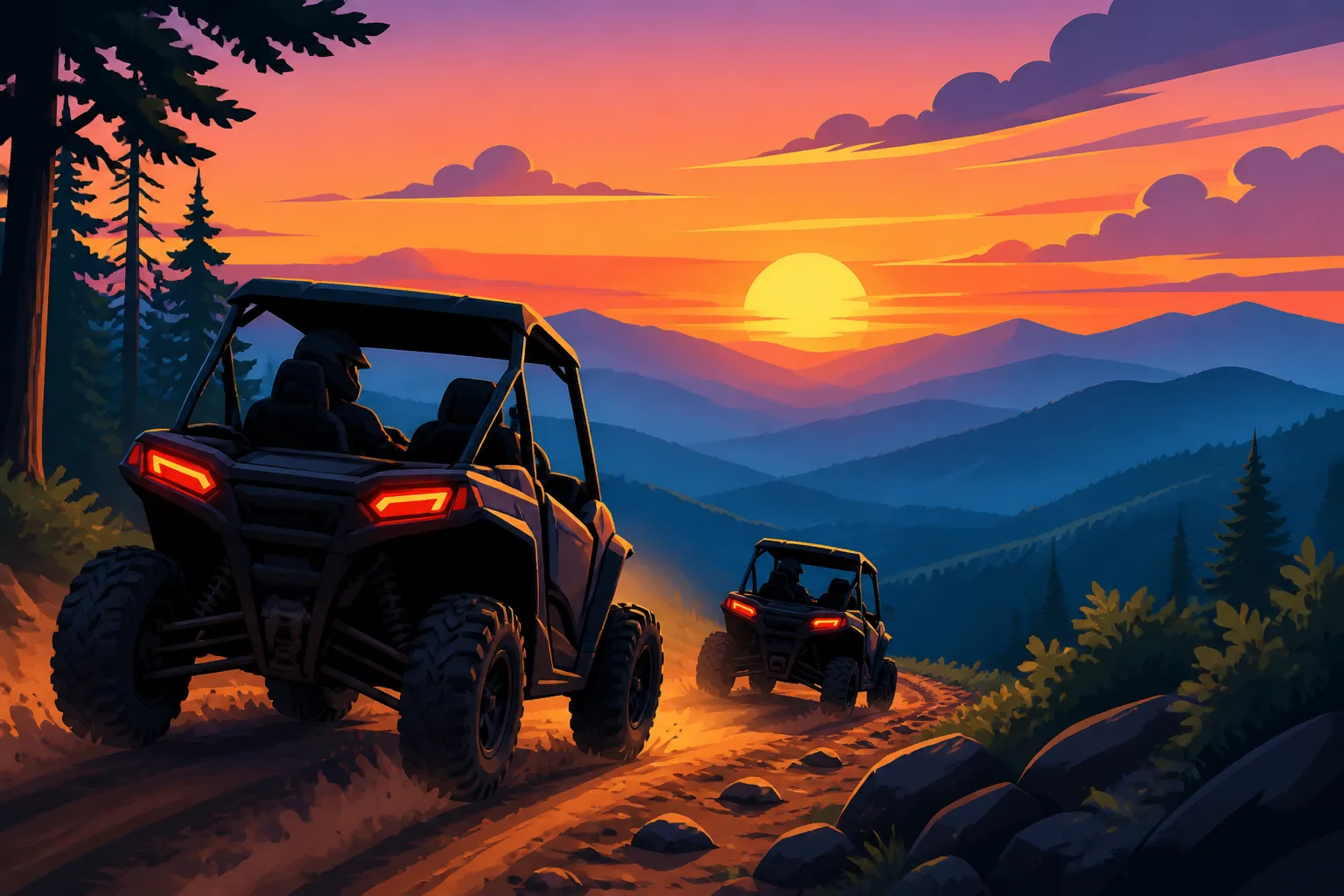
That magical feeling of watching the sun dip below the peaks of the Blue Ridge Mountains, painting the sky in fiery oranges and soft purples, is something truly special for any off-road enthusiast. You've had an incredible day on the trails, the air is cooling, and there's a peaceful calm settling over the landscape. But as beautiful as that sunset is, the reality of riding your ATV or UTV home as darkness descends in North Carolina brings a whole new set of considerations – primarily around safety, visibility, and, crucially, the often-confusing legalities of night riding on public thoroughfares. This guide is here to help you understand what you need to know to navigate that post-sunset journey safely and within the bounds of the law, ensuring your ride home is as enjoyable and incident-free as your day on the trails.
The Beauty and the Reality of Blue Ridge Night Rides
There’s a certain allure to lingering on the trails as the day gives way to night, especially when you’re surrounded by the breathtaking scenery of North Carolina’s Blue Ridge Mountains. Perhaps you found that perfect overlook, or maybe you just lost track of time soaking in the crisp mountain air. Whatever the reason, finding yourself on your machine as the twilight deepens is a common experience, but it’s one that requires a swift shift in mindset and a keen awareness of your surroundings and your state's regulations.
Why Those Sunset Views Are So Tempting
The Blue Ridge Parkway, the winding forest roads around the Pisgah and Nantahala National Forests, or even simply a quiet field on private property—these places offer some of the most stunning sunset vistas you can imagine. It’s easy to get caught up in the moment, to let that golden hour stretch just a little longer, especially after a thrilling day of riding. The cooling air after a warm day, the quiet hum of your machine, the fading light filtering through the trees – it all contributes to an almost irresistible urge to just keep cruising. This desire to extend the experience is perfectly natural, but it’s precisely when we need to be most mindful of what comes next.
The Immediate Challenges When Darkness Falls
Once the sun truly sets, the challenges for ATV and UTV riders multiply quickly. Visibility, for both you and others, becomes the paramount concern. What was a clear trail just moments ago can transform into a maze of shadows and indistinct obstacles. Your factory headlights, designed for daylight-adjacent conditions or short bursts of low light, often prove woefully inadequate for true night riding. Wildlife, which tends to be more active at dusk and dawn, becomes an even greater hazard. Plus, the temperature can drop significantly, especially in the mountains, leading to discomfort if you’re not prepared. All these factors contribute to a much higher risk environment than daytime riding, regardless of whether you’re on private land or contemplating a stretch of public road.
Understanding North Carolina's Road Restrictions at Night
This is where many riders get into a sticky situation. The vast majority of ATVs and UTVs in North Carolina are simply not street legal, day or night. While you might be able to traverse a public road briefly to get from one section of trail to another during daylight hours, doing so after dark significantly increases your chances of being noticed, and consequently, ticketed. North Carolina law is quite clear that if you intend to ride on any public road after dark, your machine must meet stringent requirements for street legality. This typically means it needs to be registered as a "Modified Utility Vehicle" (MUV), which is a completely different ballgame from a standard off-road ATV or side-by-side. Trying to "just get home" on a standard machine after sunset can lead to an expensive lesson from local law enforcement or a State Trooper.
Navigating North Carolina's Lighting and Equipment Rules After Dark
When the sun goes down, your machine's equipment, particularly its lighting, transitions from a convenience to an absolute necessity. Whether you're still on private trails or exploring the very limited circumstances where you might legally be on a public road, ensuring your ATV or UTV is properly outfitted for darkness is critical for your safety and the safety of others.
Essential Lighting for Nighttime Operation
Factory-installed headlights on most ATVs and UTVs are designed to illuminate enough for limited low-light situations, perhaps getting you back to camp before it's pitch black. However, for serious night riding, or any legal road use after dark, they are often insufficient. You'll definitely want to consider auxiliary lighting. This could mean LED light bars mounted on your roof or bumper, or additional pod lights to widen your beam spread. Companies like SuperATV offer a wide range of aftermarket lighting solutions that can dramatically improve your visibility and the illumination of the terrain ahead. Beyond simply seeing, you also need to be seen. This means ensuring your taillights are fully functional and bright, and that any brake lights are working perfectly. If your machine isn't equipped with turn signals, which most standard ATVs and UTVs are not, and you're contemplating any road use, that's a major red flag as they are a requirement for street-legal machines. For detailed requirements, you can refer to [North Carolina Equipment Rules for ATVs] and specifically [Headlamp and Taillamp After Dark in North Carolina].
Other Key Equipment for After-Dark Safety
Beyond illumination, several other pieces of equipment become even more vital when riding after sunset. First and foremost are mirrors. While not always strictly enforced off-road, having rearview and side mirrors is crucial for being aware of any vehicles or other riders behind you, especially when crossing or briefly using a public road. A working horn is also essential for alerting others to your presence. Many riders also find a powerful, handheld flashlight invaluable for tasks like reading maps, checking tire pressure, or looking for trail markers in the dark. Don't forget a first-aid kit, a tool kit for minor repairs, and navigation tools (like a GPS device or a smartphone with downloaded maps) are even more critical when getting disoriented in the dark could have serious consequences. Always ensure your tires are in good condition, as navigating obstacles at night requires maximum traction and control.
Preparing Your Machine for the Unseen
Before you even think about hitting the trails or roads after dark, a thorough pre-ride inspection of your machine is non-negotiable. Check all lights – headlights, taillights, brake lights, and any auxiliary lights – to ensure they are clean and fully functional. Test your brakes to confirm they are responsive and effective, as reaction time is reduced in low light. Make sure your battery is fully charged, as increased light usage will drain it faster. It's also wise to carry a spare set of batteries for any battery-powered accessories like headlamps or GPS units. For those considering the MUV route for road use, remember that the requirements go beyond just basic lights. Things like a speedometer, a parking brake, and even specific engine size and dimension rules come into play. Understanding these details is key to preventing a ticket from [Who Writes an ATV Ticket in North Carolina] on your way home.
| Equipment Type | Standard ATV/UTV (Off-Road/Private) | Modified Utility Vehicle (MUV) (Public Road Legal) |
|---|---|---|
| Headlights | Factory standard often sufficient for basic trail use | Must be DOT-compliant, adequately bright, and correctly aimed |
| Taillights | Factory standard for visibility to rear | Must be DOT-compliant, clearly visible from specified distance, often with brake lights |
| Brake Lights | Often integrated with taillights, may be optional on older models | Required, must activate with brake pedal |
| Turn Signals | Not typically present | Required, front and rear, amber or red |
| Mirrors | Optional, good for awareness on trails | Required (left and right exterior, or one exterior left and one interior rearview) |
| Horn | Optional | Required, audible from 200 feet |
| Tires | Off-road specific tread | Must be DOT-approved if for road use, appropriate for vehicle weight |
| Speedometer | Optional, often integrated into digital display | Required, accurate |
| Parking Brake | Often included for safety | Required |
| Muffler | Required to reduce noise | Required, may have specific decibel limits |
| Windshield | Optional | Required for MUV classification (meets specific material/visibility rules) |
| Seatbelts | Common on UTVs | Required for all occupants in an MUV |
Legalities of Riding on Public Roads After Sunset in North Carolina
This is where the rubber truly meets the road, or more accurately, where your off-road tires should absolutely not be meeting the road after dark in North Carolina, unless you've gone through the proper channels. It's tempting to think you can just hop on a paved road for a short stretch to get home, especially if it feels like the quickest or safest route. However, North Carolina law is very specific, and generally, ATVs and UTVs are not permitted on public roads. The exceptions are extremely limited and require specific vehicle modifications and compliance.
The Modified Utility Vehicle (MUV) Exception
For most riders, the only legitimate way to ride an ATV or UTV on public roads in North Carolina, day or night, is if it qualifies as a [North Carolina's Modified Utility Vehicle Route]. This isn't just a casual modification; it's a specific legal classification for utility vehicles that have been adapted to meet highway safety standards. An MUV needs to meet certain criteria, including specific dimensions (length, width, height), an engine displacement of more than 2,400cc, a top speed of over 40 mph, and, crucially for night riding, full street-legal equipment like DOT-approved headlights, taillights, brake lights, turn signals, mirrors, a horn, and a speedometer. It also needs to be titled and registered with the DMV, and carry liability insurance, much like a regular car. Without this designation, your standard ATV or side-by-side does not belong on a public road, especially not after dark. Ignoring these rules can lead to significant fines and even impoundment of your machine.
Crossing Public Roads: A Brief Moment of Legality
North Carolina law does allow for extremely limited circumstances where a standard ATV or UTV can cross a public road. This is generally permitted only if you are traversing a two-lane road at an angle of approximately 90 degrees to get from one section of private property to another, or from one trail section to another, where no other reasonable access exists. The key here is "crossing" – not riding along the road for any distance. And even for these brief crossings, you must yield to all traffic and ensure the crossing is done safely. While the law doesn't explicitly state "no crossing after dark," the spirit of the law and the extreme safety hazards of doing so make it highly ill-advised. Your visibility to oncoming traffic is severely reduced, and their ability to see you is almost nonexistent, particularly if your machine lacks adequate lighting beyond basic factory headlights. It's a risk that's rarely worth taking, and you're much more likely to attract unwanted attention from law enforcement if you attempt to cross a road when it's dark. This specific allowance is covered in more detail in [Crossing a Road on an ATV in North Carolina].
Farm Operations and the After-Dark Exemption
There is a specific, narrow exception for vehicles used in farming operations. Under [North Carolina's Farming Operations Exception], ATVs and UTVs can be operated on public roads when actively engaged in necessary farming or hunting and trapping activities. This exemption allows for limited road use for purposes directly related to agricultural work, such as moving equipment between fields or checking livestock. However, this is not a blanket "farm plate" that allows unrestricted travel. The use must be directly incidental to the farming operation, and the machine still needs to display a slow-moving vehicle emblem if operating below 25 mph. While this exemption can apply after dark for legitimate farm work, the same safety considerations regarding visibility and proper lighting still hold true. Law enforcement will often scrutinize these uses, especially if it looks like leisure riding rather than essential farm activity. If you’re caught using this exemption for recreational purposes, you could face penalties.
Staying Safe and Avoiding Trouble on Your Night Ride Home
Even if you're meticulously sticking to private land or have a fully compliant MUV, night riding demands an elevated level of caution and preparation. Your personal safety and the desire to avoid any legal entanglements should be your top priorities as you head home after a beautiful Blue Ridge sunset.
Enhancing Your Visibility to Others
Whether you're on a private trail or a legitimate MUV on a public road, making yourself as visible as possible is paramount. This means more than just good headlights. Consider wearing highly reflective clothing, such as a high-visibility vest. Helmets with reflective decals can also help. For your machine, reflective tape applied to the front, rear, and sides can make a huge difference in how quickly other riders or drivers spot you. If you're riding in a group, it's a good idea for the lead and tail machines to have extra bright lights and reflective gear. Always anticipate that you might not be seen, and ride defensively. Even if you're on private property, you might encounter other riders or landowners who might not expect you after dark. For MUVs on public roads, ensure your [North Carolina MUV Insurance Requirements] are in order, as accidents are more likely to involve multiple parties after dark.
Personal Safety Gear for Low-Light Conditions
Your personal protective equipment (PPE) is always important, but after dark, it takes on an added layer of significance. A DOT-approved helmet is non-negotiable, and one with a clear visor or, even better, a built-in light or reflective elements is ideal. Eye protection is crucial to shield your vision from dust, debris, and insects that can become disorienting in the dark. Gloves will not only protect your hands but also keep them warm as temperatures drop. Layered clothing is a smart choice for mountain rides where temperatures can fluctuate rapidly. Consider a small, powerful headlamp worn on your helmet – this allows you to direct light wherever you're looking, which is incredibly useful for spotting hazards off to the side or when you stop to check your surroundings. Remember, if you're on a public road in an MUV, you'll also be subject to [North Carolina MUV Inspection Requirements] which include safety checks that ensure your machine is truly roadworthy, day or night.
What to Do if You're Stopped by Law Enforcement
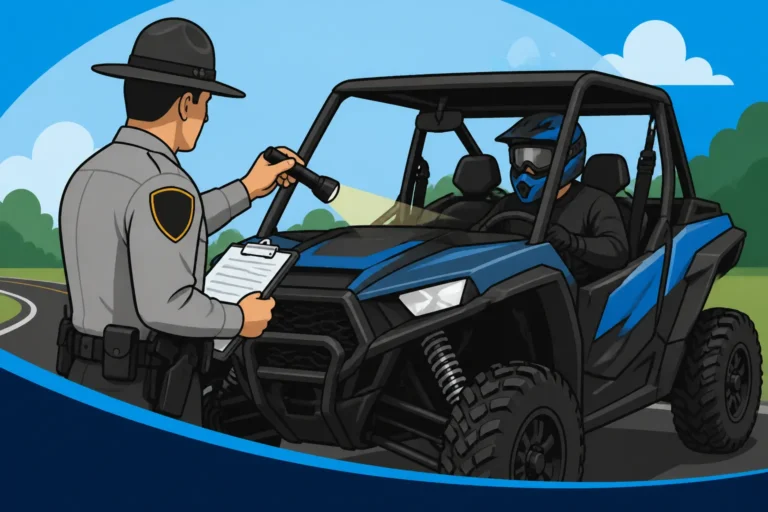
If you find yourself pulled over by a North Carolina State Trooper or local law enforcement after dark, whether you believe you're within your rights or not, the most important thing is to remain calm and cooperative. Pull over safely to the side of the road, turn off your engine, and keep your hands visible. Have your driver's license, any relevant vehicle paperwork (like title, registration if applicable, and proof of insurance for an MUV), and any required safety certificates readily available. Clearly and politely explain your situation. For example, if you are genuinely on your way home from a farm operation, state that. If you're on an MUV, present your registration. Avoid arguing or becoming defensive. The officer will be checking for adherence to [What a North Carolina Trooper Checks Roadside], which includes proper lighting, age requirements for riders, and whether you're legally permitted on that road at that time. If you receive a citation and believe it's in error, handle it through the court system, not by arguing with the officer on the side of the road. Your best defense against a stop is always thorough preparation and adherence to all North Carolina laws, especially when the sun has set.
Disclaimer
This article is for general informational purposes only and does not constitute professional advice. Laws, prices and regulations vary by location and change over time. Consult a qualified professional for guidance on your specific situation.