What a North Carolina Trooper Checks Roadside
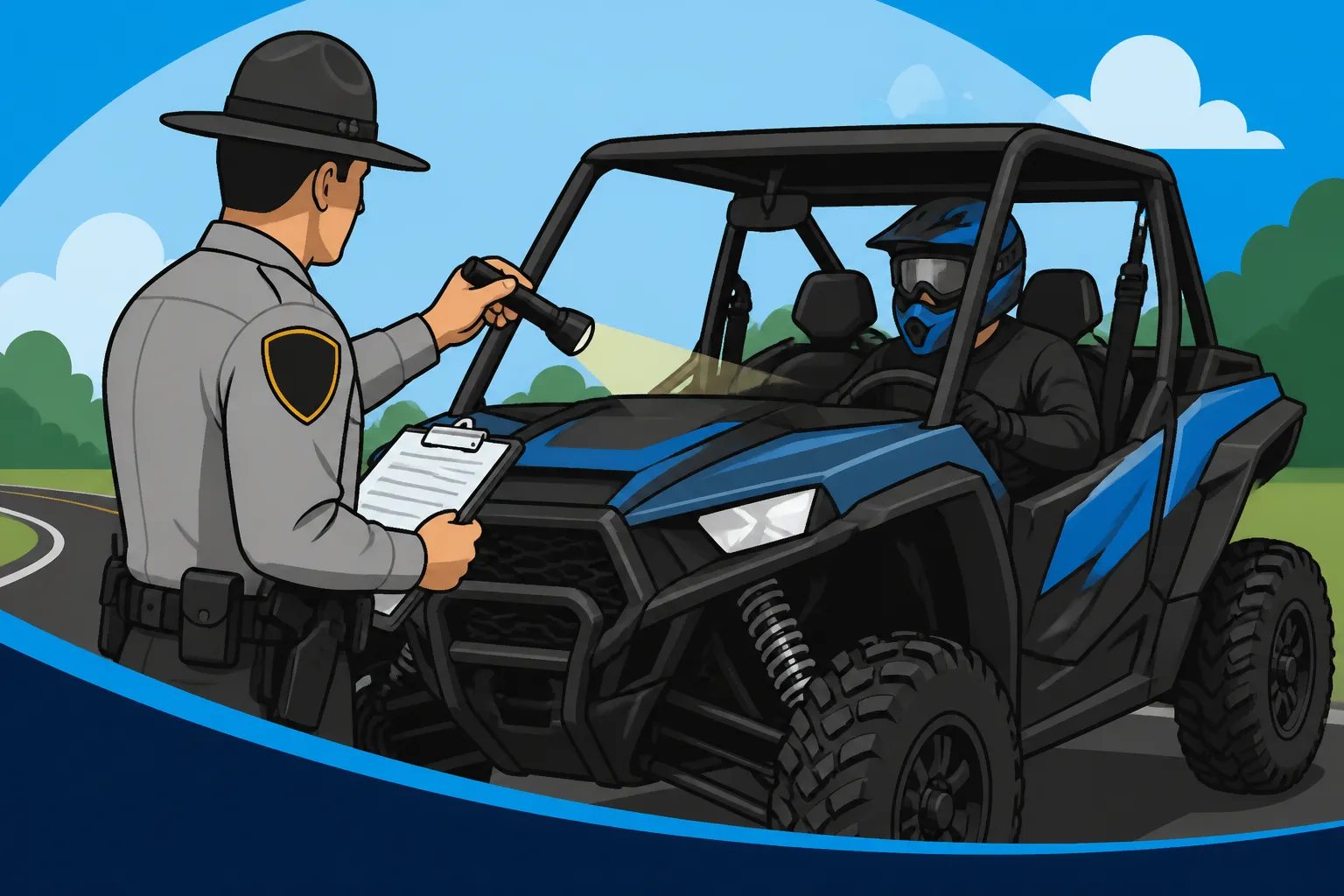
It’s a scenario no off-road enthusiast wants to face: you’re enjoying a ride, perhaps between two sections of private land or just trying to navigate a quick crossing, and suddenly, those blue lights flash behind you. Being pulled over on an ATV or UTV by a North Carolina State Trooper can be a confusing and even intimidating experience, especially when you're not entirely sure what rules apply to your machine on public roads. This guide aims to clear up that confusion, diving deep into precisely what a North Carolina trooper is looking for when they stop an ATV or UTV roadside, helping you understand your rights and responsibilities.
The Core Question: Why Was I Stopped?
Let's be real, most of us riding ATVs and UTVs are doing so for fun, work, or adventure, usually far from paved roads. So, when those lights come on, the first thought is often, "Why me?" Troopers in North Carolina aren't just pulling over off-road vehicles for sport. There's almost always a reason, even if it feels vague at the moment. Understanding these reasons can help you avoid a stop in the first place or at least prepare you for what's coming.
Observed Violations on Public Roads
The most common reason for a roadside stop involving an ATV or UTV is a visible violation of North Carolina's vehicle laws. This isn't just about speeding; it's often about where you're riding. If a trooper sees an ATV or UTV operating on a public road where it clearly doesn't belong, that's immediate probable cause for a stop. This could be anything from riding down a busy highway to simply traveling too far on a secondary road without a legitimate exception. Reckless operation, such as weaving through traffic, performing stunts, or riding in a dangerous manner, will also attract swift attention from law enforcement, not just for ATVs but for any vehicle.
Imagine you're trying to get from one section of your hunting lease to another, and you decide to take a shortcut down a county road. If a trooper spots you, they're going to want to know why you're on that road and whether your machine is legally equipped to be there. This isn't about being targeted; it's about enforcing the rules designed to keep everyone safe on shared roadways. Sometimes, what seems like a quick, harmless hop on pavement can look like a blatant disregard for road safety to an officer.
Equipment Checks for Modified Utility Vehicles MUVs
North Carolina has a very specific category of vehicle called a Modified Utility Vehicle, or MUV, that can be street-legal under certain conditions. If you're driving what looks like a UTV on a public road and it's not obviously part of a farming operation or simply crossing a road, a trooper might stop you to verify it meets the stringent MUV requirements. They're looking for whether your machine actually qualifies as an MUV, not just if it looks like one. This means they'll be checking for very specific modifications and characteristics that distinguish it from a regular UTV or ATV.
Many UTV owners mistakenly believe that because their machine looks like a small car, it's inherently street legal. North Carolina law, however, is much more particular. If your machine is on a public road and doesn't clearly fall under an exemption, a trooper will be assessing if it truly is a compliant MUV. This is where the minutiae of vehicle dimensions, engine size, and specific safety equipment really come into play. They aren't trying to spoil your fun; they're trying to ensure that if you're mixing with road traffic, your machine meets the standards set for public safety. You can read more about what's required in [North Carolina MUV Registration Requirements].
What a Trooper Looks For: Documentation
Once you've been stopped, the conversation often quickly turns to documentation. Just like with a car, a trooper will want to see proof of who you are, your authorization to operate the vehicle, and the legal status of the machine itself. This is where many off-road riders can run into trouble if they're not prepared, because the rules aren't always what they expect.
Driver's License and Age Requirements
First and foremost, a trooper will ask for your driver's license. If you're operating any vehicle on a public road, even if it's an MUV, you need a valid driver's license. This applies whether you're a seasoned adult or a young rider. For ATVs and UTVs off-road, North Carolina has specific age requirements and supervision rules. For instance, there's a [North Carolina Minimum Age to Ride an ATV] on private land, and riders born on or after January 1, 1990, need to have completed an approved ATV safety course and carry the safety certificate when riding on public lands.
However, when it comes to public roads, the rules for a driver's license kick in immediately. You must be old enough and qualified to drive a motor vehicle on the street. A child who is perfectly legal to ride an ATV on private property under supervision is absolutely not allowed to operate any vehicle, MUV or otherwise, on a public street. A trooper will verify your identity, check the validity of your license, and ensure you meet the age requirements for the specific type of operation you're undertaking.
MUV Registration, Title, and Insurance
This is a critical distinction that often trips up riders. In North Carolina, standard ATVs and UTVs are not registered or titled for road use. It's simply not an option. The only exception is if your UTV meets the very specific and strict criteria to be classified as a [Modified Utility Vehicle in North Carolina]. If you are operating what you believe is a street-legal MUV on a public road, a trooper will expect to see proof of its registration, title, and insurance. Without these, your machine is simply an unregistered, uninsured off-road vehicle illegally on a public street.
The registration and title for an MUV prove that the vehicle has gone through the necessary inspection and approval process with the North Carolina DMV. The title will show ownership, and the registration will confirm its legal status for road use. Just like with a car, you need to carry proof of liability insurance. If your machine is an ATV or a UTV that hasn't met the MUV criteria, it will not have registration or proof of insurance for road use, and that's precisely what the trooper is looking for. This is where understanding [North Carolina MUV Street Legal Requirements] is absolutely vital.
What a Trooper Looks For: Machine Compliance
Beyond your personal documents, the trooper will scrutinize the machine itself to ensure it meets legal standards for its intended use. This is especially true for MUVs on public roads, where specific equipment is mandated to ensure safety for both the occupants of the MUV and other road users.
MUV Specific Equipment Requirements
For a UTV to qualify as a Modified Utility Vehicle and be legally operated on North Carolina roads, it must be outfitted with a very specific list of safety features. A trooper will be checking for all of these during a roadside stop. This isn't just a suggestion; it's a legal requirement. These include:
- Headlamps and Taillamps: Your MUV must have functional headlights, taillights, and brake lights, just like a car. These must be properly aligned and bright enough to be seen.
- Turn Signals: Essential for communicating your intentions on the road, functional front and rear turn signals are mandatory.
- Mirrors: You need at least one rearview mirror, typically on the driver's side, to provide a clear view of traffic behind you. Many MUV owners opt for a full set, including a center rearview mirror and passenger side mirror for enhanced visibility.
- Speedometer: An accurate, working speedometer is required to ensure you can monitor your speed and adhere to posted limits.
- Seat Belts: All seating positions in an MUV must be equipped with functional seat belts, and occupants must be wearing them. This is a huge safety feature and a non-negotiable for road use.
- Parking Brake: A parking brake that can hold the vehicle stationary on an incline is also a requirement.
- Wiper and Windshield: The MUV needs a functional windshield and a windshield wiper system.
- Horn: A horn capable of emitting an audible signal is necessary for alerting other drivers to your presence.
- Engine Size and Dimensions: Beyond the visible equipment, the trooper might also be aware of the underlying MUV classification requirements. The machine must have an engine displacement greater than 2,400 cubic centimeters. It also needs to meet specific dimension limits: no more than 142 inches in length, 58 inches in width, and 70 inches in height. Most standard side-by-sides, even those with powerful engines, often fail to meet these stringent dimension limits, particularly the width restriction. For example, many popular utility UTVs are well over 58 inches wide right from the factory. Aftermarket companies like SuperATV offer a wide range of accessories, but adapting a standard UTV to meet all of North Carolina's MUV criteria, especially the size restrictions, can be incredibly challenging and expensive, if not impossible for some models. The trooper will be looking for a machine that clearly fits within the [North Carolina MUV Dimension Requirements] and the [North Carolina MUV Engine Size Requirement].
If your UTV is on a public road and lacks any of these mandated features, a trooper will consider it an illegal operation, even if you sincerely believed it was compliant.
General Safety Equipment for All Riders
Even when riding off-road or in situations where an ATV/UTV might be legally present on a road (like a farm exemption), there are still general safety equipment rules that a trooper might check.
- Helmets: North Carolina law has specific helmet requirements for ATV riders, especially for those under 18. While adults generally have more leeway on private property, if you are riding in a designated area or if a trooper stops you under circumstances that suggest unsafe operation, they might check for helmet compliance. [North Carolina Helmet Law for ATV Riders] mandates helmets for certain age groups, particularly on public lands.
- Eye Protection: Similar to helmets, [North Carolina Eye Protection Requirement] applies to riders under 18. If a young rider is operating without eye protection, especially if they are on or near a public road, a trooper could issue a citation.
- Spark Arrester: While primarily relevant for riding in national forests and other public lands to prevent wildfires, a trooper might inquire about a spark arrester if they encounter an ATV/UTV causing excessive noise or if there's any perceived fire risk near roadsides. Most new machines come with one, but if you've modified your exhaust, it's something to be mindful of.
Contextual Road Use Exemptions and Limitations
North Carolina law does acknowledge that ATVs and UTVs sometimes need to interact with public roads, but these interactions are strictly defined and limited. A trooper's job is to ensure that any such interaction falls within these narrow exemptions. They are looking for the context of your road use, not just the fact that you are on the road.
Farming Operations Exception
This is one of the most common reasons an ATV or UTV might legally be on a North Carolina public road. However, the "farming operations" exemption is often misunderstood and misapplied. A trooper will be looking to verify that your use of the road is directly and solely related to bonafide farming operations. This isn't a blanket pass to use your machine to drive to town for groceries or to visit a neighbor.
The rules are quite clear: the ATV or UTV must be used to perform a specific farming task. This could include transporting feed, checking fences, or moving equipment between fields that are separated by a public road. The operation must be conducted by the farmer, their family, or an employee, and it must occur during daylight hours. Crucially, it only applies to roads with a speed limit of 35 mph or less. If you're on a 45 mph road, or if you're taking a joyride after finishing farm chores, you're outside the scope of this exemption. A trooper will be checking to see if your activity genuinely falls under the [North Carolina Farming Exception for ATVs]. This is where a quick, honest explanation about where you're going and why can make a big difference, but it must align with the law.
Ocean Beach Rules
Along North Carolina's beautiful coastline, there are specific regulations governing ATV and UTV use on ocean beaches. These rules vary by municipality and often include seasonal restrictions, specific access points, and age limits. A trooper or local law enforcement officer on the beach will be checking for compliance with these very particular rules.
For example, many beaches will prohibit anyone under the age of 16 from operating an ATV or UTV on the sand, even if they're supervised. There might be designated times or areas where machines are allowed, and you often need specific permits from local authorities. If you're on a beach with your machine, a trooper will confirm you're in an authorized area, at an authorized time, and that the operator meets all age and licensing requirements specific to that beach. They’ll also be looking for general safe operation, as crowded beaches pose unique hazards.
Crossing a Road Rules
North Carolina law does allow ATVs and UTVs to cross a public road, but this is a very different scenario than riding on a public road. A trooper will be looking to ensure that if you're interacting with a public road, you are doing so only to cross it directly and perpendicularly, with the utmost caution. You cannot drive down the road to find a better crossing point, nor can you travel any distance on the pavement.
This rule is designed for situations where, for example, your private land or trail system is divided by a public road. You must stop, yield to all traffic, and proceed directly across to the other side in the shortest distance possible. If a trooper observes you traveling even a short distance parallel to the road, or turning onto the road as if to drive on it, they will likely consider it an illegal operation. Understanding and strictly adhering to [North Carolina Rules for Crossing a Road] is crucial to avoid a citation. It’s about minimal interaction and maximum safety.
Potential Consequences and How to Handle a Stop
Getting pulled over is never fun, but knowing the potential outcomes and how to conduct yourself can significantly impact the situation. A trooper isn't just checking for violations; they're also assessing your demeanor and cooperation.
Fines and Penalties
The consequences of operating an ATV or UTV illegally on a North Carolina public road can range from a warning to significant fines, points on your driver's license, and even impoundment of your machine. Common infractions a trooper might cite include:
- Operating an unregistered vehicle on a public road: This is a serious offense if your machine is not a qualified MUV.
- Operating without a valid driver's license: Just like with a car, this can lead to a suspension of your driving privileges.
- No insurance (for MUVs): Again, a significant offense with potentially high penalties.
- Failure to meet MUV equipment requirements: Each missing or non-compliant piece of equipment could be a separate citation.
- Violating age or safety certificate rules: Especially for younger riders, this can involve fines for both the rider and potentially the supervising adult.
- Reckless operation: This can result in severe penalties, including reckless driving charges that carry significant points on your license and high fines.
Fines for these violations can quickly add up, easily reaching several hundred dollars or more, not including court costs or potential increases in insurance rates. In some cases, if the machine is deemed to be operated dangerously or is grossly non-compliant, a trooper has the authority to impound the vehicle, meaning you'll have to pay towing and storage fees in addition to any fines. This is a very real possibility if, for instance, you're caught riding a standard ATV on a major highway. You can find more details on general charges in [North Carolina Fines for an ATV Violation].
Remaining Calm and Respectful
When a trooper pulls you over, the most important thing is to remain calm and be respectful. Immediately turn off your engine, remove your helmet if you're wearing one, and keep your hands visible. Fumbling for documents or arguing can escalate the situation unnecessarily.
Have your driver's license, and if applicable, your MUV registration, title, and insurance card readily available. Clearly and concisely answer any questions the trooper has. If you believe you are operating under a legal exemption (like the farming exception or a road crossing), explain your situation politely. Do not make excuses, and do not try to debate the law roadside. If you receive a citation and believe it was issued in error, the proper place to contest it is in court. Your goal during the stop is to be cooperative, provide the requested information, and ensure your safety and the trooper's safety. A polite and cooperative attitude, even when faced with a ticket, can go a long way in how the interaction proceeds.
Disclaimer
This article is for general informational purposes only and does not constitute professional advice. Laws, prices and regulations vary by location and change over time. Consult a qualified professional for guidance on your specific situation.