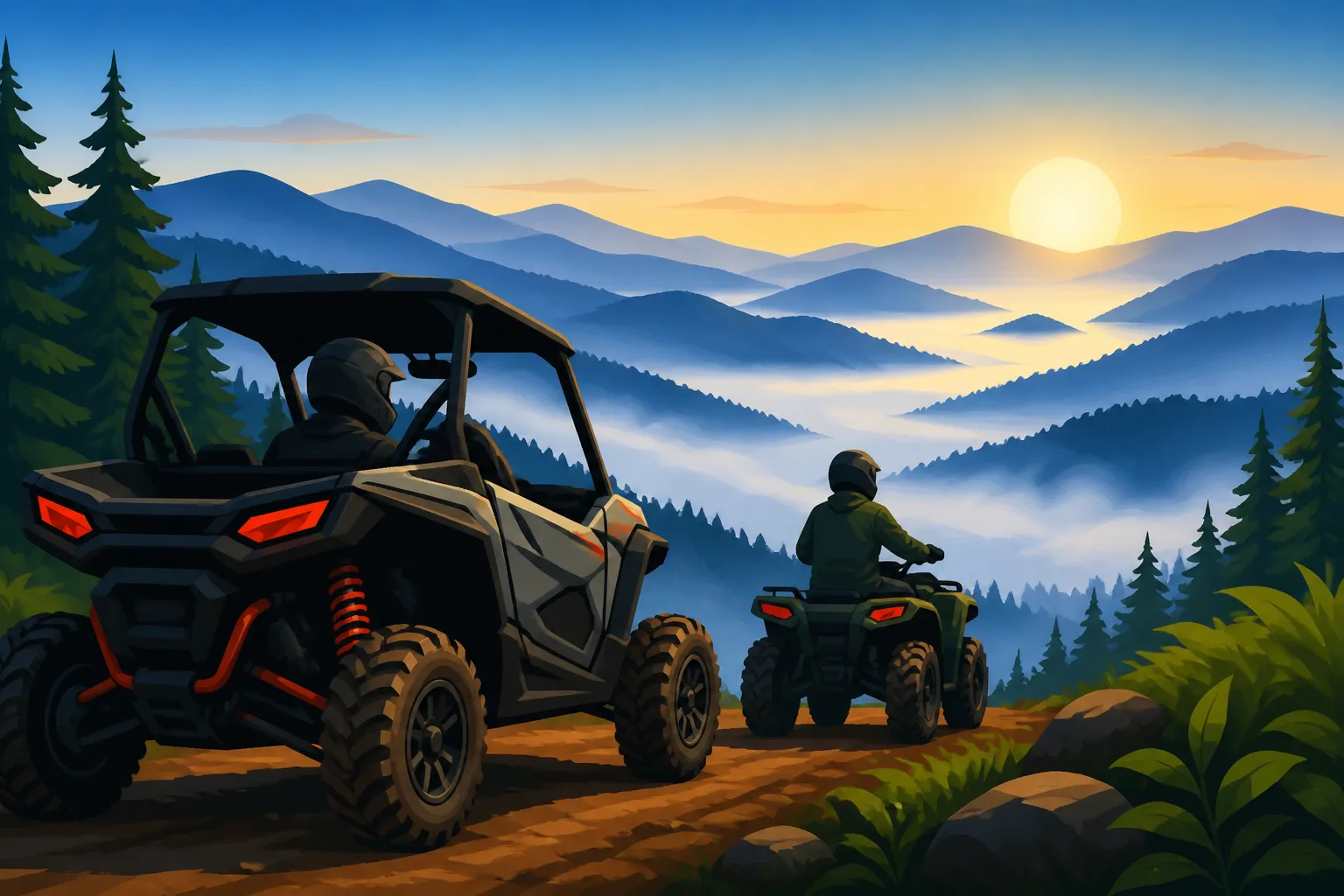
Fog on a Blue Ridge Morning
That crisp, cool feeling as you roll out early for a Blue Ridge morning ride is truly something special, isn't it? But sometimes, that beauty comes with a thick, ethereal blanket of fog that can turn an exciting adventure into a seriously tricky situation. Navigating those winding mountain roads or even familiar forest trails when visibility drops to mere feet isn't just a minor inconvenience; it's a genuine challenge that demands careful preparation and a thorough understanding of the unique conditions you're facing. This guide is here to help you unravel the mysteries of Blue Ridge fog, prepare your machine and yourself, and ride safely when the mountains decide to play hide-and-seek.
Navigating the Blue Ridge Fog: A Rider's Challenge
Picture this: you've planned an epic ride through the Pisgah National Forest, or maybe you're heading out to explore some of the scenic byways on your street-legal Modified Utility Vehicle (MUV) near Asheville. You woke up before dawn, the air was cool and clear, but as the sun tries to peek over the ridgelines, a dense, swirling mist begins to settle. It's not just a quaint visual; it's a significant factor that demands your respect and attention.
The Science of Mountain Fog in North Carolina
Fog isn't just low-lying clouds; it's a fascinating weather phenomenon, especially prevalent in mountainous regions like North Carolina's Blue Ridge. Here, the unique topography and atmospheric conditions conspire to create some truly impressive blankets of mist. Warm, moist air from the lower elevations can be forced upwards by the mountain slopes, cooling rapidly as it rises. As this air cools, the moisture within it condenses into tiny water droplets, forming fog. This "orographic fog" can hug the terrain, filling valleys and cloaking ridgelines in a way that feels incredibly immersive but also incredibly blinding.
Another common type you'll encounter is radiation fog, which forms on clear, calm nights when the ground cools quickly, chilling the air directly above it to its dew point. When you wake up, that chilled air holds visible moisture. Combine these factors, and throw in the abundant moisture from North Carolina's lush forests and numerous waterways, and you have a recipe for mornings that can quickly become an exercise in riding by feel more than by sight. The density can vary wildly, from a light haze that simply adds a mysterious filter to your ride, to a thick pea-souper that reduces your forward vision to just a few feet, making even familiar landmarks disappear.
Immediate Impacts on Visibility and Terrain
The most obvious and immediate impact of fog is, of course, the drastic reduction in visibility. What was once a clear stretch of road or a well-defined trail suddenly becomes a blurred tunnel. This isn't just about seeing the path ahead; it's about perceiving depth, identifying hazards, and reacting to changing conditions. A small puddle can look like a vast lake, or a sharp turn can appear out of nowhere.
Beyond just seeing, fog also significantly affects how light behaves. Your headlights, designed to cut through the dark, can reflect off the countless water droplets in the fog, creating a blinding glare that makes it harder to see, rather than easier. This phenomenon, often called "whiteout," can be disorienting and dangerous. Moreover, dense fog can also mean damp or even wet surfaces, even if it hasn't rained. This moisture reduces traction on pavement, gravel, and dirt, increasing your braking distances and making turns riskier. The ground might look merely damp, but the loss of grip can be substantial, demanding a much more cautious approach to speed and maneuvering.
Street Legal Requirements and Road Safety in Foggy Conditions
For those of us lucky enough to have a street-legal Modified Utility Vehicle (MUV) in North Carolina, the open road beckons, even in the mountains. But when the fog rolls in, your street-legal status comes with a set of responsibilities, especially concerning visibility and safety. You're sharing the road with other vehicles, and what might be an inconvenience on a trail becomes a serious hazard on public asphalt.
North Carolina's MUV Lighting and Equipment Rules
North Carolina has specific requirements for what makes a utility vehicle a Modified Utility Vehicle (MUV) and therefore street-legal on designated roads. These rules are designed for general safety, but they become absolutely critical when you're engulfed in a Blue Ridge morning fog. For starters, your MUV must be equipped with working headlamps, tail lamps, brake lights, and turn signals. [North Carolina MUV Turn Signal Requirement] ensures you can signal your intentions clearly to other drivers, a necessity that cannot be overstated when visibility is low. Headlights, of course, are paramount. While stock lights are legally sufficient, many riders find them inadequate for truly dense fog. Aftermarket options, like LED light bars or auxiliary fog lights from brands like SuperATV, can make a world of difference.
It's not just about what you have but also about its condition. Your lighting must be clean and fully functional. A broken tail light or a dim headlamp that might get overlooked on a clear day could lead to a dangerous situation or a ticket from a state trooper when the fog is thick. [North Carolina MUV Inspection Requirements] stress the importance of these checks. Remember, these requirements are the bare minimum; prudent riders often exceed them for greater safety, especially in challenging environments like the Blue Ridge.
Driving a Modified Utility Vehicle on Foggy Roads
When you're out on a public road in your MUV and hit a patch of thick fog, the first and most important thing to do is slow down. Way down. Speed needs to be adjusted drastically to allow for shorter stopping distances and more reaction time. You literally cannot out-drive your headlights in dense fog. Maintain a safe following distance from any vehicles ahead of you, much larger than you normally would. If you can't see the car in front's tail lights, you're too close.
Your low-beam headlights are generally better in fog than high beams. High beams will reflect more light back into your eyes, creating more glare and further reducing visibility. If your MUV is equipped with dedicated fog lights, use them! They're designed to project a wide, flat beam low to the ground, cutting under the fog rather than into it. Be mindful of your turn signals; use them early and deliberately when changing lanes or turning. [North Carolina Rules for Riding a Public Street] means you are part of traffic, and clear communication is vital. It's also a good idea to consider your vehicle's condition. Are your tires in good shape? Is your windshield clean and streak-free? Every little bit helps when you're fighting for every foot of vision.
The Critical Role of Adequate Lighting
While your MUV's standard lighting meets the legal requirements, the reality of mountain fog often calls for more. Consider upgrading your machine's lighting. LED headlights provide a brighter, clearer beam, and auxiliary fog lights can be a game-changer. These are typically mounted low on the bumper, positioned to illuminate the road directly in front of your machine without creating excessive glare. Some riders also opt for yellow-tinted fog lights, which can sometimes be less reflective in certain types of fog.
Beyond forward-facing lights, think about your rear visibility. Make sure your taillights are bright and clean. Some MUVs can benefit from additional rear-facing amber or red lights, particularly if you're frequently in areas with poor visibility. Remember, it's not just about you seeing the road; it's about other drivers seeing you. In the murky conditions of a foggy Blue Ridge morning, anything you can do to make your MUV more conspicuous can literally save lives. [North Carolina Rules for Riding After Dark] really drive home the importance of proper lighting, and fog is essentially "daylight darkness."
Off-Road Riding in the Fog: Trail Preparedness and Risks
Even if you're not planning to take your machine on public roads, off-road trails in North Carolina's national forests, like those in the Uwharrie or Pisgah, can still be heavily impacted by fog. A foggy trail ride might sound atmospheric and exciting, but it quickly adds a layer of complexity and risk that even experienced riders need to respect.
Challenges of Forest Trails in Low Visibility
Riding off-road in dense fog presents a unique set of challenges. On trails, you're not just looking for the road's edge; you're scanning for roots, rocks, sudden drops, fallen branches, and changes in terrain. Fog obscures all of this, making it incredibly difficult to pick out a safe line. What looks like a flat patch might hide a deep rut, and a gentle incline could suddenly become a steep climb you weren't prepared for.
Navigation becomes exponentially harder. Even with a GPS, the visual cues you rely on to orient yourself – a specific tree, a rock formation, a distant mountain peak – are simply gone. Losing your sense of direction in a dense fog can quickly lead to getting lost or wandering into an unsafe area. Plus, the moisture from the fog can make trail surfaces slick. Dirt becomes greasy, rocks are treacherous, and wooden bridges or crossings can be like ice. This reduces traction for both tires and boots, making dismounting or maneuvering on foot risky as well. [North Carolina Rules for Riding a Mountain Forest Road] emphasize caution, and fog certainly amplifies that need.
Machine Preparation for Foggy Trail Rides
Just as with road riding, preparing your machine for foggy trail conditions is paramount. Ensure your headlights and taillights are fully functional and clean. Consider adding auxiliary LED lights, especially those designed for off-road use, which can provide a wider spread of light to illuminate the immediate trailside. Some riders also mount smaller, dedicated "rock lights" or "puddle lights" underneath their machine to help with visibility directly around the wheels, which can be invaluable when trying to navigate tricky obstacles in the murk.
Beyond lighting, ensure your machine's brakes are in top working order, as you'll be relying on them more heavily and frequently. Check your tire pressure and tread; good traction is even more critical on slick, foggy trails. If your UTV has a windshield, make sure it's impeccably clean, and consider an anti-fog treatment or even a small wiper. Products from companies like SuperATV offer a range of windshields and accessories that can dramatically improve your experience in adverse weather, including options with vents or wipers to help manage fog and moisture buildup.
Rider and Group Safety on Fog-Shrouded Trails
When you decide to tackle a foggy trail, personal readiness and group communication are non-negotiable. Always let someone know your planned route and estimated return time. If riding in a group, maintain very close proximity and constant communication. Two-way radios are far superior to yelling in these conditions. Designate a lead rider and a sweep rider, and agree on hand signals or specific radio calls for hazards, stops, or changes in direction.
Slow your pace dramatically. There's no rush in a fog-bound forest; the goal is safe passage, not speed records. Be extra vigilant for other trail users – hikers, mountain bikers, or even wildlife that might be startled by your presence. Keep your eyes peeled for trail markers, and if you start to feel disoriented, stop, consult your map or GPS, and take a moment to regain your bearings. Sometimes, the safest decision in extremely dense fog is to turn back or wait it out. Remember, [North Carolina Helmet Law for ATV Riders] and [North Carolina Eye Protection Requirement] are always in effect, and the right gear will help keep you safe.
Essential Gear and Personal Readiness for Foggy Rides
You can have the most tricked-out machine in the world, but if you're not personally prepared for foggy conditions, you're still at a disadvantage. Your personal gear and how you manage your own vision and comfort can make all the difference between a frustrating, risky ride and a safely navigated adventure.
Visibility Enhancing Gear for Riders
When it comes to your personal attire, think "be seen." Brightly colored clothing, especially blaze orange or fluorescent yellow-green, is excellent for stand-out visibility, not just for other riders but potentially for rescue personnel if you get into trouble. While there's no specific law for this on private land, it's just plain smart in low visibility, and it also ties into hunting season rules in many areas.
Consider reflective tape on your helmet, jacket, or even your machine. Even small strips can significantly increase your visibility when struck by other lights. A quality, high-visibility jacket isn't just a fashion statement; it's a piece of safety equipment. For those on MUVs, you're interacting with vehicles that might not be expecting a slower, smaller vehicle in the fog, so anything that makes you pop out of the mist is a good thing.
Maintaining Clear Sight: Helmets, Goggles, and Windshields
Your helmet and eye protection are your primary interface with the world during a ride, and fog can severely compromise them. For helmets, an anti-fog visor insert or a helmet with excellent ventilation can prevent your breath from fogging up the inside. If your visor does fog, never ride with it open at speed; it's not worth the risk. Many riders prefer goggles over a visor in consistently foggy conditions. Look for goggles with dual-pane lenses, which create an insulating air barrier to reduce fogging, similar to a double-glazed window. Vented goggles also help with airflow.
Keep a microfiber cloth or a dedicated lens wipe handy. If you stop for a break, take the opportunity to wipe your visor or goggles clean of any moisture or condensation. For UTVs with full windshields, rain-x or anti-fog treatments can help keep the glass clear. A small, battery-operated fan or even a basic wiper kit for your windshield can also be a massive benefit for maintaining visibility. Without clear vision, all other preparations are secondary. Remember that your [North Carolina Eye Protection Requirement] applies even in these conditions, so make sure your chosen gear functions optimally.
| Element | Standard Equipment | Recommended for Foggy Blue Ridge Mornings | Benefit |
|---|---|---|---|
| Headlights | Halogen | LED Headlights / Auxiliary Fog Lights | Brighter, whiter light; cuts under fog. |
| Taillights | Standard Red | Bright LED / Additional Rear Markers | Improved rear visibility for others. |
| Windshield | Stock | Anti-fog treated / Wiper kit / Vented | Prevents internal and external condensation. |
| Eye Protection | Single-pane goggles | Dual-pane, vented goggles / Anti-fog visor | Reduces internal fogging for rider. |
| Rider Attire | Dark colors | High-visibility, reflective gear | Makes rider more noticeable to others. |
| Tires | All-terrain | Good tread, correct pressure | Maximize traction on potentially slick surfaces. |
Ultimately, riding in the Blue Ridge Mountains on a foggy morning can be an unforgettable experience, but it’s one that calls for heightened awareness and thorough preparation. By understanding the unique challenges of mountain fog, ensuring your machine meets or exceeds safety requirements for both road and trail, and equipping yourself with the right gear and mindset, you can navigate these conditions safely and confidently. So, next time that mystical mist rolls in, you'll be ready to embrace the adventure, knowing you’ve done everything to ensure a safe and enjoyable ride.
Disclaimer
This article is for general informational purposes only and does not constitute professional advice. Laws, prices and regulations vary by location and change over time. Consult a qualified professional for guidance on your specific situation.