When North Carolina Lets You Carry a Passenger
It's a familiar scenario for many of us who love hitting the trails in North Carolina: you've got your ATV or UTV ready to go, the sun is shining, and then a friend or family member asks, "Can I ride along?" Immediately, your mind probably jumps to a dozen questions about whether it's legal, safe, and what North Carolina law actually says about carrying passengers. The truth is, it’s not as simple as just hopping on, and the rules differ significantly depending on the type of machine you’re riding. This guide will cut through the confusion and explain exactly when and how North Carolina lets you carry a passenger, ensuring you stay safe and on the right side of the law.
The Basic Rule: One Rider Per Seat
When it comes to carrying passengers on your off-road machine in North Carolina, the golden rule, if you will, revolves entirely around how the machine was originally designed by its manufacturer. This might sound overly simple, but it's the fundamental principle that guides all other considerations. Essentially, if your ATV was built for one rider, that’s exactly how many people should be on it. Trying to squeeze a second person onto a single-rider machine is not only against the rules in most scenarios but, more importantly, it's incredibly dangerous.
What "Designed by the Manufacturer" Means
Think about it this way: when you buy a toaster, it's designed to toast bread, not toasters. Similarly, an ATV is engineered with specific parameters in mind, and passenger capacity is a huge one. A "designed by the manufacturer" single-rider ATV has a seat that's intended for one person, one set of footrests, and a center of gravity calculated for a single operator. The suspension, braking system, and overall stability are all tuned for solo use. Contrast this with a factory two-seater ATV, often called a 2-Up machine, which explicitly features a longer, often stepped, seat, passenger handholds, and dedicated footpegs for a second person. These machines are built from the ground up to accommodate the extra weight and shifting dynamics of an additional rider.
The danger comes in when folks try to modify a single-rider machine to carry a passenger. Maybe you've seen those aftermarket seats that claim to add a "passenger option" to a regular ATV. While they might look convenient, they fundamentally alter the machine's intended design. The manufacturer never accounted for that extra weight being placed on the rear rack or the passenger's weight shifting the center of gravity so dramatically. It’s a common frustration that you can’t just make your machine do more, but safety and liability are at stake here. The manufacturer’s intent is a legally binding concept, and ignoring it can lead to serious consequences far beyond a simple fine.
Why Passengers Are a Problem on Single-Seat ATVs
Putting a second person on an ATV designed for one is a recipe for disaster. It's not just about comfort; it's about control. Imagine trying to balance a bicycle with two people on one seat – it instantly becomes unwieldy and unpredictable. The same principles apply, but with far greater speeds and hazards, to an ATV. The extra weight from a passenger dramatically alters the machine's center of gravity, making it much more prone to tipping or rolling over, especially on turns, inclines, or uneven terrain. This is why [What Makes a Machine an MUV in North Carolina] is so specific about its design and safety features.
Beyond stability, the impact on handling and braking is severe. Your ATV’s suspension system is designed for a specific weight load. Adding a passenger overloads it, leading to a "mushy" feel, reduced ground clearance, and a greater chance of bottoming out. Braking distances increase because there's more mass to stop, and the weight distribution might shift too far back, making the front brakes less effective. In a real-world scenario, navigating a tight corner, hitting an unexpected bump, or having to brake suddenly can quickly turn a fun ride into a critical emergency. The passenger, often unprepared for the machine's unpredictable movements, can be easily ejected, leading to severe injuries for both riders. It’s a risk that’s simply not worth taking, no matter how short the ride.
Understanding Factory Two-Seaters (ATVs and UTVs)
While single-rider ATVs are strictly one-person machines, the world of off-road riding isn't entirely solo. For those who want to share the adventure, manufacturers have stepped up with options specifically designed to carry more than just the operator. These machines fall into two main categories: the less common but still available factory two-seater ATVs and, of course, the ever-popular utility terrain vehicles (UTVs), more commonly known as side-by-sides. Understanding the distinctions between these machines is key to knowing when it's safe and legal to bring a friend along.
How to Identify a Factory Two-Seater
A factory two-seater ATV, sometimes referred to as an "extended chassis" or "2-Up" model, isn't just a regular ATV with a longer seat cover. These machines are engineered from the ground up to safely accommodate two riders. The most obvious visual cues are usually the extended, often stepped, seat designed to provide ample room for both the operator and a passenger. Beyond the seat, you'll almost always find dedicated passenger handholds, typically integrated into the rear rack or fenders, allowing the passenger to maintain a secure grip. Crucially, there will be separate footpegs or footrests for the passenger, ensuring their feet aren't dangling or interfering with the operator's control.
If you're ever unsure, the manufacturer's specifications and decals are your best friends. Check the machine's manual or the warning labels affixed to the ATV itself. They will clearly state the maximum weight capacity and the intended number of riders. If it says "one rider only," then that's the rule, regardless of how long the seat looks. Distinguishing these from aftermarket modifications is important because a home-brew extension, while it might appear functional, hasn't undergone the rigorous testing and design considerations of a factory-built two-up machine. The chassis, suspension, and braking systems are all beefed up on a true two-seater to handle the additional weight and altered dynamics.
UTVs: Designed for Multiple Passengers
When it comes to carrying multiple passengers comfortably and safely off-road, UTVs (Utility Terrain Vehicles), or side-by-sides as they're colloquially known, are the undisputed champions. Unlike ATVs, which you straddle like a motorcycle, UTVs feature a bench or bucket seating arrangement, a steering wheel, and foot pedals, much like a car. This design inherently accommodates multiple occupants, typically two, four, or even six, depending on the model. They are built with sharing the trail in mind, offering a more social and often more secure riding experience for groups or families.
The safety features on UTVs are a major part of why they are so well-suited for passengers. They come standard with roll cages, which provide crucial protection in the event of a rollover. Most models are equipped with automotive-style seatbelts for every occupant, and many even include doors or safety nets to keep arms and legs inside the vehicle during motion. Some of these safety features might even come from brands like SuperATV, which offers a wide range of accessories for UTVs, including upgraded harnesses, stronger cages, and additional protective gear. The stability of a UTV, with its wider stance and lower center of gravity compared to many ATVs, also makes it inherently more forgiving when carrying passengers over varied terrain. It’s a fundamentally different experience, designed for shared adventure rather than solo thrill-seeking, and North Carolina law recognizes these differences.
North Carolina's Rules for Carrying Passengers
Navigating the legal landscape of ATV and UTV use in North Carolina can feel a bit like slogging through deep mud – confusing and sometimes frustrating. When it comes to carrying passengers, the state's laws, particularly Chapter 20 of the General Statutes, are pretty clear, but they hinge on that crucial distinction between machine types we just discussed. It's vital to understand these rules not only to avoid a costly ticket but, more importantly, to ensure the safety of everyone on board. After all, the fun of riding quickly evaporates if someone gets hurt because we overlooked a critical safety regulation.
The Law on Manufacturer's Design
North Carolina law is quite explicit: an all-terrain vehicle (ATV) is defined as a "motorized vehicle designed primarily for off-road use and having a width of 50 inches or less, a dry weight of 900 pounds or less, and three or more non-highway tires, and is designed for a single operator only." That last phrase, "designed for a single operator only," is the lynchpin. It means that if your ATV, by its original factory design, is a one-person machine, then carrying a passenger on public or designated private land (like a forest trail) is a violation. The law focuses on the intended design rather than what aftermarket modifications you might have bolted on.
This focus on manufacturer's design isn't just arbitrary; it's rooted in safety and liability. The state understands that these machines handle differently with extra weight and that improvising passenger seating can lead to serious accidents. If you're caught operating a single-rider ATV with a passenger on public land, you could face fines and other penalties. Beyond the immediate legal repercussions, consider the liability in case of an accident. An insurance company might deny a claim if the machine was being operated in a manner contrary to its design specifications and state law. Understanding [What North Carolina Counts as an ATV] is the first step in appreciating why this distinction is so important in the eyes of the law.
Exceptions and Specific Scenarios
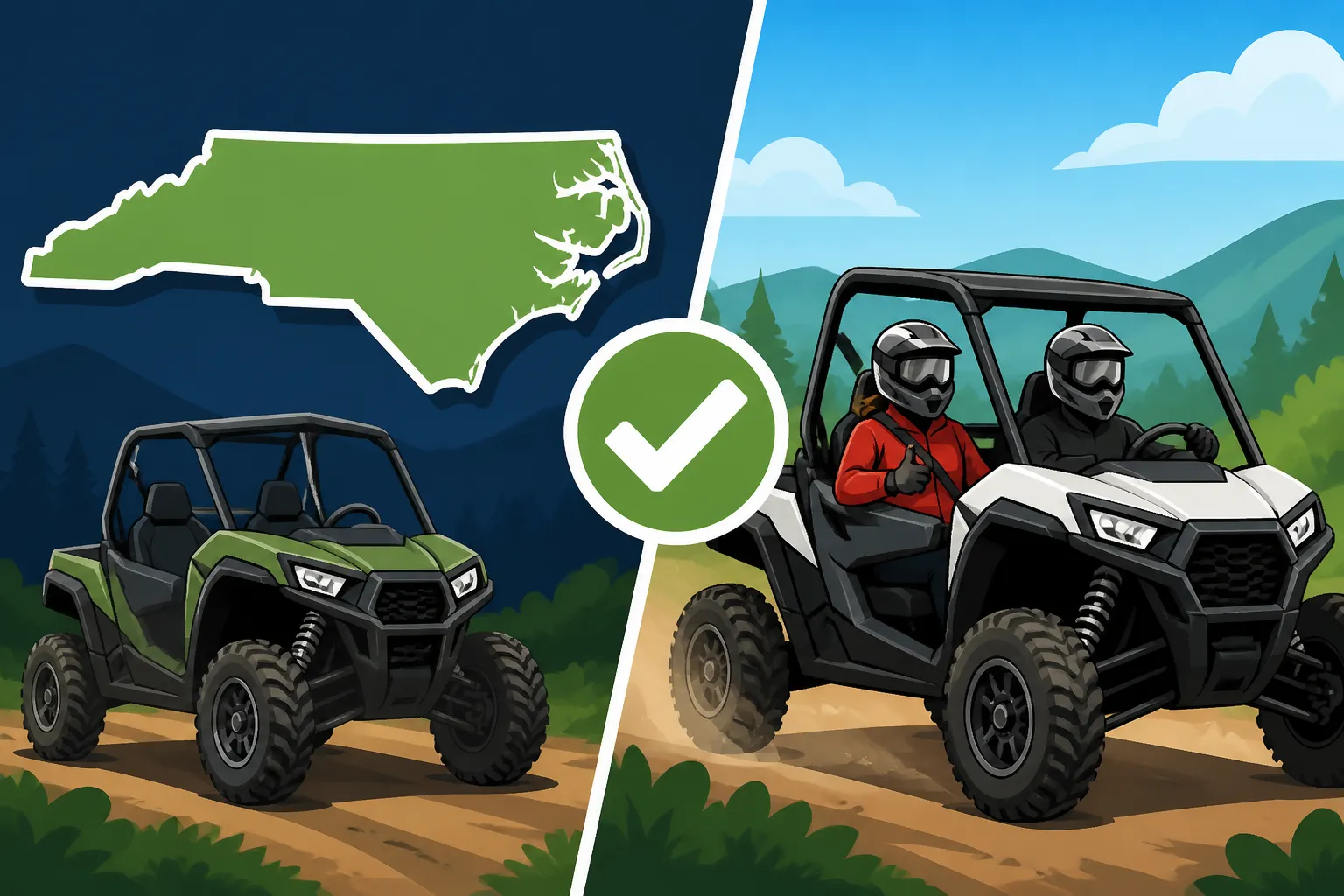
While the "single operator only" rule is firm for most ATVs, there are nuances and other machine types that offer more flexibility. For UTVs (side-by-sides), which are not classified as ATVs under North Carolina's primary ATV statutes but often fall under other motor vehicle definitions, the rules are different. Since UTVs are designed with multiple seats, seatbelts, and roll cages, carrying passengers up to the vehicle's stated capacity is generally permitted, assuming all safety features (like seatbelts) are used.
What about private land? This is where things get a bit fuzzier. If you own the land, or have express permission from the landowner, you generally have more leeway regarding how you operate your machine. The state's ATV laws primarily apply to public roads, trails, and lands managed by state or federal agencies. However, even on private land, common sense and safety should always prevail. Just because you can carry a passenger on a single-rider ATV on your own property doesn't mean it's safe or advisable. Many private riding parks and clubs also have their own strict rules that mirror state laws or go even further for insurance purposes. For example, if you're riding in one of North Carolina's National Forests, like the Uwharrie or Pisgah, the Forest Service will enforce rules strictly aligning with manufacturer design and often also have age restrictions for passengers, so checking their specific guidelines is essential before your trip. Keep in mind that for road-legal use, a [North Carolina's Modified Utility Vehicle Route] has specific requirements that allow for multiple passengers, but these are very specific and rare for typical ATVs.
Safety Considerations Beyond the Law
Even when North Carolina law allows you to carry a passenger, whether on a factory two-up ATV or a UTV, legal compliance is just the baseline. True responsible riding goes far beyond simply not getting a ticket; it means prioritizing the safety and well-being of everyone on your machine. Off-road riding inherently carries risks, and adding a passenger multiplies those risks if proper precautions and considerations aren't taken. As veteran riders, we know that the trail can throw unexpected challenges at you, and having a passenger changes the dynamics of how your machine responds.
The Importance of Rider Skill and Experience
Riding an ATV or UTV with a passenger is not the same as riding solo, even on a machine designed for two. The added weight, the shift in the center of gravity, and the potential for a passenger's unexpected movements all demand a higher level of skill and experience from the operator. If you're a new rider, or you're tackling particularly challenging terrain, it might be wise to gain more solo experience before bringing a passenger along. Consider how the machine will corner, brake, and climb hills with the extra load. It's heavier, less agile, and stopping distances will increase.
Before you even hit the trails with a passenger, take some time to practice in a safe, controlled environment, like an open field or a designated practice area. Get a feel for how your machine handles with the additional weight. Practice gentle turns, gradual stops, and navigating small obstacles. This isn't just for your benefit; it also gives your passenger a chance to get accustomed to the ride without the added pressure of complex trails. Never attempt advanced maneuvers or terrains with a passenger unless you are supremely confident in both your abilities and the machine's capacity to handle it.
Essential Gear for Passengers
Just as you wouldn't ride without proper gear, your passenger needs the same level of protection. In North Carolina, while helmets are generally recommended for all ATV riders, they are required for anyone under the age of 18 operating or riding as a passenger on an ATV. This means if you have a child as a passenger, a DOT-approved motorcycle helmet is not optional; it's the law. Beyond helmets, eye protection, such as goggles or a face shield, is absolutely critical. Dust, debris, branches, and insects can easily cause eye injuries, severely impairing vision and leading to an accident. [North Carolina Eye Protection Requirement] mandates this for riders under 18, but it's wise for everyone.
Beyond these absolute essentials, encourage your passenger to wear appropriate clothing: long sleeves and pants made of durable material (denim or synthetic blends are good), over-the-ankle boots to protect against foot and ankle injuries, and gloves to improve grip and protect hands. Think of it as armor for the trail – every layer helps to mitigate the impact of a fall or contact with trailside hazards. For UTVs, while the roll cage and seatbelts offer significant protection, helmets and eye protection are still highly recommended, especially on rough trails where jostling can occur, and debris can fly into the open cabin.
Communicating with Your Passenger
Effective communication with your passenger can be a game-changer for a safe and enjoyable ride. Before you even start the machine, have a brief "pre-ride briefing." Explain how you'll be riding, what to expect from the terrain, and what signals you might use. For example, a tap on the shoulder might mean "hold on tight," or a thumbs-up could signal "all good." Teach them how to hold on securely to the designated handholds and to keep their feet firmly on the footrests.
Crucially, instruct your passenger on how to lean into turns. On an ATV, a passenger's ability to shift their weight with the rider is paramount for maintaining balance and control, especially during cornering. For UTVs, while less critical for balance, passengers should still be aware of how their movements affect the vehicle and avoid sudden, unexpected shifts. Encourage your passenger to communicate if they need a break, feel uncomfortable, or spot a hazard you might have missed. A responsive and engaged passenger is a safer passenger, and clear communication fosters a partnership that makes the ride more secure and enjoyable for everyone.
Age Restrictions and Supervision for Young Passengers
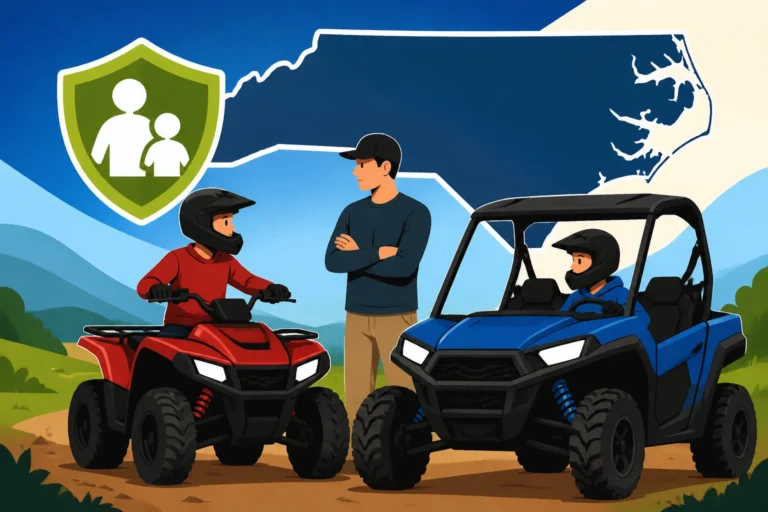
When the idea of taking a child or young teenager out on the trails crosses your mind, it's natural to feel a mix of excitement and apprehension. There's nothing quite like sharing your passion for off-road adventure with the next generation. However, North Carolina has specific rules and safety recommendations in place to protect young riders, and these apply whether they are operating a machine or simply riding as a passenger. Ignoring these can lead to serious consequences, both legally and in terms of a child's safety. It's a critical area where empathy for a child's excitement must be balanced with strict adherence to safety guidelines and the law.
North Carolina's Minimum Age to Ride
North Carolina General Statute 20-171.10 is the key piece of legislation here. It states that no person under eight years of age shall operate an ATV. This rule primarily applies to operators, but it sets a general precedent regarding young children and these powerful machines. While there isn't a specific minimum age listed explicitly for a passenger on a machine designed for multiple riders (like a UTV or a 2-Up ATV), the overarching spirit of the law and manufacturer recommendations lean heavily towards caution. A child needs to be mature enough to understand and follow instructions, strong enough to hold on securely, and tall enough for their feet to reach the designated footrests. If a child is too small or lacks the physical capability to be a secure passenger, they shouldn't be riding, regardless of what the statute explicitly says.
Furthermore, North Carolina law mandates that operators born on or after January 1, 1990, must possess an ATV safety certificate to ride on public land. While this again pertains to operators, it underscores the state's emphasis on formal safety training. While a passenger doesn't need this certificate, the operator carrying a minor should certainly possess it, demonstrating a commitment to safe riding practices. Consider [North Carolina Rules for a Rider Under 16] and [North Carolina Supervision Rules for Minors] for a broader understanding of how the state views youthful participation in off-roading. These sections often imply that children, even as passengers, should be on machines appropriate for their size and maturity, and under the watchful eye of a responsible adult.
Continuous Visual Supervision
When a minor is operating an ATV, North Carolina law requires "continuous visual supervision" by an adult at least 18 years of age. This means the supervising adult must be able to see the minor at all times during operation. While this rule directly applies to the operator of an ATV, the spirit of it extends to minors who are passengers as well. If you have a child as a passenger, especially if they are young, you are inherently providing "continuous visual supervision" by being the operator. However, it also means you, as the adult, are entirely responsible for their safety, comfort, and behavior.
This concept becomes even more important during multi-machine rides. If you have several adults and minors on various machines, ensure that each minor is either riding with a responsible adult on a multi-passenger machine, or if they are operating their own machine (and meet all legal requirements), they are constantly within sight of a designated adult supervisor. This isn't just about avoiding a ticket; it's about being present and able to react immediately if a problem arises. Off-road environments can be unpredictable, and children, with their developing judgment, need that consistent oversight. A fall or a sudden stop can be much more traumatic for a child, making their secure position and your immediate attention paramount.
Aftermarket Accessories and Modifications
It's completely understandable to want to customize your ATV or UTV. The aftermarket world is absolutely bursting with cool gadgets, performance upgrades, and comfort enhancements. From powerful winches to beefier tires, there’s no shortage of ways to personalize your machine and potentially improve its capabilities. However, when those modifications relate to passenger capacity, it’s crucial to understand that not all accessories are created equal, and some can even land you in hot water, both legally and in terms of safety. The line between a helpful upgrade and a dangerous liability can be surprisingly thin.
The Allure of Aftermarket Seats
For many ATV owners with single-rider machines, the idea of adding an aftermarket passenger seat is incredibly tempting. It seems like such an easy fix to share the trail with a friend or child. These seats often look comfortable and are marketed as a convenient way to expand your machine’s capacity. But here’s the rub: adding a passenger seat to an ATV not originally designed for two riders does not magically transform it into a safe, legal two-up machine. As we’ve discussed, North Carolina law emphasizes the manufacturer’s original design, and simply bolting on a seat does not change the vehicle's fundamental engineering, weight distribution, or stability characteristics.
The legal implications are significant. If you're riding on public land or a designated trail in North Carolina, and you're caught with a passenger on a single-rider ATV equipped with an aftermarket seat, you're still in violation of the "designed for a single operator only" rule. Beyond the law, the safety concerns are paramount. The machine's suspension, frame, and braking system were not built to handle the added stress and shifted center of gravity that a second rider brings. While brands like SuperATV offer a vast array of high-quality accessories, their expertise lies more in enhancing UTVs or providing specific upgrades for machines already designed for a certain function, not in fundamentally changing the safety classification of a single-rider ATV to a multi-passenger one. It's a classic case of convenience potentially overriding critical safety engineering.
Reinforcing Safety on Multi-Passenger Machines
For those lucky enough to own a factory two-seater ATV or, more commonly, a UTV, the aftermarket world offers fantastic opportunities to enhance existing safety features. This is where brands like SuperATV truly shine, providing robust solutions that complement the factory design. For UTVs, for instance, you might consider upgrading your seatbelts to a 4-point or 5-point harness system. These offer significantly more secure retention for occupants compared to standard lap belts, especially during aggressive riding or unexpected impacts. Aftermarket harnesses from reputable brands are designed to work within the vehicle's existing safety framework, providing an extra layer of protection.
Other valuable safety upgrades for UTVs include reinforced roll cages or additional cage components, stronger doors or nets, and even upgraded lighting for better visibility after dark. These modifications, when installed correctly and chosen from reputable manufacturers like SuperATV, can truly make your multi-passenger machine even safer and more capable. The key distinction here is that you're not trying to force a single-rider machine to do something it wasn't meant to do; instead, you're taking a machine already designed for passengers and making it even better. Always ensure that any modification doesn't interfere with the vehicle's original safety features or compromise its structural integrity. It's about building on a safe foundation, not attempting to create one where none existed.
| Feature | Single-Rider ATV (e.g., Honda Recon) | Factory Two-Seater ATV (e.g., Polaris Sportsman Touring) | Utility Terrain Vehicle (UTV/Side-by-Side) (e.g., Polaris RZR) |
|---|---|---|---|
| Passenger Capacity | 1 (Operator Only) | 2 (Operator + 1 Passenger) | 2-6+ (Operator + Multiple Passengers) |
| Seating | Single, straddle seat | Extended, often stepped, straddle seat with passenger area | Bench or bucket seats with steering wheel |
| Foot Rests | Operator only | Dedicated operator and passenger footpegs/footrests | Floorboards with operator and passenger footwells |
| Hand Holds | Operator handlebars only | Dedicated passenger handgrips | Grab handles for all passengers |
| Safety Structure | None (rely on operator skill) | None (rely on operator skill) | Roll cage, seatbelts/harnesses, doors/nets |
| Stability | Highly dependent on operator weight shift | Designed for two but still requires passenger input | Inherently more stable with wider stance, lower CG |
| North Carolina Legality | Illegal to carry a passenger on public land/trails | Legal to carry one passenger (if factory designed) | Legal to carry passengers up to capacity (if factory designed) |
| Common Uses | Recreation, sport, light utility | Recreation, trail riding with a companion | Recreation, utility, hunting, work, family adventures |
Disclaimer
This article is for general informational purposes only and does not constitute professional advice. Laws, prices and regulations vary by location and change over time. Consult a qualified professional for guidance on your specific situation.