North Carolina Supervision Rules for Minors
It’s a natural concern for any parent or guardian in North Carolina: you want your younger family members to enjoy the thrill and adventure of ATV riding, but you also want them to be safe and stay on the right side of the law. The rules around minor riders and supervision can feel like a tangled mess, leaving many of us scratching our heads and wondering if we’re doing things correctly. This guide is here to untangle that knot, offering a clear, empathetic look at North Carolina’s specific supervision rules for minors operating ATVs and how you can ensure a safe, legal, and fun experience for everyone.
The Foundations of North Carolina's Age-Based ATV Rules
North Carolina, like many states, has put specific laws in place to govern who can ride an ATV and under what conditions, especially when it comes to our younger, less experienced riders. These aren't just arbitrary rules; they're designed with safety at their absolute core.
Why Age Restrictions Exist and Why They Matter to You
Let's be honest, ATVs are powerful machines, and while they bring incredible joy and access to the great outdoors, they also carry inherent risks. The state's age restrictions and supervision requirements aren't there to spoil anyone's fun; they're in place to protect riders, particularly those who haven't yet developed the judgment, physical strength, or reaction times needed to safely operate an off-road vehicle. As a parent, you probably already worry about things like speed, unexpected terrain, or even the possibility of a machine overturning. North Carolina's laws acknowledge these very real concerns and try to provide a framework to mitigate them.
The intent is to prevent serious injuries and fatalities. When you understand this fundamental purpose, the specific rules make a lot more sense. They help ensure that young riders are not only supervised but are also riding machines appropriate for their size and skill level, in environments that are as safe as possible. This commitment to safety is paramount, and it’s why understanding these rules isn't just about avoiding a ticket; it's about safeguarding your child.
The Manufacturer's Age Warning Labels and NC Law
One of the most crucial elements of North Carolina's ATV law regarding minors ties directly back to something you might already see on your machine: the manufacturer's age warning label. That little sticker, often found prominently on the ATV itself, isn't just a suggestion from the manufacturer; it's legally binding in North Carolina. The state's law specifically states that "no person shall operate an all-terrain vehicle in violation of the manufacturer's age recommendations." This means if your ATV has a sticker advising riders to be 16 or older, then a 14-year-old operating that machine would be in violation of state law, regardless of their skill level or whether they're supervised.
This might feel a bit rigid, especially if you have a skilled younger rider, but the law's intent is to create a clear, enforceable standard. These labels are based on extensive safety research and design specifications. They consider factors like machine weight, power, speed capabilities, and chassis geometry, all of which are optimized for certain rider sizes and developmental stages. For instance, a larger, more powerful sport quad designed for experienced adult riders will handle very differently than a smaller, youth-model ATV. Therefore, adhering to [The Manufacturer's Age Warning Label in North Carolina] is not just about following a rule; it’s about matching the rider to the machine for optimal safety.
The Repealed 70cc Rule and Persistent Misinformation
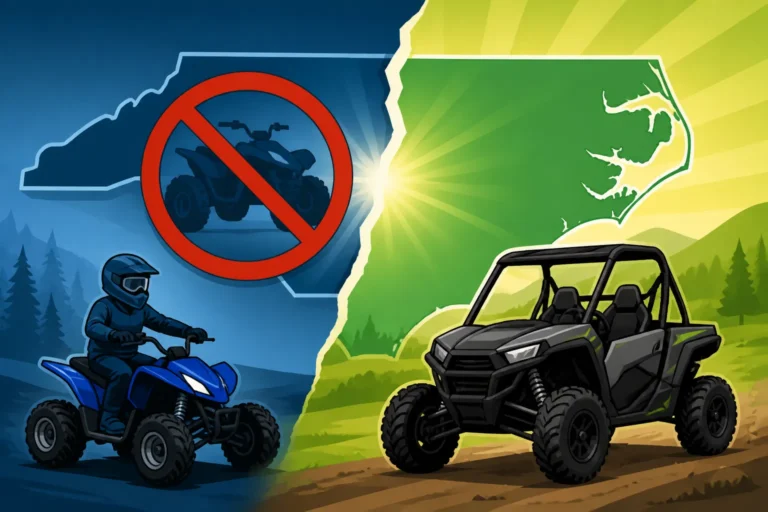
Here's a piece of confusion that trips up many riders and parents in North Carolina: the old 70cc engine rule. For years, there was a specific provision in North Carolina law that prohibited children under 12 from operating ATVs with engine sizes exceeding 70cc. This rule was intended to limit younger riders to smaller, less powerful machines. However, this rule was repealed. Yes, you read that right. It no longer exists in North Carolina law. Yet, you'll still hear it cited, see it in old brochures, or find it lingering on outdated county or municipal websites.
This misinformation can be incredibly frustrating because it creates uncertainty and can lead well-meaning parents to make decisions based on old, irrelevant statutes. While the 70cc rule is gone, the underlying principle of matching the machine to the rider's age, size, and skill is still paramount, and that's where the manufacturer's age warning labels come into play. It's vital to focus on the current laws, which prioritize those manufacturer recommendations and the "continuous visual supervision" requirement we'll discuss next. For more details on this, you might find [Why the 70cc Rule Was Repealed in North Carolina] helpful.
Understanding "Continuous Visual Supervision" in North Carolina
The phrase "continuous visual supervision" is central to North Carolina's rules for minors riding ATVs. It's more than just being in the general vicinity; it implies an active, engaged role for the supervising adult. This can feel a bit vague, so let's break down what it truly means.
What "Continuous Visual Supervision" Actually Means
When the law talks about "continuous visual supervision," it's not suggesting you merely be on the same property or in the house while your child rides. It means you must be actively watching them, capable of seeing them at all times, and close enough to intervene immediately if a problem arises. Imagine you're riding your own machine on a trail, and your child is a short distance ahead or behind you. This is generally considered continuous visual supervision. If they go over a hill and out of sight, even for a moment, that breaks the "continuous visual" aspect.
This isn't about being a helicopter parent on the trail, but about practical safety. If a child takes a spill, gets stuck, or encounters an unexpected obstacle, the supervising adult needs to be able to react without delay. This means being within earshot and clear line of sight. It implies not being distracted by your own phone, conversation, or another activity. Think of it as always having them in your "active surveillance zone." For some riders, a simple twist of the wrist on their SuperATV machine might be enough to catch up, but you still need to see them clearly.
Who Can Provide Supervision?
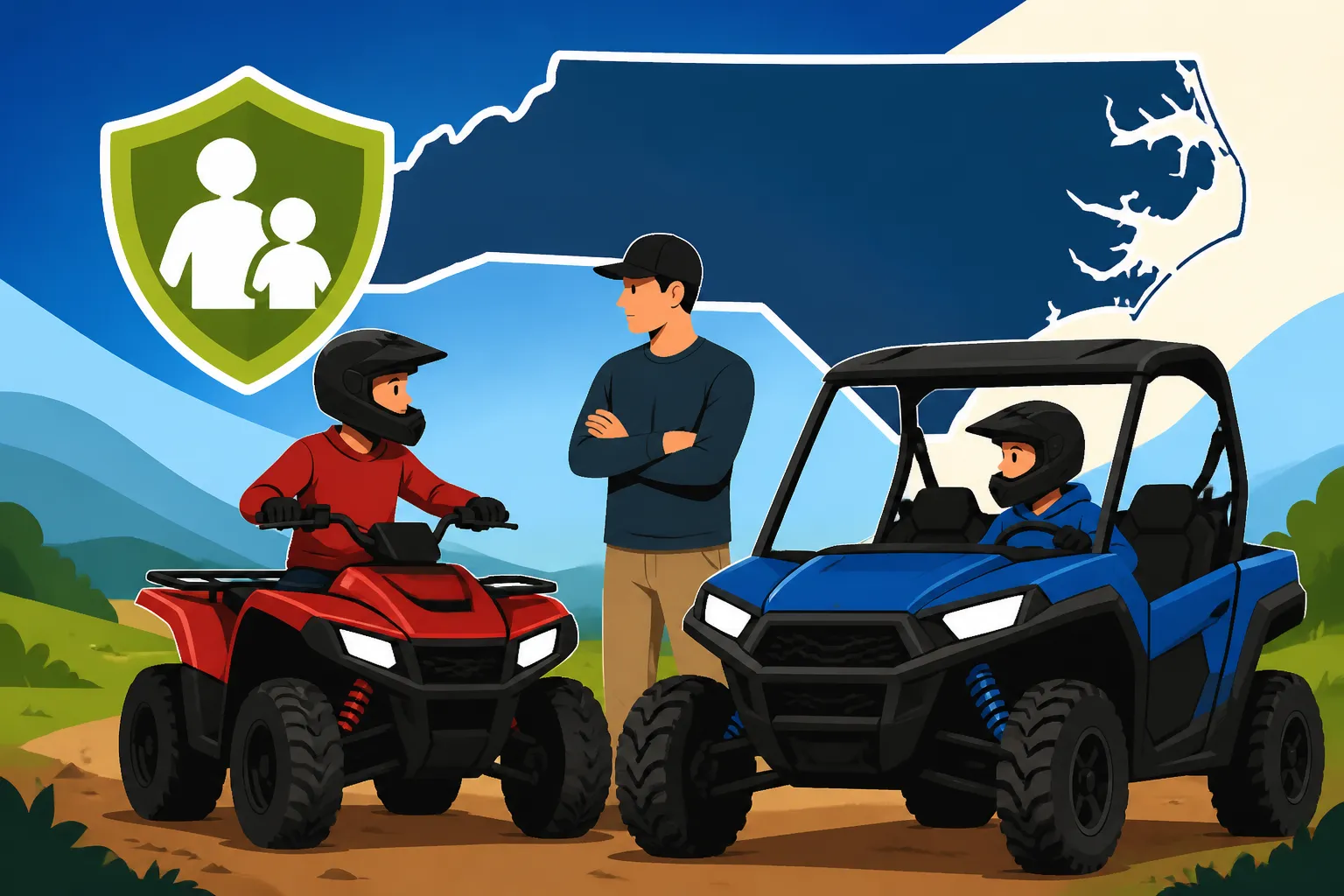
North Carolina law is quite specific about who can legally provide this "continuous visual supervision." It must be a parent, a legal guardian, or an adult (age 18 or older) who has been expressly authorized by the parent or legal guardian. This means you can't just send your teenager's older cousin out with your 10-year-old on the trails without first making it clear that the cousin is your designated supervisor. It's about accountability.
The person providing supervision bears a significant responsibility. They are expected to monitor the minor's riding, ensure they are following safety rules, and be prepared to act in an emergency. It's not just a passive role; it's an active one that requires attention and good judgment. So, if you're designating another adult, make sure they understand the gravity of their role and are capable of fulfilling it effectively and responsibly. This often means going over the specific rules of the trail, the capabilities of the machine, and what to do in case of an incident.
Practical Tips for Supervising Young Riders
Effective supervision isn't just about following the letter of the law; it's about fostering a safe and enjoyable environment. One of the best strategies is to ride alongside or directly behind your young rider, especially when they are learning or encountering new terrain. This allows you to observe their riding style, offer immediate feedback, and be there instantly if they need help. Communication systems, like helmet-mounted radios, can be incredibly helpful, allowing you to coach them through tricky sections or warn them of upcoming obstacles without having to yell.
Start small, literally. Begin with flat, open areas, gradually introducing gentle slopes and minor obstacles as their skills and confidence grow. Always pre-ride new trails yourself if possible, to identify any potential hazards before your child encounters them. Teach them proper riding techniques, like how to shift their weight, navigate turns, and handle bumps. And most importantly, lead by example. Always wear your own safety gear, follow the rules, and show respect for the environment and other riders. Encouraging them to attend an ATV safety course is also a fantastic idea, as these courses teach essential skills and safe riding practices.
Specific Age Brackets and Their Supervisory Nuances
North Carolina's laws differentiate between various age groups, imposing different requirements or outright prohibitions depending on the minor's age. It's essential to understand these distinctions to ensure compliance and, more importantly, safety.
Riders Under Eight: A Hard No for Public Operation
This is perhaps the clearest and most stringent rule: in North Carolina, no person under eight years of age is permitted to operate an all-terrain vehicle on public lands, trails, or roads. Period. There's no exception for supervision, skill level, or machine size when it comes to public access. This ban reflects the state's recognition that children under eight typically lack the physical and cognitive development necessary to safely operate an ATV in environments where they might encounter other riders, varying terrain, or unexpected situations.
While this rule specifically applies to public areas, it doesn't mean it's a free-for-all on private property. Even on your own land, or land where you have explicit permission, the spirit of the law and the inherent dangers of ATVs still warrant extreme caution. Manufacturers rarely make machines suitable for children this young, and the risk of serious injury remains very high. Responsible parents will typically avoid allowing children under eight to operate ATVs even on private land, opting for other forms of outdoor recreation until they are developmentally ready. For a closer look at this specific restriction, check out [North Carolina's Under-Eight Ban].
Riders Aged 8 to 15: The Supervision Sweet Spot
This is the primary age bracket where "continuous visual supervision" really comes into play. For children aged eight to fifteen, North Carolina law mandates that they must be under the continuous visual supervision of a parent, guardian, or an authorized adult (18 or older) when operating an ATV. This applies to both public and private lands, making it a comprehensive requirement. Furthermore, as discussed earlier, the manufacturer's age recommendations for the specific ATV being ridden are still legally binding. So, an 8-year-old on an ATV labeled for 16+ would be in violation, even if continuously supervised.
This age group is often where parents introduce their children to ATV riding, and for good reason. Many youth-model ATVs are designed specifically for these ages, featuring smaller engines, lighter frames, and safety features like throttle limiters. The combination of appropriate machine selection, continuous supervision, and proper safety gear is the key to safe riding for this demographic. It's also an excellent time to enroll them in an ATV safety course, which can instill good habits and riding skills early on. For a broader overview of guidelines for this age group, you can read more in [North Carolina Rules for Riders Under 16].
Riders Aged 16 and 17: Supervision and Safety Certificates
When riders reach the age of 16, the legal requirements in North Carolina begin to shift slightly. For those 16 and 17 years old, the continuous visual supervision rule may not be as strictly enforced in certain contexts, particularly if the rider holds an approved ATV safety certificate. However, this is a nuanced area, and parental discretion is still paramount.
While the letter of the law might suggest less direct supervision is required for a certified 16 or 17-year-old, common sense and safety still dictate strong parental involvement. Many parents will continue to supervise their older teens, especially when exploring new trails or in challenging conditions. The safety certificate itself is a valuable tool, proving the rider has undergone formal training. For riders born on or after January 1, 1990, North Carolina requires completion of an approved ATV safety course before operating an ATV on public lands. So, if your 16 or 17-year-old was born after this date, getting that certificate is a must. Details on this can be found in [North Carolina ATV Safety Certificate Requirements] and [North Carolina Rules for Riders Born On or After 1990]. Even with a certificate, always prioritize safety over just meeting minimum legal requirements.
Broader Safety Considerations for Young ATV Riders
Beyond the legal supervision requirements, there are several crucial safety considerations that every parent or guardian in North Carolina should prioritize when their minor children are riding ATVs. These elements form the bedrock of responsible off-road enjoyment.
Essential Safety Gear and Why It's Non-Negotiable
This is not a suggestion; it's a rule written in common sense and often in law. Proper safety gear is your child's first and best line of defense against injury. It can be tempting to cut corners, but trust me, a trip to the emergency room is far more expensive and traumatic than investing in quality protective equipment.
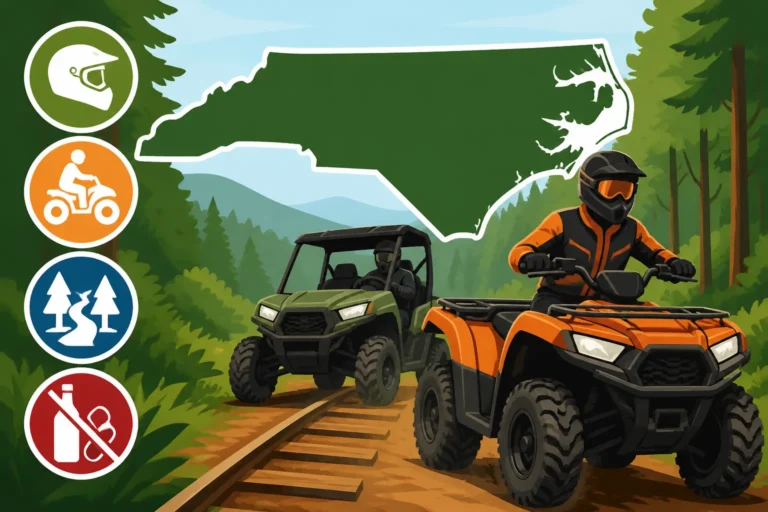
First and foremost, a DOT-approved motorcycle helmet is absolutely essential. North Carolina law specifically requires anyone under 18 operating an ATV to wear one. This isn't just for public trails; it applies anywhere they're riding. A bicycle helmet or a construction hard hat simply won't cut it. Your head is not something to gamble with. Similarly, eye protection (like goggles) is mandatory for riders under 18. Dust, debris, branches, and even insects can impair vision and cause serious injury. Beyond the legal mandates, always insist on over-the-ankle boots, gloves, long pants, and a long-sleeved shirt. These protect against scrapes, burns, and minor impacts. Brands like SuperATV offer a wide range of protective gear designed for off-road enthusiasts, ensuring your child is covered from head to toe. For more specific information, refer to [Why Under-18 Riders Need a DOT Motorcycle Helmet].
Choosing the Right Machine for a Young Rider
One of the biggest mistakes parents make is putting a young rider on a machine that's too big or too powerful for them. This is often called "too much machine," and it significantly increases the risk of accidents. North Carolina's adherence to manufacturer age recommendations directly addresses this. An ATV that is too heavy, too fast, or too wide for a child can be incredibly difficult to control, especially in challenging terrain or unexpected situations.
When selecting an ATV for a minor, consider:
- Engine Size: Generally, smaller engine sizes (e.g., 50cc-90cc for younger children, 90cc-125cc for pre-teens) are appropriate. Always check the manufacturer's age label.
- Weight: Can the child comfortably handle the machine's weight if they need to shift it or maneuver it from a stop?
- Ergonomics: Can they easily reach the handlebars, footpegs, and controls (brakes, throttle)? Their feet should be able to touch the footpegs, and they should be able to sit upright comfortably without stretching.
- Speed Capability: Youth models often have built-in throttle limiters, which are excellent for controlling maximum speed while learning.
Resist the urge to buy a machine your child will "grow into." The right-sized machine for today's skill and size is always the safest choice.
Private Land vs. Public Land: Where the Rules Change
It's a common misconception that if you're on private land, all the rules go out the window. While certain aspects of North Carolina law, particularly those concerning public access, may not apply, the core safety principles and manufacturer recommendations remain critically important. For instance, the requirement for continuous visual supervision for riders aged 8-15 generally applies regardless of whether you're on public or private land. The manufacturer's age labels are also legally binding wherever the machine is operated.
The main difference on private land (with proper permission, of course) is usually the lack of specific registration or titling requirements that might apply to public roads or specific OHV parks. However, this doesn't diminish the need for safety gear, appropriate machine sizing, or responsible supervision. In fact, on private land, you often have more control over the environment, which can be an advantage. You can create a safer, more controlled riding area for learning. Always ensure you have explicit [North Carolina Landowner Permission Rules] before riding on any private property that isn't your own. Even on private land, a basic understanding of safe riding practices and adherence to the manufacturer's guidelines will protect your family.
Here’s a quick summary to help clarify the key rules:
| Age Group | Public Land Operation | Private Land Operation | Supervision Required? | Key Considerations |
|---|---|---|---|---|
| Under 8 Years Old | NO | With Caution | Highly Recommended | Prohibited on public land. Avoid operation even on private land due to developmental factors and lack of appropriate machines. |
| 8 – 15 Years Old | Yes | Yes | Continuous Visual Supervision by Parent/Guardian/Authorized Adult (18+) | Must adhere to manufacturer's age recommendations for the ATV. Proper safety gear is mandatory. |
| 16 – 17 Years Old | Yes | Yes | Recommended; may be less stringent if ATV Safety Certified (NC born after Jan 1, 1990) | Manufacturer's age recommendations still apply. ATV Safety Certificate often required for public land access (depending on birth year). |
| 18 Years and Older | Yes | Yes | Not Legally Required | Still strongly advised to follow manufacturer's recommendations and wear safety gear. |
Ultimately, keeping our younger riders safe and legal in North Carolina boils down to a blend of understanding the state's specific laws, adhering to manufacturer guidelines, and consistently applying good, common-sense safety practices. While the rules can sometimes feel a bit complex, they are all designed with the well-being of our kids in mind. By staying informed and proactive, you can help ensure that their experiences on ATVs are not only thrilling but also safe and responsible.
Disclaimer
This article is for general informational purposes only and does not constitute professional advice. Laws, prices and regulations vary by location and change over time. Consult a qualified professional for guidance on your specific situation.