Riding a Creek Bed in Low Water in North Carolina
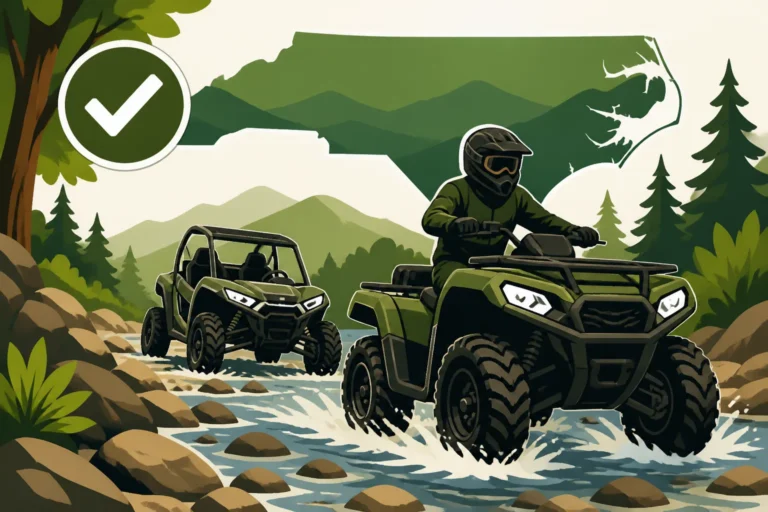
There’s a certain allure to finding a secluded spot, especially when you’re out on your ATV or UTV, and a shallow creek bed might seem like the perfect, untouched trail. However, riding through creek beds in North Carolina, even when the water is low, is fraught with legal pitfalls, environmental risks, and personal dangers that many riders simply aren't aware of until it's too late. This guide will walk you through the realities of tearing up a creek bed in our beautiful state, helping you understand why it's generally off-limits and where you can legally and safely enjoy your machine.
The Harsh Reality: Is Riding in North Carolina Creek Beds Legal?
Let's cut to the chase: almost universally, no, riding your ATV or UTV in a creek bed in North Carolina is not legal. While it might seem like a natural path, a "low water" condition doesn't suddenly make it permissible. The complexities lie in how North Carolina defines public waterways, environmental protections, and even property lines. Many riders assume that if it's not explicitly posted, it's fair game, but when it comes to water, that couldn't be further from the truth.
Understanding Public Waterways and Environmental Protections
North Carolina has a strong commitment to protecting its natural resources, and that includes our precious rivers, streams, and creeks. These waterways, even the smallest trickles, are typically considered public resources, meaning they're not just open for recreational vehicle use. State and federal laws are in place to preserve water quality, protect aquatic habitats, and prevent erosion. When you drive an ATV or UTV through a creek bed, you're not just getting your tires wet; you're churning up sediment, disturbing aquatic life, and potentially introducing pollutants like oil or fuel into the water system. This isn't just frowned upon; it's often a direct violation of environmental regulations.
Consider the delicate balance of a stream ecosystem. Tiny microorganisms, insects, and fish all rely on clear, undisturbed water. The gravel and sand on the bottom provide crucial spawning grounds and habitat. Even a single pass with a heavy machine can disrupt this for an extended period, leading to consequences far beyond what you might see at first glance. The state takes these impacts seriously, and law enforcement, including wildlife officers and local deputies, are trained to enforce these protections.
The Overlap with Private Property and Trespass Laws
Beyond environmental concerns, there's also the matter of land ownership. While the water itself might be considered public, the land immediately adjacent to and often including the creek bed can be privately owned. Many property lines extend to the center of a creek, or even fully encompass smaller streams running through private land. This means that even if you think you're on public access, you could easily be trespassing.
Imagine a farmer whose property borders a small stream in a rural county. They might rely on that stream for irrigation or livestock, and they certainly don't want ATVs tearing up the banks or contaminating the water. If you're caught riding through such a creek, you could face not only environmental fines but also trespass charges. It’s a double whammy that most riders want to avoid. Always assume that unless you have explicit, written permission from the landowner, you shouldn't be riding through any water feature on private property. For more on this, you might want to read [North Carolina Rules for Riding Private Land].
Why "Low Water" Doesn't Change the Rules
It's a common misconception that "low water" conditions somehow make riding in a creek bed acceptable. The logic often goes, "there's barely any water, so what harm could it do?" However, the legal and environmental principles don't change with the water level. The creek bed is still a designated waterway, still subject to environmental protection laws, and still potentially private property. In fact, low water can sometimes make the environmental impact worse, as there's less water to dilute potential pollutants and the disturbed sediment has a higher concentration relative to the water volume.
Think about it this way: a shallow creek might expose more of the streambed, making it even easier for your tires to dig in, displace rocks, and churn up the substrate. The impact on fish spawning beds or the habitats of small amphibians can be even more pronounced in low water, as they have fewer places to escape the disturbance. So, while it might feel safer or less damaging, the law and the environment often tell a different story.
Environmental Impact and the "Why" Behind the Restrictions
Understanding why these restrictions exist is crucial, not just for staying out of trouble, but for becoming a more responsible rider. It’s not about stifling fun, but about preserving the natural beauty and ecological health of North Carolina for everyone. Riding in creek beds has several significant negative impacts that our state is actively working to prevent.
Sedimentation, Erosion, and Water Quality
When an ATV or UTV churns through a creek bed, the tires dig into the bottom, loosening and displacing soil, sand, and gravel. This process is called sedimentation. The disturbed sediment is then carried downstream by the water, clouding the water and settling in other areas. This cloudiness (turbidity) can block sunlight, making it difficult for aquatic plants to photosynthesize, which forms the base of the food chain. The settled sediment can smother fish eggs, fill in important habitats, and even alter the flow of the stream over time.
Beyond sedimentation, repeated passes can lead to significant bank erosion. The banks of a creek are held together by plant roots, and when these are damaged or undercut by machines, they become unstable and wash away more easily, dumping even more sediment into the water. This cycle of erosion and sedimentation degrades water quality, harms aquatic life, and can even impact downstream water users, from municipal water supplies to recreational fishermen. Maintaining good water quality is a massive undertaking for the state, and preventing these types of disturbances is a key part of that effort.
Disturbing Wildlife and Habitats
Creek beds and riparian zones (the areas along the banks) are vital habitats for a vast array of wildlife. Fish, amphibians (like salamanders and frogs), turtles, snakes, and countless insects depend on these areas for food, shelter, and breeding. The noise, vibrations, and physical disturbance from an ATV or UTV can scare away or directly harm these creatures. Even if you don't see them, your presence can disrupt their natural behaviors, making them more vulnerable to predators or interrupting their reproductive cycles.
Imagine a small fish trying to spawn in a gravel bed that suddenly gets ripped up, or a turtle sunning itself on a log being scared into the water by a loud engine. These impacts might seem minor individually, but across many riders and many creek beds, the cumulative effect can be devastating to local populations. North Carolina has many protected and sensitive species, and riding in their habitat can lead to severe penalties if endangered species are involved.
Long-Term Damage to Natural Ecosystems
The consequences of riding in creek beds extend beyond immediate sedimentation and direct harm to wildlife. Over time, repeated off-road vehicle use can fundamentally alter the hydrology and ecology of a stream. This includes widening the stream channel, deepening ruts that become permanent scars, and compacting the soil on the banks, which prevents healthy plant growth. The loss of vegetation along the banks further exacerbates erosion and reduces shade, leading to warmer water temperatures that are detrimental to many aquatic species.
These changes can create a cascade of negative effects throughout the entire ecosystem, impacting everything from local water cycles to the health of larger rivers that the creek feeds into. It takes many years, often decades, for a damaged stream to recover, if it ever fully does. That's why prevention is so critical. As riders, we have a responsibility to be stewards of the land, ensuring our enjoyment doesn't come at the expense of irreversible environmental harm.
The Risks and Consequences of Riding in Creek Beds
It’s easy to focus on the thrill of the ride, but ignoring the rules comes with a heavy price. Riding in creek beds in North Carolina can lead to significant legal, financial, and personal safety risks that can quickly turn an enjoyable outing into a nightmare. Understanding these consequences is essential for any responsible ATV or UTV owner.
Legal Penalties: Fines, Court, and Machine Seizure
The legal repercussions for riding in a creek bed can be severe. Depending on the specific laws violated (environmental protection, trespass, or general off-road vehicle restrictions), you could face hefty fines that far outweigh the cost of a legal trail pass. These fines can range from hundreds to thousands of dollars, and they often come with court appearances, adding legal fees and time off work to the tab. For more on the financial penalties, check out [North Carolina Fines for an ATV Violation].
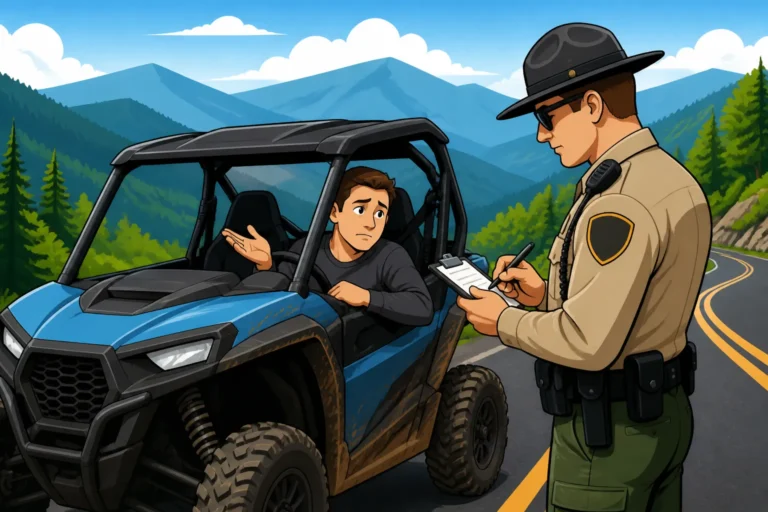
In some cases, especially with repeated offenses or significant environmental damage, authorities have the power to seize your ATV or UTV. Imagine having your prized machine impounded, facing the legal battle and expense to try and get it back, if you even can. This is a very real possibility, and it's a sobering thought for any machine owner. Wildlife enforcement officers, local police, and even park rangers are vigilant in protecting these areas, and they will enforce the law. Don't risk losing your machine for a moment of questionable fun.
Safety Concerns and Hidden Dangers
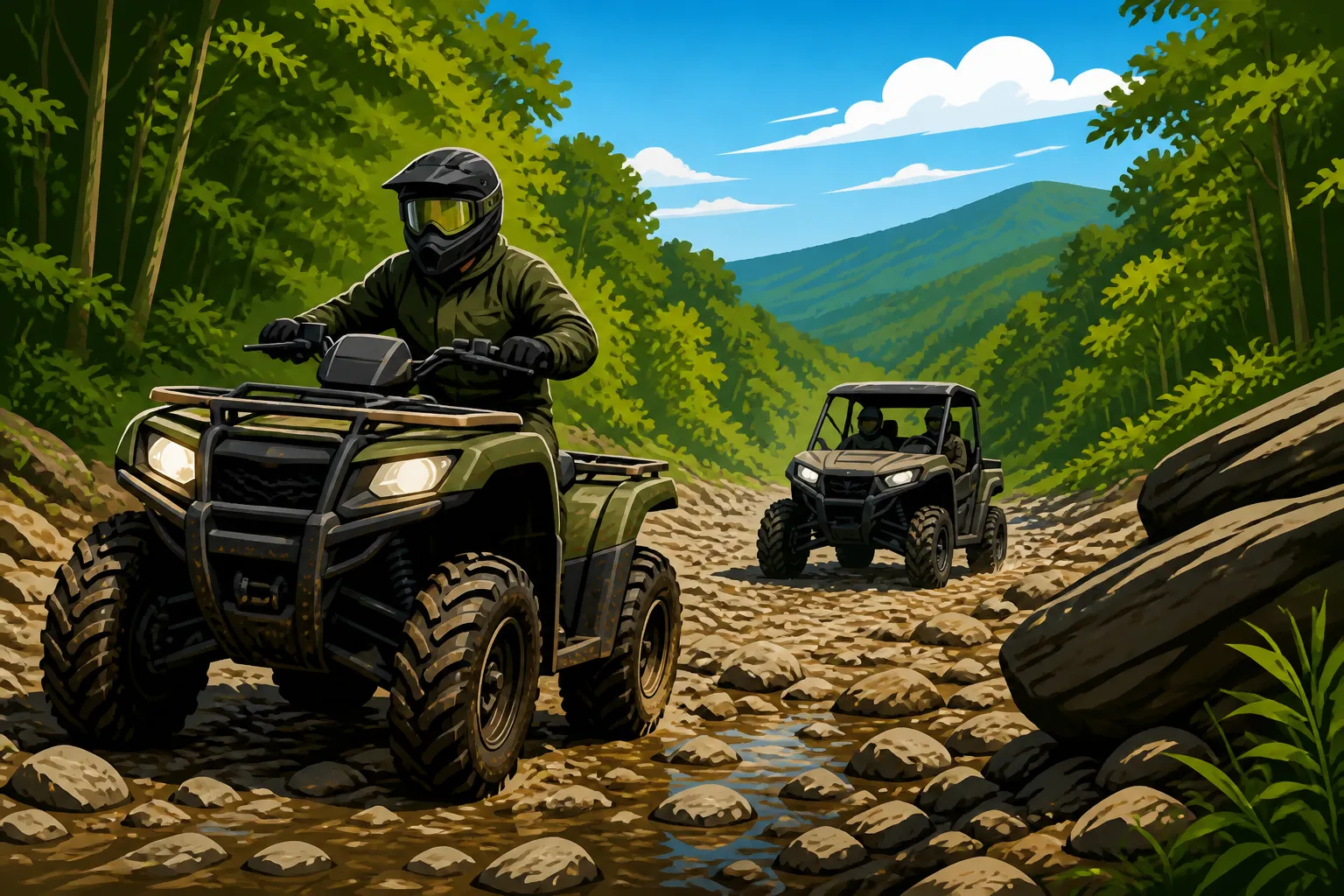
Beyond the legal trouble, creek beds present numerous safety hazards for riders. While low water might seem safe, the bottom of a creek bed is often uneven, unstable, and full of hidden obstacles. Submerged rocks, logs, and debris can easily cause an ATV or UTV to lose control, leading to rollovers or serious accidents. The traction can be unpredictable, with slick rocks and muddy patches creating treacherous conditions, even for experienced riders.
Water crossings, even shallow ones, always carry a risk. You might not know the depth or the composition of the bottom until you're already in it. There's also the risk of getting stuck, leaving you stranded in a remote area, potentially far from help. Unlike designated trails that are maintained and marked, creek beds are wild and unpredictable. Even a sturdy machine, equipped with heavy-duty A-arms or protective skid plates from a brand like SuperATV, can only do so much against an unforeseen underwater hazard. Why expose yourself and your passengers to such unnecessary dangers?
Damage to Your Machine and Insurance Headaches
Riding through water and over unseen obstacles in a creek bed is incredibly tough on your machine. Water can get into vital components like wheel bearings, CV joints, and even the engine and transmission if you go too deep or stir up too much sediment. This can lead to premature wear, corrosion, and costly repairs down the line. The constant pounding over an uneven, rocky bottom can bend rims, puncture tires, and damage suspension components.
Furthermore, if you get into an accident or damage your machine while riding illegally in a creek bed, your insurance policy might not cover it. Most ATV and UTV insurance policies have clauses that exclude coverage for damage incurred during illegal activities or in prohibited areas. This means you could be on the hook for thousands of dollars in repairs or even a total loss, with no help from your insurance provider. It’s a financial gamble that rarely pays off, turning a moment of illicit adventure into a long-term financial burden.
Where to Ride Legally and Responsibly in North Carolina
So, if creek beds are out, where can you ride in North Carolina without breaking the law, harming the environment, or risking your machine and safety? The good news is that North Carolina offers some fantastic legal opportunities for ATV and UTV enthusiasts. The key is to know where to go and to always ride responsibly.
Designated OHV Trail Systems: Your Best Bet
North Carolina is home to several excellent designated Off-Highway Vehicle (OHV) trail systems, primarily located within our beautiful National Forests. These trails are specifically designed, maintained, and managed for off-road vehicle use, providing a safe and legal environment for riders. Places like the [Brown Mountain OHV Trail System] in the Pisgah National Forest and the [Badin Lake OHV Trail Complex] in the Uwharrie National Forest offer miles of diverse terrain, from challenging climbs to scenic loops.
These trail systems are often well-marked, with varying difficulty levels to suit different skill sets. They are regularly inspected for hazards and maintained to prevent excessive erosion and minimize environmental impact. When you ride on a designated trail, you're contributing to the upkeep of these systems through permit fees, ensuring that future generations of riders can enjoy them too. Always check the specific rules and permit requirements for each area before you go, as seasons and conditions can vary. You'll need to make sure your machine has a [North Carolina Spark Arrester Requirement] and adhere to [North Carolina Sound Limits on Forest Trails].
Private Land: The Permission is Paramount
Riding on private land is another excellent option, provided you have explicit permission from the landowner. This is not a gray area; "explicit permission" means you've spoken directly with the owner, they've given you the green light, and ideally, you have it in writing. This protects both you and the landowner. Many farmers, logging companies, or large property owners might be open to allowing responsible riders on their land, especially if you offer to help with maintenance or respect their rules.
Before you even think about riding on someone else's property, get permission. Do not assume silence is consent, and never, ever cut a fence or ignore a "No Trespassing" sign. Building good relationships with landowners can open up incredible riding opportunities. However, remember that even on private land, you should still practice responsible riding to minimize environmental impact and ensure your own safety. Your machine, whether it's a stock model or kitted out with heavy-duty components from SuperATV, needs to be operated safely and respectfully.
The Importance of Preparedness and Proper Gear
No matter where you choose to ride, preparedness is key. This means ensuring your ATV or UTV is in good working order, with all safety features functioning correctly. Always wear appropriate safety gear, including a DOT-approved helmet (which is legally required for riders under 18 in North Carolina, and highly recommended for everyone) and eye protection. Consider wearing sturdy boots, gloves, and long sleeves and pants to protect against scrapes and branches.
Carry essential tools, a first-aid kit, water, and snacks. Let someone know where you're going and when you expect to return. Many riders also benefit from taking an ATV safety course; in North Carolina, there are [North Carolina ATV Safety Certificate Requirements] for certain age groups. Responsible riding isn't just about following the rules; it's about being prepared, being safe, and showing respect for the environment and others.
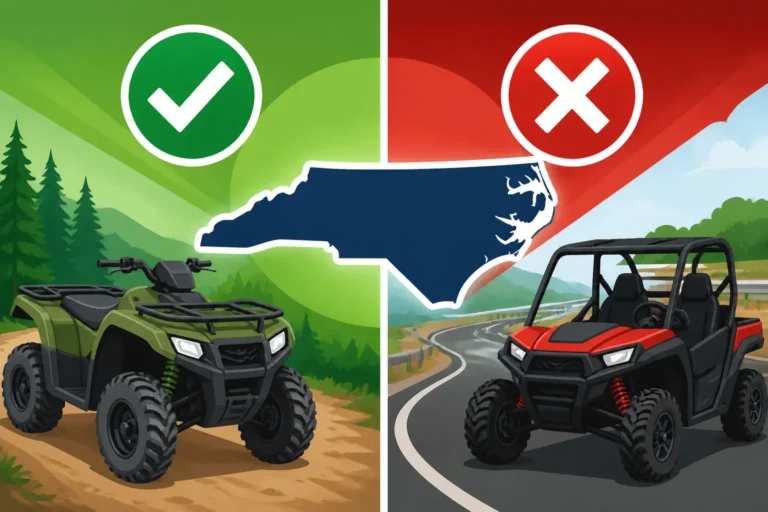
Here’s a quick overview of where you can and cannot ride in North Carolina:
| Location Type | Typical Legality for ATV/UTV Riding in NC | Key Considerations |
|---|---|---|
| Creek Beds / Waterways | Generally Illegal | Environmental damage, trespass, fines, machine seizure risks |
| Public Roads/Highways | Generally Illegal | Exceptions for [North Carolina's Modified Utility Vehicle Route] or farm use; MUVs require specific modifications & registration. |
| Public Land (Undeclared) | Generally Illegal | Most state parks, game lands (unless hunting related), and undesignated forest areas are closed. Check specific rules. |
| Designated OHV Trails | Legal with Permit | [North Carolina's Three National Forest Systems] offer trails. Requires permits, safety gear, and adherence to rules. |
| Private Land | Legal with Permission | Explicit, ideally written, permission from the landowner is mandatory. |
| Farm Fields / Farm Roads | Legal with Farm Exception | Specific rules apply for bona fide farming operations; limited road crossing. |
By choosing to ride legally and responsibly, you ensure that you and fellow enthusiasts can continue to enjoy the thrill of off-road adventures for years to come, without harming our precious natural resources or risking severe penalties.
Disclaimer
This article is for general informational purposes only and does not constitute professional advice. Laws, prices and regulations vary by location and change over time. Consult a qualified professional for guidance on your specific situation.