Getting Ticketed on a Blue Ridge Mountain Road
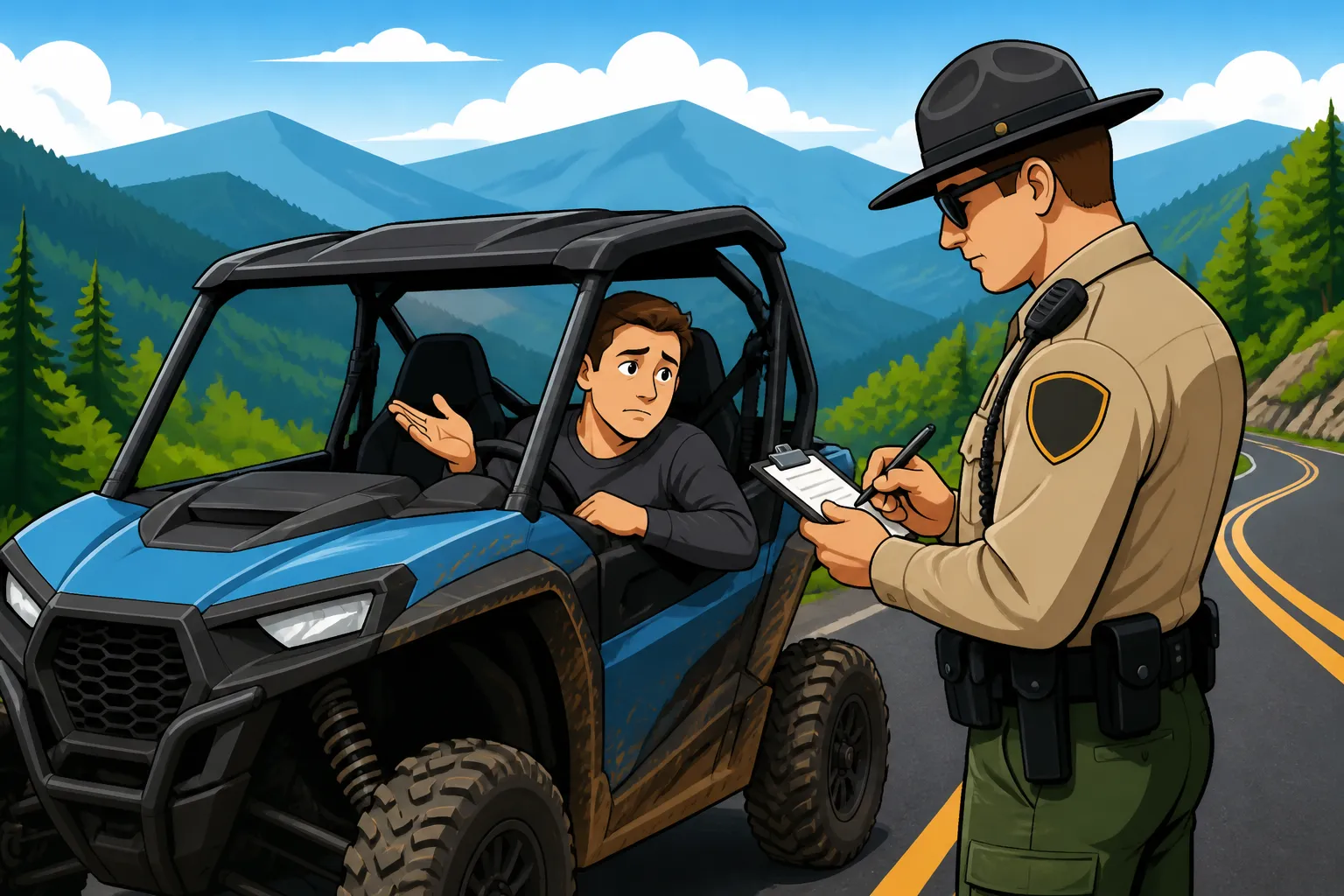
Oh, the sting of a ticket, especially when you're out enjoying the beautiful scenery of our North Carolina mountains on your ATV or UTV. It can feel like a real punch to the gut, especially if you thought you were just taking a harmless shortcut or found a quiet stretch of road. This guide is here to shed some light on why you might get ticketed on a lovely Blue Ridge Mountain road, what North Carolina law actually says about off-road vehicles on pavement, and what steps you can take if you find yourself holding a citation.
Understanding North Carolina's Stance on ATVs on Public Roads
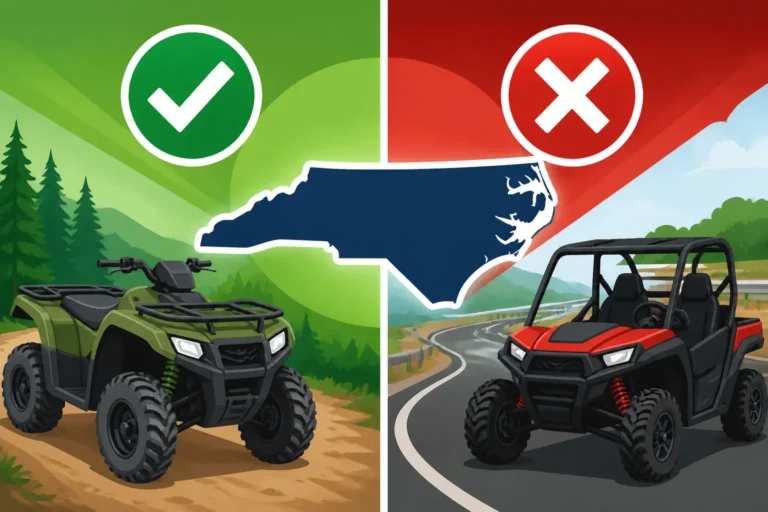
It's a common misconception, especially for those new to off-roading or visiting from states with more lenient laws, that certain roads are "fair game" for ATVs and UTVs. You see, North Carolina has a very specific, and quite restrictive, view on where these machines belong. The law is primarily designed to keep ATVs and UTVs off public roads and highways because they simply aren't built for the same safety standards as conventional vehicles, and honestly, they can be a real hazard when mixed with regular traffic.
Why the Blue Ridge Is No Exception to the Rule
The winding, scenic roads of the Blue Ridge Mountains are absolutely breathtaking, and it's completely understandable why you might think a less-traveled, gravel, or paved mountain road would be a perfect spot for a leisurely ride on your quad or side-by-side. The quiet beauty and isolation can give a false sense of security, making it feel like you're far removed from strict regulations. However, here in North Carolina, the law applies uniformly across the state, whether you're cruising near the coast, cutting across a Piedmont county road, or climbing a remote Blue Ridge pass.
Many riders, perhaps coming from a neighboring state like Virginia or Tennessee where some rural roads might have different classifications, can be caught off guard. They might assume that because a road is unpaved or lightly trafficked, it's somehow exempt from the rules. But whether it's a bustling four-lane highway or a one-lane gravel path deep in the Pisgah National Forest, if it's considered a public road by the state, your standard ATV or UTV is generally prohibited. The law doesn't make exceptions for scenery or solitude, much to the chagrin of many a mountain rider.
The "Street Legal" Myth vs. Reality for ATVs
The dream of having a truly "street legal" ATV or UTV that you can just hop on and ride to the store or connect trails with is a powerful one. Many manufacturers and aftermarket companies, including great brands like SuperATV, offer incredible accessories — lights, mirrors, horns, turn signals — that can make your machine look road-ready. And in some states, adding these components, along with registration, is enough to get you on certain public roads. But North Carolina is a different beast entirely.
Here, simply bolting on a set of turn signals or an aftermarket horn, no matter how high quality they are, doesn't magically transform your ATV into a street-legal vehicle. For a standard ATV or UTV to gain any sort of road legality, it must meet a very specific set of criteria to be classified as a Modified Utility Vehicle (MUV). This isn't just about a few accessories; it's about fundamentally altering the machine to meet rigorous safety and dimensional standards, then going through a formal titling and registration process with the DMV. Anything less, and you're just riding an off-road machine on the road, regardless of how many lights you've added. It's a frustrating reality for many who invest in those accessories hoping for more versatility. You can learn more about the specific path in our guide to [North Carolina's Modified Utility Vehicle Route].
Common Violations That Lead to a Ticket
So, what exactly puts you in the crosshairs of a North Carolina law enforcement officer on a Blue Ridge road? It usually comes down to a few key violations, all stemming from the core principle that ATVs and UTVs are generally not for public streets. Understanding these can help you avoid a citation in the future:
- Riding on Prohibited Public Roads: This is the big one. If you're on any state-maintained road, county road, or even many municipal roads not explicitly designated for off-road use (which is rare), you're likely breaking the law. This includes everything from cruising a scenic byway to just trying to get from one trail segment to another by using a paved connector.
- Illegal Road Crossings: North Carolina law does allow for brief, direct road crossings in specific circumstances, generally to get from one section of private land to another or to access a legal trail. However, many riders stretch this definition. A "crossing" means going straight across the road at a perpendicular angle, not riding down the shoulder for a quarter mile or making a quick turn to grab gas. If you're doing anything more than a quick, safe, direct crossing, you could be ticketed.
- Lack of Proper Safety Gear: While helmet and eye protection laws have seen some changes, riders under 18 still have specific requirements. If a younger rider is ticketed on a public road, a lack of appropriate safety gear like a DOT-approved helmet and eye protection will often be added to the citation. You can check out [North Carolina Helmet Law for ATV Riders] for more details.
- Underage Riding: North Carolina has rules about minimum age for riding ATVs, especially on public land or during specific activities. While some age rules have been repealed or modified for private land, if a minor is operating an ATV on a public road, the age regulations can come into play, leading to a ticket for the operator or the supervising adult.
- Carrying an Illegal Passenger: Most ATVs are designed for a single rider. Carrying a passenger on a single-seat ATV, even if they're a small child, is often a violation. Some UTVs are designed for multiple passengers, but even then, strict rules apply regarding seatbelts and age, especially if you're attempting to operate on a public thoroughfare.
The common thread is that any interaction with public roads that isn't explicitly permitted will likely lead to a conversation with law enforcement, and often, a citation.
The North Carolina Modified Utility Vehicle MUV Exception
Now, you might be thinking, "But I've seen UTVs on the road! How do they do it?" Well, North Carolina does have one very narrow and specific path for certain utility-style vehicles to become road-legal: the Modified Utility Vehicle (MUV). But let me tell you, it's not a simple process, and very few standard side-by-sides actually qualify without significant — and often expensive — modifications. This isn't just about a few bolt-on parts from SuperATV; it's a complete legal reclassification.
Meeting the Strict MUV Requirements
For your UTV to even have a prayer of becoming an MUV in North Carolina, it has to jump through a series of very specific hoops. These aren't suggestions; they are hard-and-fast legal requirements that the DMV will scrutinize. Most side-by-sides, straight from the factory, simply do not meet these specifications.
First off, the engine size is critical: your machine needs to have an engine displacement of more than 2,400 cubic centimeters. Many popular side-by-sides, even powerful ones, fall short of this, with a lot of them hovering around the 800cc to 1000cc mark. This single requirement often disqualifies the vast majority of UTVs right off the bat. Our guide, [Why an MUV Needs More Than 2,400cc], delves deeper into this.
Then there are the dimensions. Your machine must be no more than 142 inches in length. It also cannot exceed 58 inches in width, which is a big sticking point for many wider sport UTVs. And finally, it needs to be no taller than 70 inches from the ground to its highest point. You can imagine how challenging it is for a typical UTV with a roll cage and often larger tires to meet all three of these. We have specific articles on [The 142-Inch Length Requirement], [The 58-Inch Width Requirement], and [The 70-Inch Height Requirement] if you want to measure your machine.
Beyond the core specs, the MUV also needs to be capable of speeds greater than 40 mph, which most UTVs can manage, but it's part of the full package. Crucially, the vehicle must also be assigned a Vehicle Identification Number (VIN) by the North Carolina DMV if it doesn't already have one that's recognized for on-road use. This is often a hurdle for custom-built machines or those from manufacturers not typically producing street-legal vehicles. [A VIN Assigned by the North Carolina DMV] explains this process.
Lastly, and this is where those aftermarket accessories become critical, the MUV must be equipped with full road-legal safety features: working headlamps, taillamps, brake lights, turn signals, mirrors, a windshield, seatbelts for all seating positions, and a parking brake. This is why when you see an MUV, it often looks quite different from a trail-ready side-by-side; it's been purpose-built or heavily modified to resemble a small car more than an off-road beast. For the full rundown, check out the [North Carolina MUV Registration Requirements].
Registering and Insuring Your MUV for Road Use
Once you’ve somehow managed to meet all those physical and dimensional requirements—which is a huge feat in itself—you’re not done yet. You then have to formally register and title your MUV with the North Carolina Division of Motor Vehicles (DMV). This is a multi-step process that often involves an inspection to ensure everything is up to snuff.
You'll need to fill out a North Carolina Title Application, typically Form MVR-1. This form is standard for titling any vehicle in the state, and your MUV will be no exception. During this process, you'll also be subject to North Carolina's Highway Use Tax, which is typically 3% of the vehicle’s retail value or purchase price, similar to how sales tax is handled on other vehicle purchases. We explain this in more detail in [North Carolina's 3 Percent Highway Use Tax]. This tax has to be paid before you can receive a title and complete the registration.
Finally, and this is non-negotiable, you’ll need to secure specific insurance for your MUV. Because it’s now registered for road use, it needs to carry liability insurance just like any car or truck. Standard off-road insurance policies won’t cut it; you’ll need a policy that covers road use. This added layer of cost and paperwork is often overlooked, but it's essential. Our post on [Insurance a Registered MUV Carries] provides more context.
Where an MUV Can and Cannot Go
Even after painstakingly transforming your UTV into a legal MUV and going through all the hoops of registration and insurance, there are still limitations on where you can actually drive it. It’s not a blank check to hit any road you please.
In North Carolina, MUVs are generally restricted to roads with a posted speed limit of 55 mph or less. This means you won’t be taking your MUV on interstates or most major highways. The idea is to keep these smaller, specialized vehicles off high-speed roadways where they might pose a greater risk. So, while you might be able to legally drive it down a quiet country road or a main street in a small town, you won’t be zipping along I-40 on your way to the coast.
It’s crucial to understand these restrictions. Getting pulled over in an MUV on a prohibited road, even if it’s fully compliant otherwise, can still lead to a citation. The point of the MUV classification is to offer limited road access for utility purposes, not to replace a regular car or truck for all driving needs. For a more granular breakdown of allowed routes, see [Which North Carolina Roads Are Open to an MUV]. So, if you’re planning a trip through the mountains, you'll still need to map out your route carefully, ensuring that your MUV stays on permissible roadways.
What to Do If You Get Ticketed on a Blue Ridge Road
Getting a ticket while out enjoying your machine is never fun, but it's particularly frustrating when you're in the middle of a scenic ride on a Blue Ridge Mountain road. The first thing to remember is not to panic, but also not to ignore it. A citation isn't just a slap on the wrist; it's a legal document that demands a response.
Understanding the Charges and Your Options
When you receive a citation for an ATV or UTV violation on a public road, it's often more than just a typical speeding ticket. Depending on the specific circumstances and the officer's discretion, it could be classified as an infraction or even a misdemeanor. An infraction typically carries a fine and court costs, while a misdemeanor can have more serious consequences, including higher fines, potential community service, and in some rare cases, even jail time, though that's usually reserved for more egregious or repeated offenses.
The exact cost of a fine for an ATV road violation can vary greatly by county and the specific charge. You might be looking at a base fine, plus various court fees, which can quickly add up. Our article [What a $200 ATV Infraction Actually Costs] gives you an idea of the financial side. It's important to look closely at your ticket to see the exact statute you're being charged under and the court date.
Once you have the ticket, you generally have two main options:
- Pay the Fine: This is often the simplest route. By paying the fine, you're essentially admitting guilt to the charge. The downside is that it becomes part of your record, and depending on the charge, it could potentially impact things like insurance rates or future vehicle registrations, though often less so than a moving violation in a car.
- Contest It in Court: If you believe you were wrongly ticketed, or if there were extenuating circumstances, you have the right to challenge the citation in court. This involves appearing before a judge and presenting your side of the story. While it can be more time-consuming and potentially require legal representation, it’s an option if you feel strongly that you have a defense.
Ignoring the ticket is almost never a good idea. Failure to appear in court or pay a fine by the due date can lead to additional penalties, including a warrant for your arrest or a hold on your driver's license.
Appealing the Citation and Presenting Your Case
If you decide to contest your ticket, the process will involve a few steps. Your citation will have a court date, which is usually an initial appearance. At this point, you might have the opportunity to speak with the prosecutor, who might offer a plea bargain, such as reducing the charge to something less severe. This can be a good option if you want to avoid the full penalty but acknowledge some fault.
If you choose to go to trial, you'll need to prepare your case. This means gathering any evidence that supports your claim. Did you have written permission from a landowner to cross a specific road? Were there unclear signs? Did you believe you were on private property? Take photos of the location, any relevant signs (or lack thereof), and ensure you have any permits or MUV documentation (if applicable) clearly organized.
It's important to remember that law enforcement officers, especially those patrolling the scenic areas of the Blue Ridge, are often very familiar with the specifics of North Carolina ATV and UTV laws. They know [What a North Carolina Trooper Checks Roadside], so arguing ignorance of the law generally won't get you very far.
For serious charges, or if you're unsure about navigating the legal system, consulting with an attorney specializing in traffic or property law can be immensely helpful. They can advise you on the best course of action, represent you in court, and potentially help minimize the impact of the citation on your record.
Learning from the Experience and Future Prevention
Whether you decide to pay the fine or fight it in court, a ticket is always a learning experience. The most crucial takeaway should be to fully understand North Carolina's ATV and UTV laws before your next ride. This means educating yourself on topics like [Are ATVs Street Legal in North Carolina?] and ensuring you know where you can and cannot operate your machine.
Proactive planning is your best friend when it comes to avoiding future citations. Always consult maps of designated OHV (Off-Highway Vehicle) trails and parks. North Carolina has some fantastic places to ride, like the Uwharrie National Forest and Brown Mountain, which are explicitly designed for off-road enthusiasts. Check out our guide on [Where to Ride an ATV in North Carolina] for ideas. Plan your routes to strictly use these legal areas and avoid public roads altogether unless you genuinely have a fully legal MUV and are on an approved road segment.
If you operate a Modified Utility Vehicle, always carry all your registration, title, and insurance documents with you. While officers are generally familiar with MUVs, having your paperwork readily available will make any roadside stop much smoother.
Ultimately, preventing a ticket is about respecting the law and understanding the limitations of your machine on public thoroughfares. It means making the choice to enjoy our incredible North Carolina landscape in designated areas, ensuring both your safety and the longevity of our riding opportunities.
| Feature | Standard ATV/UTV (Off-Road Only) | Modified Utility Vehicle (MUV) | Standard Car/Truck (On-Road) |
|---|---|---|---|
| Road Legal Status | Generally NOT street legal | Limited street legal | Fully street legal |
| Primary Use | Off-road trails, private land | Utility tasks, limited road connections | Public roads and highways |
| Registration | Optional titling (no registration) | Mandatory titling and registration | Mandatory titling and registration |
| Insurance | Off-road/recreational coverage | Road-legal auto insurance required | Road-legal auto insurance required |
| Engine Size | Varies, often under 1000cc | Must be > 2400cc | Varies widely |
| Width Limit | Varies | No more than 58 inches | Varies, generally wider |
| Speed Cap | Varies, often high | Must be capable of > 40 mph | Varies, often high |
| Required Safety Gear (for road use) | None (for road use, as not allowed) | Headlights, taillights, turn signals, brake lights, mirrors, windshield, seatbelts, parking brake | Full standard automotive safety features |
Disclaimer
This article is for general informational purposes only and does not constitute professional advice. Laws, prices and regulations vary by location and change over time. Consult a qualified professional for guidance on your specific situation.