North Carolina Rules for a Rider Under 16
It's incredibly common for parents in North Carolina to feel a bit lost when it comes to understanding the specific rules for their younger riders on ATVs and UTVs. You want your kids to enjoy the thrill of the ride and the great outdoors, but above all, you want them safe and legal. This guide is here to help you navigate North Carolina's regulations, ensuring your under-16 rider stays protected and on the right side of the law.
Understanding North Carolina's Age and Supervision Laws
North Carolina takes the safety of its youngest riders very seriously, and that's reflected in the specific statutes concerning age and supervision. It's not just about letting a child hop on any machine; there are clear guidelines designed to prevent accidents and ensure responsible riding. As a parent, grasping these rules is your first step toward a fun and safe experience.
The Minimum Age to Ride
First things first: there is no universal minimum age that prohibits all children from riding an ATV or UTV on private land in North Carolina. This is where a lot of confusion comes in, because many other states have a hard minimum age. What North Carolina law does focus on is the manufacturer's age recommendation, which is usually found right on the machine itself. These age labels are based on the machine's size, speed capabilities, and overall design. When you see a sticker that says "16+" or "10+," those aren't just suggestions; in North Carolina, they carry legal weight. [The Manufacturer's Age Warning Label in North Carolina] specifically outlines how these recommendations become legally binding.
The state essentially adopts the manufacturer's guidance, meaning if a machine is labeled for riders 16 and older, a 15-year-old legally should not be operating it, even on your own property. It’s a common misconception that private land is a free-for-all, but when it comes to age and machine recommendations, that’s not always the case. For example, if your child is 10, they should only be on a machine specifically designed and labeled for riders 10 and older. Trying to put a younger child on a full-size adult ATV, even if they can technically reach the controls, is not only dangerous but also goes against the spirit and letter of North Carolina law concerning youth riders. This specific rule helps ensure that the machine's power and handling characteristics are appropriate for the rider's physical and mental development. [North Carolina Minimum Age to Ride an ATV] delves deeper into these age requirements.
Continuous Visual Supervision
Beyond the age recommendations for the machine itself, North Carolina law mandates "continuous visual supervision" for riders under the age of 16. This isn't just about being in the same general area; it means you, as the parent or guardian, must be able to see the minor rider at all times while they are operating the ATV or UTV. Think of it like watching a child swim in a pool – you're actively monitoring their activity and ready to intervene if needed.
This rule is designed for immediate intervention in case of a mishap, a wrong turn, or an unexpected obstacle. It means you can't send your 12-year-old off into the back forty to ride alone while you're relaxing on the porch. If you're riding with them, you should be close enough to keep them in sight, perhaps riding behind them or alongside on a separate machine. If they're practicing in a field, you should be present at the field's edge, eyes on them constantly. This requirement underscores the state's emphasis on safety and the responsibility parents bear for their young riders. [North Carolina Supervision Rules for Minors] further explains the specifics of this supervision requirement, ensuring you know exactly what’s expected to keep your young adventurer safe.
The August 1997 Grandfather Clause
There's a specific "grandfather clause" in North Carolina law that sometimes causes confusion, but it's important to understand it correctly. If a person was born before August 1, 1997, the age restrictions and safety certificate requirements might apply differently. However, this clause is becoming less relevant for riders under 16, as anyone born before August 1, 1997, is now well over 16 years old.
So, for any rider currently under the age of 16, the current laws regarding manufacturer's age recommendations and continuous visual supervision are fully in effect. Don't let older, outdated information about this clause lead you astray when it comes to your young rider today. Always default to the most stringent and current safety rules for minors.
Essential Gear for Young Riders in North Carolina
Beyond understanding who can ride and under what supervision, equipping your child with the right safety gear is non-negotiable. North Carolina law specifies certain items, but a wise parent goes above and beyond to ensure maximum protection. This isn't just about avoiding a ticket; it's about minimizing injury in the event of an accident.
Helmet Requirements
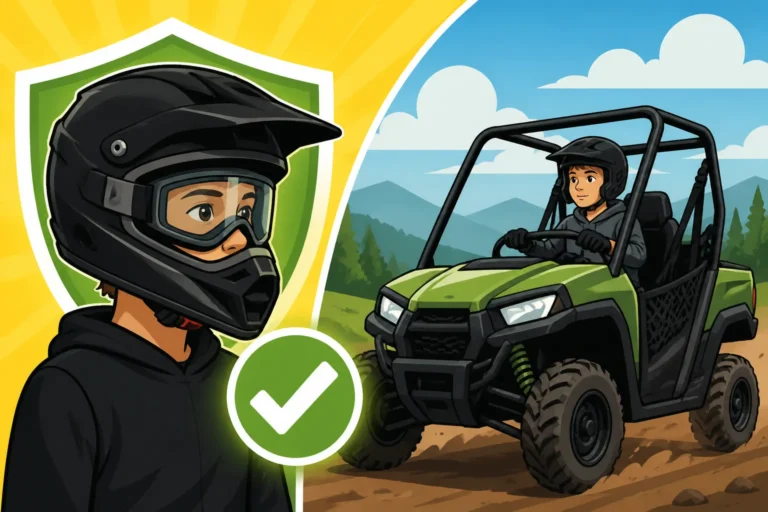
For any rider under the age of 18 in North Carolina, wearing an approved safety helmet is mandatory whenever operating an ATV or UTV. This isn't restricted to public land or designated trails; it applies even on private property. And we're not talking about just any helmet; it must be a U.S. Department of Transportation (DOT) approved helmet. This is the same standard required for motorcycles, and it means the helmet has undergone rigorous testing to prove its ability to protect the rider's head from impact.
Imagine a sudden tip-over or an unexpected collision with a tree limb – a properly fitted DOT-approved helmet can be the difference between a minor bump and a life-altering injury. It's vital that the helmet fits snugly, without being too tight, and doesn't wobble on the child's head. A helmet that's too large can shift during a fall, reducing its effectiveness. Always check for the DOT sticker on the back of the helmet. [North Carolina Helmet Law for ATV Riders] and [Why Under-18 Riders Need a DOT Motorcycle Helmet] offer more detail on this critical safety item. When you’re outfitting your younger riders, look for reputable brands and consider options that offer good ventilation for comfort, especially during warmer rides. Companies like SuperATV, for instance, offer a range of safety gear and accessories that can help you meet these requirements, ensuring your kids are as protected as possible.
Eye Protection and Other Safety Gear
In addition to a helmet, North Carolina law also requires all riders under 18 to wear adequate eye protection. Goggles or a face shield on the helmet are crucial to protect against dust, flying debris, insects, and low-hanging branches. Anyone who's ridden without eye protection knows how quickly a small pebble or a sudden gust of wind can impair vision and cause a dangerous situation.
But don't stop there. While not explicitly mandated by North Carolina law for all situations, responsible parents often invest in additional protective gear for their young riders. This includes long-sleeved shirts and long pants to protect against scrapes and minor burns, sturdy over-the-ankle boots for ankle support and protection from the hot engine, and gloves for a better grip and hand protection. Elbow and knee pads are also highly recommended, especially for beginners or those tackling more challenging terrain. Think of it as a full suit of armor for your little adventurer. A quick search for "youth ATV gear" will show you many options, and many accessory manufacturers, including some of those that produce aftermarket parts like SuperATV, also offer a selection of safety gear designed specifically for youth riders, keeping them safer on their machines. [North Carolina Eye Protection Requirement] provides more specific information about what counts as adequate eye protection.
Machine-Specific Considerations for Youth Models
When choosing an ATV or UTV for a rider under 16, or preparing an existing one, there are a few machine-specific safety features to consider. Many youth models come equipped with throttle limiters, which are fantastic tools for parents. These devices allow you to restrict the machine's top speed, giving your child time to learn handling and control at a safe pace before gradually increasing the speed as their skills improve. It's like having training wheels for power.
Another crucial feature is a remote shut-off or tether switch. These allow a supervising adult to immediately cut the engine from a distance if the child gets into trouble or loses control. This provides an invaluable layer of safety, especially when a child is just starting out. Always ensure these safety mechanisms are in good working order before every ride. You can also look into aftermarket accessories from companies that specialize in ATV/UTV parts, such as SuperATV, which might offer additional protective components like stronger brush guards or wider footrests that can enhance safety and comfort for smaller riders.
Where Can Young Riders Actually Ride in North Carolina?
The question of where your under-16 rider can legally operate an ATV or UTV is just as important as the age and gear requirements. North Carolina's rules are quite clear on this: these machines are generally meant for off-highway use, with very limited exceptions. Knowing these boundaries is crucial to avoid fines and ensure your child's safety.
Private Land vs. Public Trails
The vast majority of ATV and UTV riding for minors in North Carolina will happen on private land, with the landowner's permission. This is your property, a friend's farm, or a designated private riding park. As long as you adhere to the age-appropriate machine rules, supervision requirements, and gear mandates, private land is generally your safest and most legal bet.
When it comes to public lands, such as state or national forests with designated OHV trails, the rules can be a bit more complex, particularly for younger riders. While some public trail systems, like those in the Uwharrie National Forest, are fantastic places to ride, they often have their own set of age-specific rules, including requirements for safety certificates. A child under 16 might be allowed on these trails if they meet all the state's age, supervision, and gear rules, AND if they possess a valid ATV safety certificate. This certificate demonstrates that they've completed an approved safety course. Always check the specific rules of the public trail system before you go, as some may have stricter age limits or permit requirements. [North Carolina Rules for Riding Private Land] and [Where to Ride an ATV in North Carolina] provide more context on these riding environments.
Road Crossing and Street Riding Limitations
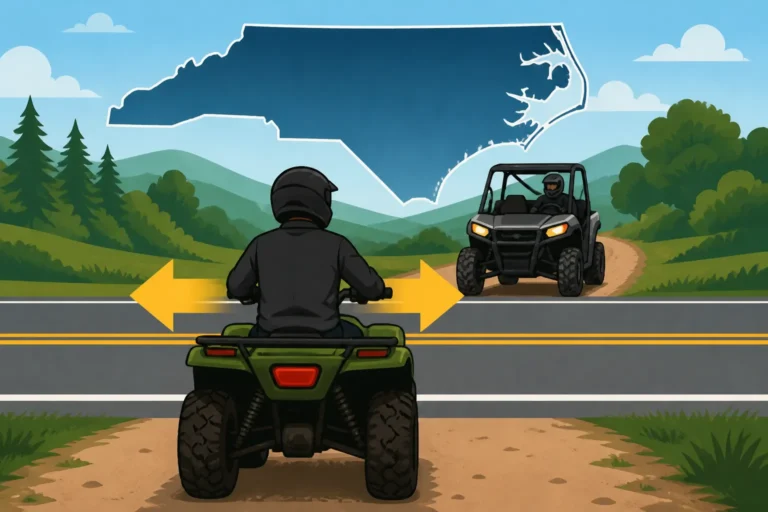
This is a critical area where many people get confused. For a rider under 16, operating an ATV or UTV on any public road, street, or highway in North Carolina is almost universally prohibited. This includes shoulders, ditches, and even briefly crossing a road. The only very narrow exceptions generally apply to specific situations like farming operations or emergency services, and even then, often involve adults on machines that meet very specific requirements, like the Modified Utility Vehicle (MUV) designation, which is highly unlikely for a youth-sized machine.
Imagine your child wanting to cross a paved county road to get from one section of your property to another. Even this brief crossing is illegal and incredibly dangerous. Public roads are designed for vehicles with different safety standards, speed capabilities, and visible signaling. An ATV or UTV, especially one ridden by a minor, simply isn't equipped for that environment. Stick to private land or designated off-road trails. [North Carolina Rules for Crossing a Road] and [North Carolina Rules for Riding a Public Street] lay out these restrictions very clearly, emphasizing the dangers and legal ramifications of operating these machines on public roadways.
Game Lands and Other Restricted Areas
North Carolina has vast tracts of game lands and other protected areas, which can be tempting for riding. However, the rules for ATVs and UTVs on game lands are often very restrictive, and for riders under 16, even more so. Generally, ATVs are not permitted for recreational riding on game lands. Their use is usually limited to specific purposes during hunting seasons, and even then, often restricted to designated access routes and specific types of machines.
Furthermore, state parks and other protected natural areas typically prohibit the use of ATVs and UTVs entirely. These areas are preserved for passive recreation like hiking and wildlife observation, and the motorized traffic of off-road vehicles is seen as incompatible with their conservation goals. Before you ever consider taking your child and their machine to any public land, always, always check with the managing agency first. A quick phone call to the local ranger station or park office can save you a lot of hassle and potential fines. [North Carolina Rules for Riding Game Lands] provides details on the specific restrictions that apply in these sensitive areas.
Here's a quick reference table for North Carolina's rules for riders under 16:
| Requirement | Detail |
|---|---|
| Minimum Age | No universal minimum; must adhere to manufacturer's age warning label on the machine. |
| Supervision | Continuous visual supervision by an adult (18+) is required at all times. |
| Helmet | DOT-approved safety helmet is mandatory for all riders under 18, even on private land. |
| Eye Protection | Adequate eye protection (goggles or face shield) is mandatory for all riders under 18. |
| Safety Certificate | Required for riders born on or after January 1, 1990 when riding on public OHV trails or designated areas. |
| Public Roads | Generally prohibited for all riders under 16; very limited, specific exceptions for adults on MUVs. |
| Private Land | Permitted with landowner permission, adhering to age, supervision, and gear rules. |
| Public Trails | Permitted if all state laws (age, supervision, gear, certificate if applicable) and trail-specific rules are met. |
Safety Education: Preparing Young Riders for the Trail
While understanding the laws and having the right gear is fundamental, developing strong riding skills and a safety-first mindset is paramount. This is where proper safety education comes into play, providing your young rider with the knowledge and confidence to handle their machine responsibly.
The Birth-Year Safety Certificate
North Carolina law requires an ATV safety certificate for anyone born on or after January 1, 1990, when operating an ATV on public lands, including designated OHV trails. While this primarily impacts adults now, it's an important consideration for young riders as they approach their teens and beyond, especially if you plan to visit public trail systems.
This certificate proves that the rider has successfully completed an approved ATV safety course. These courses cover everything from basic machine controls and proper riding posture to understanding trail etiquette, recognizing hazards, and performing emergency maneuvers. It's not just a hoop to jump through; it's genuine, life-saving education. Even if your child isn't riding on public land yet, taking an approved safety course is an excellent idea for any young rider, as it instills good habits from the start. [North Carolina Safety Certificate Requirements] explains who needs this certificate and for what types of riding.
Approved Safety Courses
So, what constitutes an approved safety course in North Carolina? The state typically recognizes courses approved by the ATV Safety Institute (ASI). These courses are often offered in a blended format, combining online learning with hands-on, practical training led by certified instructors. The practical component is especially valuable for young riders, as it allows them to apply what they've learned in a controlled environment, receiving immediate feedback from an experienced professional.
Taking a course together as a family can also be a fantastic bonding experience and reinforces the importance of safety for everyone. It ensures that both parents and children understand the physics of riding, the environmental responsibilities, and the specific hazards associated with off-road vehicle operation. Investing in this education is investing in your child's safety and confidence, making their time on the trails more enjoyable and less prone to incidents. Always check the North Carolina Department of Environmental Quality or the ATV Safety Institute website for current information on course availability and approved providers.
Disclaimer
This article is for general informational purposes only and does not constitute professional advice. Laws, prices and regulations vary by location and change over time. Consult a qualified professional for guidance on your specific situation.