Where a Forest Road Meets Pavement
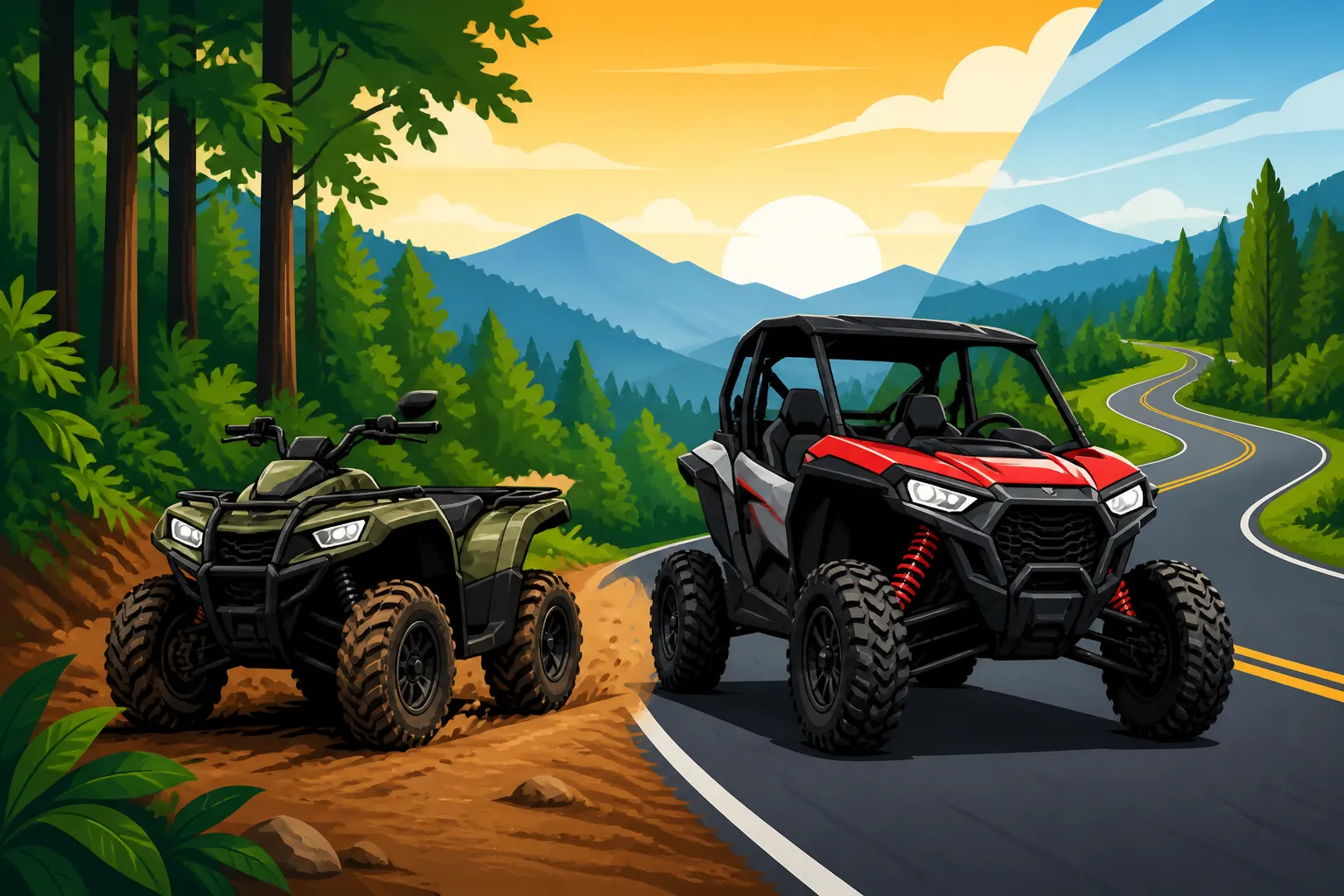
It's a familiar scenario for many off-road enthusiasts here in North Carolina: you're out enjoying a fantastic ride on a winding forest trail, the dirt flying, the engine purring, and suddenly, through the trees, you spot it – the unmistakable sheen of asphalt. That moment when a rugged forest road abruptly meets a paved public street can be confusing and fraught with legal uncertainty. This guide is here to untangle the complexities of North Carolina law regarding where your ATV or UTV can, and absolutely cannot, legally roll when dirt turns to pavement.
The Harsh Reality: ATVs and UTVs Are Generally Not Street Legal in North Carolina
Let's get this out of the way upfront, because it’s the most critical piece of information for any ATV or UTV owner in North Carolina: generally speaking, your off-road machine is not legal to ride on paved public roads. I know, it's a bitter pill to swallow, especially when that forest road you’ve been enjoying for miles dead-ends onto a quiet country lane that looks utterly harmless. It's frustrating when you just need to cover a few hundred feet to get to the next trail section or back to your truck.
The state of North Carolina views ATVs and UTVs as off-highway vehicles, designed and intended for use on unpaved surfaces. They lack many of the safety features, like sealed cabins, seat belts, and specific lighting, that are standard on vehicles built for highway travel. Even if your machine is kitted out with an aftermarket windshield, a sturdy SuperATV bumper, or upgraded lights, it doesn't automatically qualify it for paved road use in the eyes of the law. This fundamental distinction is why you won't find a traditional ATV registration process in North Carolina for highway use; it simply doesn't exist outside of very specific, narrowly defined exceptions.
The moment your tires touch that blacktop, if you're not operating under one of those specific exceptions, you're technically in violation of state law. This isn't just a minor infraction; it can lead to significant fines, potential impoundment of your machine, and even more serious legal trouble depending on the circumstances. It's a risk many riders don't fully appreciate until they see those blue lights in their rearview mirror.
Why the Strict Separation Exists
It might seem arbitrary, especially on those deserted backroads, but there are concrete reasons for North Carolina's strict stance on ATVs and UTVs on pavement. Firstly, safety is paramount. ATVs and UTVs handle very differently on hard, paved surfaces compared to dirt. Their suspension, tire design, and weight distribution are all optimized for off-road conditions. On asphalt, they can be unstable, particularly at higher speeds or during quick maneuvers, posing a significant risk to both the rider and other motorists.
Secondly, visibility plays a crucial role. While many modern UTVs, and even some ATVs, come with decent headlights and taillights, they often aren't as bright or as strategically placed as those on street-legal vehicles. Their smaller profile can also make them harder to spot in traffic, especially at dusk or dawn. This isn't to say your machine isn't equipped for night riding on a trail – in fact, many riders invest in powerful light bars and accessories from brands like SuperATV for enhanced visibility off-road – but the demands of sharing a road with cars, trucks, and motorcycles are completely different.
Finally, there's the issue of liability and insurance. Standard ATV/UTV insurance policies are typically designed for off-road incidents and may not cover accidents that occur on public paved roads. When an ATV is involved in an accident on a public street, the legal and financial ramifications can be devastating for all parties involved, precisely because the vehicle isn't legally supposed to be there. Understanding [North Carolina ATV Insurance Requirement] can save you a lot of headache down the line.
Navigating the Grey Areas: When a Forest Road-to-Pavement Transition Might Be Permitted
While the general rule is "no street riding," North Carolina does acknowledge a few very specific, highly restricted scenarios where an off-road machine might legally touch pavement. These are not loopholes for casual street use but narrow exceptions designed for specific purposes. If you find yourself needing to cross or briefly use a paved road from a forest trail, you must understand these conditions thoroughly. Mistaking an exception for a general allowance is where many riders get into trouble.
The Brief Road Crossing: A Tightrope Walk
North Carolina law allows for very limited road crossings by ATVs and UTVs. The key here is "brief and incidental" and, crucially, "at a ninety-degree angle." This isn't permission to ride down the road for a quarter-mile to the next trail access point. It means literally crossing from one side of a paved road to the other, as directly as possible, when necessary to get to an adjacent trail or private property. Even then, you must yield to all vehicular traffic and pedestrians, and it's generally only permitted on roads where the posted speed limit is 35 mph or less.
It’s easy to misunderstand this. Many riders think, "Oh, it's just a quick hop across the road, what's the big deal?" The big deal is that a law enforcement officer has discretion, and if your "brief crossing" looks like you're actually riding on the road, you could still be cited. This exception is not for connecting trail systems via public roads. It's for an unavoidable, quick traverse. Always be aware of [North Carolina Rules for Crossing a Road] before attempting it.
The Farm Use Exemption: Not a Free Pass for Joyriding
The farm use exemption is another area frequently misunderstood. North Carolina law provides that ATVs and UTVs used for legitimate farming operations may operate on public roads for agricultural purposes. This sounds broad, but it's incredibly specific. It means actively transporting tools, crops, feed, or performing farm-related tasks on a working farm, and often involves moving between different sections of the same farm property that are divided by a public road.
This exception absolutely does not extend to recreational riding, even if you own a farm. You cannot take your UTV out for a Sunday drive on the paved road simply because you live on a farm. The machine must be directly engaged in agricultural work. Moreover, the definition of "farming operations" can be quite strict. If you're riding your UTV with a SuperATV cargo box full of tools to fix a fence on your farm, that might qualify. If you're taking it to the local convenience store for a soda, it most certainly does not. Familiarize yourself with [North Carolina's Farming Operations Exception] to understand the nuances.
The Modified Utility Vehicle (MUV) Route: A Niche, Not a Norm
For those desperate to get a side-by-side or UTV legally on paved roads, North Carolina offers a highly specific path: the Modified Utility Vehicle, or MUV. But let me tell you, this isn't for most machines, and it's a significant undertaking. To qualify as an MUV, a UTV must meet an exhaustive list of requirements that essentially transform it into a street-legal vehicle, much like a car. This isn't just about adding turn signals; it's about fundamental vehicle specifications.
Here’s a snapshot of some of the stringent MUV requirements:
| Feature | Requirement |
|---|---|
| Engine Displacement | More than 2,400 cubic centimeters (cc) |
| Length | No more than 142 inches (about 11.8 feet) |
| Width | No more than 58 inches (about 4.8 feet) |
| Height | No more than 70 inches (about 5.8 feet) |
| Top Speed | Capable of exceeding 40 mph on level ground |
| Safety Equipment | Headlamps, taillamps, brake lights, turn signals, mirrors, windshield, speedometer, parking brake, horn |
| Occupant Protection | Seat belts for all occupants |
| VIN | Must have a VIN assigned by the North Carolina DMV |
| Registration & Insurance | Must be registered, titled, and insured as an MUV, and inspected annually. |
As you can see, the engine size requirement alone immediately disqualifies the vast majority of consumer UTVs, which typically range from 500cc to 1000cc. Even if you manage to meet the engine size and dimension rules, the list of required safety equipment and the need for a DMV-assigned VIN make this a costly and complex process. This path is almost exclusively for industrial or specialty vehicles, not your average recreational side-by-side from a dealer. If you're curious about this route, definitely dig into [North Carolina's Modified Utility Vehicle Route], [North Carolina MUV Registration Requirements], [North Carolina MUV Engine Size Requirement], and [North Carolina MUV Dimension Requirements].
Private Land Access: Your Best Bet for Connected Riding
Often, what looks like a "forest road meets pavement" scenario is actually private property. If you have permission from the landowner to ride on their private land, and that land happens to be bisected by a paved road, you might be able to cross or briefly use that paved section if it's specifically part of the private property. This isn't a public road exception; it's an extension of your private property rights with explicit landowner permission.
For example, if a large private hunting club owns land on both sides of a small paved county road, and they have designated crossing points, that's different from a public forest service road meeting a state highway. Always ensure you have clear, preferably written, permission from the landowner. Without it, you're trespassing, and the moment you hit that pavement, you're back to being an illegal road rider. Understanding [North Carolina Landowner Permission Rules] is crucial here.
Practical Steps and Safety Considerations at the Pavement Junction
Given the strict rules, preparation and caution are your best allies when a forest road unexpectedly or necessarily meets pavement. You can't just barrel out onto the asphalt hoping for the best. Taking a few proactive steps can make all the difference in avoiding a citation or, worse, an accident.
Pre-Trip Planning and Route Awareness
The best defense is a good offense, as they say. Before you even head out to the trails, spend time with a detailed map (both physical and digital) to understand where forest roads intersect with paved ones. Many popular OHV areas, like Brown Mountain or Badin Lake, have established trail systems that largely avoid public road interactions, but it's not always guaranteed. If you know a specific section of your ride involves crossing or briefly using a paved road, you can plan for it.
Identify potential crossing points that offer the best visibility and the lowest speed limits. Look for pull-offs or shoulders where you can safely stop and assess traffic. The goal is to minimize your time on the pavement and maximize your safety. There's nothing worse than discovering an unexpected paved road junction when you're already in the thick of it, feeling rushed and unprepared.
Maximizing Visibility and Situational Awareness
When you approach a paved road from a forest trail, slow down considerably. Even if you've got aftermarket LED light bars on your SuperATV rig, remember that other drivers aren't expecting to see an off-road machine emerging from the woods. Come to a complete stop, look both ways multiple times, and listen for approaching traffic.
Wear bright colors if possible, and ensure all your lights (headlights, taillights) are on, even in broad daylight. Make eye contact with any drivers you see. Assume they haven't seen you. This hyper-vigilance might feel excessive for a quick crossing, but it's essential for your safety and to avoid any misinterpretations by law enforcement.
Essential Gear is Non-Negotiable
Even for the shortest foray onto pavement, you absolutely must be wearing your helmet and eye protection. North Carolina has specific rules regarding these for ATV riders, particularly for those under 18, but it's a smart practice for everyone. A DOT-approved helmet and proper eye protection (goggles or a face shield) are critical safety devices whether you're on a trail or crossing a paved road. Do not, under any circumstances, take them off prematurely because you think you're "almost there." Always review [North Carolina Helmet Law for ATV Riders] and [North Carolina Eye Protection Requirement].
What to Do If Stopped
If you are stopped by law enforcement while on a paved road with your ATV or UTV, remain calm and cooperative. Turn off your machine, keep your hands visible, and follow the officer's instructions. Provide your identification and any requested paperwork (proof of ownership, any private land permits). Do not argue or become defensive. Clearly explain your situation – for example, that you were making a legal crossing to another section of trail or private property if that applies.
Understand that the officer has a job to do, and if you are indeed operating outside the permitted exceptions, you will likely receive a citation. While it's frustrating, remember that challenging the ticket is done in court, not on the roadside. Getting a citation for riding your ATV on a paved road can come with significant [North Carolina Fines for an ATV Violation] and other consequences, so always err on the side of caution.
Consequences of Non-Compliance: What to Expect When Caught
Riding an ATV or UTV on a paved public road in North Carolina when not expressly permitted by law carries real and often expensive consequences. It's not just a slap on the wrist; it's a serious matter that the state takes seriously for public safety reasons.
Fines, Penalties, and Court Appearances
The most immediate consequence of being caught riding an off-highway vehicle on a public road is a traffic citation. These fines can be substantial and, depending on the specific statute violated, may also accrue court costs and administrative fees. It's not uncommon for a single infraction to cost several hundred dollars.
Furthermore, if the violation is severe, or if it contributes to an accident, you could face more serious charges. The type of road, the presence of other traffic, and whether you were operating recklessly can all influence the severity of the legal ramifications. A minor citation can quickly escalate if the situation is perceived as dangerous or if you have prior violations.
Machine Impoundment and Recovery Costs
One of the most disheartening consequences for any rider is the impoundment of their beloved machine. Law enforcement has the authority to seize vehicles operated illegally on public roads. If your ATV or UTV is impounded, you'll be responsible for towing fees, daily storage fees, and any administrative costs associated with retrieving it. These costs can quickly add up, often exceeding the initial fine.
Retrieving an impounded machine can be a bureaucratic nightmare, requiring proof of ownership, payment of all outstanding fees and fines, and potentially a court order. It's a hassle that nobody wants to deal with, and it underscores the importance of adhering to the rules. Imagine planning an exciting weekend ride, only to have your machine sitting in a tow yard because of a momentary lapse in judgment on a paved section.
Insurance and Liability Implications
As mentioned earlier, standard ATV/UTV insurance policies are primarily designed for off-road use. If you have an accident on a public paved road where your machine is not legally permitted to be, your insurance provider may deny coverage. This means you could be personally liable for all damages, including property damage, medical bills for yourself and others, and any legal fees resulting from the incident.
The financial burden of an uninsured accident on a public road can be catastrophic. Imagine hitting another vehicle or injuring a pedestrian. The costs could easily run into the tens or even hundreds of thousands of dollars, fundamentally altering your financial future. This risk alone should be enough to deter any temptation to take your off-road machine onto pavement illegally. Always ensure you understand your policy's limitations and consider the severe implications of being uninsured on a public road.
Why It's Not Worth the Risk
Ultimately, the few moments of convenience gained by riding your ATV or UTV on a paved public road simply aren't worth the immense risks. The legal penalties, financial costs, and potential for severe accidents far outweigh any perceived benefit. North Carolina has incredible off-road opportunities, from the expansive [Badin Lake OHV Trail Complex] to the challenging [Brown Mountain OHV Trail System], and countless miles of private land available with permission. Focus on enjoying those areas where your machine is designed to be ridden and where you can truly appreciate the freedom of off-roading without the constant worry of breaking the law.
If you need to connect two trail systems, explore legal options like trailering your machine between locations. If you’re looking to ride in a more street-legal capacity, consider a vehicle that is actually designed and regulated for road use, or explore the extremely narrow path of converting a UTV into an MUV, understanding that it's a significant investment and transformation. Play it safe, play it smart, and keep your wheels on the dirt where they belong.
Disclaimer
This article is for general informational purposes only and does not constitute professional advice. Laws, prices and regulations vary by location and change over time. Consult a qualified professional for guidance on your specific situation.