Continuous Visual Supervision Under North Carolina Law
Navigating the world of ATV and UTV riding with kids in North Carolina can feel like trying to decipher a secret code. You want your children to experience the thrill and freedom of off-roading, but you're also keenly aware of the safety implications and, let's be honest, the sometimes-confusing legal requirements. One of the biggest questions that pops up for parents is all about "continuous visual supervision" – what exactly does it mean to the letter of the law, and how do you actually put it into practice while keeping everyone safe? This comprehensive guide will peel back the layers of North Carolina's supervision requirements, helping you understand your responsibilities and ensuring your young riders can enjoy their machines legally and safely.
Understanding North Carolina's Core Supervision Requirement
The phrase "continuous visual supervision" might sound straightforward, but in the context of ATV and UTV riding, it carries specific weight and implications. It’s not just about being in the same general area; it's about a consistent, unbroken connection between the supervising adult and the minor rider. This is a cornerstone of child ATV safety in North Carolina, designed to minimize risks and provide immediate intervention when needed.
What "Continuous Visual Supervision" Actually Means
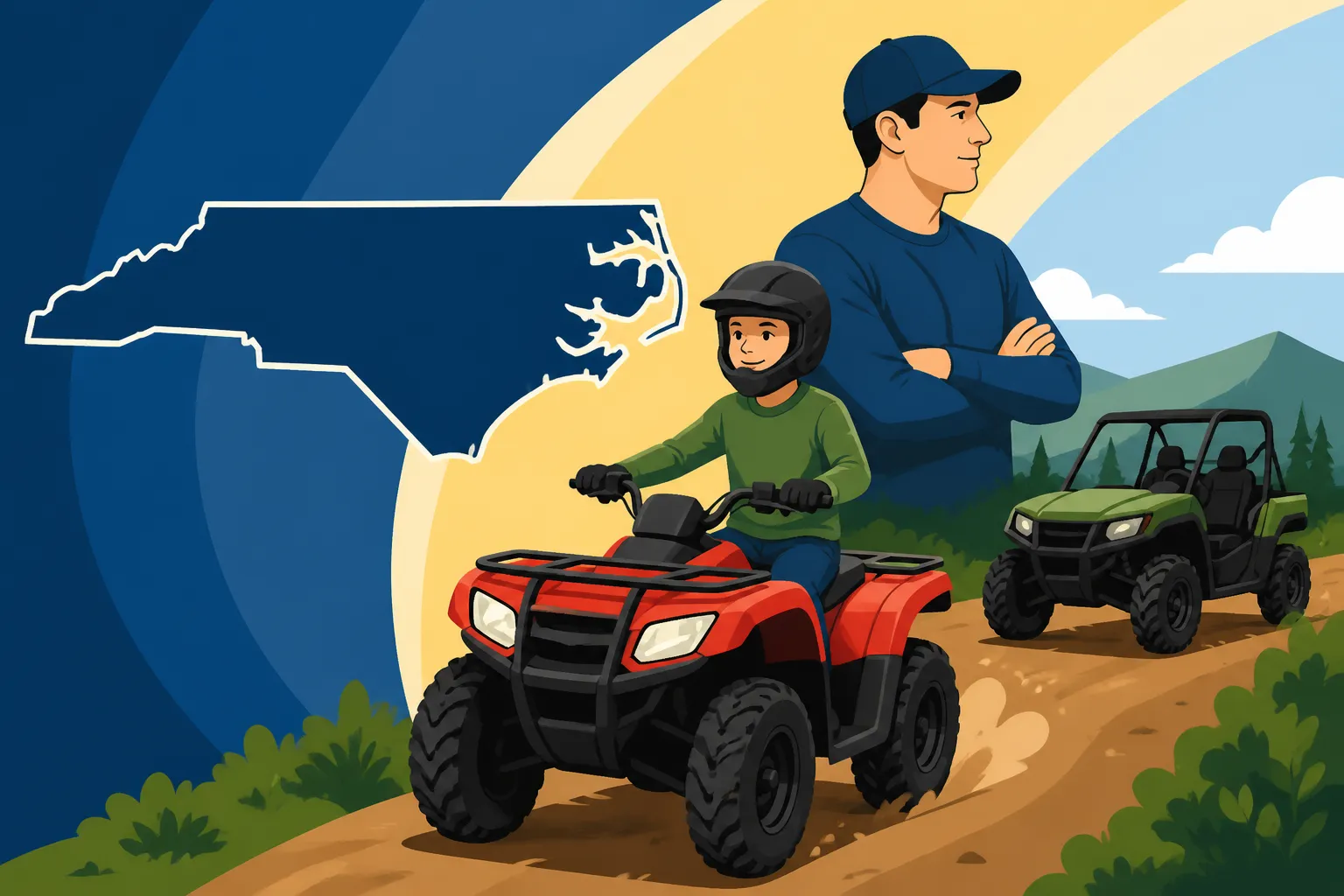
In North Carolina, when the law talks about continuous visual supervision for ATV or UTV riders, it means that the supervising adult must maintain an unobstructed line of sight to the young rider at all times while the machine is in operation. This isn't just a suggestion; it's a legal expectation. Imagine being able to see every move your child makes on their machine, from a casual turn to an unexpected bump. That's the level of visibility the state is looking for. It means you can't be inside a house while they're riding in the yard, or on the other side of a dense tree line on a trail. Your eyes need to be on them, continuously. This allows for instant reaction if a child gets into trouble, whether it's stalling on a hill, encountering an obstacle, or needing a quick reminder about safe riding practices. The intent is to ensure that the adult is truly present and capable of intervening physically or vocally at any moment.
Why This Rule Exists for Young Riders
The reason behind such a stringent rule is rooted deeply in safety and the protection of minors. ATVs and UTVs, while incredibly fun, are powerful machines that demand respect and skill. Young riders, by their very nature, lack the experience, judgment, and physical maturity of adults. They might misjudge terrain, overestimate their abilities, or react impulsively in a way an adult wouldn't. The "continuous visual supervision" rule acts as a critical safety net, ensuring that an experienced adult is always on hand to guide, correct, and protect. It's about preventing accidents before they happen, teaching good habits, and being there for immediate first aid or machine assistance if an incident does occur. The state acknowledges the educational aspect of riding, too; a supervising adult isn't just an overseer but a mentor, instilling proper riding techniques and a sense of responsibility from the earliest days.
The Legal Age Bracket This Applies To
The requirement for continuous visual supervision in North Carolina specifically applies to riders under the age of 16. This age threshold is key because it aligns with other significant ATV safety laws in the state, such as those concerning helmets and safety certificates. Once a rider turns 16, they are legally considered mature enough to ride without the continuous visual oversight of an adult, though responsible riding is always encouraged regardless of age. For those young riders, however, the adult's presence is non-negotiable. This means if you have a 10-year-old and a 17-year-old riding together, only the 10-year-old legally requires an adult to be continuously watching. However, as any seasoned rider parent knows, even if the law doesn't explicitly require it, keeping an eye on all your riders, regardless of age, is simply good practice. You can learn more about [What North Carolina Law Says About a Rider's Age].
Practical Application of Continuous Visual Supervision
Knowing the legal definition is one thing; putting it into practice in the real world, especially when you're out on trails or dealing with varying terrain, is another. It requires thoughtful planning, the right equipment, and a commitment to staying engaged with your young rider's experience.
Keeping Your Child in Constant Sight
Maintaining constant sight of a child on an ATV or UTV is the bedrock of continuous visual supervision. This means you need to be strategically positioned to see them at all times. On an open field, this might be relatively easy – you can walk alongside them or ride your own machine a safe distance behind. However, on wooded trails, hills, or areas with dense vegetation, it becomes much more challenging. You might need to ride on a parallel path, positioned slightly ahead or behind, always ensuring no obstacles block your view for more than a fleeting moment. This often means adjusting your own riding speed and path to match theirs, rather than trying to outpace them. For very young or novice riders, this might even involve walking alongside their machine, particularly in tight or technical sections.
Consider the layout of your private property or the specific trail you're on. Are there blind corners? Steep drops? Thick stands of pines that could momentarily obscure your view? If so, you'll need to adapt. This might mean only allowing riding in specific, visible areas, or having multiple adults positioned along a trail section to hand off supervision. It’s about anticipating where your line of sight might break and proactively preventing it. Aftermarket accessories like wider mirrors on your own machine, or even some high-visibility flags on your child's ATV, can also help you keep track of them, especially if they are riding a powerful machine. Brands like SuperATV offer a range of accessories that can enhance a machine's visibility, which, while not directly addressing your line of sight to the child, can make the child's machine more prominent in diverse riding environments.
Maintaining Direct Communication and Proximity
Beyond just seeing your child, continuous visual supervision also implies the ability to communicate directly and effectively. This means being close enough to shout instructions, warnings, or encouragement that they can hear. Hand signals are also incredibly useful, especially if engine noise or distance makes verbal communication difficult. Think about what happens if they suddenly stop, or if you spot a hazard they haven't seen yet. You need to be able to get their attention and convey information instantly.
For longer trails or more spread-out riding areas, consider investing in two-way communication systems, such as helmet-to-helmet communicators or walkie-talkies. While these don't replace the visual aspect, they greatly enhance your ability to maintain continuous supervision in a broader sense. They allow you to coach them through obstacles, remind them about throttle control, or check in on their comfort level without having to stop and dismount. This level of immediate feedback is invaluable for both safety and skill development. Remember, proximity doesn't necessarily mean riding bumper-to-bumper, but rather being within a reasonable range to ensure your voice or signals can reach them clearly and instantly.
Addressing Challenges on Trails and Private Land
Whether you're exploring the winding paths of the Uwharrie National Forest (with the proper permits, of course!) or simply riding on your own sprawling property in eastern North Carolina, the challenges to continuous visual supervision can vary greatly. On private land, you have more control over the environment. You can clear brush, designate specific riding zones, or even create a dedicated practice loop that allows for optimal visibility. However, you still need to be vigilant about unexpected changes in terrain, other people, or even wildlife.
On public trails, like those at [Badin Lake OHV Trail Complex] or [Brown Mountain OHV Trail System], the challenge is often amplified. Trails are designed for adventure, which means they often feature tight turns, elevation changes, and dense cover that can easily break your line of sight. Here, patience and a willingness to adjust your pace are crucial. You might need to ride ahead to clear a blind turn and then wait for your child to come into view, or ride behind them, maintaining enough distance to see their every move while still being able to catch up quickly. It's often safer to ride your machine, especially if it's equipped with things like enhanced lighting or a robust winch from SuperATV, which can give you peace of mind and the ability to assist if a machine gets stuck or needs recovery. Always remember that trail conditions can change rapidly, so continuous observation also means continuously assessing the environment your child is riding in.
The Interplay with Age Restrictions and Safety Courses
Continuous visual supervision isn't a standalone rule; it's part of a larger framework of North Carolina laws designed to protect young riders. Understanding how these various regulations interact is crucial for full compliance and effective safety management.
How Supervision Connects with Age-Specific Laws
North Carolina has specific rules about who can ride an ATV or UTV based on their age. For instance, children under eight years old are generally prohibited from operating ATVs, regardless of supervision. For riders between the ages of 8 and 15, continuous visual supervision becomes a paramount requirement. This connection is logical: if a child is too young to operate an ATV without certain inherent risks, then an adult must be present and actively monitoring to mitigate those risks. The law recognizes that while these age groups can develop riding skills, they still need the oversight that only an adult can provide. This age boundary for supervision is a key point to remember when you're planning family rides, whether it's a casual spin around the farm or a more structured outing. You can get a clearer picture of these age rules in [North Carolina Minimum Age to Ride an ATV].
The enforcement of continuous visual supervision often goes hand-in-hand with other age-specific regulations. For example, if a minor under 16 is riding without a helmet (which is illegal in North Carolina), the lack of continuous supervision could compound the violation and point to a broader pattern of negligence. The laws are designed to work together to create a safe environment for young riders, and ignoring one often means you're likely bending or breaking another.
The Role of the North Carolina Safety Certificate
For riders born on or after January 1, 1990, North Carolina requires an approved ATV safety certificate to operate an ATV on public lands. While this requirement is typically for riders 16 and over when using public lands, the foundational knowledge gained from a safety course is incredibly valuable for younger, supervised riders as well. Even if your child isn't legally required to have the certificate yet, taking an approved safety course – often through organizations like the ATV Safety Institute – instills crucial riding techniques, hazard awareness, and an understanding of responsible riding practices. This training directly assists the supervising adult. A child who has had formal training is often more predictable, more skilled, and better able to follow instructions, making the job of continuous visual supervision more effective and, frankly, less stressful.
When a young rider has a safety certificate, it doesn't remove the need for continuous visual supervision if they are under 16. Instead, it complements it. The certificate provides the rider with a strong knowledge base, and the supervisor provides the immediate, real-time guidance and safety net. It’s a powerful combination that maximizes safety. Learn more about [North Carolina ATV Safety Certificate Requirements].
When Supervision Requirements Shift or End
The continuous visual supervision requirement for ATV and UTV riders in North Carolina primarily hinges on the rider's age. Once a rider reaches 16 years old, the legal obligation for continuous visual supervision technically ends. At this point, they are legally permitted to operate an ATV or UTV without an adult constantly watching them, provided they meet other requirements like holding a safety certificate if riding on public lands. This shift reflects the law's recognition of increasing maturity and judgment as a person ages.
However, just because the legal requirement for continuous supervision lifts doesn't mean a parent's responsibility for guidance and safety ends. Many parents will continue to keep a watchful eye, offer advice, and ensure their now-older teens are riding responsibly, especially if they are new to the 16+ age bracket or venturing into more challenging terrains. Furthermore, if you are a commercial outfitter or renting machines, you might have your own age requirements that extend beyond the state's minimums, often requiring drivers to be 21 or older, even if they're just supervising. It's always about assessing the individual rider's skill and maturity, rather than simply relying on a birth certificate to determine when they're truly ready for unsupervised riding.
| Age Group | Supervision Requirement (NC Law) | Other Key Considerations |
|---|---|---|
| Under 8 Years Old | Prohibited from operating ATVs | No riding permitted, even with supervision. |
| 8 to 15 Years Old | Continuous Visual Supervision | Helmet and eye protection required; safety certificate often recommended. |
| 16 Years and Older | No Legal Supervision Required | Safety certificate required for public lands if born after Jan. 1, 1990; helmet and eye protection still good practice. |
Common Scenarios and Misconceptions About Supervision
Even with clear legal definitions, real-world situations can complicate how continuous visual supervision is understood and applied. It's easy to fall into traps of common misconceptions, especially when dealing with multiple children or varying terrain. Let's clarify some of these.
Supervising Multiple Children at Once
One of the most frequent questions parents ask is, "Can I supervise more than one child at a time?" The short answer, under the letter of North Carolina law's "continuous visual supervision," is yes, but it comes with a massive caveat: you must be able to maintain unobstructed visual contact with all of them, all the time. This is where things get tricky. If you have two children on separate machines, and they ride in slightly different directions or one goes over a small rise while the other goes behind a tree, your "continuous visual supervision" has been broken for at least one of them.
Practically, this often means riding in a very controlled environment, such as a large open field, where all riders remain within a tight group and your field of vision. On trails with twists, turns, and varying elevations, supervising multiple young riders by yourself becomes incredibly difficult, if not impossible, to do legally and safely. In such scenarios, bringing an additional supervising adult for each additional child, or limiting riding to one child at a time in challenging areas, is often the only way to genuinely meet the continuous visual supervision requirement. It's about safety over convenience, every single time. Equipping your own machine with accessories that help you manage the ride, like a storage box for first-aid or communication devices from SuperATV, can support your efforts, but it doesn't replace the need for direct, visual oversight of each child.
The "Continuous" Aspect on Different Terrains
The meaning of "continuous" truly comes into play when you consider varied terrains. On a flat, open pasture, continuity of vision is easy. You can see your child from one end to the other. But what about a dense, pine-forested trail in the Appalachian foothills? Here, the terrain itself is designed to obscure views. A few seconds out of sight is not "continuous." This means that on challenging terrain, your supervisory method must adapt drastically.
You might need to designate a "leader" (you, the adult supervisor) who stops at every blind corner and waits for the child to catch up and come into view before proceeding. Or, you might ride slightly behind, maintaining enough distance to see their path but not so close that dust obscures your view. For technical sections, you might even need to dismount your own machine and walk a tricky part, guiding your child vocally as they navigate it. The key is that the adult must actively make the supervision continuous, not just hope it happens. If you find yourself frequently losing sight of your child, even for brief moments, you are not meeting the standard of continuous visual supervision, and you need to adjust your riding environment or method.
Debunking Old Rules and Misinformation
The world of ATV and UTV laws can be a confusing place, and North Carolina is no exception. Older rules, repealed laws, and local ordinances often circulate as current fact, leading to misunderstandings about continuous visual supervision. For example, some old guidelines about specific engine sizes for certain age groups (like the 70cc rule) have been repealed but still pop up in conversation. Relying on outdated information can put you and your young rider at risk of non-compliance and, more importantly, an unsafe situation.
Always refer to the most current North Carolina General Statutes or consult the North Carolina Department of Motor Vehicles (NCDMV) for the most accurate information. Do not assume that what was true five or ten years ago, or what is true in a neighboring state, applies today in North Carolina. Ignorance of the law is not a defense, especially when it comes to the safety of children. Staying informed through official channels ensures you're upholding the true spirit and letter of North Carolina's safety regulations for young ATV and UTV riders. If you're unsure about specific equipment requirements, checking out reliable vendors like SuperATV for compliant parts can also help ensure you're up to code. For broader context on repealed regulations, see [The 70cc Engine Rule That No Longer Exists].
Equipment and Preparation for Supervised Rides
Effective continuous visual supervision isn't just about presence; it's also about preparedness. Having the right equipment and taking crucial pre-ride steps can significantly enhance safety and make the supervision process smoother for both you and your young rider.
Ensuring the Right Machine Size for Your Child
One of the most fundamental aspects of rider safety, especially for minors, is ensuring they are operating a machine that is appropriately sized for them. An ATV or UTV that is too large or too powerful can quickly become unmanageable, making it incredibly difficult for a child to control and for you to supervise effectively. The manufacturer's age warning label, often found directly on the machine, is a critical guide here. These labels are there for a reason, indicating the minimum age and sometimes recommended size/power for safe operation. For instance, a small 90cc ATV is typically recommended for younger, lighter riders, while a larger, more powerful machine is for older, more experienced teens or adults.
When a child is on a machine that's too big, they might struggle to reach the controls, properly shift their weight, or apply the brakes effectively. This increases the risk of tip-overs, loss of control, and accidents, demanding an even higher level of vigilance from the supervisor. Conversely, a well-matched machine allows the child to focus on riding skills rather than wrestling with the machine, making your supervision more about coaching and less about constant crisis management. Always check the manufacturer's recommendations and observe your child's comfort and control before heading out. [The Manufacturer's Age Warning Label in North Carolina] can provide more insight into this.
Essential Safety Gear and Its Impact on Supervision
Beyond the machine itself, essential safety gear is non-negotiable for all ATV and UTV riders in North Carolina, especially minors. Helmets are legally required for riders under 16, and eye protection is also mandated. But the list doesn't stop there. Over-the-ankle boots, long pants, long-sleeved shirts, and gloves all provide crucial protection against scrapes, impacts, and debris. While not directly related to your visual supervision, ensuring your child is properly geared up provides a layer of passive safety that means your supervision can be more focused on riding technique and less on mitigating preventable injuries from a fall.
From a supervision standpoint, proper gear also ensures that minor incidents don't immediately escalate. A child wearing all their gear is more likely to bounce back from a small tumble, allowing you to quickly assess and continue the ride, rather than having to stop for a minor injury. High-visibility clothing, while not legally required, can also make your child easier to spot in varied terrain, subtly enhancing your ability to maintain continuous visual supervision. It’s an investment in their safety and your peace of mind.
Pre-Ride Checks and Communication Tools
Before any ride, especially one involving young, supervised riders, a thorough pre-ride inspection of both their machine and yours is essential. Check tire pressure, fluid levels, brakes, lights, and ensure all controls are functioning properly. A mechanical issue can quickly turn a fun ride into a dangerous situation, diverting your attention from supervision to problem-solving. Make sure your child understands basic hand signals and voice commands. Establish a clear set of rules for the ride: maximum speed, where to stop, what to do if they lose sight of you, and what to do if they get into trouble.
Communication tools, as mentioned before, can be a game-changer. Two-way radios or helmet communicators allow for real-time instruction and feedback without stopping the ride. This is particularly useful on longer trails where distance might naturally fluctuate. If you're using hand signals, review them beforehand. For example, a raised fist might mean "stop," while a finger pointing to your eye could mean "watch out for that branch." Having these protocols in place ensures that your continuous visual supervision is backed by continuous, effective communication, creating a safer and more enjoyable experience for everyone involved.
Disclaimer
This article is for general informational purposes only and does not constitute professional advice. Laws, prices and regulations vary by location and change over time. Consult a qualified professional for guidance on your specific situation.