North Carolina MUV Street Legal Requirements
It can be incredibly frustrating to own a powerful off-road machine in North Carolina, knowing full well you can't just hop on it and cruise down a paved road. For most ATVs and UTVs, hitting the blacktop is a strict no-go, leaving many riders feeling limited to trails or private land. This guide is here to unravel the often-confusing world of North Carolina's Modified Utility Vehicle (MUV) designation, detailing precisely what it takes to get your machine legal for street use in the Tar Heel State.
Understanding the Modified Utility Vehicle (MUV) in North Carolina
Let's be honest, the idea of a "street legal ATV" in North Carolina often leads to a quick dead end. Most standard ATVs and side-by-sides simply don't qualify for road use outside of very specific, limited exceptions like farm operations or beach access. This is where the Modified Utility Vehicle, or MUV, comes into play. It's North Carolina's specific pathway for certain off-road machines to gain limited street legality, but it's not a simple process and your run-of-the-mill quad or UTV usually won't make the cut without significant modifications. It's a journey that requires meeting some pretty strict criteria laid out by the North Carolina Department of Motor Vehicles (NCDMV).
The MUV designation isn't about making your ATV a passenger car; it's about recognizing a specific class of utility-focused machine that, when properly equipped, can safely operate on certain public roads. Think of it less as a blanket "street legal" stamp and more as a conditional permit that comes with a specific set of rules and equipment requirements. Many riders come into this thinking they can just bolt on a few lights, but the reality is far more complex and involves fundamental aspects of the machine's design and capability.
What Makes a Machine an MUV in North Carolina
To even begin considering your machine an MUV, it has to meet a foundational set of criteria that most factory-built ATVs and UTVs simply weren't designed to meet. These aren't minor tweaks; they're core specifications that often require a purpose-built utility vehicle or extensive, often costly, modifications to an existing one. It's a common point of frustration for riders who bought a side-by-side for trail riding only to discover it falls short of these basic MUV dimensions.
First off, your machine needs to have an engine displacement of more than 2,400 cubic centimeters. That's a huge engine for an off-road machine! Many standard utility UTVs, while powerful, typically hover in the 700cc to 1,000cc range, maybe 1,200cc for some of the biggest engines. So right off the bat, if your engine isn't already massive, you're likely out of the running. This requirement is a significant hurdle that filters out the vast majority of consumer-grade ATVs and UTVs. This focus on engine size hints at the state's intention to classify only heavy-duty, commercial or industrial-grade utility vehicles for MUV status. [Why an MUV Needs More Than 2,400cc] delves deeper into the reasoning behind this rather specific engine size requirement.
Beyond the engine, your machine needs to be physically quite large. We're talking about a length of at least 142 inches, a width of at least 58 inches, and a height of at least 70 inches. To put that in perspective, a standard two-door car is often around 170-180 inches long. Many side-by-sides are nowhere near 142 inches long, and some might struggle with the height or width requirements. These dimensions are critical, as they contribute to the machine's visibility and stability on public roads. Trying to stretch or widen a machine to meet these figures is usually impractical and unsafe, making it clear that the MUV designation is intended for larger, more substantial utility vehicles, not just modified recreational toys.
Finally, your machine must be capable of exceeding 40 miles per hour. While most modern ATVs and UTVs can easily hit this speed, it's another box to check, ensuring the vehicle can keep up with at least slower-moving traffic on the roads where it will be permitted. This minimum speed requirement, combined with the size and engine displacement, paints a picture of a robust utility vehicle rather than a nimble recreational off-road machine. These combined characteristics define [What Makes a Machine an MUV in North Carolina] and are the absolute baseline for any further consideration of street legality.
Required Equipment for a North Carolina MUV
Once you've somehow managed to meet the stringent foundational requirements for an MUV—the engine size, dimensions, and speed capability—you're then faced with a laundry list of mandatory equipment that must be properly installed and fully functional. This isn't just about adding some bling; it's about ensuring the machine can safely interact with other vehicles on the road, providing all the necessary signals, visibility, and occupant protection. If your machine doesn't have these items, or they aren't up to snuff, the DMV simply won't grant it MUV status.
This list of equipment is designed to bring the MUV closer in line with conventional street-legal vehicles, bridging the gap between off-road design and on-road safety standards. Many riders find themselves investing heavily in aftermarket parts to meet these requirements, and quality components from brands like SuperATV can be a reliable choice for everything from lighting to mirrors. It’s not just a matter of having the part; it’s about having the right part that meets regulatory standards.
Safety and Signaling Components
The core of MUV equipment requirements revolves around safety, visibility, and signaling, ensuring that your machine can communicate its intentions to other drivers and protect its occupants. This is where the biggest modifications usually happen, turning a purely off-road machine into something that can at least resemble a street vehicle.
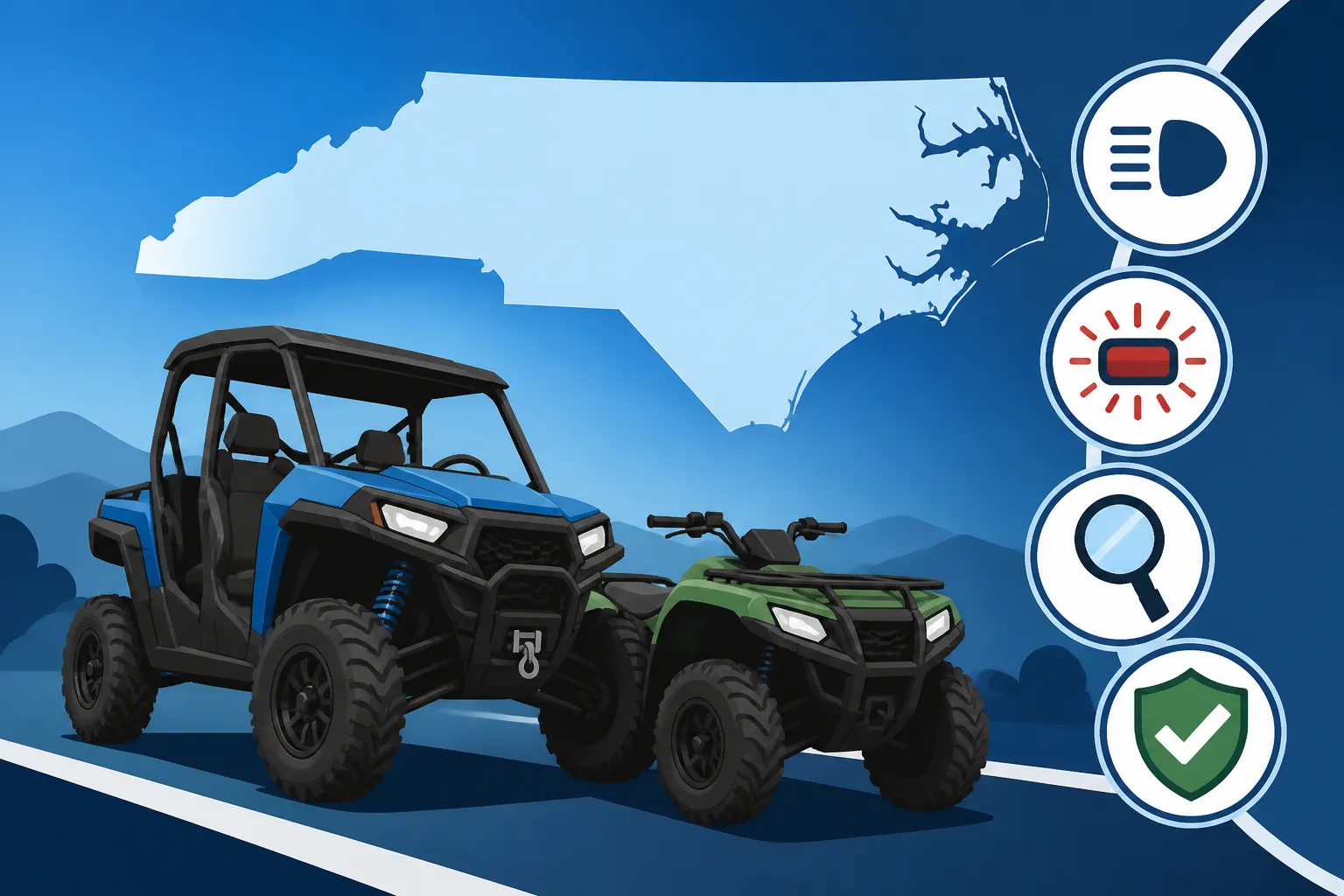
First and foremost, your MUV must be equipped with working headlamps and taillamps. This isn't just about having lights; they need to be bright enough to be seen and illuminate the road effectively, especially if you plan on operating after dark. They should meet federal standards for road use, similar to those found on cars and trucks. Complementing these are turn signals, both front and rear, and they must be clearly visible and easily actuated by the driver. This is a common add-on for many UTVs, as factory setups often lack integrated turn signals. Without them, indicating turns on public roads would be a dangerous guessing game for other drivers. You'll also need a brake light system that clearly activates when the brakes are applied, signaling your deceleration to vehicles behind you. These three lighting components are non-negotiable for road safety.
Beyond lighting, mirrors are crucial for situational awareness. Your MUV must have at least one rearview mirror, typically mounted to provide a clear view of the traffic approaching from behind. Many riders opt for a full set of mirrors, including side mirrors, for enhanced visibility, often sourcing universal kits from reputable aftermarket suppliers. [North Carolina MUV Mirror Requirement] covers this in more detail. A functioning horn is also required, providing a way to alert other drivers or pedestrians to your presence in emergency situations. This isn't just a novelty; it's a critical safety feature. Finally, a speedometer is essential. It needs to be accurate and clearly visible to the driver, allowing you to monitor your speed and adhere to posted speed limits. Without one, you'd be guessing, and guessing on public roads is never a good idea. [North Carolina MUV Speedometer Requirement] explains why this seemingly simple gauge is so important for MUV compliance.
Occupant Protection and Other Requirements
While often overlooked by those focusing on external modifications, the safety of the occupants within the MUV is just as critical for street legality. This means ensuring proper restraints and other foundational safety features are in place, mirroring the expectations for passenger vehicles.
Your MUV must be equipped with seat belts for all designated seating positions. These aren't just any belts; they need to be properly anchored and meet federal motor vehicle safety standards, just like those in a car or truck. This is a significant consideration, as some older or more basic utility vehicles might not have robust seat belt systems, or perhaps only lap belts when three-point restraints are expected for road use. Beyond seat belts, a proper windshield is typically required to protect occupants from road debris, wind, and weather. This isn't always standard on off-road machines, and if it is, it might be a lightweight, non-safety glass version not suitable for road speeds. A durable, laminated safety glass windshield, similar to what you'd find in a car, is usually the expectation. [North Carolina MUV Seat Belt Requirements] elaborates on the importance of proper restraints.
Lastly, and often a point of contention, your MUV must have a parking brake system that can hold the vehicle stationary on an incline. This seems basic, but for some off-road machines, the parking brake might be less robust or even absent, relying more on transmission engagement. For road use, a reliable and independent parking brake is a must for safely parking on slopes or during stops. All of these components contribute to the overall safety profile of the MUV, demonstrating its readiness to share public roads with other vehicles.
Rules of the Road for Your Street-Legal MUV
So, you’ve put in the hard work, met all the physical and equipment requirements, and successfully registered your machine as an MUV with the NCDMV. Congratulations! But the journey isn't over yet. Operating a street-legal MUV in North Carolina comes with its own set of rules and limitations that are distinct from those for a standard car or truck. These restrictions are in place to ensure safety, given that MUVs, even when street-legal, still retain many characteristics of off-road vehicles. Understanding these rules is crucial to avoid citations and ensure safe operation.
It’s important to remember that while your MUV is street legal, it's not "street equivalent." You won't be cruising down the interstate or weaving through downtown traffic like a compact car. The MUV designation is designed for specific types of road use, often in more rural or less congested areas. For example, [North Carolina MUV Insurance Requirements] highlights that you'll need proper liability coverage, just like any other vehicle on the road. This helps protect you and others in the event of an accident, something that's often overlooked when transitioning an off-road machine to street use.
Where You Can and Cannot Ride
The most significant restriction for MUVs in North Carolina concerns where you can actually operate them on public roads. This isn't a free pass to drive anywhere. The law is quite specific about the types of roads permitted, aiming to keep MUVs off high-speed, high-volume routes where they might pose a greater safety risk due to their size, speed limitations, and unique handling characteristics.
Primarily, your MUV is restricted to roads with a posted speed limit of 55 miles per hour or less. This means no interstates, no major four-lane highways, and generally no roads where traffic is consistently moving at high speeds. This limitation is critical because while MUVs must be capable of 40 mph, they are not designed for sustained high-speed travel or the dynamics of high-speed highway traffic. Additionally, MUVs are generally prohibited from state-maintained primary highways, which are typically the larger, more heavily traveled routes. This narrows down permissible travel to secondary roads, municipal streets, and other local thoroughfares. [North Carolina MUV Street Legal Requirements] confirms these speed and road type restrictions are central to the MUV designation.
It's vital to check local ordinances as well. While state law defines the general parameters, individual counties or municipalities might have additional restrictions or specific zones where MUVs are further limited or prohibited. Always assume more restriction rather than less, and if in doubt, contact your local law enforcement or DMV office for clarification. This granular approach means that what's legal in one small town might not be legal just a few miles down the road in another jurisdiction. For many, [Why an MUV Is the Only Street-Legal Path] underscores the very specific and often limiting nature of this route to road legality compared to typical vehicles.
Licensing, Age, and Other Operating Rules
Beyond where you can ride, there are fundamental requirements related to who can operate an MUV and how it must be operated on public roads. These rules align with general vehicle operation laws, ensuring that anyone behind the wheel of a street-legal MUV is qualified and adheres to standard road practices.
First, the operator of an MUV must hold a valid driver's license. This is non-negotiable. You can't just have an off-road safety certificate; you need a full, unrestricted driver's license, just as if you were driving a car or truck. There is no special MUV license or permit. This ensures that the driver has demonstrated a basic level of knowledge and skill for operating a motor vehicle on public roads. Age restrictions will follow standard driver's license rules, typically meaning you must be at least 16 years old. [North Carolina UTV Rental License Requirements] gives a sense of how seriously the state takes operator licensing for utility vehicles.
When operating your MUV, all occupants must be wearing their seat belts. This isn't just a recommendation; it's a legal requirement, reinforcing the importance of the safety equipment you installed. Furthermore, all standard rules of the road apply: obey traffic signals, yield the right-of-way, signal turns, and adhere to posted speed limits. You're expected to operate your MUV with the same care and attention as any other vehicle. While you might be riding a unique machine, you are still bound by the same laws as everyone else on the road.
Here's a quick summary of the North Carolina MUV requirements:
| Requirement Category | Specific Rule | Details & Considerations |
|---|---|---|
| Engine Size | More than 2,400 cubic centimeters | Significantly larger than most recreational ATVs/UTVs. Crucial for MUV designation. |
| Dimensions | Length: 142 inches (min) | Width: 58 inches (min) Height: 70 inches (min) |
| Speed | Capable of exceeding 40 mph | Ensures the machine can keep pace with slower road traffic. |
| Lights | Headlamps, Taillamps, Brake Lights, Turn Signals | Must be functional, clearly visible, and meet road standards for both day and night operation. |
| Visibility | Rearview Mirror (at least one) | Horn |
| Safety | Seat Belts for all occupants | Windshield (safety glass) |
| Road Use | Roads with posted speed limit of 55 mph or less | Generally excludes interstates and major state primary highways. Always check local ordinances. |
| Operator | Valid Driver's License | Operator must be at least 16 years old (standard license rule). |
| Insurance | Proof of financial responsibility (liability insurance) | Required for all registered motor vehicles. [North Carolina MUV Insurance Requirements] |
Remember, getting an MUV street-legal is a commitment. It requires a specific type of machine and adherence to a detailed list of modifications and operational rules. It's not a shortcut to making your recreational ATV street legal, but rather a designation for heavy-duty utility vehicles that meet strict safety and design standards for limited road use. If you're considering this path, thorough research and careful attention to detail are your best allies.
Disclaimer
This article is for general informational purposes only and does not constitute professional advice. Laws, prices and regulations vary by location and change over time. Consult a qualified professional for guidance on your specific situation.