North Carolina Rules for Crossing a Road
It's incredibly frustrating when you just want to get from one trail section to another, or even just check your mailbox across a quiet road, and you're left wondering if you're breaking the law by simply crossing the pavement on your ATV or UTV. North Carolina has very specific, and sometimes confusing, rules about off-road machines and public roads. This guide will clarify exactly what North Carolina law says about [North Carolina Rules for Crossing a Road], when you can do it, and what you need to know to stay legal and safe.
The General Rule: No Street Legal ATVs in North Carolina
Let's cut right to the chase: in North Carolina, your typical ATV or UTV is generally not considered street legal. This isn't just a suggestion; it's a fundamental aspect of the state's vehicle code. The machines we love for tearing up trails and tackling tough terrain simply aren't designed or equipped to meet the safety standards required for regular highway travel. This can be a real headache for riders, especially if your favorite riding spots are bisected by public roads or if you have private property on both sides of a state route.
Why Most ATVs Aren't Street Legal
The reasons behind this non-street-legal status are quite practical, even if they feel inconvenient to us riders. ATVs and UTVs lack many of the standard safety features that passenger vehicles are mandated to have. Think about it: full enclosures, crumple zones, advanced airbag systems, and even basic items like laminated safety glass are just not part of a typical off-road machine's design. These machines are built for low-speed, off-pavement performance, not for mixing it up with cars and trucks at highway speeds. The wide, low-pressure tires that grip so well on dirt and mud don't perform safely on asphalt, especially when braking or turning at speed. Plus, the suspension systems, while great for absorbing trail bumps, aren't tuned for stable road handling.
From a regulatory standpoint, the North Carolina Division of Motor Vehicles (DMV) classifies most ATVs and UTVs as off-highway vehicles, which means they are intended for off-pavement use only. This classification impacts everything from titling to registration, and crucially, their legality on public roads. It's why you won't find specific ATV registration processes for general road use like you would for a car or motorcycle. In fact, if you're curious about the state's broader stance, you might want to look into [Why North Carolina Has No ATV Registration] for more context.
The Law's View on "Road Use"
When we talk about "road use" in North Carolina, the law makes a pretty clear distinction between crossing a road and traveling on a road. Simply put, any sustained travel on a public road, even if it's just a short distance along the shoulder, is generally prohibited for an ATV or UTV that isn't specifically exempted or modified. This means you can't just hop on the asphalt and drive a quarter-mile to the next trail entrance or to your buddy's house down the street. The intention is to keep these machines, and their riders, off roads where they could pose a safety risk to themselves or others.
This distinction is crucial because many riders mistakenly believe that if they're only going a short distance, or if the road is quiet, it's acceptable. Unfortunately, ignorance of the law isn't a defense, and a quick trip down a paved lane can land you a ticket. Understanding [What Is Illegal on an ATV in North Carolina] is a good step to avoid these kinds of situations.
Navigating Intersections: When Crossing Is Permitted (and How)
Despite the general prohibition, North Carolina law does provide a narrow window for ATV and UTV operators to cross public roads. This isn't a free pass, though; there are strict conditions and specific types of roads where this is allowed. It's about recognizing that sometimes, crossing a road is unavoidable when transitioning between legitimate off-road areas.
Crossing a Two-Lane Road
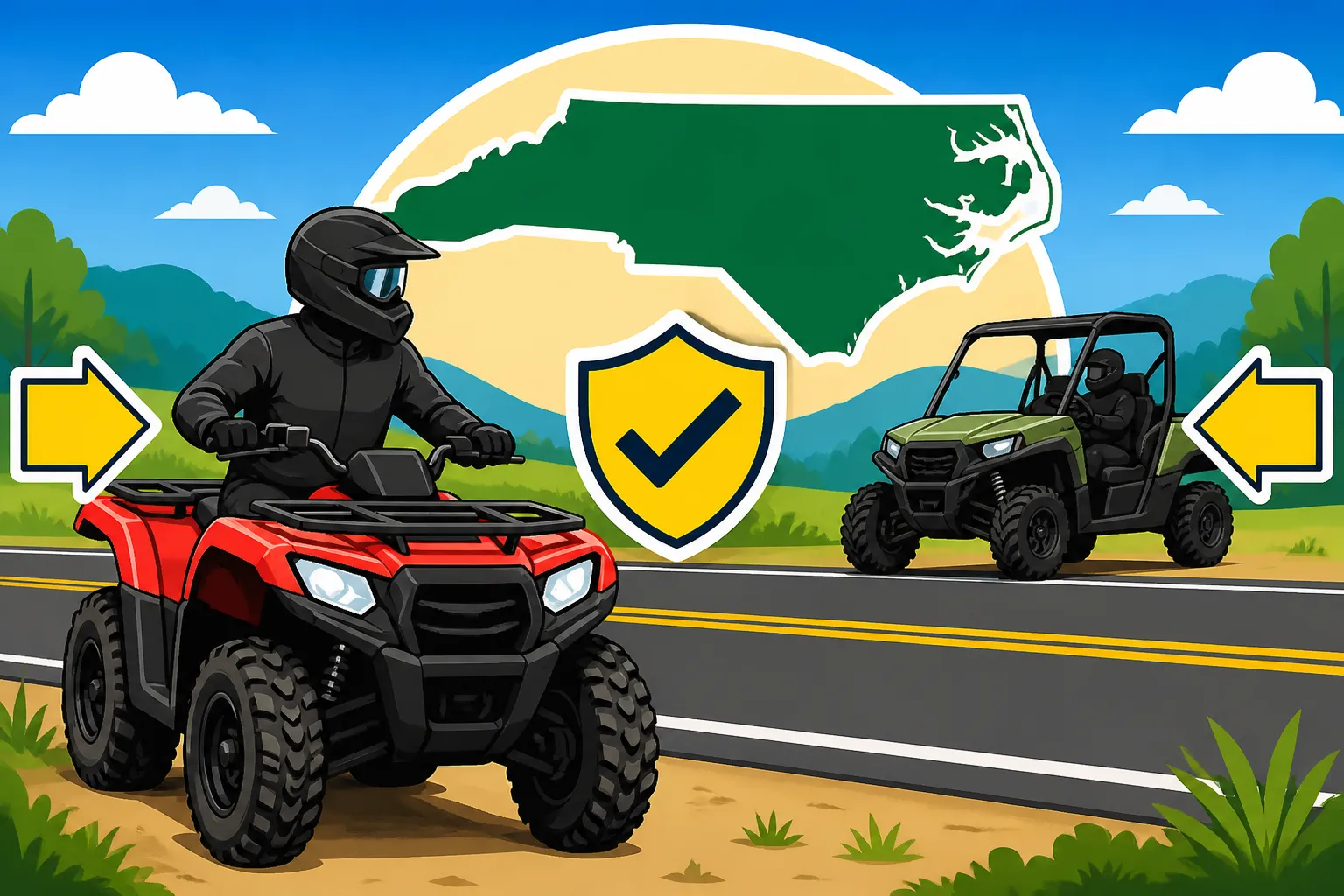
This is the most common scenario where a legal road crossing might occur. North Carolina law allows an ATV or UTV to cross a two-lane public road at a perpendicular angle. What does "perpendicular angle" mean in practice? It means you should aim to cross the road as directly as possible, essentially making a straight line from one side to the other. You shouldn't be angling down the road, even for a few feet, to get a better approach or to line up with a driveway. The goal is to minimize your time on the paved surface and reduce the risk of interaction with other traffic.
Before you even think about crossing, you must yield the right-of-way to all other vehicles. This isn't just a courtesy; it's a legal requirement. You need to come to a complete stop, look both ways multiple times, and ensure the path is clear before proceeding. Imagine a vehicle approaching at speed; it might not see your ATV or UTV, especially if you're emerging from a treeline. Safety is paramount here. This provision is specifically for situations like [Crossing a Two-Lane and Nothing More], and not for any kind of travel on the road.
Crossing a Multi-Lane or Divided Highway
Here's where things get much trickier, and generally, you should assume it's a "no-go" for standard ATVs and UTVs. North Carolina law does not permit crossing multi-lane highways or divided highways, period. This includes interstates, major four-lane roads, and any road with a median or divider. The reasoning is clear: the increased speeds, multiple lanes of traffic, and the sheer difficulty of safely traversing such a wide and busy thoroughfare make it an extreme hazard for off-road vehicles.
Attempting to cross such a road on an ATV or UTV would be incredibly dangerous and almost certainly result in a citation. Even a simple mistake in judgment can have catastrophic consequences. If your riding area requires you to get across a multi-lane road, your only truly legal and safe option is to load your machine onto a trailer and transport it across. Don't take chances with these types of roads.
Required Equipment for Crossing
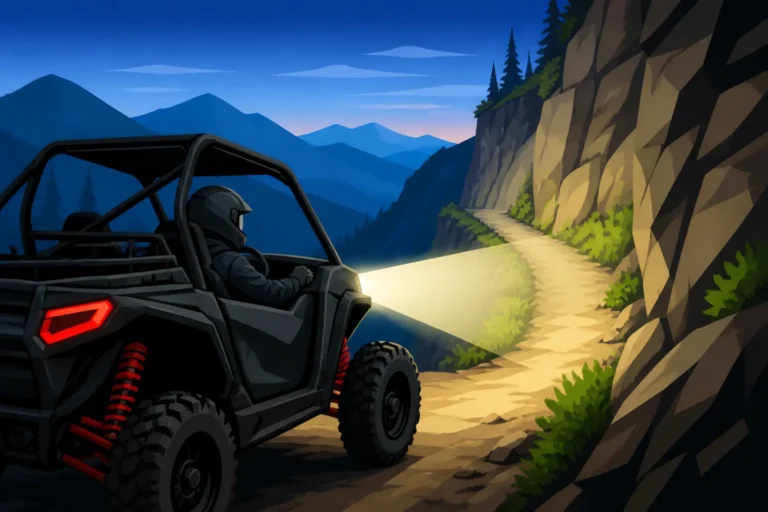
While your ATV or UTV doesn't need to be fully street-legal to perform a legal road crossing, it does need certain basic equipment, especially if you're crossing at dawn, dusk, or night. North Carolina law requires that any ATV or UTV operating on a public road, even for a crossing, must have at least one working headlamp and at least one working taillamp. These lights need to be on and visible.
Beyond the legal minimums, common sense and safety dictate that more visibility is always better. Consider adding aftermarket lighting, like bright LED light bars or auxiliary taillights, especially if your stock setup isn't very robust. Companies like SuperATV offer a wide range of lighting solutions, from full headlight replacements to amber caution lights, that can significantly improve your machine's visibility. While not always legally mandated for a quick crossing, having adequate braking capabilities and a well-maintained exhaust system (with a spark arrester) is also a good idea. [North Carolina Lighting Requirements for ATVs] provides more detail on what's expected.
Exceptions to the Rule: When More Than Just Crossing Is Allowed
While the general rule is "no street legal ATVs," North Carolina does recognize a few specific scenarios where off-road machines can legitimately use public roads beyond just crossing. These are important distinctions that many riders might not be aware of, and they offer crucial pathways for certain types of operations.
The Farming Operations Exception
This is arguably the most significant exception for many rural North Carolina residents. The state allows ATVs and UTVs to be operated on public roads when used for bona fide farming operations. This isn't just a vague allowance; it's quite specific. Your machine must be engaged in an agricultural activity, such as hauling feed, checking fences, or transporting tools related to your farm work. It's about using the machine as a functional piece of farm equipment.
However, this exception comes with caveats:
- Purpose-Driven: The use must be directly related to farming. Taking your ATV for a joyride down the road, even if you live on a farm, would not qualify. The machine must be [Riding a North Carolina Street on Farm Business].
- Limited Travel: While you can travel on the road, it's generally understood to be for reasonable distances connected to your farming tasks. It's not a green light for extended road trips.
- Equipment: The machine still needs basic operational safety equipment, like working headlights and taillights, especially if operating during low light conditions.
- Who Can Ride: Generally, the farmer, family members, or employees directly involved in the farming operation are covered under this exception. [Who in the Household May Ride on Farm Business] outlines this further.
This exception is designed to support the agricultural community, recognizing that sometimes public roads are integral to moving equipment and personnel around a farm property. It's a common-sense allowance that acknowledges the practical realities of rural life in North Carolina.
The Modified Utility Vehicle (MUV) Route
If you're looking for a way to make a side-by-side truly street-legal in North Carolina for general road use (not just for farming), the Modified Utility Vehicle, or MUV, route is your only option. This is a very specific and challenging classification to achieve. An MUV is essentially a UTV that has been extensively modified and inspected to meet a stringent set of safety and equipment standards, bringing it much closer to a traditional passenger vehicle in terms of roadworthiness.
To qualify as an MUV, a UTV must meet several criteria, including specific dimensions (like [North Carolina's 58 Inch Width Limit] and [The 142-Inch Length Requirement]), an engine size of more than 2,400cc ([Why an MUV Needs More Than 2,400cc]), and the ability to travel at speeds over 40 mph ([40 mph to Qualify as an MUV]). Beyond these core specs, it needs to be equipped with a whole host of safety features:
- Headlights, taillights, brake lights, and turn signals
- A windshield and windshield wipers
- A parking brake
- A speedometer and odometer
- Mirrors (side and rearview)
- Seatbelts for all seating positions
- A horn
- DOT-approved tires
- A VIN assigned by the North Carolina DMV ([A VIN Assigned by the North Carolina DMV])
Once all modifications are complete and verified, the machine can be inspected and potentially registered as an MUV. This path is complex and costly, often requiring significant aftermarket parts and professional installation. Many standard side-by-sides, even robust ones, struggle to meet all the MUV requirements, particularly the engine size and width limits. For a deeper dive, consider reading about [North Carolina's Modified Utility Vehicle Route].
The Ocean Beach Rule
North Carolina's extensive coastline offers another specific, albeit geographically limited, exception for off-road vehicles. Certain designated ocean beach areas allow ATVs and UTVs, typically for fishing access, emergency services, or other authorized activities. However, this is not a blanket rule for all beaches. Each town, county, or state park managing beachfront property will have its own specific ordinances regarding vehicle access, permits, times of operation, and vehicle types allowed.
Generally, where allowed, there are often age restrictions for operators ([The 16-and-Over Rule on a North Carolina Beach]) and limitations on where you can drive (e.g., below the high tide line or only on specific access ramps). Always check with the local authorities of the specific beach you plan to visit before riding on the sand. The best rule of thumb is to assume beach riding is prohibited unless you have explicit, verified permission and have obtained any required permits. [North Carolina Rules for Riding a Beach] provides more general information on this unique aspect of riding.
Penalties and Best Practices for Road Interactions
Navigating North Carolina's road rules for ATVs and UTVs can feel like walking a tightrope. One misstep can lead to a citation, and more importantly, put you and others at risk. Understanding the consequences and adopting best practices is key to responsible riding.
What a North Carolina Trooper Checks Roadside
If you're stopped on a public road by a North Carolina Highway Patrol trooper or a local law enforcement officer, even for a brief crossing, they'll be checking for a few key things. First and foremost, they'll want to know why you're on the road. If it's for a quick, perpendicular crossing of a two-lane road, they'll be looking for proof that you yielded the right-of-way and that your machine has basic lighting if applicable. If you're on the road for any other reason, they'll assess if you fall under an exception like the farming operation rule or if your machine is properly registered as an MUV.
They'll also check for operator requirements, such as age and helmet use. For example, [Why Under-18 Riders Need a DOT Motorcycle Helmet] is strictly enforced on public roads, even for crossing. Beyond the immediate offense of unlawful road use, they'll be looking for other violations like careless operation, excessive speed, or even operating while impaired. Penalties for violating ATV laws on public roads can include fines, court costs, and potentially even seizure of the machine in egregious cases. [What a $200 ATV Infraction Actually Costs] details the financial impact. It's much better to understand the rules beforehand than to explain yourself roadside.
Staying Safe and Visible
Even when you're legally permitted to interact with public roads, safety should be your absolute top priority. Off-road machines are significantly smaller and harder to see than cars and trucks, and drivers often aren't expecting them on or near pavement.
- Maximize Visibility: Wear bright, reflective clothing. Add high-visibility flags to your machine. Ensure your headlights and taillights are clean and functioning perfectly. Consider adding aftermarket amber or white strobes from a brand like SuperATV to make your presence undeniable, especially during crossings or if operating under the farm exception.
- Be Predictable: Signal your intentions clearly. If you're crossing, make your movement decisive and direct. Avoid sudden turns or stops.
- Assume You're Invisible: This is a crucial mindset. Always operate as if other drivers haven't seen you. Make eye contact if possible, and be prepared for them not to react as you expect.
- Educate Yourself: Continuously review North Carolina's specific laws. They can be nuanced, and staying informed is the best defense against accidental violations. [North Carolina Rules for Riding a Public Street] delves into more detail about general road use.
Here's a quick summary table of common road interactions:
| Scenario | Legality for Standard ATV/UTV | Key Requirements/Conditions |
|---|---|---|
| Crossing a Two-Lane Road | Permitted (limited) | Perpendicular crossing, yield right-of-way, working lights. |
| Crossing a Multi-Lane/Divided Highway | Not Permitted | Trailer transport is the only safe/legal option. |
| Traveling on a Public Road (General) | Not Permitted | Except for specific exceptions listed below. |
| Farming Operations (On Road) | Permitted (limited) | Directly related to bona fide farm work, basic equipment. |
| Registered Modified Utility Vehicle (MUV) | Permitted (on roads 55 mph or less) | Extensive modifications, inspection, registration. |
| Ocean Beach Access | Permitted (specific, designated areas) | Local permits/rules apply, age restrictions, specific zones. |
Always remember, responsible riding isn't just about following the letter of the law; it's about making safe choices that protect yourself, your passengers, and everyone else who uses North Carolina's roads.
Disclaimer
This article is for general informational purposes only and does not constitute professional advice. Laws, prices and regulations vary by location and change over time. Consult a qualified professional for guidance on your specific situation.