North Carolina Rules for Riding a Public Street
It can be incredibly frustrating to own a powerful off-road machine in North Carolina, only to feel like you're constantly fighting against the rules just to get it from point A to point B. Many riders just want to know if they can safely and legally take their ATV or UTV on a public street, even for a short hop. This guide is here to untangle the often-confusing web of North Carolina laws concerning off-road vehicles on public roads, giving you a clear picture of what's allowed, what's not, and the specific paths you might be able to take.
Understanding North Carolina's Default Stance on Street Riding
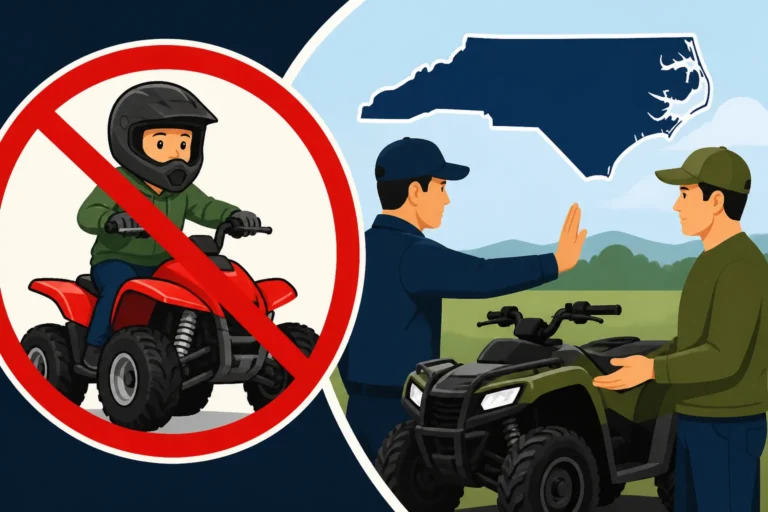
Let's just get it out there: in North Carolina, your typical ATV or UTV is generally not considered street-legal. I know, I know, it's a bummer, especially when you see folks in other states cruising around. But our state's laws are pretty clear on this, and it’s important to understand why before you even think about rolling onto asphalt. These machines are designed for dirt, trails, and rough terrain, not for navigating traffic alongside cars and trucks.
Why ATVs and UTVs Aren't Like Cars
When you think about a car or a motorcycle, they're built to specific standards for road use – lights, mirrors, seatbelts, horns, the works. ATVs and UTVs, for the most part, simply aren't. They lack many of the safety features and operational characteristics deemed necessary for safe travel on paved roads. For instance, the suspension is often designed for absorbing harsh impacts, not for smooth, high-speed cornering. Tires are typically knobby for grip in mud and dirt, not for quiet, stable traction on asphalt. Even something as fundamental as steering can feel very different on a paved road compared to a dirt trail. The state's stance isn't about being difficult; it's rooted in a concern for public safety, given the fundamental design differences between an off-road vehicle and a traditional road vehicle. This is why you won't find specific ATV registration that allows road use in North Carolina, unlike some other states. You'll often hear us talk about [Why North Carolina Has No ATV Registration] because the state defines these machines for off-road use primarily.
What "Public Street" Actually Means for Off-Roaders
So, what exactly constitutes a "public street" in North Carolina? This isn't just about busy highways; it includes just about any publicly maintained road, highway, or thoroughfare that's open to the general public for vehicular traffic. This means neighborhood streets, county roads, state highways, and even paved forest service roads that are maintained for general public access. It's not just the interstates that are off-limits; it's virtually any road that isn't specifically designated as a private path or an off-road trail. The spirit of the law aims to keep off-road machines off any surface where they might interact with standard road traffic, even if it's just a quiet country lane. This can be a tough pill to swallow for those who just need to get across town or to a different trail section, but the definition is broad and strictly enforced. Understanding [North Carolina Rules for Riding a Public Street] requires knowing this foundational principle.
The Modified Utility Vehicle MUV Route: The Only Path to Street Legality
If you're truly determined to get your UTV, specifically, legal for street use in North Carolina, there is one, and only one, official route: converting it into a Modified Utility Vehicle, or MUV. This isn't a casual modification; it's a rigorous process that demands significant changes to your machine and compliance with a very specific set of requirements laid out by the North Carolina DMV. It's essentially about transforming your off-road utility vehicle into something that closely resembles a street-legal car, rather than an ATV. Many of us who ride know the desire for [Street Legal ATVs in North Carolina: The Short Answer], and the MUV is that answer for UTVs.
Meeting the Stringent MUV Requirements
To qualify as an MUV, your machine must jump through several hoops. First, it needs an engine with more than 2,400 cubic centimeters displacement. That immediately rules out most standard ATVs and many smaller UTVs. Then come the dimensions: it must be at least 142 inches long, at least 58 inches wide, and no more than 70 inches high. It also needs to be capable of at least 40 mph on a level surface. Beyond these core specs, it has to have a host of safety features typically found on cars: a VIN assigned by the North Carolina DMV, seatbelts for all seating positions, headlamps, taillamps, brake lights, turn signals, a horn, a parking brake, a speedometer, and a windshield. This often means buying a lot of aftermarket parts, and companies like SuperATV offer many of the accessories you'd need, from turn signal kits to mirrors, to help bridge that gap. But even with the right parts, meeting all these dimensions and engine size requirements can be incredibly challenging, if not impossible, for many factory UTVs. This rigorous set of criteria is why [North Carolina MUV Registration Requirements] are so detailed.
Here's a quick look at the core MUV requirements:
| Requirement | Specification | Common Challenge for UTVs |
|---|---|---|
| Engine Size | More than 2,400cc | Most stock UTVs are much smaller than this. |
| Length | At least 142 inches (11 ft 10 in) | Many UTVs fall short, especially two-seaters. |
| Width | At least 58 inches | Most UTVs meet this or are wider. |
| Height | No more than 70 inches (5 ft 10 in) | Lift kits or larger tires can easily exceed this. |
| Speed Capability | At least 40 mph | Most UTVs can meet or exceed this. |
| State-Assigned VIN | Required | Factory UTV VINs are for off-road; needs NC DMV one. |
| Safety Equipment | Headlights, taillights, brake lights, turn signals, horn, parking brake, speedometer, windshield, seatbelts | Requires significant aftermarket additions and wiring. |
Registering and Insuring Your MUV
Once your machine theoretically meets all the physical and equipment requirements, you still have the administrative hurdle of getting it recognized and titled by the North Carolina DMV. This involves submitting an application, likely including an affidavit of modification, and having the vehicle inspected to verify it meets all MUV specifications. The DMV will then assign it a unique VIN, if it doesn't already have one, and you'll go through the standard titling and registration process, paying the [North Carolina ATV Highway Use Tax] which is generally 3 percent of the purchase price or appraised value. This isn't like titling a regular ATV, which is optional in North Carolina; registering an MUV for street use is mandatory. Just like any other registered motor vehicle, your MUV will then need to carry liability insurance. This isn't optional; it's a legal requirement to operate any motor vehicle on North Carolina public roads. Without it, you're looking at serious penalties if you're caught. Essentially, you're making your UTV into a low-speed, specialized vehicle in the eyes of the law, and it comes with all the responsibilities of a regular car. For more details on the transformation, look up [North Carolina's Modified Utility Vehicle Route].
The Realities of Converting a Machine
Let's be realistic: converting a standard UTV into an MUV is a significant undertaking, both in terms of time and money. The engine size requirement alone, demanding [Why an MUV Needs More Than 2,400cc], often means a complete engine swap or starting with a very specific, larger-engine UTV model that might be hard to find. Then there's the [The 142-Inch Length Requirement], which might mean fabricating extensions to the frame. Adding all the necessary lighting, mirrors, and other safety equipment is doable with aftermarket kits (many of which, like those from SuperATV, are high-quality), but integrating them seamlessly and ensuring they meet legal standards can be complex. For example, simply adding turn signals means a proper wiring harness, a switch, and often blinker lights both front and rear. All these modifications need to be done correctly to pass inspection. The cost can quickly add up, easily surpassing the value of the original UTV in some cases. It's a path for the truly dedicated, or for those who specifically purchase a UTV with the intent of undergoing such a conversion.
Exploring North Carolina's Limited Exceptions for Street Riding
While the MUV route is the only way to truly make a UTV "street-legal" for general use, North Carolina law does provide a few very specific, narrow exceptions where ATVs and UTVs might be permitted on public roads under certain circumstances. These are not blanket allowances, but rather highly conditional situations. It's crucial to understand the limitations of each to avoid inadvertently breaking the law. These exceptions are often the source of confusion and frustration for riders.
The Farming Operations Exception
North Carolina law allows an ATV or UTV to be operated on a public road if it is being used for a legitimate "farming operation." This exception is specifically designed to help farmers move their equipment, livestock, or supplies between fields, barns, or different parts of their property. Key phrases here are "farming operation" and "between farm properties." This doesn't mean you can just ride your ATV to the grocery store because you live on a farm. It needs to be directly related to agricultural work. The definition of who qualifies as a "farm employee" or "immediate family member" of the farmer also applies here. You might be hauling fence posts, checking on crops, or moving feed. This exception typically applies to roads where the posted speed limit is 35 mph or less, but always check local ordinances as some counties or towns may have stricter rules. This is a common allowance, but also commonly misinterpreted. For a deeper dive, check out [North Carolina's Farming Operations Exception].
Crossing a Road: The Bare Minimum
In some limited circumstances, North Carolina law permits an ATV or UTV to cross a public road. This is the most minimal allowance and comes with strict rules. You can only cross at an angle of approximately 90 degrees to the roadway, and only when safe to do so. You must yield to all oncoming traffic, and the crossing should be completed as directly and quickly as possible. This is not an allowance to ride along the shoulder or to travel any significant distance on the road; it's purely for traversing from one off-road area to another where a public road intersects your path. Imagine you're on a trail system, and the trail continues on the other side of a county road. That's the scenario this exception is designed for. Any deviation from a direct crossing, such as riding down the road to get to a better crossing point, can be considered illegal operation. This is why [Crossing a Road on an ATV in North Carolina] is such a carefully defined exception.
The Ocean Beach Rule: A Unique Scenario
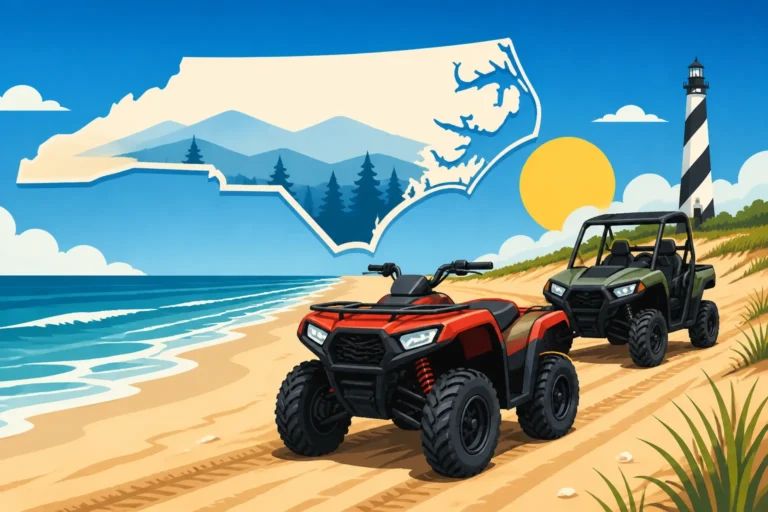
North Carolina has a very specific set of rules regarding off-road vehicles on its ocean beaches. While not strictly a "public street," ocean beaches are often publicly accessible and shared with pedestrians and other vehicles, making them akin to a roadway in terms of regulation. The general rule is that ATVs and UTVs are not allowed on the state's ocean beaches. However, individual municipalities and counties along the coast have the authority to create their own ordinances regarding vehicle access to specific stretches of beach within their jurisdiction. Some areas might allow vehicle access for fishing, surfing, or specific recreational purposes, often requiring a permit, limiting access to certain times of day or year, or restricting it to vehicles with certain characteristics (e.g., street-legal vehicles). Always, always check with the local authorities for the specific beach you intend to visit. What's allowed in one town might be strictly forbidden in the next. And remember, these rules can change with the seasons or even after major storms. Knowing [North Carolina Rules for Riding a Beach] is essential for coastal riders.
Consequences and Best Practices for Street Riding
Riding an ATV or UTV on a public street when not legally permitted can lead to a host of problems, from fines to machine impoundment. It’s important to understand the risks and to always prioritize safety, both for yourself and for others sharing the road. When in doubt, it’s always better to err on the side of caution.
What Happens When You Break the Rules
Operating an ATV or UTV on a public street without meeting the MUV requirements or falling under a specific exception can result in a traffic citation, which carries fines and potentially court costs. Beyond that, your machine could be impounded, leaving you with towing and storage fees on top of everything else. If you're involved in an accident while illegally operating your off-road vehicle on a public road, your personal insurance might deny coverage, leaving you personally liable for damages and injuries. This can be a financially devastating situation. Furthermore, if you're under 18, there can be additional penalties or requirements for parents or guardians. It’s a serious matter, and law enforcement officers, whether it's the Highway Patrol or a local sheriff's deputy, are generally well-versed in these regulations. Understanding [North Carolina Fines for an ATV Violation] is a good way to see the potential financial impact.
Safety Gear and Roadside Checks
Even if you're riding legally as an MUV or under one of the narrow exceptions, safety should always be your top priority. North Carolina has specific [North Carolina Helmet Law for ATV Riders] and [North Carolina Eye Protection Requirement] that apply to off-road vehicles, and these are often enforced on public roads, even during brief crossings or farm use. For MUVs, seatbelts are mandatory. When you're stopped by an officer, they'll be checking not just for your MUV registration and insurance, but also for proper safety gear and that your machine has all the required safety equipment, like working turn signals and headlights. Keeping your license, MUV registration, and proof of insurance readily available is crucial for any roadside stop. Investing in quality gear, like a DOT-approved helmet and eye protection (perhaps even some aftermarket mirrors from a company like SuperATV for better visibility), is a smart move, regardless of the letter of the law.
Finding Legal Places to Ride Off-Road
Given the strict rules against street riding, the best and safest option for most ATV and UTV enthusiasts in North Carolina is to stick to designated off-road areas. North Carolina offers some fantastic public and private options, primarily within our National Forests. Places like Brown Mountain, Badin Lake (Uwharrie National Forest), and Wayehutta offer miles of trails designed specifically for off-road vehicles. These areas provide the terrain and challenge you're looking for, without the legal headaches and safety risks of street riding. Private riding parks are also growing in popularity, offering controlled environments for all skill levels. While it might mean trailering your machine, it ensures you're riding legally and safely, maximizing your enjoyment. Always check [Where to Ride an ATV in North Carolina] before heading out to ensure trails are open and you have the necessary permits.
Disclaimer
This article is for general informational purposes only and does not constitute professional advice. Laws, prices and regulations vary by location and change over time. Consult a qualified professional for guidance on your specific situation.