Which Roads the Farm Exception Actually Opens
It’s a common frustration for North Carolina ATV and UTV owners who live or work on farms: you've got machines perfectly suited for farm tasks, but the lines around using them on public roads can feel incredibly blurry. You might haul feed across a paved road to another field or move equipment a short distance down a public lane, wondering if you’re technically breaking the law. This guide will meticulously unpack North Carolina's farm exception, helping you understand precisely which roads you can legally traverse for legitimate farming operations and under what circumstances.
Understanding the North Carolina Farm Exception
Navigating the rules for ATVs and UTVs on public roads in North Carolina can feel like trying to find your way through a dense, unmapped forest. Most folks know that off-road vehicles aren't generally "street legal" here, but then they hear whispers about a "farm exception." This exception isn't a free pass to cruise down Main Street on your quad, but it's a vital provision for our state's agricultural backbone, allowing farmers to efficiently manage their operations. It's designed for practical, everyday use that directly supports farming, not for joyrides or trips to the grocery store.
Why the Farm Exception Exists
North Carolina, with its rich agricultural heritage, understands that farming isn't confined to a single, unbroken parcel of land. Many farms are spread out, sometimes separated by public roads, or they might need to access different fields, barns, or even neighboring properties for collaborative work. Imagine having to load your UTV onto a trailer every single time you need to move it 500 feet down a paved road to tend to another section of crops. It's inefficient, time-consuming, and utterly impractical for the day-to-day realities of farm life. The farm exception was put into place to remove this kind of burdensome hurdle, acknowledging that these machines are often indispensable tools for modern agriculture. It's about enabling farmers to do their jobs without unnecessary bureaucratic red tape, recognizing the unique operational needs of the agricultural community. Without it, many essential farm tasks would become far more difficult, if not impossible, to carry out efficiently.
The Core Purpose: Efficiency on Rural Land
The heart of the farm exception beats with the rhythm of efficiency and practicality for genuine agricultural work. It's not about making ATVs or UTVs street legal in the traditional sense, but rather about allowing them to momentarily interact with public roadways as an extension of the farm itself. Think about moving livestock, transporting tools from one field to another, checking fence lines that abut a public road, or even moving irrigation equipment. These are all tasks where an ATV or UTV shines in its ability to quickly and effectively get the job done. The core purpose is to facilitate the flow of farm operations, ensuring that the necessary movement of equipment and personnel between different parts of a farm, or between closely connected farms, can occur smoothly without having to jump through hoops like trailer towing for very short distances. It's about keeping North Carolina's farms productive and operational, recognizing that these versatile machines are often the most practical choice for navigating varied terrain and carrying light loads across rural landscapes. [North Carolina's Farming Operations Exception] details this further.
Defining "Farm Business" in the Eyes of the Law
This is where many people get tripped up. The "farm exception" sounds broad, but the phrase "farm business" is actually quite specific in its legal interpretation. It’s not just any activity that happens on a farm, or any errand you might run from a farm. It must be directly, intrinsically linked to the agricultural operation itself. This distinction is absolutely critical, because stepping outside of this definition, even by a few hundred feet, can turn a legally allowed short road trip into a traffic infraction. Understanding what constitutes "farm business" is your first line of defense against potential issues with law enforcement.
Directly Supporting Agricultural Operations
When the law talks about "farm business," it's focused squarely on activities that are essential for the production, harvesting, or processing of agricultural products, or the raising of livestock. This means tasks like tending to crops, moving planting or harvesting equipment, managing irrigation systems, feeding animals, mending fences, or transporting supplies directly related to these activities between different parts of the farm. For example, if you're taking your Polaris Ranger across a road to check on a pasture that's separate from your main property, that's generally considered directly supporting agricultural operations. The key is that the activity must be a necessary part of the agricultural enterprise, not merely convenient or related in a general sense. The machine is being used as a piece of farm equipment, making the operation more viable. If you've invested in heavy-duty axles or a utility bed from a company like SuperATV for your UTV, it's clear your machine is configured for serious work, reinforcing its role in supporting those operations.
Examples of Legitimate Farm Use
Let's get specific about what typically falls under legitimate farm use. Picture this: you're driving your Kubota RTV a quarter-mile down a secondary road from your barn to a field to spread fertilizer. Or you're moving your John Deere Gator from one field to another to fix a broken irrigation pipe. Perhaps you're herding cattle that have wandered to the edge of your property, requiring you to momentarily cross a small county road to guide them back. Transporting tools, seed, feed, or harvested crops for short distances between different sections of your farm, or between two adjacent farm properties under the same operation, also fits the bill. Even checking on remote equipment or fence lines that are accessible only by traversing a short section of public road would generally be considered legitimate. The operative word here is "short distance" and "direct relation" to the ongoing farming tasks. These aren't joyrides; they are functional movements vital to the farm's productivity. [Riding a North Carolina Street on Farm Business] further illustrates these scenarios.
What Doesn't Count as Farm Business The "Personal Errand" Trap
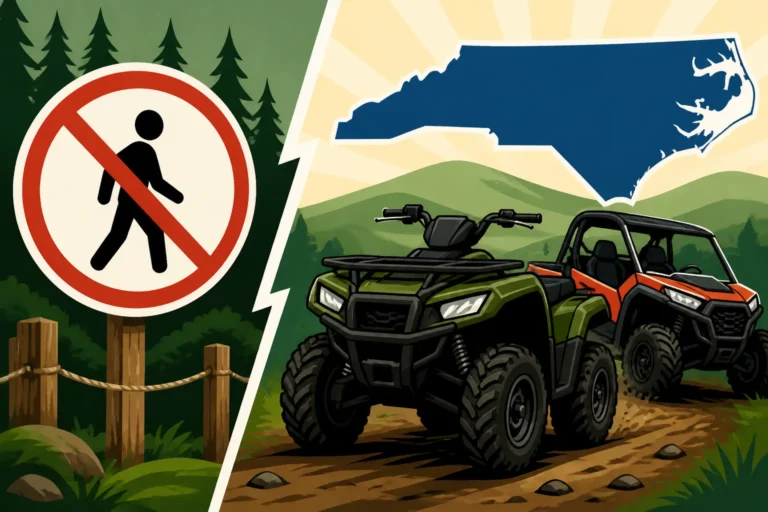
Here's where things can get sticky, and it's a trap many well-meaning folks fall into. The farm exception does not extend to personal errands, even if those errands are somehow farm-related in a loose sense. Driving your ATV to the local co-op to pick up a single bag of feed, or heading to the hardware store for a part, even if it's for farm equipment, generally falls outside the scope of "farm business" that permits road use. Think about it: if you need a specific bolt for your tractor, you'd typically take a truck or car to the store, not an ATV. The law isn't designed to replace your street-legal vehicle for general transportation. Similarly, taking your UTV to visit a neighbor just to chat, even if you're talking about crops, isn't farm business. Hauling your kids to the bus stop on your quad, even if you live on a farm, is definitely not farm business in the eyes of the law. These activities, while they might originate from or return to the farm, are not directly supporting the immediate, ongoing agricultural production in the way the exception intends. If you're on a public road, the purpose of your trip must be unmistakably and solely for the direct function of the farm. If it looks like you're simply using the ATV for convenience, you could be asking for trouble.
Specific Roads and Routes the Exception Allows
So, you've established that your purpose is legitimate farm business. Now, the next hurdle is understanding where you can actually operate your ATV or UTV under this exception. It's not a blanket permit for all public roads. North Carolina law is quite specific about the types of roads and the distances involved. Ignoring these specifics is a common reason why farmers sometimes find themselves facing citations, despite believing they were operating within the rules. It's crucial to know your local roads and the limitations.
Crossing Public Roads: The Short Distance Rule
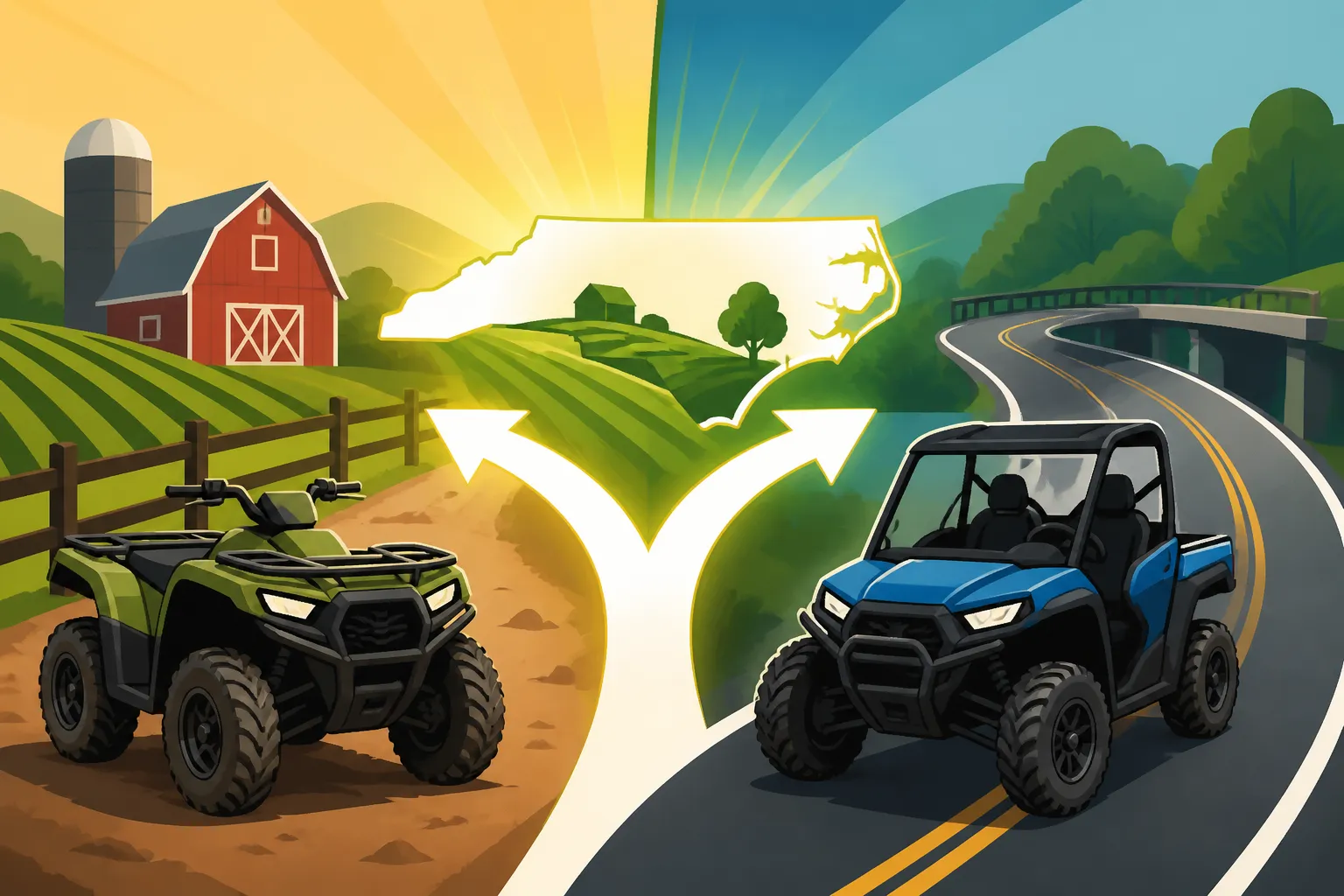
The most common application of the farm exception involves simply crossing a public road. Imagine your farm fields are on both sides of a state highway, or you have a pasture across a county road. The law generally permits you to cross these public roads at or near a ninety-degree angle to get from one section of your farm to another. This is intended to be a direct transit, not a stretch of driving down the road. The "short distance rule" implies that you are on the public road for the absolute minimum time and distance required to complete your crossing. You shouldn't be traveling parallel to the road for any significant length. For example, if you need to access a gate 200 yards down the road on the opposite side, simply crossing the road directly is usually okay, but driving those 200 yards along the road to get to that gate might be pushing the limits. The intent is to bridge gaps in your farm property, not to use the road as a thoroughfare. Always exercise extreme caution when [Crossing a Road on an ATV in North Carolina], yielding to all street-legal traffic.
Farm-to-Farm Travel on Public Roads
This is where the nuances become even more critical. In some specific instances, the farm exception can allow for short-distance travel on public roads between different properties that are part of the same farming operation or between closely collaborating farms. However, this is heavily restricted. The journey must still be directly related to the farming operation, involve the shortest possible route on the public road, and often applies more readily to secondary, less-trafficked county roads rather than major state highways. For instance, if you operate two distinct parcels of farmland five miles apart, the farm exception is not intended to allow you to drive your UTV those five miles on a highway. That would require a street-legal vehicle. However, if two fields are separated by a half-mile stretch of a quiet, rural township road, and you're moving equipment like a small sprayer or fence posts between them, that might fall within the spirit of the exception. The key here is the absolute minimum necessary travel on public roads for direct support of the farm. Anything more extensive typically falls outside.
Local vs. State Roads: Are There Differences?
While North Carolina law generally applies statewide, the practical reality of enforcement and the nature of the roads themselves can create perceived differences between local county roads and busier state highways. On a quiet, two-lane county road deep in rural North Carolina, a sheriff's deputy might be more understanding of a farmer making a short, necessary traverse with a utility vehicle than a State Trooper would be on a bustling state highway. The core rules remain the same: the purpose must be farm business, the distance short, and the crossing direct. However, the higher traffic volumes, speed limits, and overall safety concerns on state highways make any ATV or UTV presence there inherently riskier and more likely to draw attention. While the law doesn't explicitly differentiate, exercising common sense is paramount. Stick to the quietest, least-trafficked roads possible, and always prioritize safety. [North Carolina Rules for Riding a Public Street] reiterates the general restrictions, highlighting why this exception is so specific.
Who Can Ride Under the Farm Exception?
It's not just anybody who happens to be on the farm. The farm exception has specific parameters regarding who is permitted to operate an ATV or UTV on public roads for farm business. This isn't a loophole for teenagers to drive their machines around the neighborhood; it's a provision for those directly involved in the agricultural work. Knowing these limitations is just as important as knowing the road rules themselves, as violations can lead to fines and other legal headaches.
The Farm Operator and Immediate Family
The primary individuals covered by the farm exception are, naturally, the farm operator themselves and immediate family members who are actively engaged in the farming operation. This typically includes spouses, children, and sometimes even parents or siblings, provided they are performing tasks directly related to the farm's daily functions. For instance, a farmer's son or daughter helping to move irrigation pipes from one field to another across a small road would likely fall under this provision, assuming they are competent and following all other safety rules. The emphasis is on active involvement in the farm's operations, not just being a resident of the farm. If a family member is simply visiting or using the ATV for recreational purposes, the farm exception does not apply to their use on public roads. It’s about their role in the agricultural business, not just their family ties. [Who in the Household May Ride on Farm Business] clarifies this further.
Farm Employees and Authorized Personnel
Beyond the immediate family, the farm exception can also extend to employees or other authorized personnel who are directly working for the farm and whose duties necessitate the use of an ATV or UTV on public roads for farm business. This could be a hired hand moving a small trailer with tools from the main barn to a distant field, or a manager overseeing different parcels of land. The critical factor is that these individuals must be acting within the scope of their employment and their task must be a direct part of the agricultural operation. They are essentially extensions of the farm operator, carrying out essential duties. It would be wise for farm operators to clearly communicate these rules to any employees and ensure they understand the limitations. This isn't for a casual friend helping out for a day; it's for those with a formal or established role in the farm's operations. [When a Farm Employee May Use a Public Road] gives more detail on this specific situation.
Age and Supervision Considerations
Even for those legitimately riding under the farm exception, age and supervision rules still matter, especially for younger riders. While the farm exception allows for road use, it doesn't completely override all of North Carolina's general ATV safety statutes. For instance, children under 8 years old are prohibited from operating ATVs anywhere in North Carolina, public or private land. For riders under 16, there are specific supervision rules, generally requiring continuous visual supervision by an adult. While a minor might be helping out with farm tasks and need to cross a road, they must still adhere to age-appropriate safety guidelines. An adult supervising them would need to be present and watchful. The farm exception is about the purpose of the ride, not a waiver of basic safety requirements, particularly those designed to protect young riders. Always ensure that any rider, regardless of age, is competent and trained to operate the machine safely, especially when near or on public roads. [North Carolina Rules for Riders Under 16] outlines these age-related restrictions.
Equipment Requirements for Farm-Use ATVs/UTVs
Just because your machine is being used for farm business doesn't mean you can throw caution to the wind regarding its equipment. While you're not expected to have it fully street-legal like a car, North Carolina still mandates certain safety equipment, particularly when operating, even momentarily, on public roads. These requirements are in place to ensure the safety of the ATV/UTV operator and other road users. Ignoring them could not only lead to a ticket but also potentially serious accidents.
Basic Safety Gear: Helmets and Eye Protection
This is non-negotiable for all ATV and UTV riders in North Carolina, whether on farm land or crossing a public road. If you're under 18 years old, you must wear a DOT-approved safety helmet and appropriate eye protection (like goggles or a face shield) at all times while operating an ATV or UTV. While adults over 18 are not legally mandated to wear a helmet off-road on private land, the moment you put a wheel on a public road, even for a farm exception crossing, the state's general rules of the road can apply, and it's always safest to wear a helmet regardless of age. Moreover, good eye protection is essential for all riders to prevent dust, debris, or insects from impairing vision, which is especially critical when interacting with other traffic. Safety should always be your top priority, even on the shortest farm-related journey. [North Carolina Helmet Law for ATV Riders] and [North Carolina Eye Protection Requirement] further elaborate on these vital safety precautions.
Machine-Specific Requirements: Lights and Brakes
When operating an ATV or UTV on a public road, even under the farm exception, your machine must be equipped with functional headlights and taillights, especially if there's any chance of operating at dawn, dusk, or in low-light conditions. While you might typically only use your machine during daylight hours on the farm, a quick run across a road might coincide with a sudden change in light or weather, making visibility crucial. Additionally, your ATV or UTV must have fully functional brakes that are capable of bringing the machine to a safe stop. These are fundamental safety features designed to prevent accidents with other vehicles or pedestrians. It's not about making your machine street-legal with turn signals and mirrors, but ensuring basic visibility and stopping power. If you're hauling anything, ensure your lights aren't obscured and your brakes are up to the task. [North Carolina Equipment Rules for ATVs] provides a broader overview of general requirements. Consider riding during daylight hours, but if you're caught by [Riding Home After a Blue Ridge Sunset], your lights will be critical.
Modifications for Farm Work (e.g., implements, SuperATV accessories)
Many farmers heavily modify their ATVs and UTVs for specific agricultural tasks, turning them into true workhorses. This might include adding specialized sprayers, seeders, small plows, or heavy-duty cargo beds and lift kits to handle larger loads. Companies like SuperATV offer a wide range of accessories designed to enhance the utility and durability of these machines for demanding farm environments, from suspension upgrades to specialized storage solutions. While these modifications are perfectly legitimate and often necessary for farm work, it’s important to ensure they don't compromise the machine's basic safety features or make it unwieldy for road use. For instance, an implement that significantly obstructs the driver's view or extends too far beyond the machine's footprint could create a hazard when crossing a road. Always ensure that any additions or modifications maintain the machine's stability, braking capability, and visibility, especially when briefly venturing onto public property. Your farm vehicle must remain safely controllable.
Common Misconceptions and Risky Assumptions
The farm exception, while a blessing for many North Carolina farmers, is also fertile ground for misunderstandings. These misconceptions can lead to dangerous situations and unwanted legal trouble. Many riders assume the rules are more flexible than they truly are, or they conflate the exception with broader street-legal allowances. Dispelling these myths is crucial for safe and lawful operation. Don't let a misunderstanding turn a helpful provision into a costly mistake.
The "Any Road Near My Farm" Myth
One of the biggest pitfalls is the belief that if you live on a farm, you can use any public road adjacent to or near your property. This is simply not true. The farm exception is not a general permission slip for driving on public roads whenever it's convenient. It's specifically for direct and necessary travel to facilitate the farming operation itself, typically involving short distances and direct crossings. You cannot, for example, take your ATV on the main road into town just because you need to pick up a part for your tractor or grab groceries. That constitutes general transportation, for which street-legal vehicles are required. Similarly, taking a scenic drive on a back road that happens to pass by your farm, even if you eventually end up on your own property, does not fall under the farm exception. The trip's purpose must be purely agricultural, and the use of the public road must be the shortest, most direct path for that specific farm task. If you find yourself driving a mile or more down a public road, you are almost certainly outside the bounds of this exception.
Assuming the Rule Applies to All Off-Road Vehicles
Another common misconception is that if it's an off-road vehicle and it's used on a farm, the exception applies. This isn't always the case. While the exception primarily covers ATVs and UTVs (which often include side-by-sides), it generally does not extend to dirt bikes, dune buggies, or other recreational off-road vehicles. The intent of the law is for utilitarian machines that are integral to farm operations. While some very light-duty golf carts might be used on a farm, the farm exception is primarily geared towards the heavier-duty, more capable ATVs and UTVs. It's about the function and design of the machine as a working tool, not just any vehicle that isn't a car or truck. If you're unsure if your specific machine qualifies, err on the side of caution or consult local authorities. The distinction often comes down to how the vehicle is primarily designed and used for agricultural work. [What Is Illegal on an ATV in North Carolina] provides more context on general restrictions.
Consequences of Misinterpreting the Law
The consequences of misinterpreting or abusing the farm exception can range from inconvenient to severe. At the very least, you could face a citation for operating an unregistered or uninsured vehicle on a public road, along with fines. Remember, most ATVs and UTVs are not registered or insured for public road use in North Carolina, unless they've gone through the rigorous process to become a [Modified Utility Vehicle in North Carolina]. Without this, a simple traffic stop can quickly escalate. In the event of an accident on a public road, if you're found to be operating outside the farm exception, you could be held personally liable for damages, and your personal insurance policies (which typically exclude off-road vehicle use on public roads) might not cover you. This means facing significant medical bills, property damage claims, and legal fees out of your own pocket. Furthermore, repeated violations could lead to more serious charges or even loss of driving privileges. It's far better to be safe, understand the law fully, and use other means of transport when your activity doesn't strictly fall within the farm exception. [North Carolina Fines for an ATV Violation] can be quite steep, making careful adherence to the rules paramount.
At a Glance: Farm Use on Public Roads
To help clarify the situations, here's a quick comparison of what generally falls under legitimate farm use on a public road and what typically doesn't.
| Scenario / Action | Generally Legitimate Farm Use | Generally NOT Legitimate Farm Use |
|---|---|---|
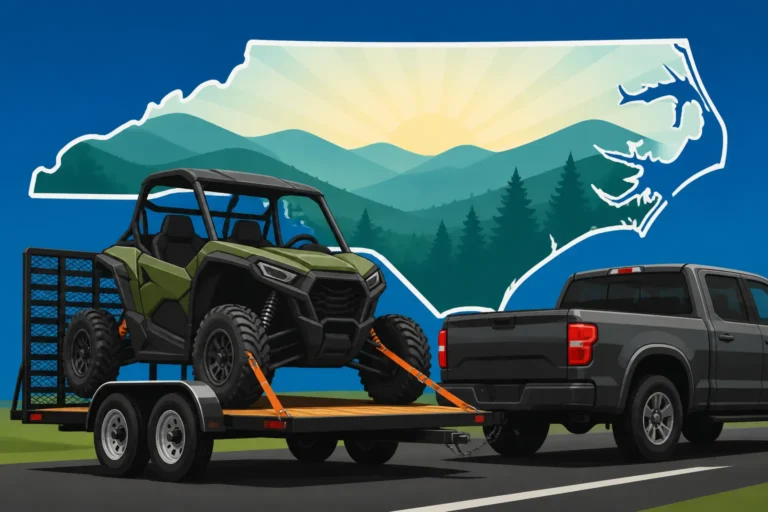
| Purpose of Travel | Directly moving equipment, supplies, or livestock between farm parcels for cultivation, harvest, or animal care. For example, [Hauling Feed Down a Public Street] to an adjacent field. | Commuting to a job (even a farm-related one elsewhere), running personal errands (e.g., mail, groceries), recreational riding, visiting friends or neighbors. |
| Road Type & Distance | Short, direct crossings of secondary or county roads to access adjoining fields; very short distances between closely connected farm properties. | Extended travel on major highways, state roads, or through towns; using public roads as a shortcut for recreational trails; any distance longer than absolutely necessary to connect farm operations. |
| Operator | Farm operator, immediate family members actively involved in farm work, or authorized farm employees performing duties. | Anyone not directly involved in the farm operation; minors not under direct, continuous adult supervision; friends helping out casually without formal role. |
| Vehicle Type | ATVs/UTVs primarily designed and equipped for utility or agricultural tasks (e.g., hauling, towing, spraying). | Dirt bikes, recreational-only ATVs, golf carts (unless specific local ordinances allow), or machines not equipped for farm work. |
| Equipment | Functional headlights, taillights, and brakes. Helmets for riders under 18 (and strongly recommended for all); eye protection for all. | Missing lights or brakes, non-DOT helmets (for minors), no eye protection, modifications that dangerously obstruct view or create hazards for road use. |
| Example Situation | Taking a side-by-side across a two-lane county road to move a portable feeder to another pasture on the other side. | Driving a quad on a paved street into the nearest small town to pick up parts from the farm supply store, even if it's only a mile or two away. |
Remember, this table provides general guidance. Always consider the specific context, the local ordinances, and err on the side of caution. When in doubt, it’s always better to use a street-legal vehicle for public road travel.
Disclaimer
This article is for general informational purposes only and does not constitute professional advice. Laws, prices and regulations vary by location and change over time. Consult a qualified professional for guidance on your specific situation.