A Parent Who Owned the Machine Before 2005
It's easy to get lost in the whirlwind of North Carolina's ATV and UTV laws, especially when you're a parent trying to make sense of rules that seem to change or have historical caveats. You might have heard whispers of old laws, perhaps about a grandfather clause that applied if a parent owned a machine before a certain year, leaving you wondering if it still applies to your family today. This guide aims to clear up that confusion, specifically looking at the historical "parent owned before 2005" exemption and how it—or its absence—impacts how your kids can ride legally and safely in North Carolina now.
The Landscape Before the Shift: North Carolina's ATV Riding Rules
Before the mid-2000s, the world of ATV riding in North Carolina, especially for younger enthusiasts, felt a lot less structured. It wasn't quite the Wild West, but the specific, codified regulations we see today were still taking shape. This created a sense of freedom for many families who had been enjoying off-road adventures for years, but it also laid the groundwork for future concerns that would eventually lead to legislative changes.
A Time of Fewer Formal Regulations
For many years, if you owned an ATV in North Carolina, your primary concerns likely revolved around finding safe places to ride, maintaining your machine, and making sure everyone wore a helmet. There wasn't a comprehensive state-mandated program for registering ATVs, nor were there strict age-based safety certification requirements that applied universally. Riders and parents often relied on common sense, manufacturer's recommendations, and local ordinances, which could vary wildly from one county to another. This decentralized approach meant that what was perfectly acceptable in the Uwharrie National Forest might have been a gray area in a private field near Raleigh. It allowed families to pass down machines and riding traditions without much state interference, shaping a generation of riders who learned the ropes from parents and older siblings.
This era fostered a strong sense of community among riders, but it also meant that safety education was largely informal. While many parents instilled good riding habits and insisted on protective gear, there wasn't a consistent baseline for knowledge or skill across the state. This informal environment, while cherished by many, inevitably led to calls for more standardized safety measures as the popularity of ATVs grew, and with it, the number of accidents.
The Growing Need for Rider Safety Laws
As ATVs became more prevalent and powerful, and as stories of accidents, particularly involving younger riders, became more frequent, public awareness and concern began to mount. It became clear that the existing patchwork of recommendations and local rules wasn't enough to ensure the safety of everyone enjoying these machines. Lawmakers, parents, and safety advocates started pushing for clearer, statewide regulations. The goal wasn't to stop people from riding, but to ensure that riding was done safely, especially by minors. This push for greater safety oversight wasn't unique to North Carolina; it was part of a national trend to better regulate recreational vehicles.
The discussions often centered on common-sense measures: who was old enough to ride, whether training was necessary, and what kind of supervision was appropriate for younger riders. This period of growing awareness and debate directly preceded the legislative changes that would introduce new requirements and, for a time, a specific grandfather clause designed to ease the transition for families who were already deeply invested in the sport. It was an acknowledgement that while new rules were needed, there was also a long history of responsible ownership that deserved consideration.
Decoding the "Owned Before 2005" Clause
The year 2005 marked a significant turning point in North Carolina's approach to ATV safety, particularly for young riders. A new law came into effect that introduced mandatory safety education requirements. However, recognizing that many families already owned ATVs and had established riding practices, the legislature included a "grandfather clause" to accommodate these existing owners. It was an attempt to balance new safety standards with the realities of long-term ownership.
What the Grandfather Clause Specifically Stated
The North Carolina law, which came into effect on January 1, 2005, mandated that anyone under the age of 16 operating an ATV on public lands, or even on private lands for compensation, had to possess an ATV safety certificate. This was a significant shift, as it formalized safety education in a way it hadn't been before. However, the grandfather clause provided an important exception. It stated that this safety certificate requirement did not apply to a person operating an ATV if:
- The ATV was owned by that person's parent or guardian.
- The parent or guardian had purchased or otherwise acquired the ATV before January 1, 2005.
So, if your dad bought that trusty Honda Recon in 2004, and you, as his child, were riding it, you might have been exempt from the certificate requirement, even if you were under 16. The key was the date of acquisition by the parent or guardian. This wasn't about when the child started riding, but when the machine entered the family's possession under the specific ownership of a parent or guardian. This clause aimed to prevent families from having to immediately comply with a new certification requirement for machines they had owned and used responsibly for years. For many, this felt like a fair compromise, acknowledging their history with the sport while ushering in an era of increased safety.
Who Was Covered by This Exemption
This exemption was quite specific. It applied to:
- Minors under 16: The law primarily targeted young riders, as they were statistically more vulnerable to ATV-related injuries.
- Children of pre-2005 owners: It wasn't about any child riding any ATV; it specifically linked the child to a parent or guardian who had owned that particular machine before the cutoff date. So, if your neighbor's child was riding your pre-2005 ATV, they might still need the certificate if you weren't their legal guardian.
- Machines owned by a parent/guardian: The ownership had to be direct and pre-dated January 1, 2005. It didn't extend to machines acquired after that date, even if the family already owned other older ATVs.
Think of it this way: if your family had a Yamaha Warrior from '99, a Polaris Outlaw from '03, and then bought a new Can-Am Renegade in '06, the minor children could potentially ride the Warrior and Outlaw without a certificate (assuming all other conditions were met), but they would absolutely need one for the Renegade. This clause provided a specific window of relief for established ATV-owning families, acknowledging their existing recreational assets. It also meant that if a family sold their pre-2005 ATV and bought a new one, the exemption did not transfer.
Common Misconceptions and Real-World Scenarios
Despite its clear intent, the "parent owned before 2005" clause often led to confusion. One common misconception was that it meant any child could ride any ATV without a certificate if the family simply owned an ATV before 2005. That wasn't the case; it was specific to the individual machine and its acquisition date by the parent or guardian. Another misunderstanding was that this clause superseded all other safety guidelines, like the manufacturer's age recommendations or the need for a helmet. It did not. It specifically addressed the safety certificate requirement for minors.
Consider a family in the Piedmont who had two ATVs: a trusty Kawasaki Bayou bought in 2003 and a brand-new Honda Foreman bought in 2007. Their 14-year-old son, who had been riding the Bayou since he was 10, technically fell under the grandfather clause for that machine. However, if he wanted to ride the new Foreman, he would need to get his ATV safety certificate. This distinction was crucial, and often overlooked. For accessories and replacement parts for these machines, companies like SuperATV would still be a go-to, regardless of the machine's age or its rider's certificate status.
The clause also didn't exempt riders from general safety rules like wearing appropriate gear or following trail rules. Even if grandfathered in, a young rider still needed a helmet, eye protection, and sturdy boots. The goal of the clause was to avoid immediate burden on existing owners, not to lower safety standards overall.
The Evolution of North Carolina's ATV Laws
While the "parent owned before 2005" clause offered a temporary reprieve for some, the landscape of ATV regulation in North Carolina continued to evolve significantly. The trend was towards greater standardization and enhanced safety for all riders, especially the youngest and most vulnerable. This meant that the limited scope of the grandfather clause eventually became overshadowed by more comprehensive legislation.
The Introduction of Mandatory Safety Certificates
The initial 2005 law was just the beginning. North Carolina has continually emphasized the importance of formal safety education. Today, the requirement for an ATV safety certificate is much broader and affects a wider demographic. While the exact birth year cutoff might vary depending on the specific legal text, the general rule is that anyone born on or after a certain date (often cited as January 1, 1990) must complete an approved ATV safety course and carry proof of certification while riding on public lands or certain private lands. You can find more specific details on who needs one in [North Carolina ATV Safety Certificate Requirements]. This shift meant that relying solely on a parent's pre-2005 ownership was no longer a viable long-term strategy for many families.
This expansion of the safety certificate requirement reflects a commitment to ensuring that all new generations of riders have a foundational understanding of safe operation, trail etiquette, and risk awareness. It's not just about knowing how to start and steer a machine; it's about understanding its capabilities, potential hazards, and how to react in various situations. This is especially critical given the increasing power and complexity of modern ATVs and UTVs. Even if you're riding with a group in the Uwharrie National Forest, you'll need to show your [North Carolina Forest OHV Permits] and potentially your safety certificate to a ranger.
Age Restrictions and Supervision Requirements Today
Beyond the safety certificate, North Carolina has also solidified age restrictions and supervision requirements, making the "parent owned before 2005" clause even less impactful. For instance, there are strict rules about riders under 16, including the requirement for continuous visual supervision by an adult on certain lands. [North Carolina Rules for Riders Under 16] outlines these provisions in detail. While the repealed 70cc engine rule might still circulate in old handouts, the emphasis is now on the manufacturer's age recommendation and direct adult oversight.
The shift is clear: the state is moving away from exemptions based on machine age or ownership history and towards universal safety standards based on rider age, education, and direct supervision. This ensures a consistent level of protection for all young riders, regardless of how long their family has owned a particular ATV. Even if a particular machine could have been grandfathered in at one point, current laws regarding minimum age to ride an ATV and supervision likely override that old exemption for most practical riding scenarios.
Moving Beyond the Grandfathered Exemption
The reality for families today is that the "parent owned before 2005" clause holds little practical weight. While it existed as a transitional measure, subsequent legislation and a stronger focus on universal safety requirements have largely rendered it obsolete. If you're a parent today, focusing on whether your machine was acquired before 2005 is less important than ensuring your child meets the current age requirements, has the necessary safety certificate if applicable, and always wears proper safety gear.
The state's current legal framework prioritizes ongoing safety education and responsible riding practices for everyone. This means investing in approved safety courses, adhering to age limits, and providing constant supervision for young riders. Whether your machine is a vintage model or fresh off the showroom floor, the rules for rider safety are now largely standardized. Even when looking for robust aftermarket parts, such as a new suspension kit or heavy-duty bumpers, companies like SuperATV provide options that meet modern demands for safety and durability, regardless of how old your ATV might be.
Navigating Modern ATV Riding for Families in North Carolina
For parents navigating the exciting, yet sometimes complex, world of ATV and UTV riding in North Carolina, the focus has firmly shifted from historical exemptions to current compliance and proactive safety. It’s about creating a safe and enjoyable environment for your family on the trails, ensuring everyone is properly equipped and educated.
Prioritizing Safety Gear and Machine Maintenance
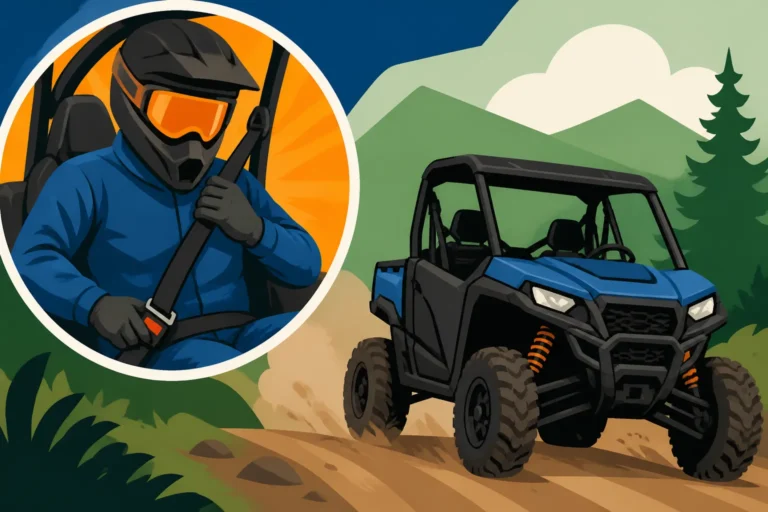
Regardless of any historical clauses, the first and most critical step for any parent is to ensure that every rider, especially children, is equipped with the right safety gear. This isn't just a recommendation; it's often a legal requirement in North Carolina, particularly for minors. A DOT-approved helmet is non-negotiable, as are eye protection, sturdy over-the-ankle boots, gloves, and long pants and sleeves. Don't skimp on this. Imagine a scenario where a young rider takes a minor spill on a trail in the Brown Mountain OHV Trail System; proper gear can prevent a serious injury from becoming a life-altering event.
Beyond rider gear, the machine itself needs to be in top condition. Regular maintenance—checking tires, brakes, lights, fluid levels, and ensuring all controls function correctly—is paramount. If your ATV is an older model, a thorough inspection is even more crucial. Are the suspension components still sound? Is the steering tight? Sometimes, an older machine benefits greatly from modern upgrades, like improved lighting systems or more robust skid plates, which you can often find from aftermarket providers like SuperATV. Ensuring your ATV is mechanically sound prevents breakdowns and potential accidents on the trail.
Securing the Necessary Safety Certification
For young riders born on or after the specified date (currently January 1, 1990), acquiring an ATV safety certificate isn't just a good idea; it's a legal mandate for riding on public lands. This certificate proves that the rider has undergone formal training, understands essential safety principles, and knows how to operate an ATV responsibly. Many certified courses are available, often offered through organizations like the ATV Safety Institute (ASI). These courses cover everything from pre-ride inspections and basic maneuvering to emergency stopping and environmental awareness.
Enrolling your child in one of these courses is an investment in their safety and your peace of mind. It provides them with structured learning beyond what they might pick up informally. Furthermore, carrying proof of this certification is a must whenever they ride on designated public trails or lands where the certificate is required. If a forest service officer or warden at Badin Lake OHV Trail Complex asks for it, having that card on hand prevents unnecessary hassle. This formal training complements hands-on experience and builds a strong foundation for a lifetime of safe riding.
Understanding Where to Ride Legally and Safely
Knowing where your family can legally and safely ride in North Carolina is just as important as knowing the rules for how to ride. North Carolina has very specific laws about where ATVs can be operated. Generally, ATVs are not street-legal and cannot be ridden on public roads, highways, or interstates, except for very limited circumstances like crossing a road or for legitimate farming operations. You can learn more about this in [North Carolina Rules for Crossing a Road] or [North Carolina's Farming Operations Exception]. Trying to ride an ATV on unauthorized public land or roads can result in significant fines and legal trouble.
Instead, families should seek out designated OHV trails and private property where permission has been granted. North Carolina boasts some fantastic public OHV areas, such as those within the Uwharrie and Pisgah National Forests. However, even on these designated trails, there are often specific rules regarding permits, open seasons, and noise limits. Always check the current status of trails before you head out, especially after heavy rain or during hunting season. [North Carolina Trail Closures to Check] is a good resource for this. For private lands, always obtain [North Carolina Landowner Permission Rules] in writing to avoid trespassing issues. By understanding and respecting these boundaries, you ensure a safe, legal, and enjoyable riding experience for your entire family.
Disclaimer
This article is for general informational purposes only and does not constitute professional advice. Laws, prices and regulations vary by location and change over time. Consult a qualified professional for guidance on your specific situation.