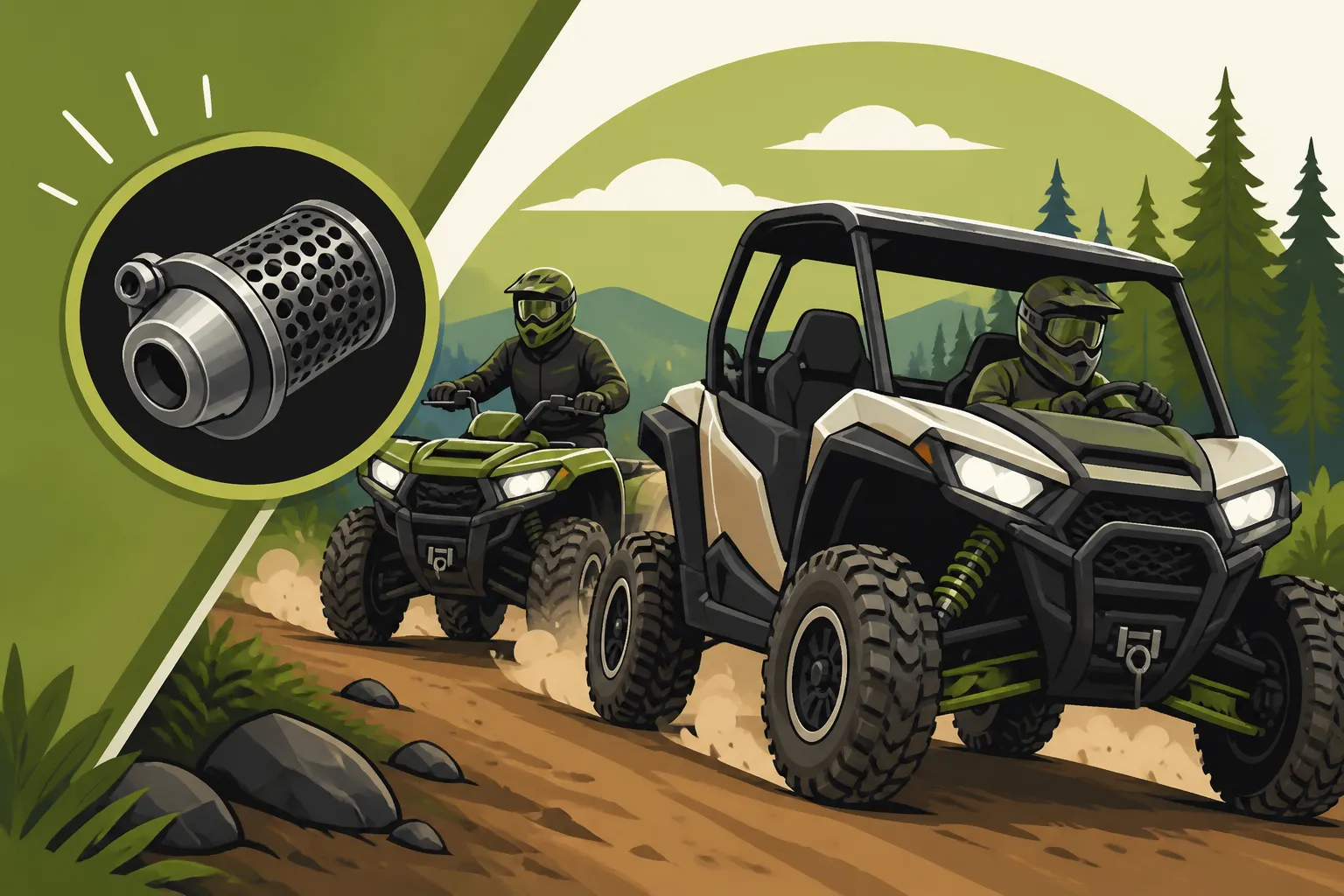
Spark Arresters Accepted on Uwharrie Forest Trails
There’s nothing quite like the thrill of hitting the trails in North Carolina, especially when you’re headed to a place as renowned as the Uwharrie National Forest. But before you even think about loading up your ATV or UTV and pointing your rig east towards Troy, there’s one critical piece of equipment that often gets overlooked until it's too late: the spark arrester. Many riders don't realize that a non-compliant or damaged spark arrester can lead to an abrupt end to their day, a hefty fine, or worse, contribute to a devastating wildfire. This guide is here to walk you through exactly what an accepted spark arrester means for Uwharrie Forest trails, why it's so important, and how to ensure your machine is ready to ride safely and legally.
Why Spark Arresters Are Non-Negotiable on North Carolina Forest Trails
When you're out enjoying the rugged beauty of the Uwharrie National Forest, it's easy to get caught up in the moment – the rev of the engine, the challenge of the terrain, the sheer joy of the ride. But beneath all that excitement lies a serious responsibility, especially when it comes to fire prevention. North Carolina's forests, particularly areas like the Uwharries, are often dry and susceptible to wildfires, and an improperly equipped off-road vehicle can be a significant risk. This isn't just a minor suggestion; it's a strict federal and state requirement designed to protect these precious natural resources.
Imagine you're deep on a Uwharrie trail, kicking up dust, and a small, superheated carbon particle escapes your exhaust. If it lands on dry leaves, pine needles, or brush, it can ignite a fire that spreads rapidly, turning a fun day into an ecological disaster. This isn't a hypothetical fear; it's a real and present danger that the U.S. Forest Service takes extremely seriously. They've seen firsthand the devastation that even a single spark can cause. That's why the rules are in place – to ensure that every rider contributes to the safety and preservation of the forest. Without these precautions, the trails we love could be closed indefinitely, as has happened in other areas due to severe fire damage. It's a small part to consider, but its impact can be monumental.
The Environmental Stakes in Uwharrie
The Uwharrie National Forest is a truly special place, a remnant of an ancient mountain range with unique geology, diverse wildlife, and a history stretching back millennia. When a wildfire erupts in such an area, it doesn't just burn trees; it destroys habitats, eradicates rare plant species, contaminates water sources, and destabilizes the delicate balance of the ecosystem. The impact can last for decades, forever altering the landscape and the life it supports. The soil can become barren, leading to erosion, and it can take generations for the forest to truly recover its previous grandeur. [Uwharrie National Forest in North Carolina] is a treasure, and protecting it from preventable fires is a collective responsibility for every single person who enjoys its trails.
Beyond the immediate damage, the long-term effects on air quality, water runoff, and even local climate patterns can be significant. Wildfires release massive amounts of carbon dioxide into the atmosphere, contributing to air pollution and climate change. Ash and debris can wash into streams and rivers, harming aquatic life and affecting water quality for downstream communities. So, when a forest ranger checks your spark arrester, they're not just being bureaucratic; they're acting as stewards of an irreplaceable natural heritage. Riders who understand this deep connection to the environment are the ones who truly appreciate the privilege of riding in such a pristine area.
Regulatory Necessity for Forest Riding
It might feel like just another rule, but the requirement for a compliant spark arrester on federal lands, including the Uwharrie National Forest, is rooted in federal law. The U.S. Forest Service mandates that all internal combustion engines operating on national forest system lands must be equipped with a spark arrester that is "maintained in effective working order" and "certified to meet the appropriate standard." This isn't unique to North Carolina; it's a nationwide policy. When you're driving to the trailhead, you'll often see signs reminding you of this very requirement. Ignoring it isn't just risking a ticket; it's risking public safety and the health of the forest.
The enforcement of these regulations is quite serious. Forest rangers and law enforcement officers regularly conduct compliance checks at trailheads and even out on the trails themselves. If your machine is found to be non-compliant, you could face significant fines, your riding privileges could be revoked, and your day in the Uwharries will definitely be cut short. It's a hassle nobody wants, especially after driving hours to get there. Always remember that your trail permit, which is essential for riding in these areas, comes with the implicit agreement to adhere to all forest regulations, including the [North Carolina Spark Arrester Requirement]. It’s a small detail, but one that can make or break your trip and keep these trails open for everyone.
Understanding "Accepted" Spark Arrester Standards
So, what exactly constitutes an "accepted" spark arrester for Uwharrie Forest trails? It’s not just any screen you can stick in your exhaust. The U.S. Forest Service has specific standards that these devices must meet to be considered effective and legal. These standards are designed to ensure that the arrester can trap and cool those dangerous carbon particles before they have a chance to escape and cause a fire. Knowing these standards is the first step to ensuring your machine is compliant and you avoid any issues with a ranger.
At its core, a spark arrester is a chamber or screen device fitted to the exhaust system of an internal combustion engine. Its job is to capture or cool down hot carbon particles (sparks) that are expelled from the engine, preventing them from igniting flammable materials. For U.S. Forest Service land, the most commonly accepted standard is detailed in Forest Service Specification 5100-1b. This specification outlines requirements for screen size, material, and design to ensure maximum effectiveness. Don't worry, you don't need to memorize the entire spec sheet, but understanding the basics will help you identify a compliant device.
US Forest Service (USFS) Approval and Design
The primary characteristic of a USFS-approved spark arrester is that it must be designed to contain solid particles 0.023 inches (0.584 mm) or larger in diameter. This is typically achieved through a stainless steel screen or a labyrinth-style baffling system that forces exhaust gases through a tortuous path, allowing carbon particles to cool and fall out of the gas stream before exiting. Most factory-installed mufflers on ATVs and UTVs purchased new in the U.S. come with an integrated spark arrester that meets these standards. However, if you've modified your exhaust or are riding an older machine, it's absolutely crucial to double-check.
The arrester should also be permanently affixed and in good condition. You can often tell if a spark arrester is USFS-approved by looking for a stamp or label on the exhaust system, usually near the end of the muffler. This stamp will often say "USFS Approved" or "Meets USDA Forest Service Standard 5100-1B." If you don't see this marking, or if it's damaged and unreadable, it's time to investigate further. Some aftermarket exhaust systems, like those from companies such as SuperATV, will clearly state their compliance with USFS standards. Always look for that stamp; it's your visual proof that you're good to go.
Checking Your Machine's Existing Arrester
Before every ride, especially when heading to the Uwharries, you should perform a quick inspection of your spark arrester. First, locate your muffler. The spark arrester is typically housed at the very end of the exhaust pipe or within the muffler canister itself. Many ATVs and UTVs have a small cap or a few screws that allow you to remove the end of the muffler to access the spark arrester screen. If you’re unsure how to access it, consult your owner's manual; it usually has diagrams and instructions.
Once you can see the screen, inspect it closely. Look for any holes, tears, or excessive carbon buildup. A clean, intact screen is a happy screen! Carbon buildup can clog the screen, reducing exhaust flow and potentially causing performance issues, but more importantly, it can compromise the arrester's ability to trap sparks effectively. If the screen is damaged or heavily clogged, it needs to be cleaned or replaced. Trying to ride with a compromised arrester is not only illegal but also incredibly irresponsible. Imagine explaining to a ranger that you "just didn't get around to cleaning it" while they're handing you a citation. You might also notice that some mufflers from manufacturers like SuperATV are designed for easier maintenance access, which is a big plus for regular riders.
Aftermarket Solutions and Compliance
The world of aftermarket ATV and UTV parts is vast, and many riders opt for performance exhaust systems. While these can certainly enhance your machine's power and sound, you need to be extremely vigilant about their spark arrester compliance. Not all aftermarket exhausts come with USFS-approved spark arresters, or they might require a separate add-on. If you're considering an aftermarket exhaust, the first question to ask is: "Is it USFS-approved?" and "Does it have an integrated spark arrester that meets the 5100-1B standard?"
Reputable manufacturers will clearly advertise this compliance. If a product doesn't explicitly state that it's USFS-approved, assume it isn't and avoid using it on forest trails. You don't want to get caught unprepared because you assumed a shiny new exhaust automatically included the necessary safety features. It's much better to spend a little extra time researching or investing in a known compliant product than to face a fine or cause a fire. For example, many of the heavy-duty exhaust systems available from SuperATV often have options or designs that are mindful of these regulations, making it easier for riders to find compliant upgrades. Don't hesitate to contact the manufacturer directly if you have any doubts about a specific product's compliance.
Ensuring Your Spark Arrester is Trail-Ready
Having a spark arrester is one thing; ensuring it's always in optimal, trail-ready condition is another. Just like you check your tire pressure and fluid levels, your spark arrester needs regular attention. This isn't a "set it and forget it" kind of component. Carbon buildup, rust, and physical damage from trail riding can quickly compromise its effectiveness. Being diligent about maintenance is key to staying compliant and, more importantly, keeping our forests safe.
Think of it as part of your pre-ride ritual. You check your gas, your oil, maybe even your winch cable. Adding a quick spark arrester inspection to that list takes minimal time but offers huge peace of mind. It's far better to catch a problem in your garage than to have a ranger spot it at the [North Carolina Forest OHV Permits] station or, even worse, have an issue arise deep in the woods. Proactive maintenance is always less stressful and less expensive than reactive repairs or fines.
Regular Inspection and Maintenance Routines
Before every major ride, especially trips to places like the Uwharries or the Badin Lake OHV Complex, you should dedicate a few minutes to inspecting your spark arrester. As mentioned, access it by removing the end cap or bolts from your muffler. Once exposed, gently scrape away any carbon buildup with a brush or a small, non-abrasive tool. You want to avoid anything that might tear the screen itself. Hold it up to the light to confirm there are no holes or thin spots. If you notice any damage, no matter how small, it's time for a replacement.
A good rule of thumb is to perform a thorough cleaning and inspection every 20-30 hours of ride time, or at least seasonally if you're not riding that frequently. The type of fuel you use, how rich your engine runs, and even the riding conditions (e.g., dusty trails) can influence how quickly carbon builds up. Keep a spare spark arrester screen on hand if your machine uses a removable one; they're generally inexpensive and easy to swap out. This habit will save you headaches and ensure your machine is always ready for legal and safe operation on public lands.
Replacement and Installation Tips
If your spark arrester screen is damaged, torn, or excessively worn, it needs to be replaced immediately. Trying to patch it or "make it work" is not only non-compliant but also dangerous. Replacement screens are typically readily available from your machine's manufacturer, aftermarket parts suppliers, or even general powersports retailers. When purchasing, make sure to get the correct size and type for your specific muffler and ensure it meets USFS standards. Again, if you're looking at aftermarket parts for your machine, like from SuperATV, they often carry replacement screens or entire muffler systems that are designed to be compliant.
Installation is usually straightforward: simply remove the old screen and slide the new one into place. Make sure it's seated properly and securely before reattaching the muffler end cap. A loose spark arrester can vibrate out, leaving you exposed and non-compliant in the middle of a ride. After installation, start your machine and let it idle for a few minutes, listening for any unusual exhaust leaks or sounds. This ensures everything is sealed correctly. Properly functioning brakes and lighting are also important for safety, just like a compliant spark arrester, so ensure all components are in top shape before you ride. [North Carolina Lighting Requirements for ATVs] and [North Carolina Brake Requirements for ATVs] are other essential checks.
Here’s a quick checklist to help you stay compliant:
| Component | Check Interval | What to Look For | Action if Failed |
|---|---|---|---|
| Spark Arrester Screen | Before every ride | Holes, tears, excessive carbon buildup, corrosion | Clean (if clogged), Replace (if damaged) |
| USFS Stamp/Label | Initial/Mod | Visible, legible "USFS Approved" or "5100-1B" | Verify compliance, Replace muffler if none |
| Exhaust System | Before every ride | Leaks, loose connections, physical damage | Repair or tighten as needed |
| Muffler End Cap | Before every ride | Securely attached, no missing screws or bolts | Replace hardware, ensure tight fit |
| Engine Performance | During ride | Unexplained loss of power, excessive smoke, backfiring | Investigate cause, could be arrester related |
This diligent approach not only keeps you compliant with North Carolina's forest regulations but also helps to preserve the natural beauty of places like the Uwharrie National Forest for future generations of riders. Don't let a small oversight ruin your trip or, worse, jeopardize our precious public lands. Always check for [Checking a Forest Alert Before You Drive] as well, as conditions can change rapidly. A responsible rider is a welcome rider on any trail.
Disclaimer
This article is for general informational purposes only and does not constitute professional advice. Laws, prices and regulations vary by location and change over time. Consult a qualified professional for guidance on your specific situation.