Crossing a Road on an ATV in North Carolina
It's incredibly frustrating when you're out enjoying the North Carolina trails or just trying to get from one part of your property to another, and you hit a public road. That moment of uncertainty – "Can I cross this? How do I cross this? Am I going to get a ticket?" – is a common worry for ATV and UTV owners across the Tar Heel State. This guide is here to untangle the complexities of North Carolina law regarding ATVs and UTVs on public roads, specifically focusing on the rules for crossing, and exploring the very limited exceptions that might allow your machine to briefly touch pavement.
The General Rule: Off-Highway Machines Belong Off-Highway
Let's start with the fundamental truth that can be a real headache for many riders: in North Carolina, all-terrain vehicles (ATVs) and most utility terrain vehicles (UTVs) are legally defined as off-highway vehicles. This means they are generally prohibited from operating on public streets, roads, or highways. It's not just a suggestion; it's the law, and it’s a constant source of confusion and frustration for those of us who just need to get our machines from one place to another.
The Core Prohibition and Why It Exists
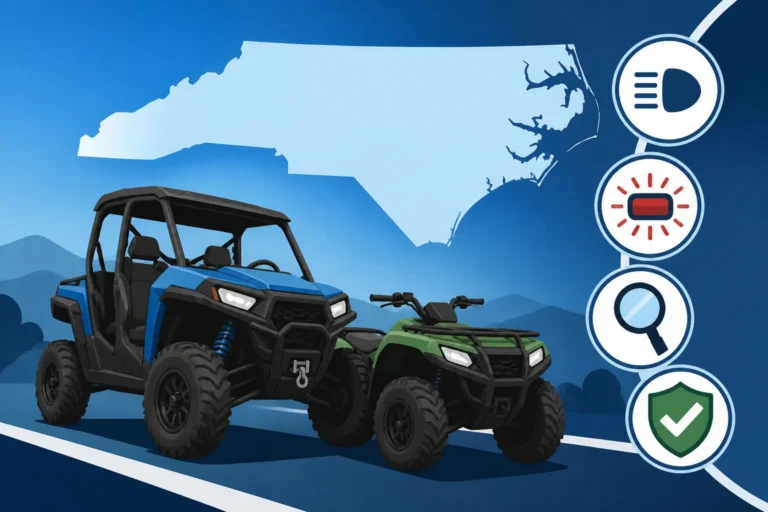
The main reason for this widespread prohibition is safety and the design of these machines. ATVs and UTVs are built for rugged, uneven terrain, not for paved roads with cars, trucks, and high-speed traffic. They often lack essential safety features required for street-legal vehicles, such as turn signals, rearview mirrors, proper headlights, and brake lights that meet highway standards. Their suspension systems, tires, and steering are optimized for off-road performance, which can make them unstable, difficult to control, and prone to rollovers on hard, fast surfaces. Imagine trying to make a quick turn on a busy road with knobby tires and a high center of gravity – it’s a recipe for disaster.
Beyond the mechanical aspects, there's also the issue of visibility. ATVs and UTVs are often smaller than typical road vehicles, making them harder for other drivers to see, especially at dawn, dusk, or in adverse weather conditions. The state's intent is to keep everyone safe by separating these powerful off-road machines from the flow of traditional road traffic. While this rule is clear-cut in its intent, it doesn't make it any less inconvenient when you have a legitimate need to traverse a public thoroughfare, even if it's just for a few yards. It's a classic example of regulations that, while well-meaning, can feel restrictive to the responsible rider.
What North Carolina Law Says About Crossing a Road
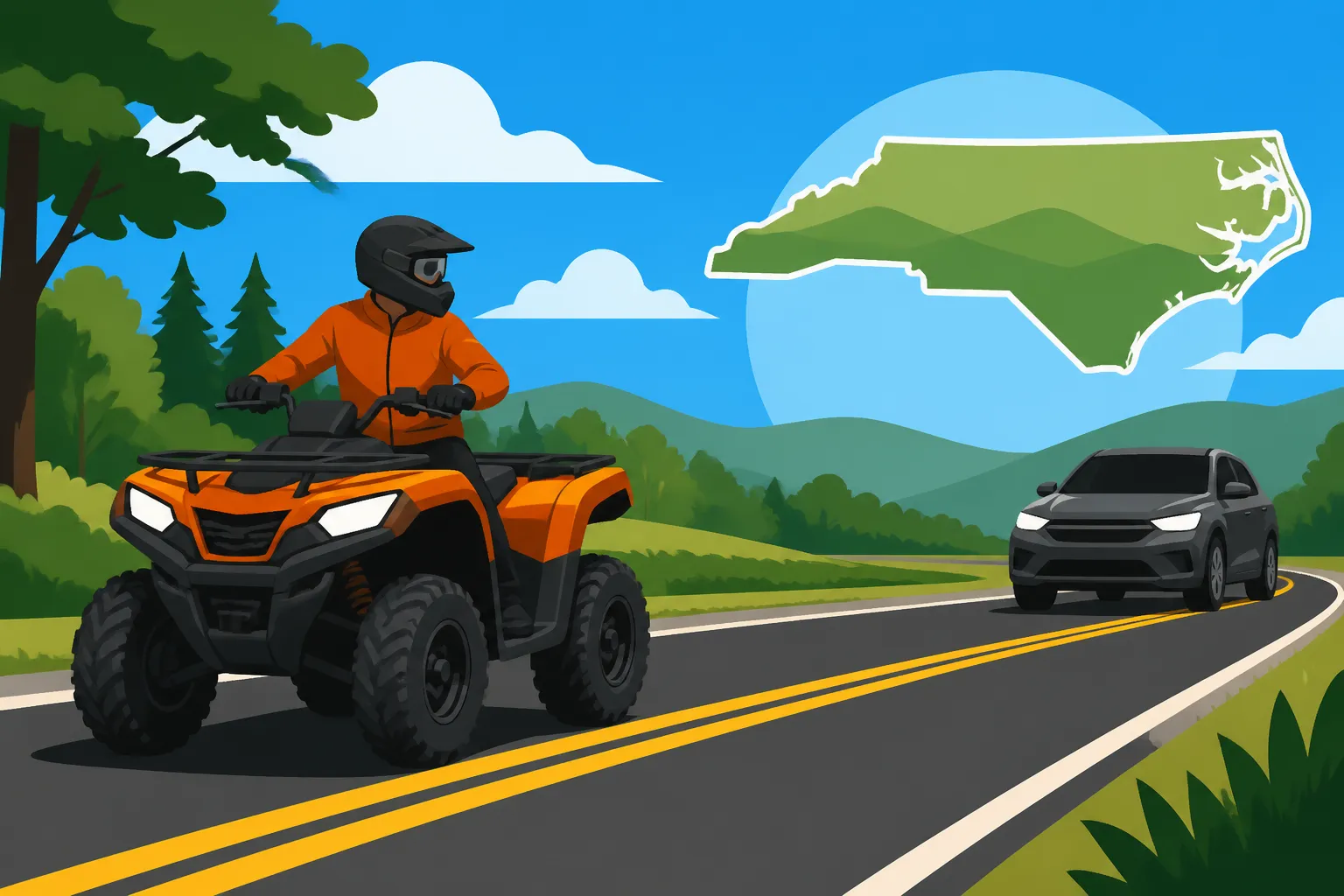
Now for the good news, or at least a small concession for frustrated riders: North Carolina does permit an ATV to cross a public street, road, or highway, but only under very specific circumstances. This isn't a free pass to drive down the road to your buddy's house; it’s a narrow exception for essential transit. The law states that an ATV may cross a public road if the crossing is made at an angle of approximately 90 degrees to the road, and at a place where the ATV operator has a clear view of approaching traffic. Furthermore, the crossing must be made in the safest manner possible and without unduly interfering with vehicular traffic. This means no joyriding, no cruising the shoulder, and absolutely no stopping in the middle of a lane.
Think of it this way: you're trying to connect two pieces of private property, or two sections of a trail system, that are bisected by a public road. The law allows you to go straight across, from one side to the other, as quickly and safely as possible. It's about minimizing the time your machine is on the public road, treating it like a brief, necessary interruption, not an extension of your riding area. This distinction is crucial; straying from these rules can quickly land you in hot water with law enforcement, turning a simple crossing into a costly citation. If you want to understand the exact wording, delve into [North Carolina Rules for Crossing a Road].
Understanding North Carolina's "Crossing a Road" Rules
Navigating the landscape of North Carolina's ATV laws can feel like threading a needle, especially when it comes to interacting with public roads. The allowance for crossing roads is a lifeline for many riders, but it's important to grasp the nuances to avoid accidentally breaking the law. It’s not about finding loopholes, but understanding the very specific situations where a crossing is permissible and how to execute it safely and legally.
When and Where You Can Make a Crossing
The "when and where" of road crossings are critical. Generally, you can make a legal crossing when there's a clear, legitimate reason to do so, typically to connect properties or trail sections. This might be when your farm straddles a rural paved road, and you need to access fields on the other side. Or perhaps you're riding a permitted private trail system that has a designated crossing point where it intersects with a minor county road. The key here is "necessity." You can't just cross a road because it's a shortcut to the gas station or a more interesting trail. It must be for direct access to another legal riding area or property.
The type of road also plays a role, though the legal permission to cross applies to most public roads. While the law doesn't explicitly differentiate, common sense and safety certainly do. Crossing a quiet, unpaved logging road that sees minimal traffic is inherently different from crossing a busy four-lane state highway. The expectation is that you choose the safest possible point to cross, which often means an area with good sightlines and lower traffic volume. The law specifically states the crossing must be "at an angle of approximately 90 degrees to the road" and "at a place where the ATV operator has a clear view of approaching traffic." This "shortest distance" concept is vital; you're not meant to ride down the road, even briefly, to find a better crossing spot further away.
Safety Considerations and Best Practices for Road Crossings
Even when legally permitted, crossing a public road on an ATV is always a moment of heightened risk. Unlike street-legal vehicles, your ATV doesn't have the same road manners or protective features. Therefore, practicing extreme caution and adhering to best practices is paramount. First and foremost, always yield to road traffic. Vehicles on the public road have the right-of-way, and you must wait for a clear and safe opportunity to cross, even if it means waiting for an extended period. Never assume drivers see you, especially if you're on a smaller machine or in an area with limited visibility.
Before you even approach the road, slow down, look both ways multiple times, and listen for approaching vehicles. Consider wearing brightly colored clothing or attaching a safety flag to your ATV to increase your visibility. When the path is clear, execute the crossing swiftly and directly, maintaining that perpendicular angle. Don't swerve, don't stop mid-crossing, and don't try to chat with someone on the other side. Your goal is to minimize your time on the pavement. Think of it as a momentary intrusion into vehicle traffic, executed with maximum vigilance. This disciplined approach not only keeps you safe but also demonstrates responsible riding, which can go a long way if a law enforcement officer happens to witness your crossing.
The Farm Operations Exception: A Glimmer of Hope for Some Riders
While the general rule is strict, North Carolina does offer a significant exception for those involved in agriculture. This is a common-sense allowance that recognizes the practical needs of farmers to use their equipment, including ATVs and UTVs, for essential tasks that might involve public roads. It's not a blanket pass for recreational riding, but it does provide necessary flexibility for the state's agricultural backbone.
What Qualifies as a "Farm Operation" in North Carolina
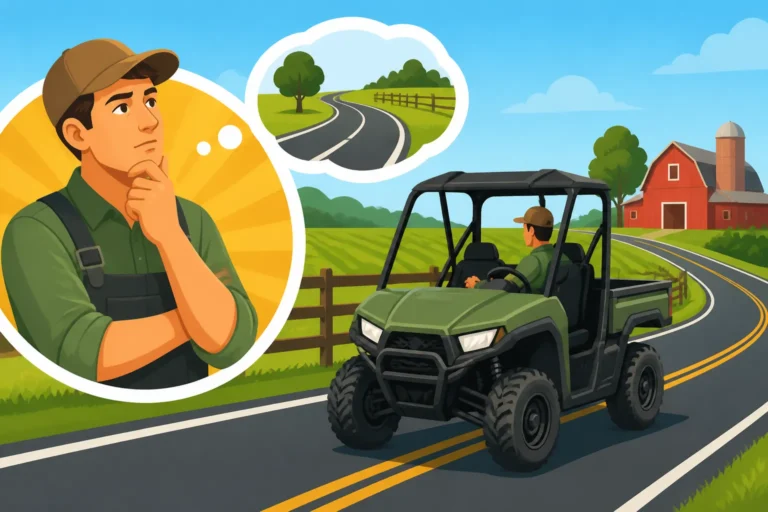
North Carolina law allows ATVs to be operated on public roads if they are "operated by a person 16 years of age or older for the purpose of crossing a highway or traveling on a highway to perform a farm operation." This exception is specifically tailored to agricultural uses. A "farm operation" generally refers to activities directly related to farming, such as planting, cultivating, harvesting, or transporting agricultural products, livestock, or farm equipment. This could mean driving your UTV to check fences in a pasture across the road, hauling a small trailer of feed to a distant barn, or moving tools between different sections of your land.
The spirit of the law is to facilitate legitimate farming activities. It's not intended for you to take your side-by-side to town for groceries, even if you live on a farm. The connection to farm business must be direct and undeniable. If questioned, you should be able to articulate how your presence on the public road with your ATV or UTV is essential to your farm operations. This distinction is crucial, as misrepresenting recreational use as farm work could lead to legal trouble. For more details on this specific allowance, refer to [North Carolina Farming Exception for ATVs].
Limitations and Responsibilities Under the Farm Exception
Even with the farm operations exception, there are strict limitations and responsibilities that riders must adhere to. First, as mentioned, the operator must be at least 16 years of age. This ensures a certain level of maturity and driving experience when interacting with public roads. Second, the operation must genuinely be for a bona fide farm purpose. It's not an excuse to take a joyride on public roads. If an officer observes you cruising for pleasure rather than performing a specific farm task, the exception will not apply.
Furthermore, while the ATV might be permitted on the road for farm business, it still needs to meet certain safety standards, especially regarding visibility. For instance, if you're operating on a public road, particularly during low-light conditions, your machine should have appropriate lighting and, if traveling at slower speeds, possibly a slow-moving vehicle (SMV) emblem visible from the rear. While not explicitly required for all farm ATVs on roads, it's a wise safety precaution that demonstrates due diligence. Remember, the farm exception is about necessity, not entitlement. It's a privilege to use public roads for farm work, and that privilege comes with the responsibility of ensuring safety for both the ATV operator and other road users.
The Modified Utility Vehicle MUV Route to Road Legality
For most ATVs, true street legality in North Carolina is simply not an option. However, for a specific type of utility vehicle, the state offers a pathway: the Modified Utility Vehicle (MUV). This is the only official route to make a side-by-side or similar UTV fully street-legal for general road use in North Carolina, and it's far from a simple process.
What Exactly is an MUV in North Carolina?
An MUV isn't just any side-by-side with a few lights bolted on. It's a specific classification defined by North Carolina law with a rigorous set of requirements that most stock UTVs simply do not meet. To qualify as an MUV, a vehicle must be:
- Engine Size: More than 2,400 cubic centimeters (cc). This is a huge hurdle for many UTVs, as most standard models fall well below this, even popular larger displacement machines. This requirement aims to ensure the vehicle has sufficient power to keep up with traffic.
- Dimensions: It must be at least 142 inches in length, at least 58 inches in width, and at least 70 inches in height. These dimensions are crucial for visibility and presence on the road. Many UTVs, even large ones, struggle to meet all three. You might find a great lift kit or wider A-arms from a company like SuperATV, but those modifications might only satisfy one dimension while others remain below the threshold, or even exceed width limits for other trail systems!
- Speed: Capable of exceeding 40 miles per hour on a level surface. Again, this points to ensuring the vehicle can maintain pace with typical road traffic.
- VIN: It must have a vehicle identification number (VIN) assigned by the North Carolina Division of Motor Vehicles (DMV). This is often a multi-step process for machines not originally designed for road use.
These criteria are incredibly stringent, effectively narrowing the field to very few, if any, readily available stock UTVs. The intent is to ensure that if a machine is allowed on public roads, it more closely resembles a traditional automobile in terms of size, power, and roadworthiness. If you're curious about the specifics of these dimensions, check out [What Makes a Machine an MUV in North Carolina] and [North Carolina MUV Engine Size Requirement].
The Process for Making an MUV Street-Legal
If by some chance your UTV meets the initial physical and engine requirements (or you've done extensive, often costly, modifications to make it so), the journey to street legality as an MUV is still lengthy and complex. It involves several steps with the North Carolina DMV:
- Modifications: Your UTV will likely need substantial modifications to meet all the MUV criteria, not just engine and dimensions. This often includes adding street-legal lighting (headlights, tail lights, brake lights, turn signals), a windshield, windshield wipers, seatbelts, a rearview mirror, and potentially even a speedometer and horn. Aftermarket parts from companies like SuperATV can certainly help with some of these components, but integrating them into a cohesive, compliant system is key.
- Inspection: The machine must undergo an inspection by the DMV to verify it meets all MUV specifications. This is not a casual once-over; it's a thorough check of every detail.
- VIN Assignment: If your UTV doesn't have a VIN that the DMV recognizes for road use, you'll need to go through a process to get one assigned. This verifies its identity for titling purposes.
- Titling: Once inspected and assigned a VIN, you'll apply for a North Carolina title as an MUV. This legally establishes your ownership of a road-legal vehicle.
- Registration and Plate: Finally, you'll register the MUV with the DMV and receive a license plate, much like a car. This is when it officially becomes street-legal.
- Ongoing Requirements: After registration, an MUV is subject to all the same rules as other road vehicles: it must carry liability insurance, undergo annual safety inspections, and be operated by a licensed driver.
This entire process is expensive, time-consuming, and often prohibitive for most UTV owners. The high bar set by the MUV classification means that for the vast majority of riders, true street legality for their off-road machine remains an elusive dream. For those serious about exploring this route, more information can be found on [North Carolina MUV Registration Requirements].
Specific Road Types and Their Implications for ATVs
Understanding the general rules is one thing, but applying them to the diverse range of North Carolina's roads adds another layer of complexity. The rural gravel path in the Uwharries, the two-lane state road near a Piedmont farm, and the multi-lane highway near a bustling city all present different scenarios, even if the underlying law for ATVs remains consistent.
Crossing Paved State Highways vs. Unpaved County Roads
When it comes to the legal act of crossing a road, the North Carolina statute doesn't differentiate between a paved state highway and an unpaved county road. The fundamental principle of a 90-degree angle, clear sightlines, and minimal interference with traffic applies universally. However, the practical implications and inherent dangers certainly vary widely. Crossing a state highway, especially one with higher speed limits or significant traffic volume, is far riskier than traversing a quiet, unpaved back road.
On a paved state highway, vehicles are traveling at higher speeds, and drivers may be less accustomed to seeing off-road vehicles. This drastically reduces the reaction time for both the ATV rider and approaching motorists. The consequences of a misjudgment on such a road are much more severe. Conversely, a quiet, unpaved county road, especially in a rural area, often has lower speed limits and less traffic. While still requiring the same legal adherence, the reduced risk factor allows for a more controlled and often safer crossing. Riders should always prioritize safety over convenience, choosing the least busy, most visible crossing point possible, regardless of the road's classification. The law may treat all roads equally for crossing purposes, but prudence demands a higher degree of caution on busier thoroughfares.
Private Roads, Logging Roads, and Utility Corridors
Away from the public road network, the rules shift dramatically. Private roads, logging roads, and utility corridors (like power line or pipeline easements) are generally not subject to the same state restrictions as public roads. This means that if you have explicit permission from the landowner or managing authority, you can typically ride your ATV or UTV on these paths without issue. This is where much of the legitimate, legal riding outside of dedicated trail systems often takes place in North Carolina.
For example, a logging company might grant permission for riders to use their active or inactive logging roads on private timberland, understanding that these are not public thoroughfares. Similarly, a utility company might allow access along a power line easement, provided you adhere to their specific rules and regulations. The key here is always "permission." Without it, riding on these private or semi-private paths constitutes trespassing, which can lead to legal penalties. Never assume implied permission; always seek explicit consent, preferably in writing, before venturing onto any land that isn't clearly designated as a public trail system. These types of routes offer fantastic riding opportunities, but understanding their private status is critical. For more on this, check out [North Carolina Rules for Riding a Logging Road] and [North Carolina Rules for Riding Private Land].
Equipment, Age, and Rider Requirements for Road Interactions
Even for the briefest interactions with North Carolina's public roads, whether it's a quick crossing or a permitted farm operation, the state's existing regulations regarding ATV equipment and rider qualifications don't magically disappear. These rules are in place for safety, and they apply whenever the machine is in operation, irrespective of the specific legal context. Ignoring them, even for a moment, can lead to serious consequences.
Mandatory Safety Gear, Even for Brief Crossings
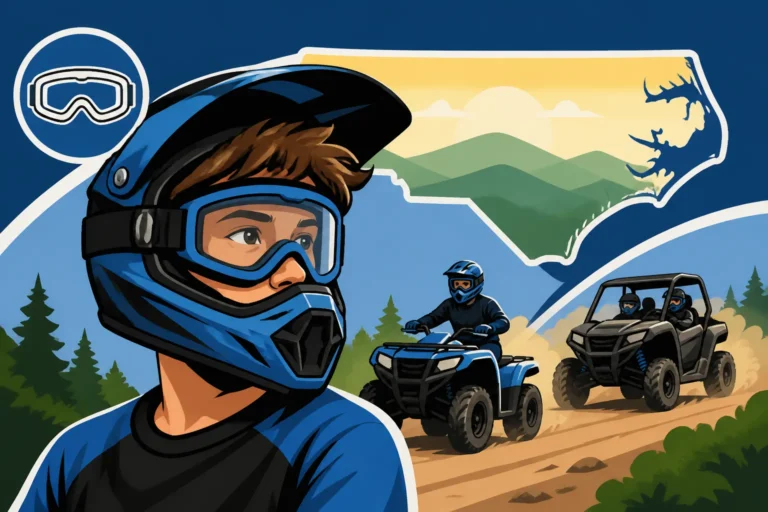
North Carolina takes rider safety seriously, and this commitment extends to any moment an ATV or UTV is being operated. One of the most critical requirements, especially for younger riders, is the helmet law. Anyone under the age of 18 operating or riding as a passenger on an ATV must wear a Department of Transportation (DOT) approved safety helmet. While this rule is primarily enforced on trails and private land, it applies universally. If you're crossing a public road with a minor on your machine, that minor must be wearing a helmet. It's not a rule that only kicks in for prolonged riding; it's about being prepared for any potential impact or incident.
Beyond helmets, eye protection is also mandatory for anyone under 18 operating an ATV in North Carolina. This means goggles or a face shield. While adults are not legally mandated to wear helmets or eye protection off-road, it's always a highly recommended safety practice, especially when interacting with public roads. Furthermore, all ATVs must be equipped with functional brakes, a muffler to keep sound levels in check, and a spark arrester if operating on public lands or areas prone to wildfires. These are baseline equipment requirements that ensure the machine is safe and environmentally responsible, regardless of where it's being ridden. Familiarize yourself with [North Carolina Helmet Law for ATV Riders] to stay compliant.
Age Restrictions and Supervision for Young Riders
North Carolina has specific age restrictions for ATV operation, and these rules are not suspended just because you're performing a quick road crossing or a farm operation. Generally, no person under the age of eight is allowed to operate an ATV. For riders between the ages of 8 and 15, they are permitted to operate an ATV only if they are under "continuous visual supervision" by a person 18 years of age or older, and they must hold an ATV safety certificate issued by the Commissioner of Insurance.
This means that if you have a 12-year-old helping out on the farm or needing to cross a road to access a field, they must have their safety certificate and be under the direct, watchful eye of an adult. These rules are in place to protect young riders, who may lack the experience, strength, or judgment to safely operate an ATV, especially when facing the unpredictable environment of a public road. A road crossing, even a short one, can be a high-stress, high-risk maneuver, and having an unqualified or unsupervised young rider involved significantly amplifies that risk. Always ensure all operators, regardless of the brief nature of the road interaction, meet the state's minimum age and training requirements. For a full breakdown, consult [North Carolina Minimum Age to Ride an ATV].
Consequences of Illegally Riding an ATV on North Carolina Roads
The temptation to take a "shortcut" down a public road or to casually ride your ATV a short distance can be strong, especially when the destination seems just around the corner. However, succumbing to this temptation can lead to severe and costly repercussions in North Carolina. The state's laws against ATV road use are not mere suggestions; they are enforceable statutes with real teeth, and law enforcement officers are increasingly vigilant, particularly in areas where off-road riding is popular.
Fines, Penalties, and Machine Impoundment
Operating an ATV on a public street, road, or highway in North Carolina, outside of the very limited exceptions discussed, is a violation of state law. This is typically classified as a Class 3 misdemeanor, which carries significant penalties. A first offense can result in a hefty fine, potentially hundreds of dollars, plus court costs and administrative fees. These costs quickly add up, turning a momentary convenience into a substantial financial burden.
But the financial penalty might just be the beginning. Law enforcement officers have the authority to ticket you, and in some cases, impound your machine on the spot. Imagine your ATV or UTV being towed away, leaving you stranded and facing not only the fine but also impoundment fees, daily storage charges, and the hassle of arranging for its retrieval. This can easily double or triple the initial cost of the violation. A Class 3 misdemeanor also goes on your permanent record, which can have long-term implications beyond just the immediate fine. It's a serious matter, and the state does not take illegal road use lightly, recognizing the inherent dangers it poses to public safety. For a detailed look at what a violation might cost you, see [North Carolina Fines for an ATV Violation].
Insurance Implications and Liability Risks
Beyond the immediate legal and financial penalties, operating an ATV illegally on a public road opens a Pandora's box of insurance and liability nightmares. Standard ATV insurance policies are designed to cover off-road use; they typically do not extend coverage to incidents that occur while operating illegally on public streets or highways. This means if you cause an accident, however minor, your insurance company will likely deny coverage, leaving you personally responsible for all damages.
Consider a hypothetical scenario: you illegally ride your ATV down a paved road to reach a friend's property. While doing so, you collide with another vehicle. If your insurance denies coverage, you could be on the hook for thousands, or even hundreds of thousands, of dollars in property damage to the other vehicle, medical bills for injured parties, and potential lawsuits for pain and suffering. This level of personal liability can be financially devastating and could impact your assets for years to come. Even if you're not at fault, the mere fact that you were operating your ATV illegally on a public road could significantly complicate any claim or defense. The risk simply isn't worth it. Responsible riders understand that adhering to the law protects not only their freedom to ride but also their financial well-being.
| Scenario | Is it Legal in NC? | Requirements/Conditions | Typical Machine | Key Risks of Non-Compliance |
|---|---|---|---|---|
| General ATV Road Use | No | N/A (Generally prohibited) | Standard ATV/UTV | Fines, impoundment, criminal charges, no insurance coverage, severe liability. |
| Crossing a Public Road | Yes (Limited Exception) | 90-degree angle, clear view, shortest distance, yield to traffic, safest manner, no undue interference. Rider age/gear rules still apply. | Standard ATV/UTV | Fines if rules are violated, increased accident risk if not cautious. |
| Farm Operation Exception | Yes (Specific Exception) | Operator 16+, bona fide farm business, appropriate lighting/SMV emblem (recommended for safety), all other ATV safety rules apply. | Standard ATV/UTV used for farm tasks | Fines if not for farm business or if age/safety rules are ignored. |
| Modified Utility Vehicle (MUV) | Yes (Requires Conversion) | Engine > 2400cc, Length > 142", Width > 58", Height > 70", Speed > 40 mph, NC DMV VIN, full street-legal equipment, inspection, title, registration, insurance. | Heavily modified UTV, custom-built, or specific large utility vehicles | Very high cost/effort to convert. Fines/impoundment if incomplete or non-compliant. Same liability risks as other street-legal vehicles. |
Disclaimer
This article is for general informational purposes only and does not constitute professional advice. Laws, prices and regulations vary by location and change over time. Consult a qualified professional for guidance on your specific situation.