Meeting Traffic on a One-Lane Uwharrie Bridge
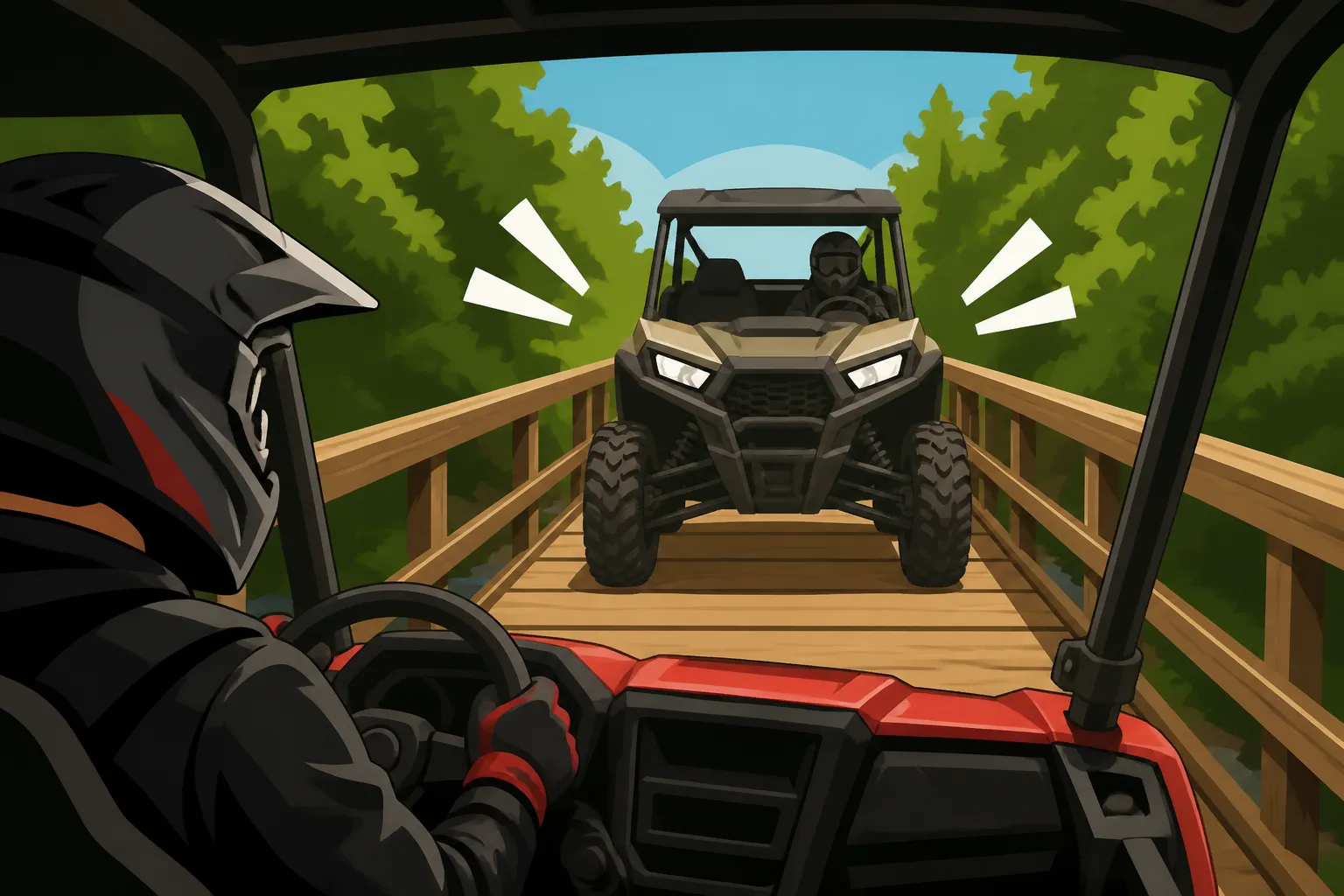
Picture this: you're out enjoying a fantastic ride on your ATV or UTV, deep in the Uwharrie National Forest, when you come across a narrow, one-lane bridge. Your heart might do a little skip, wondering not just about the best way to safely cross, but also, what if you meet oncoming traffic? More importantly, is your machine even supposed to be on this bridge in the first place? This guide is here to untangle the often-confusing rules surrounding ATVs and UTVs on public roads and bridges in North Carolina, especially when you're facing a tricky situation like a one-lane crossing.
The Reality of ATVs and North Carolina Public Roads
Let's be upfront: the rules about riding your ATV or UTV on public roads in North Carolina can be incredibly frustrating and are often misunderstood. Many riders simply want to connect a few trails, access a different section of their property, or get to a nearby store, only to find themselves in a legal gray area, or worse, facing a ticket. The general stance is clear, but there are nuances you absolutely need to grasp.
The General Rule: No Street Legal ATVs
The straightforward answer, which often surprises and disappoints riders, is that your standard ATV or UTV is generally not considered street legal in North Carolina. This means that, for the most part, you cannot legally operate these machines on public highways, streets, or even most bridges that are part of the public road system. This isn't just about registration or a simple sticker; it's about the fundamental classification of the vehicle. These machines are designed for off-road use, and their lack of specific safety features required for on-road vehicles keeps them off paved surfaces. It's a real bummer when you're just trying to get from point A to point B and a short stretch of pavement or a small bridge stands in your way. You might have seen others doing it, but that doesn't make it legal or safe. For a deep dive into this topic, check out [Are ATVs Street Legal in North Carolina: The Short Answer].
The Modified Utility Vehicle MUV Exception
Now, here's where things get a bit more complex, and where some UTVs can find a path to road legality. North Carolina recognizes a specific category called a "Modified Utility Vehicle," or MUV. This isn't for every side-by-side out there, and it certainly doesn't apply to traditional single-rider ATVs. To qualify as an MUV and be registered for road use, a utility vehicle has to meet a very strict set of criteria that most factory-stock UTVs simply won't. We're talking about specific engine size requirements, precise measurements for length, width, and height, and a minimum top speed.
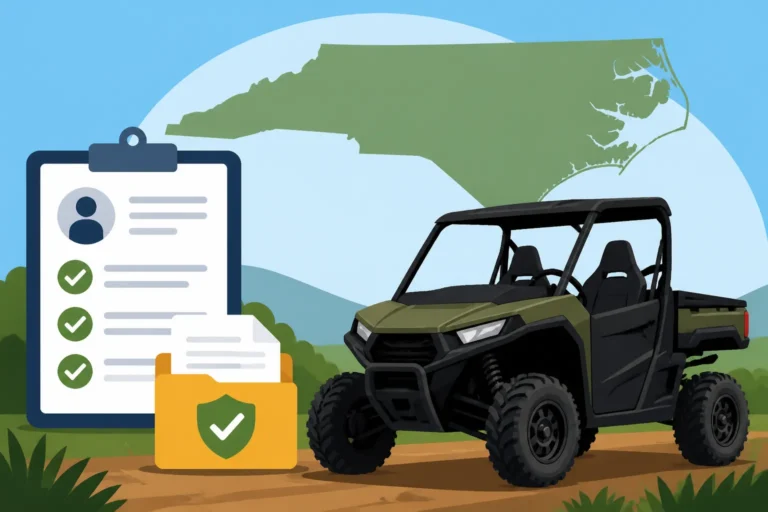
For instance, an MUV must have an engine displacement of more than 2,400 cubic centimeters. It also needs to be at least 142 inches long, no more than 58 inches wide, and at least 70 inches tall. On top of that, it has to be capable of at least 40 miles per hour. Meeting all these requirements often means significant modifications, sometimes with aftermarket parts from companies like SuperATV, to bring a UTV into compliance. Even then, you'll need all the standard road-going equipment: headlamps, taillamps, turn signals, brake lights, a horn, a speedometer, rearview mirrors, a parking brake, and seatbelts. It's a rigorous process, and frankly, most side-by-sides fall short of these specific dimensions or engine size. If you're seriously considering this route, you'll want to explore [North Carolina's Modified Utility Vehicle Route] and get into the nitty-gritty of [North Carolina MUV Registration Requirements] and [North Carolina MUV Dimension Requirements].
The Farm Operations Exception
Beyond the MUV, there's a very narrow exception for certain farm operations. If you're a farmer and your ATV or UTV is being used strictly for legitimate farm business, you might be permitted to operate it on public roads for short distances. This is a crucial distinction: it's not for recreational riding, nor is it a loophole to connect trails. It's solely for the purpose of carrying out tasks directly related to your farming enterprise, such as moving equipment, checking fences, or transporting feed across a public road that divides your property.
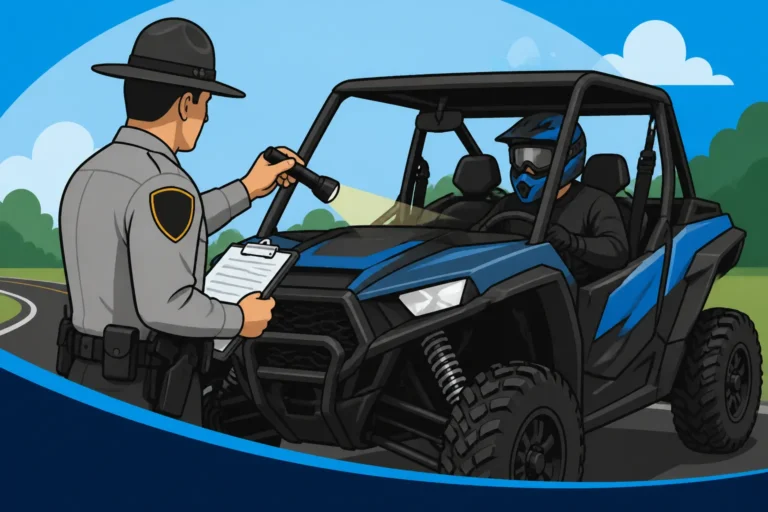
This exception is quite specific and doesn't grant free rein to ride your machine anywhere on public roads. It's tied directly to the nature of your work and the purpose of the trip. If a law enforcement officer pulls you over and you're not actively engaged in farming activities, this exception won't protect you. Think of it as a tool for agricultural efficiency, not a recreational permit. Understanding [North Carolina's Farming Operations Exception] is vital, as is knowing the limitations of [Riding a North Carolina Street on Farm Business]. Always err on the side of caution and ensure your use falls squarely within the bounds of what the law allows for farming operations.
Navigating One-Lane Bridges: Rules and Realities
So, let's bring it back to that one-lane bridge. Given the strict rules we just discussed, the very first question isn't how to meet traffic, but whether your ATV or UTV should be on that bridge at all. Assuming you've met one of the very specific legal conditions (you're on a registered MUV, or you're operating under the farm exception, or you're merely crossing a road as permitted), navigating such a scenario requires both legal understanding and practical safety measures.
Crossing a Road on an ATV: What the Law Says
Even if your ATV or UTV isn't street legal, North Carolina law does make provisions for crossing public roads in very limited circumstances. This is typically allowed when you need to get from one section of private property to another, and a public road or bridge is the only way to connect the two. The key here is "crossing" – not riding along – and it must be done as directly and perpendicularly as possible. You should minimize your time on the public road to the absolute bare minimum required to make the crossing.
When you're crossing a road, you're expected to yield to all oncoming traffic and ensure the path is completely clear before proceeding. This isn't a right-of-way situation for the ATV; it's a privilege granted under very specific conditions. If that crossing involves a one-lane bridge, the same principles apply: ensure it's clear, cross directly, and get off the public thoroughfare as quickly and safely as possible. Familiarize yourself with [Crossing a Road on an ATV in North Carolina] and [North Carolina Rules for Crossing a Road] to understand the precise limitations and responsibilities. It’s not a free pass, but a narrow allowance for connectivity.
Safety Protocols for Narrow Crossings
Whether you're operating a legal MUV or making a permitted crossing, safety on a one-lane bridge is paramount. These situations are inherently riskier due to limited visibility and space. Here’s how to approach it:
- Slow Down and Scan: As you approach any bridge, especially a one-lane one, drastically reduce your speed. Look far ahead to see if any traffic is approaching from the other side. Listen for sounds of vehicles that might be out of sight.
- Yield to Oncoming Traffic: This is non-negotiable. If another vehicle, regardless of its type, is already on the bridge or clearly approaching it first, you must stop and wait for them to clear the bridge before you proceed. Even if you're in an MUV, courtesy and safety dictate this.
- Be Visible: Many ATVs and UTVs, even those modified for road use, can be less visible than a car or truck, particularly if they are smaller or have less prominent lighting. Ensure your headlights are on, even in daylight. Bright clothing helps. Consider aftermarket light bars or whips from a company like SuperATV to enhance your presence, especially in low light or adverse weather conditions.
- Anticipate the Unexpected: Drivers of larger vehicles might not expect to see an ATV or UTV on a public bridge. Assume they might not see you, and be prepared to react defensively.
- Maintain Control: A one-lane bridge often means a narrower surface, possibly without shoulders. Stay centered in your lane and avoid sudden movements. Be mindful of potential potholes or debris that could be more hazardous on a bridge.
Uwharrie National Forest: Road and Trail Considerations
The Uwharrie National Forest is a fantastic place for off-road enthusiasts, with miles of designated OHV trails. However, even within the forest, the lines between what's permitted and what's not on roads can blur, leading to confusion, especially when you encounter a one-lane bridge.
Accessing Uwharrie Trails and Forest Roads
Most riders access the Uwharrie's OHV trails by trailering their ATVs and UTVs to designated staging areas, like those at the Eldorado Outpost or Swift Island. From these points, you can unload and directly access the trail system. This eliminates the need to ride on public roads, which is the safest and most legal approach for recreational off-road machines.
However, the Uwharrie also has a network of forest roads. It's crucial to understand that not all forest roads are "OHV trails." Many are public roads, maintained by the county or Forest Service, and are therefore subject to North Carolina's general road laws. Just because it's a gravel road in the forest doesn't mean your recreational ATV is legal on it. It often requires you to be in an MUV or operating under another specific exception. This distinction is vital when planning your ride and avoiding unintended legal trouble. You can learn more about this by consulting resources like [Uwharrie National Forest in North Carolina] and [Forest Roads Open to North Carolina Machines]. Always check local forest regulations and maps to confirm which roads are open to which types of vehicles.
The Practicality of One-Lane Bridges in a Forest Setting
Within the Uwharrie, you'll certainly encounter narrow sections of road and one-lane bridges, both on designated OHV trails and on the broader forest road network. On the designated OHV trails, these features are part of the challenge and are expected. Riders generally anticipate encountering other off-road machines and adjust their speeds and etiquette accordingly.
However, on the public forest roads, which might lead to trailheads, campsites, or other points of interest, you're sharing the space with a wider variety of vehicles – everything from passenger cars to pickup trucks, and even Forest Service administrative vehicles or logging trucks. These drivers might not expect to encounter an ATV or UTV, especially one that isn't street-legal. If you are legitimately on a forest road (perhaps in a registered MUV, or making a quick, legal crossing to access private property), the safety protocols for a one-lane bridge become even more critical. Visibility is often lower due to tree cover, and the road surface can be less predictable. Always assume the other driver isn't looking for you and drive defensively.
Equipping Your Machine for Safety and Visibility
While the legal aspect of riding on roads is paramount, equipping your machine correctly can significantly enhance your safety if you are permitted to be on a public road or making a legal crossing. This isn't about circumventing the law, but about maximizing your protection and visibility for those rare, lawful instances.
Essential Safety Gear for Road Usage
Even if North Carolina law doesn't explicitly require a helmet for adult MUV riders on certain public roads, it's always a smart move to wear one. The same goes for eye protection. The forces involved in an accident, whether with a vehicle or an unexpected obstacle, don't discriminate based on your vehicle's registration status. A DOT-approved helmet and sturdy eye protection (like goggles or a face shield) are your first line of defense.
Beyond personal protective equipment, consider your machine's setup. If you're building an MUV, you'll be adding essential items like turn signals and mirrors. Ensure these are not just present, but highly functional. Quality mirrors, perhaps wider than factory stock, can give you a much better view of what's behind you, which is crucial on narrow roads or when navigating tight spots like a one-lane bridge. Companies like SuperATV offer a range of mirrors, turn signal kits, and other accessories designed to enhance both the safety and compliance of your UTV, helping it meet the stringent MUV requirements or simply making it safer for permitted road crossings. For details on protective gear, refer to [Helmet and Eye Protection Rules in North Carolina] and [North Carolina MUV Mirror Requirement].
Enhancing Visibility for Other Drivers
Being seen is half the battle when you're on a public road, especially on a narrow bridge. ATVs and UTVs are smaller than most cars and trucks, making them less conspicuous. This is particularly true in shaded areas, around blind curves, or at dusk/dawn.
- Lighting: Ensure your headlights, taillights, and brake lights are all in perfect working order and are as bright as legally allowed. If your machine is an MUV, it must have functional turn signals. Consider adding auxiliary lights, especially to the rear, to make your machine's presence unmistakable.
- Reflective Materials: Applying reflective tape to the front, rear, and sides of your machine can significantly increase your visibility, especially at night or in low-light conditions. Brightly colored machines or wraps also help you stand out.
- Flags/Whips: While more commonly seen off-road, a bright, tall whip flag can make your machine more visible over crests and around turns, giving oncoming drivers an earlier warning of your presence. This is particularly useful in hilly, wooded terrain like the Uwharrie, where lines of sight can be limited.
Always operate with the assumption that other drivers might not see you, and do everything within your power to make yourself as visible as possible. This proactive approach to safety can make all the difference when you're faced with a challenging situation like meeting traffic on a one-lane bridge.
Below is a quick overview of the key distinctions for road-legal operation in North Carolina.
| Feature / Category | Standard ATV/UTV (Off-Road Only) | Modified Utility Vehicle (MUV) | Farm Operations Exception (ATV/UTV) |
|---|---|---|---|
| Road Use | Generally NOT permitted on public roads | Permitted on public roads < 55 mph speed limit | Permitted for direct farm business crossings/short distances |
| Registration | No (optional titling available) | Required (titled and plated) | No (optional titling available) |
| Engine Size | Varies widely | > 2,400cc required | Varies widely |
| Dimensions | Varies widely | L: >142", W: <58", H: >70" required | Varies widely |
| Speed Capability | Varies | > 40 mph required | Varies |
| Required Equipment | Basic off-road lighting, spark arrester | Head/tail/brake lights, turn signals, horn, speedometer, mirrors, parking brake, seatbelts | Basic off-road lighting |
| Intent of Use | Recreational off-road, private land | Limited public road access as a vehicle | Agricultural business |
| Driver's License | Not required for off-road | Required | Not required for farm use |
| Insurance | Not required for off-road (though recommended) | Required (standard vehicle liability) | Not required for farm use (though recommended) |
Disclaimer
This article is for general informational purposes only and does not constitute professional advice. Laws, prices and regulations vary by location and change over time. Consult a qualified professional for guidance on your specific situation.