Gravel Washed Onto a Pisgah Road
There's nothing quite like the sudden jolt of encountering unexpected hazards when you're out on your ATV or UTV, especially when it involves public roads that you might be briefly crossing or legally navigating. One minute you're enjoying a crisp mountain ride, the next you're faced with a patch of gravel, washed out onto the pavement from heavy rains or erosion, creating a genuinely treacherous situation. This guide is here to help you understand the specific rules and crucial safety measures you need to keep in mind when navigating North Carolina roads, particularly when facing unpredictable conditions like gravel washouts in areas like the Pisgah National Forest.
Understanding North Carolina's Rules for Off-Road Machines on Paved Roads
Let's be upfront: North Carolina generally keeps off-highway vehicles (OHVs) like ATVs and most UTVs off its public paved roads. It's a common point of frustration for riders who just want to connect trails or get to a gas station. The laws are designed with the safety of all road users in mind, given that these machines aren't built to the same standards as street-legal vehicles. Trying to ride an ATV on a public road where it's not permitted can lead to significant fines and dangerous situations.
The General Prohibitions on Public Streets
The foundational rule in North Carolina is that ATVs and UTVs are primarily for off-road use. They don't meet the stringent safety and equipment standards required for highway vehicles. Think about it: no turn signals, often no mirrors, different tire compounds, and no formal crash testing for road use. This is why, generally speaking, you cannot just hop on your quad and ride down Main Street or even a quiet country lane. This can be a hard pill to swallow, especially if you're coming from a state with different rules, but it's vital to understand this baseline. For a deeper dive into this, you might want to read [Are ATVs Street Legal in North Carolina?]. The state is quite clear that these machines are intended for dirt, mud, and trails, not asphalt.
Limited Exceptions: Farming Operations and Road Crossings
Now, while the general rule is "no public roads," North Carolina does provide a couple of very specific and narrow exceptions. These aren't loopholes to exploit; they're pragmatic allowances for certain situations.
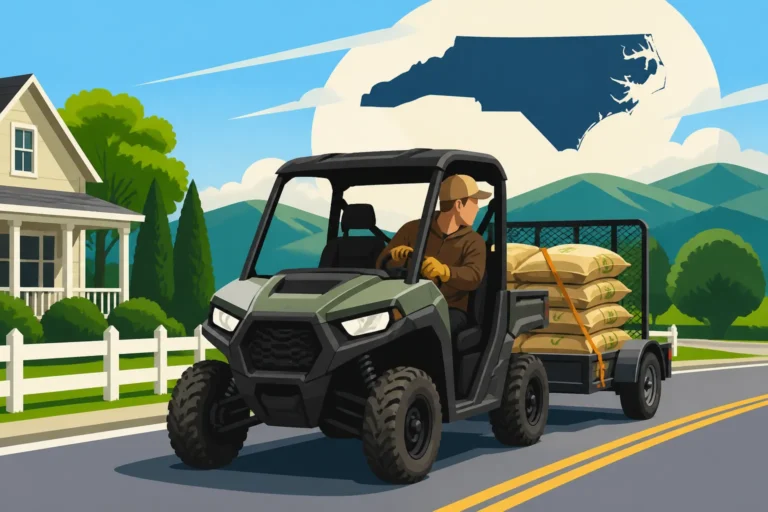
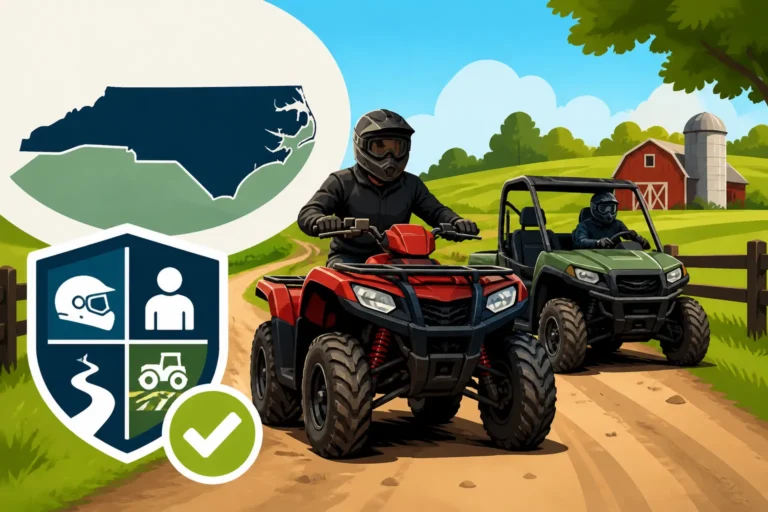
First, there's the "farming operations" exception. If you're genuinely engaged in agricultural work, you might be allowed to operate your ATV or UTV on public roads for short distances. This isn't for pleasure riding; it's strictly for farm-related business. Imagine needing to move from one field to another across a small rural road in eastern North Carolina, or checking fence lines that abut a public lane. The machine must be operated in connection with farming, and the travel must be incidental to that purpose. You can't just throw a bucket in the back of your UTV and claim you're "farming" while cruising to the diner. For more details on this, check out [North Carolina's Farming Operations Exception].
The second exception is for simply crossing a road. This is often necessary to connect two sections of a trail or to access private property. When crossing, you must do so as directly and safely as possible, yielding to all vehicular traffic, and only when safe to do so. You're not allowed to ride along the road, just straight across. This is a very brief maneuver, not an extended stretch of travel. Picture crossing a two-lane road to get to a different section of a logging road. You stop, look both ways, and go straight across. This is a fundamental skill for any rider who uses trails that are bisected by public roads. Understanding the nuances of this can save you a lot of trouble, and you can learn more by reading [Crossing a Road on an ATV in North Carolina].
The Modified Utility Vehicle (MUV) Route: A Niche Exception
For those UTV owners who truly aspire to some form of street legality, North Carolina offers a highly specific pathway: the Modified Utility Vehicle (MUV). But let me tell you, this isn't an easy route, and it doesn't apply to ATVs. MUVs are a category designed for UTVs that can be legally registered and operated on specific public roads. However, the requirements are incredibly strict, turning your average side-by-side into something closer to a purpose-built, low-speed vehicle.
To qualify as an MUV, a machine needs to meet very particular specifications for engine size, dimensions, and safety equipment. For instance, the engine must be more than 2,400cc, a significant jump for many stock UTVs. The machine must be at least 142 inches long, no more than 58 inches wide, and no more than 70 inches high. On top of that, it needs to be capable of at least 40 mph and must be fitted with specific equipment like headlamps, taillamps, turn signals, a speedometer, mirrors, and seatbelts. It also needs a VIN assigned by the North Carolina DMV if it doesn't already have one that's recognized. Most UTVs, even factory two-seaters, won't meet these criteria without extensive, often custom, modifications. It's truly a niche category. If you're considering this, understanding [North Carolina's Modified Utility Vehicle Route] is essential, as is knowing [What Makes a Machine an MUV in North Carolina] to even begin the process. If you're serious about the MUV path, you'll be looking at aftermarket parts from companies like SuperATV for things like turn signals, mirrors, or lighting, but remember, just having the parts isn't enough; they need to meet all the state's very specific legal requirements and be inspected by the DMV.
Navigating Unexpected Hazards: What Washed-Out Gravel Means for Riders
Even when you're operating legally on a road, whether it's crossing a county road for a farm task or driving a fully registered MUV, you still have to contend with the unpredictable nature of the road itself. Mountainous regions like Pisgah are particularly susceptible to environmental factors, and an unexpected patch of gravel can turn a routine ride into a hairy situation in a heartbeat.
The Dangers of Gravel on Paved Surfaces
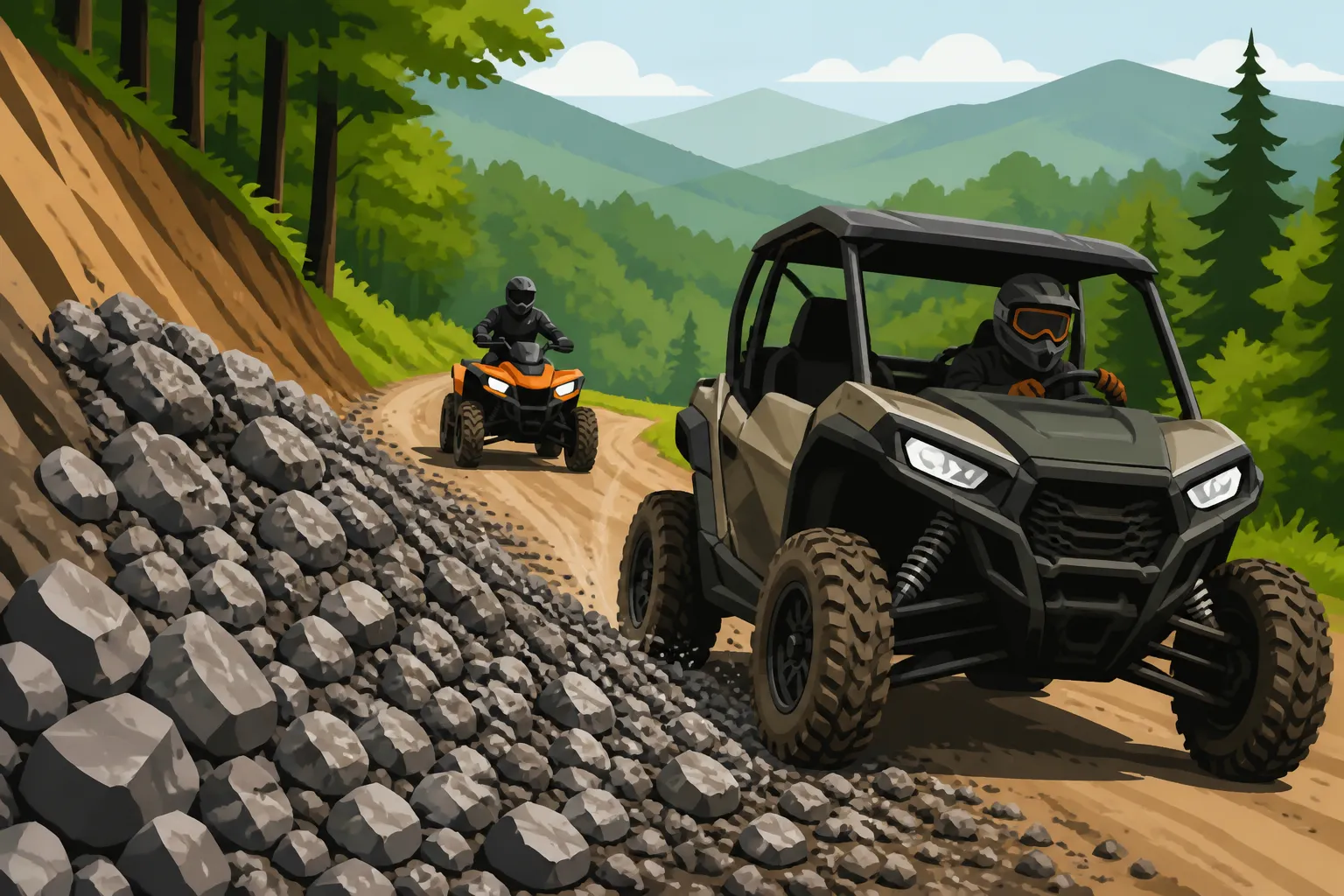
Gravel washed onto a paved road, like what you might encounter after a heavy rainstorm on a Pisgah road, poses a significant risk to any vehicle, but especially to ATVs and UTVs. These machines, with their knobby tires designed for grip on soft terrain, don't always have the best traction on hard, loose surfaces. Gravel acts like ball bearings under your tires, drastically reducing your grip for steering, braking, and accelerating.
For ATVs, which require active rider input for balance, hitting a gravel patch unexpectedly can easily lead to a loss of control, a slide, or even a rollover. UTVs, while more stable, can still slide unpredictably, especially if cornering or braking suddenly. In an area like Pisgah, where roads can be winding and elevations change rapidly, this danger is amplified. Imagine coming around a blind curve on a downhill stretch only to find a fresh layer of gravel covering the pavement. Your reaction time and machine's response are critical. This kind of hazard is why checking [North Carolina Trail Conditions Before You Ride] is so important, as sometimes these conditions can extend to connecting roads as well.
Legal Implications When Encountering Road Hazards
Encountering a road hazard like washed-out gravel doesn't change the legal framework of operating your ATV or UTV on a public road. If you're there illegally, you're still illegally there, and any incident will be compounded by that fact. If you're operating under an exception (farm use, crossing) or with an MUV registration, you're still responsible for operating your machine safely and prudently.
Should an accident occur due to gravel, you would still be held to the standard of a reasonable and prudent operator. This means slowing down, exercising extreme caution, and being aware of your surroundings. If you're riding an MUV, your liability insurance, which is a mandatory part of MUV registration, becomes critically important. [Insurance a Registered MUV Carries] covers you in case of an accident on a public road, which is a significant peace of mind that untaxed, unregistered machines do not have. Without it, you could face immense personal liability. If you're ticketed for an ATV violation in North Carolina, the fines can be substantial, making it clear that the state takes these rules seriously. Knowing [North Carolina Fines for an ATV Violation] can certainly encourage careful compliance.
Best Practices for ATV/UTV Riders on or Near Roads
The key to dealing with unexpected road hazards, especially for us off-road enthusiasts, is defensive riding and preparation.
Expect the Unexpected: In areas prone to erosion and heavy weather, like the mountains of Western North Carolina, always assume that conditions can change rapidly. This means being vigilant for mud, rocks, and, yes, gravel, even on paved surfaces. Slow your speed significantly when approaching blind curves, cresting hills, or when visibility is poor, such as when riding a [Blue Ridge Forest Road in Fog].
Pre-Ride Checks and Awareness: Before you even head out, check the local weather forecast. Heavy rains from the previous day can absolutely mean washouts. If you're planning a trip that involves road crossings or MUV travel, a quick call to a local ranger station or checking online community forums for road condition reports can make a huge difference.
Maneuvering Through Hazards: If you do encounter a significant patch of gravel:
- Slow Down Gradually: Avoid sudden braking, which can cause a skid.
- Maintain a Straight Line: Try not to make sudden steering inputs.
- Look Far Ahead: Spot the clear patches and aim for them.
- Feather the Throttle: Gentle, consistent throttle can sometimes maintain stability better than coasting, but be extremely careful.
- If It's Too Much: There are times when it might be safer to stop, assess the situation, and even dismount to walk your machine across a particularly bad patch, if safe to do so. Your safety is paramount.
Equipment, Preparation, and Staying Safe on North Carolina Roads
Being prepared isn't just about having gas in the tank; it's about having the right gear, the right mindset, and the right knowledge. This is especially true when your off-road machine touches any public road surface in North Carolina.
Essential Safety Gear for Road Sections
While a helmet and eye protection are non-negotiable for riding off-road in North Carolina for anyone under 18, and highly recommended for adults, their importance skyrockets the moment you hit pavement. For MUVs, specific requirements apply, including seatbelts and working lights. Even for a quick road crossing on an ATV, a Department of Transportation (DOT) approved helmet and appropriate eye protection can be life-savers, greatly reducing the risk of serious injury. [Helmet and Eye Protection Rules in North Carolina] are clear on this.
Moreover, your machine's equipment matters. For MUVs, you need operational headlamps, taillamps, turn signals, mirrors, and a speedometer to even be considered legal. These aren't just accessories; they are critical safety components for road use. For standard ATVs and UTVs making a legal road crossing, ensure your brakes are in perfect working order and that any lights you do have are functional, especially if visibility is low. [What is Illegal on an ATV in North Carolina] details the consequences of not adhering to safety and equipment rules.
Pre-Ride Planning and Local Knowledge
Never underestimate the power of good planning. Before any ride, particularly one that might involve traversing public roads, consult maps, check weather reports, and understand the terrain. In national forests like Pisgah, the Forest Service often provides alerts about road closures, trail conditions, or potential hazards. Local knowledge, gleaned from fellow riders or residents, can also be invaluable. They might know about specific areas prone to washouts or recent storm damage that haven't been officially posted.
Thinking ahead about your route and potential alternative paths can save you from having to make a dangerous decision on the fly. If you're going to be riding near public roads, having a contingency plan for unexpected conditions is just smart riding.
What to Do if You Spot Significant Road Damage
If you encounter significant road damage, beyond just a few loose pebbles, it's not just about your safety but the safety of others.
Report the Hazard: If you see large washouts, downed trees, or other significant dangers on a public road, report it to the appropriate authority. For state-maintained roads, this would be the North Carolina Department of Transportation (NCDOT). If it's a forest road, contact the local Ranger District of the U.S. Forest Service. Providing clear, specific details about the location is crucial.
Warn Other Riders: If possible and safe, warn other riders or drivers you encounter about the hazard. A simple hand signal or verbal alert can prevent an accident.
Here's a quick summary of the North Carolina rules for ATVs/MUVs on roads:
| Feature | ATV (General Use) | MUV (Modified Utility Vehicle) |
|---|---|---|
| Street Legal? | No | Yes (with conditions) |
| Road Crossing? | Yes, direct & safe | Yes |
| Farm Operations? | Yes, specific tasks | Yes |
| Engine Size | No specific limit | >2,400cc |
| Dimensions | No specific limit | Length >142", Width <58", Height <70" |
| Minimum Speed | N/A | >40 mph |
| Required Equipment | None for road (off-road) | Headlamps, Taillamps, Turn Signals, Speedometer, Mirrors, Seatbelts |
| Registration/Title | Optional title | Mandatory title & registration |
| Insurance | Optional | Mandatory |
| Helmet/Eye Protection | Recommended (mandatory <18) | Recommended (seatbelt is primary) |
| Typical Use Case | Trails, private land | Limited public roads, farm use |
This article is for general informational purposes only and does not constitute professional advice. Laws, prices and regulations vary by location and change over time. Consult a qualified professional for guidance on your specific situation.