The Manufacturer’s Age Warning Label in North Carolina
Navigating the world of ATVs and UTVs in North Carolina can feel like untangling a ball of yarn, especially when it comes to the rules for younger riders. One of the most common points of confusion, and frankly, frustration, often revolves around age restrictions. It’s not just about how old a child is, but specifically how the manufacturer’s age warning label on the machine itself carries surprising legal weight in the Tar Heel State, impacting everything from casual trail rides to those limited instances where machines might touch a public road. This guide is here to shed light on exactly what those labels mean, how North Carolina law interprets them, and what that means for your family's riding adventures, even when you're just looking to cross a quiet county lane.
Decoding the Manufacturer's Age Warning Label
Before we dive into the specifics of North Carolina law, let's talk about what those often-overlooked stickers on your ATV or UTV actually signify. You've seen them, probably skimmed past them, but in North Carolina, they're more than just suggestions; they're codified safety guidelines that carry legal authority.
What Those Stickers Actually Mean
When you purchase an ATV or UTV, especially a new one, you'll find various warning labels plastered on the fenders, handlebars, and sometimes even the seat. Among these, there's almost always a prominent sticker detailing the minimum recommended age for operation. These aren't arbitrary numbers plucked from thin air; they're the result of extensive testing, safety standards, and industry agreements designed to match a machine's characteristics to a rider's physical and cognitive development.
For ATVs, you'll commonly see categories like "For Riders 6 and Older," "For Riders 10 and Older," "For Riders 12 and Older," and the ubiquitous "For Riders 16 and Older." UTVs, due to their larger size, passenger capacity, and often higher speeds, almost universally carry a "For Riders 16 and Older" or "Adult Only" recommendation for the driver. These recommendations are based on factors such as engine displacement, machine weight, top speed, suspension travel, and overall handling stability. A smaller, lighter machine with a governed top speed is deemed suitable for a younger, less experienced rider, while a powerful 4×4 with a manual transmission is rightfully reserved for someone with the maturity and physical capability to control it safely. It's crucial to understand that at this stage, these labels represent the manufacturer's best assessment of safety and suitability, often influenced by groups like the Specialty Vehicle Institute of America (SVIA) or the Recreational Off-Highway Vehicle Association (ROHVA).
Why Manufacturers Put Them There
Manufacturers don't just put these labels on their machines out of the goodness of their hearts, though safety is undoubtedly a primary concern. There's a strong component of product liability and adherence to established safety standards at play. Historically, the ATV industry faced significant scrutiny regarding youth rider safety, leading to consent decrees and industry-wide agreements in the late 1980s. These agreements, often spearheaded by the U.S. Consumer Product Safety Commission (CPSC), established the core guidelines for ATV design and marketing, including the age recommendations that we still see on warning labels today.
The idea is to mitigate the risk of injury or fatality by ensuring that riders operate machines appropriate for their age, size, and experience level. A child simply doesn't have the strength, coordination, or judgment to react appropriately to hazards on a machine designed for an adult. Imagine a young rider on a powerful utility ATV trying to navigate a tricky trail or avoid an unexpected obstacle; the consequences can be severe. These labels serve as a stark reminder to consumers about the intended use and limitations of the product, helping to shield manufacturers from liability when these recommendations are disregarded. It’s a proactive step to promote safe riding habits right from the point of sale.
How North Carolina Law Elevates the Warning Label
Here's where things get really interesting and where North Carolina sets itself apart from many other states. While manufacturer warning labels are advisory in many places, in the Tar Heel State, they’ve been woven directly into the fabric of the law, giving them an unexpected and significant legal bite.
The Unexpected Legal Weight of a Sticker
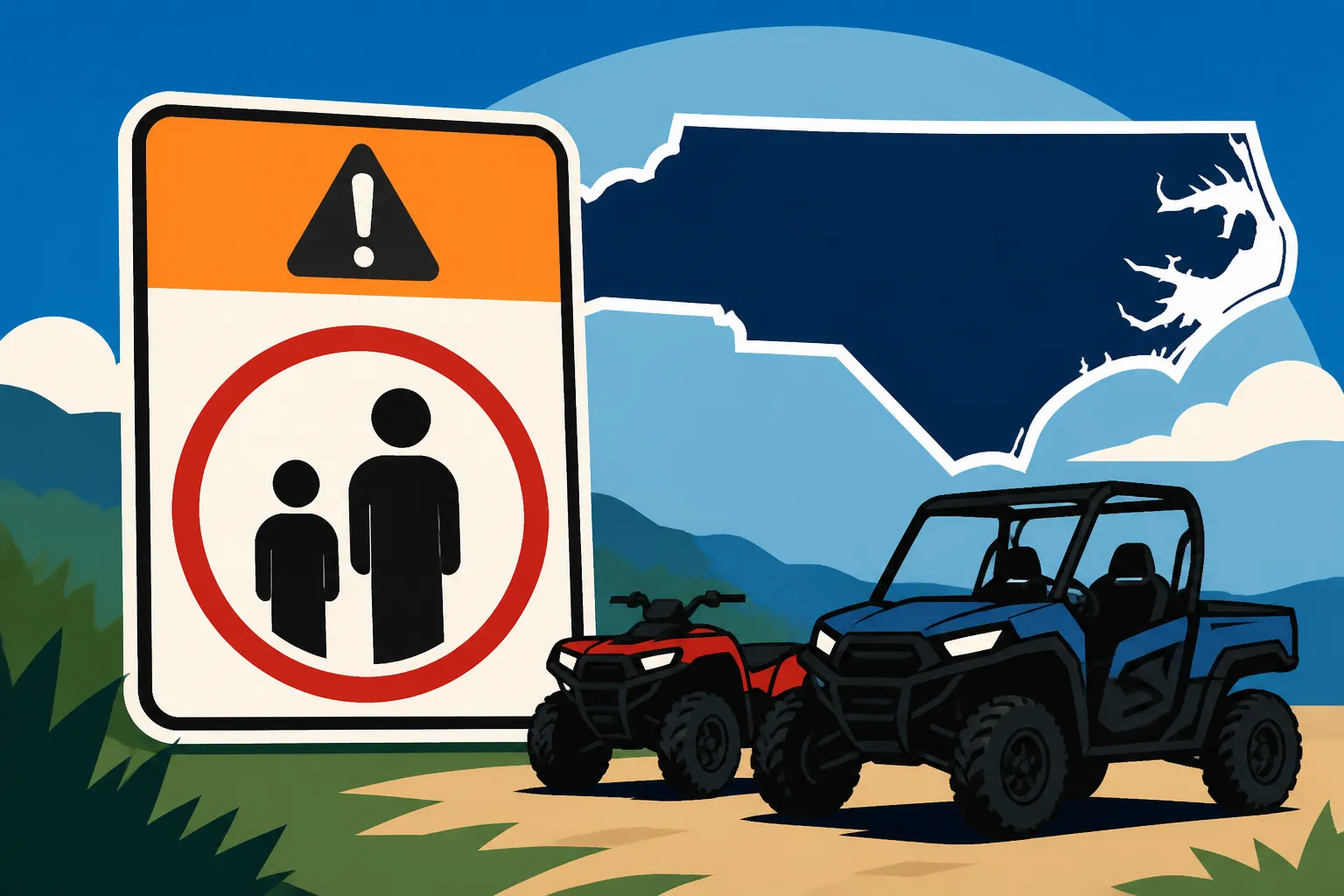
It might sound strange, but in North Carolina, that small sticker on your ATV or UTV is more than just a suggestion from the company that built it. The state's general statutes specifically incorporate the manufacturer's age recommendations into the law, making them legally binding for riders under the age of 16. This means that if a manufacturer states a machine is "For Riders 16 and Older," allowing a 15-year-old to operate it in North Carolina is a violation of state law. This is a critical distinction and often catches people by surprise. Unlike some other states that might set a blanket age (e.g., "no one under 12 on any ATV"), North Carolina defers to the specific machine's design and the manufacturer's expert assessment as displayed on the label.
This legal framework means that what might seem like an innocent choice – letting your adventurous 14-year-old ride a 450cc ATV – becomes a violation of the law in North Carolina because that machine almost certainly carries a "16+" warning. This applies whether you're on your own private property, a designated [Where to Ride an ATV in North Carolina], or even just briefly crossing a road as permitted by law. The intent here is clear: to ensure the safety of young riders by aligning legal requirements with the machine's inherent capabilities and risks. It's not about stifling fun, but preventing accidents by ensuring children aren't on machines too powerful or complex for them to handle. You can read more about [What North Carolina Law Says About a Rider's Age] for further details.
Consequences of Ignoring the Label for Minors
The implications of ignoring these age warning labels, particularly for minors, can be quite serious. For starters, parents or guardians who permit a child under 16 to operate a machine that is clearly labeled for an older age group can face citations and fines. This isn't just a slap on the wrist; these are legal infractions that carry financial penalties. Imagine a local law enforcement officer, perhaps a county sheriff's deputy or a wildlife resources commission officer, observing a 13-year-old on a full-size side-by-side that's clearly marked "16+." They have every right to intervene and issue a citation.
Beyond the immediate fines, there's a significant liability aspect. If an accident occurs while a minor is riding a machine in violation of the manufacturer's age warning label, the owner or supervising adult could be held legally responsible for any injuries or damages. This could lead to substantial medical bills, property repair costs, and even lawsuits. Insurance companies might also deny coverage for incidents involving an illegal operation, leaving you fully exposed financially. While there was once a [The 70cc Engine Rule That No Longer Exists], the current law tying directly to the manufacturer's label ensures that the responsibility rests heavily on the adults to ensure compliance. It's a powerful incentive to take those warning labels seriously, not just for legal reasons, but for the fundamental safety of the child.
Practical Implications for North Carolina Riders and Parents
Understanding the legal weight of age labels in North Carolina is one thing; putting that understanding into practice for everyday riding is another. For parents and guardians, this rule requires thoughtful consideration when choosing machines and supervising young riders.
Choosing the Right Machine for Young Riders
Given North Carolina's strict adherence to manufacturer age labels, the first and most critical step for parents is to select an ATV or UTV that is genuinely appropriate for their child's age, size, and experience. This isn't just about what they can physically manage, but what the manufacturer recommends and, by extension, what the law dictates. You might see a great deal on a used 300cc quad, but if your child is 12 and that machine has a "16+" label, it's a non-starter in North Carolina.
The market offers a wide array of youth-specific models designed for different age brackets, often from brands like Polaris, Can-Am, and Honda. These machines are engineered with lower power outputs, smaller frames, and safety features like throttle limiters to ensure a safer riding experience. While it might be tempting to buy a larger machine that a child can "grow into," this is precisely what the manufacturer's warning labels – and North Carolina law – aim to prevent. An oversized or overpowered machine can quickly become uncontrollable for a young rider, leading to accidents that could have been avoided. Always check the specific age recommendation on the machine's label before making a purchase or allowing a child to ride. This proactive approach is a cornerstone of responsible off-road vehicle ownership in North Carolina, especially when considering [North Carolina Rules for Riders Under 16].
Supervision and the Age Label
Many parents believe that as long as they are present and providing "continuous visual supervision," they can override the manufacturer's age recommendations. While [Continuous Visual Supervision Under North Carolina Law] is indeed a requirement for riders under 16, it's crucial to understand that supervision does not negate the manufacturer's age label rule. In North Carolina, even if you are standing right beside your child, watching their every move, it is still illegal for them to operate an ATV or UTV that is explicitly labeled for an older age group.
For example, if a machine has a "For Riders 16 and Older" sticker, and your 14-year-old is operating it, you are in violation of North Carolina law, regardless of how closely you are supervising. The law doesn't provide an "adult supervision" loophole for the age label requirement. The legislative intent here is to add an extra layer of protection, recognizing that even the most attentive supervision cannot compensate for a machine that is fundamentally too large, too powerful, or too complex for a child's developmental stage. While safety training, such as an ATV Safety Institute (ASI) course, is highly recommended for all riders, especially youth, it too does not supersede the legal weight of the manufacturer's age label in North Carolina. This rule acts as a strict, non-negotiable baseline for youth rider safety in the state.
Age Labels and Street Legal Considerations in North Carolina
The conversation around ATVs and UTVs often leads to questions about street legality and road use. While North Carolina is quite restrictive in this regard, it's vital to understand how the manufacturer's age warning label still plays a significant, unyielding role, even in the limited scenarios where these machines might encounter public roads.
The Interplay with Road Crossings and Farm Use
North Carolina is not a state that embraces "street legal" ATVs or most UTVs for general road use. However, there are very specific, limited exceptions, such as brief road crossings and operation for bona fide farming operations. These exceptions are often a lifeline for property owners and agricultural workers who need to move their machines from one field to another or access different parts of their property. But here's the critical point: these exceptions do not override the manufacturer's age warning label rule.
Let's imagine a scenario: you own a large farm in rural North Carolina, and your 15-year-old son regularly helps with chores. He's a skilled rider, and you've allowed him to operate your utility UTV – perhaps a powerful machine with all the bells and whistles from SuperATV, complete with a winch and upgraded suspension – to haul feed or fencing materials across county roads that divide your property. If that UTV has a "16 and Older" or "Adult Only" warning label, your son is operating it illegally on that road, even though the purpose of his travel (farm use) would otherwise be permitted. The moment he's on that public road, or even just crossing it, the age label rule is still in effect. [North Carolina Rules for Crossing a Road] are specific, but they don't grant an age exemption. Similarly, the [North Carolina Farming Exception for ATVs] allows certain activities but doesn't lower the age requirement linked to the machine's warning label. It's a nuanced but absolutely critical distinction that many riders overlook, leading to potential legal trouble for both the rider and the supervising adult.
Modified Utility Vehicles MUVs and Age
When people talk about "street legal" off-road machines in North Carolina, they're almost always referring to a Modified Utility Vehicle, or MUV. This is a very specific class of vehicle that some UTVs can be registered as, provided they meet a long list of dimension, engine, and safety equipment requirements (like turn signals, a speedometer, and a parking brake). This is the only pathway for something resembling an ATV or UTV to gain street-legal status in North Carolina for general road use.
However, even if you manage to jump through all the hoops to register your UTV as an MUV, the manufacturer's age warning label still holds sway, particularly for drivers under 16. Most UTVs that qualify as MUVs are full-sized, powerful machines designed for adult operation, and will carry a "16 and Older" or "Adult Only" label. Therefore, even if you have a perfectly legal, registered MUV, you cannot allow a driver under 16 to operate it on public roads if the manufacturer's label prohibits it. The MUV registration process facilitates road use for the machine, but it doesn't magically alter the age recommendations for the rider. This means a teenager who might be allowed to drive a standard passenger car at 16, would still be restricted from driving a street-legal MUV if the manufacturer's label dictates "adult only" or 16+ and they haven't met that age. This is where understanding [North Carolina's Modified Utility Vehicle Route] is crucial, as it comes with its own set of responsibilities, including adherence to existing age-of-operator laws.
Why This Rule Matters Beyond the Off-Road Trail
The manufacturer's age warning label rule isn't just about avoiding a ticket on a remote trail. Its implications stretch into vital areas like insurance coverage, legal liability, and the overall safety culture of off-road riding in North Carolina.
Insurance, Liability, and Legal Ramifications
Consider this: an accident occurs on your property involving a minor operating an ATV or UTV in violation of its manufacturer's age warning label. Even if no public road was involved, the fact that the machine was being operated illegally under North Carolina law can have catastrophic consequences for your insurance coverage and personal liability. Many insurance policies for recreational vehicles contain clauses that may void coverage if the machine is being operated in violation of state law or manufacturer guidelines. This means that instead of your insurance company covering medical expenses, property damage, or legal defense costs, you could be left to shoulder all of those burdens out of pocket.
The legal ramifications can be severe. If the accident results in serious injury, the parents of the injured child (or the injured child themselves, once they reach adulthood) could sue the machine's owner or the supervising adult for negligence. The violation of a state statute – in this case, the one incorporating the manufacturer's age label – can be used as strong evidence of negligence in court. This elevates a seemingly minor infraction into a major legal and financial headache, far beyond the initial fines for an [North Carolina Fines for an ATV Violation]. The state takes the safety of young riders very seriously, and these laws are designed to minimize risks, protect minors, and place clear responsibility on adults.
Staying Compliant and Safe
Staying compliant with North Carolina's laws regarding manufacturer age warning labels boils down to awareness and responsible decision-making. Before allowing any minor to operate an ATV or UTV, always locate and read the age warning label on the specific machine. If you're unsure, or if the label is missing, err on the side of caution and assume a "16 and Older" or "Adult Only" restriction. It's far better to be conservative with safety than to risk a child's well-being or face legal repercussions.
Educating young riders about the importance of safety, the limitations of their machines, and the rules of the road (even for brief crossings) is also paramount. While they might not grasp the nuances of state statutes, they can understand that certain machines are for older, more experienced operators. For those seeking to ride on North Carolina's public lands, it's also worth remembering that other safety requirements, such as [North Carolina Helmet Law for ATV Riders] for those under 18, also apply.
The North Carolina rule about manufacturer age warning labels for ATVs and UTVs serves as a crucial reminder that safety regulations are rarely arbitrary. They are often born from hard-won experience and are designed to prevent injuries and save lives. By understanding and respecting these labels, we can ensure that our riding adventures remain enjoyable and safe for everyone, especially the youngest generation of enthusiasts.
| Age Label Requirement | North Carolina Legal Status | Implications for Minors (Under 16) | Examples of Machines |
|---|---|---|---|
| 6+ | Legally Binding | Permitted only on 6+ machines. | Youth 50-70cc ATVs |
| 10+ | Legally Binding | Permitted only on 10+ machines. | Youth 90cc ATVs |
| 12+ | Legally Binding | Permitted only on 12+ machines. | Youth 125-150cc ATVs |
| 16+ | Legally Binding | Not permitted to operate. | Adult ATVs, most UTVs, MUVs |
| Adult Only | Legally Binding | Not permitted to operate. | High-power UTVs, specific ATVs |
This article is for general informational purposes only and does not constitute professional advice. Laws, prices and regulations vary by location and change over time. Consult a qualified professional for guidance on your specific situation.