Getting Stopped While Towing a Quad on a Trailer
There’s nothing quite like the open road when you’re headed to your favorite North Carolina trail system, quad in tow, the promise of adventure hanging in the air. But that serene feeling can vanish in an instant when you see those flashing blue lights in your rearview mirror. It's a stomach-dropping moment for any driver, especially when you're just trying to get your beloved ATV or UTV to where it belongs. This guide is here to unravel the mystery of why you might get pulled over while trailering your off-road machine in the Tar Heel State, equipping you with the knowledge to ensure your setup is rock-solid and compliant, so you can focus on the ride ahead, not the roadside stop.
Ensuring Your Trailer and Tow Vehicle Are Road-Ready in North Carolina
When you're towing an ATV or UTV, the entire setup – from the trailer itself to the vehicle pulling it – becomes a single unit in the eyes of the law. This means that every component needs to be in tip-top shape and fully compliant with North Carolina's vehicle codes. Overlooking even a small detail on your trailer can lead to an unexpected stop and a conversation with law enforcement that puts a damper on your trail day. It’s not just about avoiding a ticket; it’s about safety for everyone on the road.
Proper Lighting and Reflectors
One of the absolute most common reasons for a roadside stop involving a trailer is lighting. Think about it: your trailer extends the length of your vehicle, and its presence needs to be clearly communicated to other drivers, especially at dusk, dawn, or in inclement weather. North Carolina law is pretty specific about what needs to be lit up. This includes brake lights that illuminate when you hit the pedal, turn signals that flash in sync with your tow vehicle, and taillights that stay on with your headlights. You also need side marker lights and reflectors along the length of the trailer, as well as identification lights if your trailer is wide enough.
Imagine you’re cruising down US-1 towards the Uwharrie National Forest, focused on getting to the trailhead. A bulb on your trailer’s right taillight could be out, or maybe a wire got pinched and is causing an intermittent issue. You might not even know it, but the driver behind you, or worse, a patrolling officer, certainly will. This isn't just a minor infraction; faulty lighting can be genuinely dangerous, as it makes it hard for other drivers to judge your intentions or distance, leading to potential accidents. Before every trip, do a walk-around: turn on your lights, hit the brakes, and activate your turn signals to confirm everything is working as it should. If you've got older lights or you're upgrading your trailer, quality aftermarket LED lights from a place like SuperATV can make a huge difference in visibility and durability, often being brighter and less prone to vibration-induced failure than traditional incandescent bulbs.
Secure Hitch and Safety Chains
Your hitch connection is literally the lifeline between your tow vehicle and your trailer. A failure here is catastrophic. North Carolina law requires that your trailer be securely attached to your tow vehicle, which includes not only a properly rated hitch and ball but also safety chains. These chains are your last line of defense should the primary hitch connection fail. They should be crossed under the tongue of the trailer, creating a cradle, and securely attached to the tow vehicle's frame or hitch. This crisscross prevents the trailer tongue from dropping to the pavement and digging in, helping to maintain some control.
We've all seen a trailer bouncing a bit too much over a pothole or a rough section of I-40. If your hitch pin isn't clipped, or if the ball nut is loose, or if the ball itself is undersized for the coupler, you’re asking for trouble. Before you even pull out of your driveway, double-check that your coupler is fully engaged and latched onto the hitch ball, and that the safety pin or clip is in place. Then, make sure your safety chains are properly crossed and secured. Don't forget the breakaway cable for trailers with electric brakes – this cable should be attached to your tow vehicle, separate from the chains, so that if the trailer disconnects, the brakes will automatically engage. A quick, firm tug on your hitch to make sure it's snug is always a smart move before you hit the road.
Tire Condition and Pressure
The tires on your trailer are just as important as the ones on your tow vehicle, yet they often get overlooked. Underinflated or excessively worn trailer tires are a common cause of sway, blowouts, and, you guessed it, roadside stops. Trailer tires carry a heavy load, and they're often sitting for extended periods between uses, which can lead to dry rot and flat spots. North Carolina authorities are keen on safety, and bald or obviously damaged tires are a red flag for a traffic stop.
Before each trip, take a moment to visually inspect all tires on your trailer. Look for any bulges, cracks, or excessively worn tread. Then, grab your tire pressure gauge. Trailer tires often require higher inflation pressures than passenger car tires, and these specifications are usually printed on the tire's sidewall or on a sticker on the trailer frame. Maintaining proper tire pressure is crucial for stable towing, preventing excessive heat buildup (a common cause of blowouts), and ensuring even wear. Imagine getting a flat on US-321 in the mountains while trying to get to Wayehutta OHV – not only is it a hassle, but it can be dangerous. Proper tire maintenance can prevent such headaches and keep you moving safely down the road.
Securing Your ATV or UTV Properly for Transport
Once your trailer is in road-ready condition, the next critical step is making sure the quad itself is secured. An improperly secured ATV or UTV can shift, bounce, or even break free during transit, creating an incredibly hazardous situation for you and everyone else on the road. Law enforcement officers are highly trained to spot these dangers, and they won't hesitate to pull you over to address a potential catastrophe.
Strapping Down Your Machine
This is probably the single most crucial aspect of safely trailering your ATV or UTV. Your machine needs to be cinched down securely at multiple points to prevent any movement. Don't just rely on a couple of straps over the seat! You should use heavy-duty ratchet straps attached to the frame or a sturdy, designated tie-down point on your ATV/UTV, and then secured to the trailer frame. The goal is to compress the suspension slightly, so the machine isn't bouncing around on its own springs. Ideally, you want at least four tie-down points – one at each corner – pulling down and slightly outward to create tension. For extra security, many riders will also use an additional strap across the front and/or rear to prevent forward or backward movement.
Think about the unexpected maneuvers you might encounter on North Carolina's roads – a sudden stop on I-85, a sharp turn on a rural highway near Badin Lake, or even just hitting a rough patch of pavement. If your machine isn't properly secured, it can shift, causing the trailer to sway violently and potentially leading to a loss of control. I've heard too many stories of machines trying to "walk" off trailers. Companies like SuperATV offer a range of robust tie-down straps and wheel nets specifically designed for powersports vehicles, which can make a huge difference compared to flimsy, cheap straps that fray or break under tension. Invest in good quality straps, and always double-check them before you leave and again after the first 15-20 miles of your journey.
Avoiding Overhang and Weight Distribution Issues
How you load your ATV or UTV onto the trailer dramatically impacts towing stability. Weight distribution is key. Generally, you want about 10-15% of your total trailer weight (including the machine) to be on the tongue of the hitch. Too much weight in the rear can cause the trailer to sway uncontrollably, a terrifying experience that can quickly lead to an accident. Too much weight in the front can overload your tow vehicle's rear suspension and significantly reduce steering control and braking effectiveness. Also, be mindful of overhang. Your ATV should fit comfortably within the dimensions of the trailer. While it's rare for an ATV to stick out excessively, if your machine extends too far beyond the sides or rear of your trailer, it can become a visibility hazard for other drivers and may even require special flags or lighting, depending on the extent of the overhang and local regulations.
Picture this: you're heading down a twisty mountain road towards Brown Mountain OHV Trail System, and your trailer starts to feel squirrelly. That's often a sign of poor weight distribution. Load your machine so the bulk of its weight is slightly forward of the trailer's axle(s). If you have multiple machines, distribute them evenly. If you're towing a longer UTV, ensure it sits as squarely as possible on the trailer bed. This proper distribution, combined with appropriate tire pressure, will make for a much smoother and safer towing experience. A North Carolina Highway Patrol trooper can easily spot a trailer that's swaying or handling poorly, and they will almost certainly investigate.
Covering Your Machine Optional but Smart
While not a legal requirement in North Carolina, covering your ATV or UTV can be a smart move, both for protecting your machine and potentially avoiding a stop. A cover prevents road grime, dust, and debris from coating your machine during transit. More importantly, it can keep loose items on your ATV – like a spare helmet, a cooler, or gear in a cargo net – from flying off the machine and onto the roadway, creating a hazard. A flying object from your trailer is a serious offense and can lead to fines, especially if it causes damage or an accident.
Think about a long haul on a major highway. Rocks and debris from other vehicles can chip paint, damage plastics, or even crack a windshield on your UTV. A good cover protects your investment. Additionally, a covered machine often looks tidier and more secure to a passing officer. It gives the impression that you're a responsible owner who takes care of their equipment and prioritizes safety. While it won't prevent a stop for faulty lights or an unsecured hitch, it can contribute to an overall impression of compliance and care. Plus, who wants to arrive at the [Badin Lake OHV Trail Complex] with a machine already caked in road grime before you've even hit the dirt?
Understanding North Carolina's Towing Laws
Beyond the physical condition of your trailer and how you've secured your ATV, there are also legal requirements to consider when towing in North Carolina. Ignorance of the law is never a valid excuse, and a traffic stop can quickly escalate if you're not prepared with the correct documentation or if your setup violates specific regulations.
Trailer Registration and Inspection Rules
This is a common point of confusion. Many off-road riders know that [Why North Carolina Has No ATV Registration] for the machine itself. However, the trailer you're using to haul it is a different story. In North Carolina, any trailer used on public roads, regardless of what it's carrying, generally needs to be registered with the North Carolina Division of Motor Vehicles (NCDMV). This means it needs a valid license plate and a current registration sticker. While smaller utility trailers might have some exemptions based on weight, most ATV trailers fall under standard registration rules.
So, while you don't need to register your ATV to ride it on private land or designated trails, you absolutely need to make sure your trailer's paperwork is in order for legal road travel. If you're pulled over and your trailer isn't registered, you'll be facing a citation. This is separate from any requirements for your ATV itself, such as applying for a [North Carolina ATV Title Application on Form MVR-1] if you choose to title it for proof of ownership, or the associated [North Carolina ATV Highway Use Tax] that applies to titled machines. Always carry your trailer's registration card in your tow vehicle, ready to present if asked by an officer.
Driver's License and Endorsements
For most recreational ATV and UTV towing with a standard pickup truck or SUV and a single-axle or smaller tandem-axle utility trailer, a regular Class C driver's license is sufficient in North Carolina. However, it’s important to be aware that once you start getting into heavier trailers or larger, commercial-style setups, you might require a Commercial Driver's License (CDL) with specific endorsements, such as an air brake endorsement or a combination vehicle endorsement. The exact requirements depend on the Gross Vehicle Weight Rating (GVWR) of your tow vehicle and trailer combination.
While most casual ATV riders won't hit these thresholds, it's always wise to know the limits. If you're towing a very large enclosed trailer with multiple UTVs, or if you're using a heavy-duty truck, quickly check the NCDMV's guidelines. An officer who pulls you over for a light out on your trailer might also take the opportunity to verify your license class, especially if your rig looks substantial. Ensuring you have the correct license for the load you're hauling is fundamental to safe and legal operation.
Insurance and Liability Considerations
While your ATV itself might not require liability insurance for off-road use (though it's highly recommended!), your tow vehicle certainly does, and its liability coverage typically extends to any attached trailer. However, what about damage to your ATV or UTV while it's being towed? This is where many riders get caught out. Your standard auto insurance policy often does not cover damage to personal property (like your ATV) that you are transporting. You might need a separate rider on your auto policy, or even a dedicated ATV/UTV insurance policy, to cover theft, damage during transport, or collision.
Imagine you're driving through a fierce North Carolina summer storm, perhaps on your way back from a weekend ride in the Pisgah National Forest, and another vehicle hydroplanes and hits your trailer, damaging your expensive UTV. If you don't have the right coverage, you could be out of luck. An officer might not directly ask for proof of ATV insurance during a routine stop for a trailer issue, but if an accident occurs, lack of proper coverage for your machine can add significant financial burden to an already stressful situation. It's always best to be prepared and understand your policy limits for all your vehicles, including the ones being towed.
What to Do If You Get Pulled Over
Despite your best efforts to ensure everything is compliant and secure, sometimes you might still find yourself getting pulled over. Perhaps it's a random check, or maybe an issue developed unexpectedly. Knowing how to react calmly and respectfully can make a big difference in how the interaction proceeds.
Staying Calm and Being Prepared
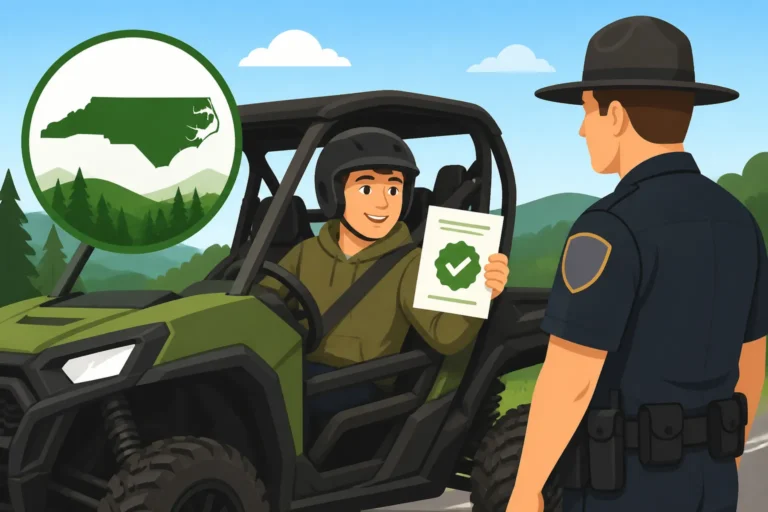
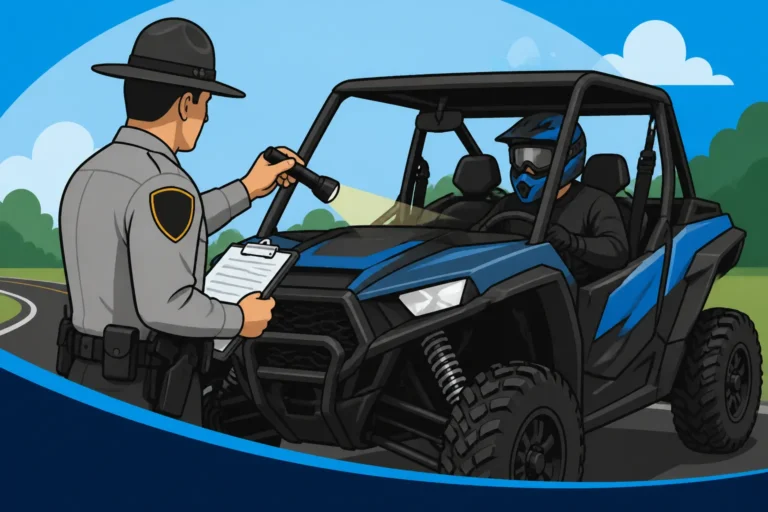
Seeing those blue lights flash is startling, no doubt about it. Your first instinct might be to panic or get frustrated, but take a deep breath. Pull over safely and promptly to the right side of the road, or to the nearest safe pull-off area. Turn on your hazard lights, and if it's dark, switch on your interior lights. Keep your hands visible, ideally on the steering wheel, and wait for the officer to approach your window. Don't start rummaging for your documents before they ask; this can be misinterpreted as reaching for something else.
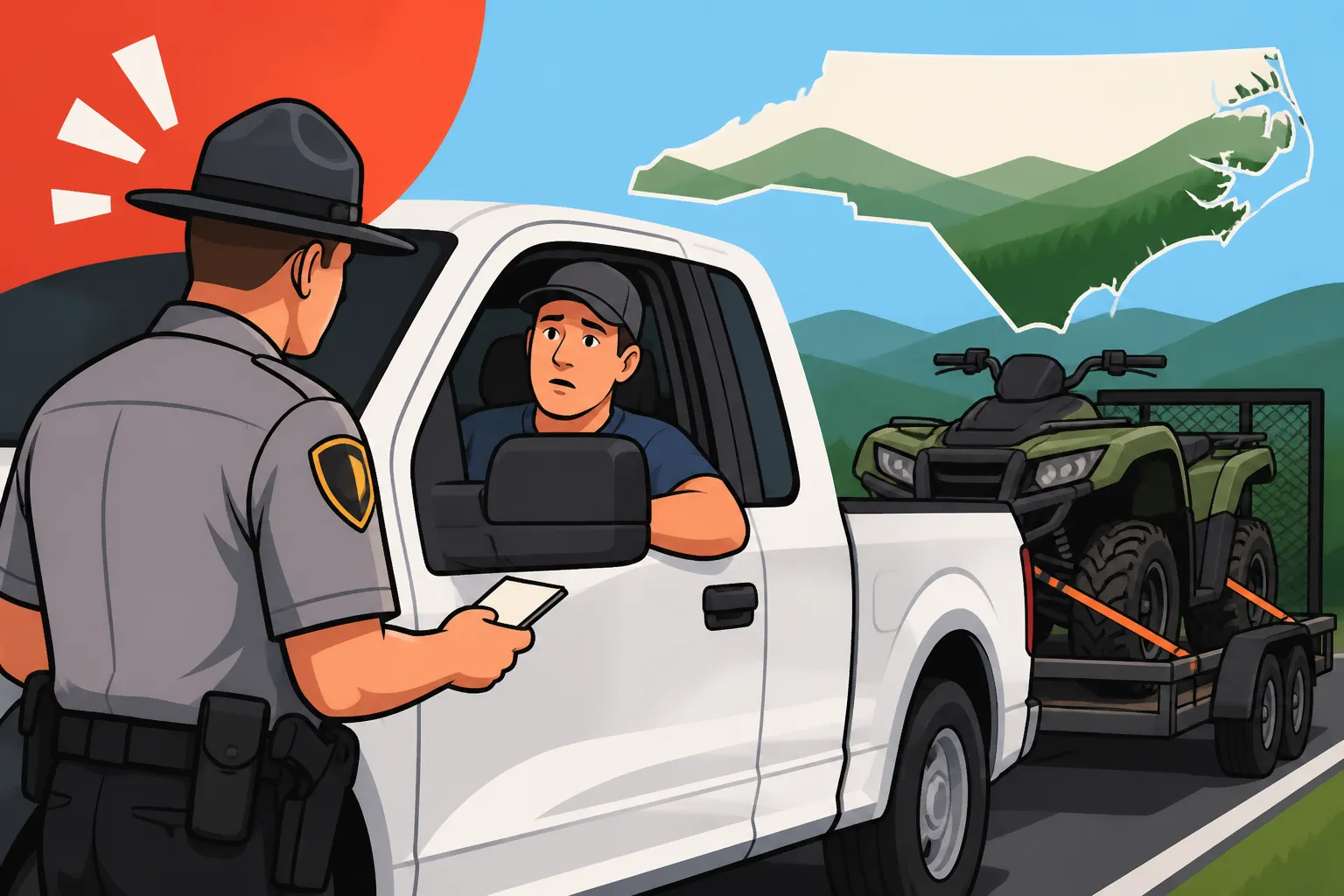
When the officer arrives, greet them politely. They'll typically ask for your driver's license, vehicle registration (for your tow vehicle), and proof of insurance. This is also when they'll likely ask for your trailer registration. Having all these documents neatly organized and easily accessible – perhaps in a dedicated folder in your glove compartment – will show preparedness and can help the stop go smoothly. Remember, even if you feel unjustly stopped, maintaining a respectful demeanor is key. Argue your case in court, not on the roadside. Keep in mind that a good impression starts the moment you pull over, so try to convey calm and cooperation. If you're heading out to hit the trails at [Wayehutta OHV in Western North Carolina], the last thing you want is a negative interaction before you even get there.
Common Violations and How to Fix Them
During a stop, the officer will likely explain why they pulled you over. It could be something as simple as a burned-out brake light on your trailer, or a more serious concern like excessive trailer sway. The most common violations related to towing ATVs often revolve around:
- Lighting Issues: A non-functioning brake light, taillight, turn signal, or marker light. Keep a spare bulb kit in your tow vehicle, and even a basic multimeter if you're handy with electrical troubleshooting. For quick fixes, even a roll of red electrical tape can temporarily cover a broken lens.
- Unsecured Cargo: Straps that are loose, broken, or improperly applied, causing the ATV to shift. This is where those quality SuperATV tie-downs pay for themselves. Always carry a couple of extra straps in case one breaks or comes loose.
- Missing or Expired Registration/Inspection: Your trailer registration is out of date, or you don't have it on hand. Always double-check expiry dates before you tow, and make sure your registration card is in the vehicle. While your ATV doesn't register, proving ownership of the machine you're towing, perhaps with a bill of sale or its [How a Title Proves You Own the Quad], can be helpful if questions arise.
- Missing Safety Chains/Breakaway Cable: If these crucial safety features aren't properly connected or are missing entirely. Ensure they are always correctly installed before moving.
If you're issued a warning or a citation for a fixable issue, take it seriously. Many officers appreciate it when you express understanding and demonstrate a willingness to rectify the problem immediately, if possible. For example, if it's a loose strap, tighten it on the spot. If a light is out, and you have a spare, ask if you can change it right there. Showing proactive responsibility can sometimes lead to a warning instead of a ticket, especially for minor infractions. But even if you get a ticket, addressing the issue means you won't be stopped for the same reason again, and you'll be safer on the road. Safe trailering is about more than just avoiding a fine; it's about ensuring your adventure begins and ends safely.
Disclaimer
This article is for general informational purposes only and does not constitute professional advice. Laws, prices and regulations vary by location and change over time. Consult a qualified professional for guidance on your specific situation.