North Carolina Low-Speed Vehicle Rules
It can be incredibly confusing trying to figure out what type of smaller vehicle you can legally drive on North Carolina's public roads. Many folks assume their souped-up golf cart or even an ATV could qualify for short jaunts to the store or down a neighborhood street, only to find out the rules are far more specific than they realized. This guide will walk you through North Carolina's detailed regulations for Low-Speed Vehicles (LSVs), clarifying what they are, what equipment they need, and where you can legally drive them.
What Exactly Is a Low-Speed Vehicle in North Carolina?
Let's cut through the confusion right away. When we talk about a "Low-Speed Vehicle" in North Carolina, we're not talking about your average golf cart, nor are we referring to a typical ATV or side-by-side. The state has a very specific definition for an LSV, and it's all about how the vehicle is manufactured and equipped to meet certain safety standards for limited road use.
Distinguishing an LSV from a Golf Cart
The biggest misconception out there is that a golf cart is an LSV. While they look similar and share some characteristics, North Carolina law sees them very differently. A golf cart is designed primarily for use on a golf course, private property, or specific, designated public areas like those found in some beach towns. They typically aren't built with the robust safety features required for regular road interaction, even at low speeds. An LSV, on the other hand, is built from the ground up to be a street-legal machine, albeit one with speed limitations. Think of it this way: a golf cart is for leisure on controlled grounds, while an LSV is a bona fide, albeit small, vehicle for navigating local streets. If you're hoping to make your standard golf cart street legal, you'll find it's a very steep, often impossible, climb to meet true LSV requirements, which go far beyond just adding a rearview mirror. For more on general golf cart rules, you might want to check out [North Carolina Golf Cart Street Rules].
LSV vs. Modified Utility Vehicle (MUV)
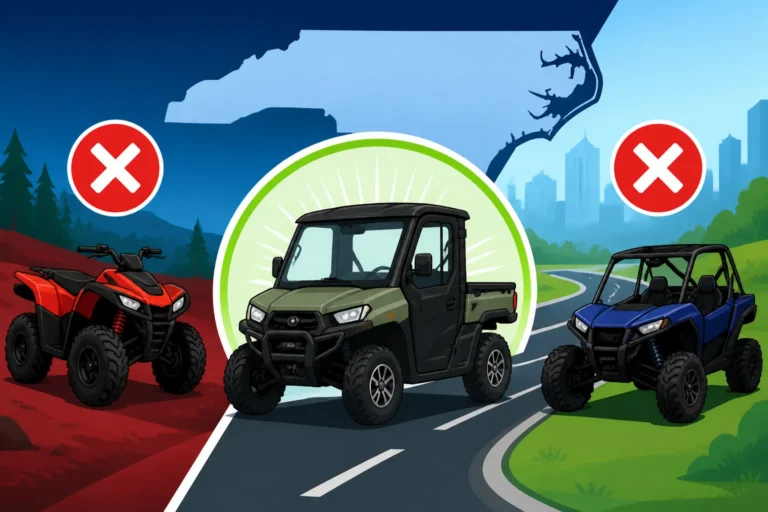
Another point of confusion can be distinguishing an LSV from a Modified Utility Vehicle (MUV). While both are attempts to get a smaller, utility-type vehicle onto public roads, they have completely different sets of rules and applications in North Carolina. An LSV is specifically defined as a four-wheeled vehicle whose top speed is greater than 20 miles per hour but not greater than 25 miles per hour. It’s built for public road use. An MUV, conversely, is typically a side-by-side or UTV that has undergone a significant and often costly conversion process to meet a unique set of criteria, including engine size, dimensions, and extensive safety equipment, allowing it to be registered for roads with a speed limit of 55 mph or less. The MUV path is much more intensive and designed for more robust machines. For a deep dive into that, you can read [North Carolina MUV Registration Requirements]. The key takeaway here is that an LSV is a purpose-built vehicle with a very specific, lower speed range, whereas an MUV is a heavily modified utility machine aimed at broader (but still limited) road access.
The Essential Equipment Your LSV Needs for North Carolina Roads
Getting an LSV street-legal in North Carolina isn't just about sticking a license plate on it. These vehicles are held to specific safety equipment standards to ensure they can safely share the road, even at their lower speeds. This isn't optional; these are requirements for registration and legal operation.
Headlights, Taillights, and Turn Signals
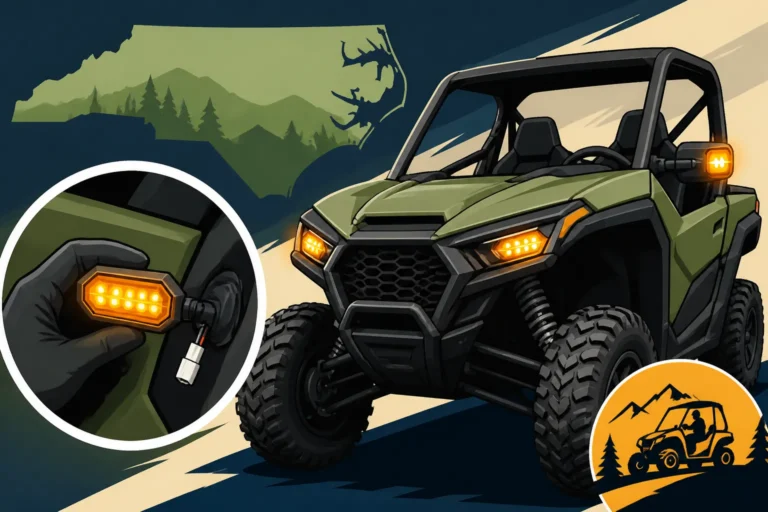
Every LSV must be equipped with headlamps, taillamps, and turn signal lamps that meet federal safety standards. This means proper brightness, visibility from specified distances, and the ability to clearly indicate turns. Imagine you're driving your LSV home after sunset in a quiet neighborhood. Without clear headlights, you're a hazard to pedestrians and other drivers. Similarly, functional turn signals are crucial for communicating your intentions, preventing collisions when you're making a left turn onto a busier road. It's not enough to have a small light; they must be DOT-compliant. This isn't just a recommendation; it's a legal necessity to operate on any public road, regardless of how deserted you think it might be.
Reflectors, Mirrors, and Windshield
Visibility is paramount for LSVs. They must have stop lamps, reflex reflectors, and exterior mirrors, including a driver's side mirror and either an interior rearview mirror or another exterior passenger-side mirror. These are crucial for seeing what’s happening behind and around you, especially if you're navigating a residential street with kids playing or cars backing out of driveways. Furthermore, an LSV needs a windshield that conforms to the Federal Motor Vehicle Safety Standard No. 205. This isn't just a plexiglass screen; it needs to be made of safety glazing material, just like a regular car windshield, to protect you from road debris. Some companies like SuperATV offer various windshield options, but ensure any aftermarket addition meets the necessary safety ratings if you're replacing a damaged one or upgrading. If your LSV is lacking any of these, it's not considered street-legal in North Carolina.
Seat Belts, Brakes, and a Vehicle Identification Number (VIN)
Finally, and perhaps most importantly, an LSV must be equipped with seat belts at all seating positions. This is non-negotiable for occupant safety, even at speeds up to 25 mph. A collision at that speed can still cause serious injury, and seat belts drastically reduce that risk. You also need a parking brake to keep the vehicle stationary when parked, and hydraulic service brakes on all wheels. These braking systems must be robust enough to stop the vehicle effectively and reliably. Lastly, every LSV must have a 17-character VIN, just like a standard car or truck. This unique identifier is critical for titling, registration, and proving ownership. Without a VIN, you simply cannot title or register the vehicle in North Carolina. If you're looking at buying a used LSV, always check for the VIN. [Checking a VIN Before a North Carolina Purchase] can offer more insights on this.
Navigating North Carolina's Road Rules with an LSV
So, your LSV is properly equipped and ready to roll. But where exactly can you take it, and what rules do you need to follow? North Carolina has clear guidelines on the permissible use of LSVs on its public roads. Understanding these rules is critical to staying safe and legal.
Permissible Roadways and Speed Limits
The primary rule for LSVs in North Carolina is straightforward: you can operate them on any public street or highway where the posted speed limit is 35 miles per hour or less. That means cruising down a main thoroughfare with a 45 mph limit is absolutely off-limits, even if you’re just trying to get to the grocery store a few blocks away. This rule is in place for your safety and the safety of others. While an LSV can go up to 25 mph, being on a road where traffic is moving significantly faster creates a dangerous scenario. Always pay attention to the posted speed limits. It’s perfectly fine for zipping around a residential neighborhood, heading to a local park, or making short hops between businesses in a low-speed commercial district. If you're ever in doubt, err on the side of caution and find an alternative route or avoid that road altogether. This is very different from [North Carolina Rules for Crossing a Road] for an ATV, which often involves much stricter limitations.
Crossing Higher-Speed Roads and Local Ordinances
There are instances where an LSV may need to cross a street or highway with a posted speed limit greater than 35 miles per hour. This is generally permitted, but it must be done at an intersection and only if the intersection has a traffic control device (like a stop sign or traffic light). You can't just cross anywhere; it has to be at a designated crossing point. Think of it like a pedestrian crosswalk for your LSV. Furthermore, it's important to remember that counties and municipalities in North Carolina have the authority to regulate or prohibit the operation of LSVs on streets and highways within their jurisdiction. This means that even if state law allows it, a local town could have an ordinance restricting or banning LSVs on certain streets. Always check with your local city or county government's planning or traffic department to understand any specific local rules that might apply where you live or plan to ride. What’s legal in Wilmington might not be in Asheville, and vice-versa.
Licensing, Insurance, and Helmet Requirements
Operating an LSV on public roads requires a valid driver's license. This isn't a "junior" license or a special permit; it's a full, unexpired driver's license just like you'd need to drive a car. So, if you're a teenager with only a learner's permit, you're not legally allowed to drive an LSV on public streets. Just like any other registered motor vehicle, an LSV must also carry liability insurance that meets North Carolina's minimum requirements. This insurance protects you and others in the event of an accident. It's not something you can skip; proof of insurance will be required for registration and could be requested by law enforcement. Unlike ATVs and UTVs, LSVs generally do not require helmet use for adults, as they are equipped with seat belts and operate at lower speeds. However, common sense and local ordinances might still suggest or require helmets for younger riders or in certain areas. For comparison, you can read [North Carolina Helmet Law for ATV Riders] to see the distinct differences.
Titling, Registration, and the DMV Process for an LSV
Once your LSV meets all the equipment standards, you’re ready for the final, crucial step: making it officially road-legal through the North Carolina Division of Motor Vehicles (DMV). This involves titling and registration, similar to how you’d handle a car.
Applying for a North Carolina Title
Just like a car, your LSV needs a North Carolina title. This document proves you are the legal owner of the vehicle. If you bought your LSV new from a dealer, they will typically handle the initial titling paperwork for you. If you bought it used, you’ll need to transfer the title into your name. This process usually involves filling out North Carolina Form MVR-1, the Application for Certificate of Title. You'll need to provide your personal information, the vehicle's VIN, and details about the purchase, including the previous owner's information if it's a used vehicle. Make sure all the information is accurate and complete to avoid delays. Getting a title isn't just about proving ownership; it's the foundation for everything else, including getting your plates. You can learn more about this general process by looking at [North Carolina Title Application on Form MVR-1].
Registering Your LSV and Obtaining License Plates
After your LSV is titled in your name, you'll proceed to registration. This is where you get your license plate and registration card, allowing you to legally operate the vehicle on North Carolina roads. During registration, you'll need to pay the applicable fees, which include the title fee and the annual registration fee. You will also be subject to North Carolina's Highway Use Tax when you first title the vehicle, which is a percentage of the vehicle's purchase price or fair market value. This tax is applied instead of a sales tax on vehicles. This tax applies to all titled vehicles, including LSVs, and it’s critical to understand [North Carolina's 3 Percent Highway Use Tax]. You'll need to present proof of insurance and potentially a valid North Carolina driver's license. The DMV will issue your registration card and license plate once all requirements are met and fees are paid. Remember, these plates need to be displayed correctly on your LSV, usually on the rear, to comply with the law.
Maintaining Your LSV's Road-Legal Status
Once your LSV is titled and registered, it's not a one-and-done deal. You'll need to renew your registration annually, just like with a car. This typically involves paying a renewal fee and providing proof of current liability insurance. It’s essential to keep your insurance active continuously, as lapses can lead to fines or suspension of your registration. Beyond the paperwork, it’s your responsibility to ensure your LSV consistently meets all the required safety equipment standards. Regularly check your headlights, taillights, turn signals, mirrors, windshield, and seat belts. If a light goes out or a mirror breaks, it needs to be repaired or replaced promptly to maintain its street-legal status. Driving an LSV that no longer meets the equipment requirements is just as illegal as driving an unregistered vehicle, and it puts you and others at risk. The [North Carolina DMV and Off-Road Machines] section of their site covers many general requirements that also apply to LSVs.
| Feature | Low-Speed Vehicle (LSV) | Golf Cart (Standard) | ATV / UTV (Standard) |
|---|---|---|---|
| Top Speed | 20-25 mph | Typically under 20 mph | Varies, often 40-70+ mph |
| Road Use (NC) | Roads ≤ 35 mph, cross >35 mph at intersections with traffic control | Local ordinances only, golf courses, private property | Private property, designated trails (with exceptions for farm/MUV) |
| Titling Required | Yes | No (unless MUV conversion) | Optional (unless MUV conversion) [Titling an ATV in North Carolina Is Optional] |
| Registration Req. | Yes | No (unless MUV conversion) | No (unless MUV conversion) [Why North Carolina Has No ATV Registration] |
| License Plate Req. | Yes | No (unless MUV conversion) | No (unless MUV conversion) |
| Driver's License | Required | Not always on private land, but check local ordinance for public use | Not for off-road use, but check local ordinance for public use |
| Insurance Req. | Required | Not required by state for golf cart, but check local ordinance/private property rules | Not required by state for off-road use, but highly recommended |
| Seatbelts | Required | Often none or lap belts | Often lap/shoulder belts |
| Windshield | Safety glazing required | Optional, often plastic | Optional, often plastic/poly |
| Headlights/Turns | Required, DOT compliant | Often optional or basic | Often standard, but not always DOT compliant for road use |
Disclaimer
This article is for general informational purposes only and does not constitute professional advice. Laws, prices and regulations vary by location and change over time. Consult a qualified professional for guidance on your specific situation.