How to Title an ATV in North Carolina
Many ATV and UTV owners in North Carolina find themselves scratching their heads when it comes to official paperwork for their off-road machines. Unlike cars, ATVs don't have a mandatory registration in the Tar Heel State, which can make the process of proving ownership feel a bit murky. This guide will walk you through the precise steps to title your ATV in North Carolina, clarifying the necessary forms, fees, and procedures so you can hit the trails with peace of mind.
Understanding North Carolina's Unique Approach to ATVs
North Carolina has a distinct way of handling off-highway vehicles (OHVs), and it often catches new residents or first-time buyers off guard. When you think about vehicles, your mind probably jumps straight to registration, license plates, and yearly renewals. With ATVs and UTVs here in our beautiful state, it's a different ballgame entirely. The key difference lies in understanding what the state requires versus what it recommends or allows.
Why Titling Isn't Always Mandatory, But Is Often Smart
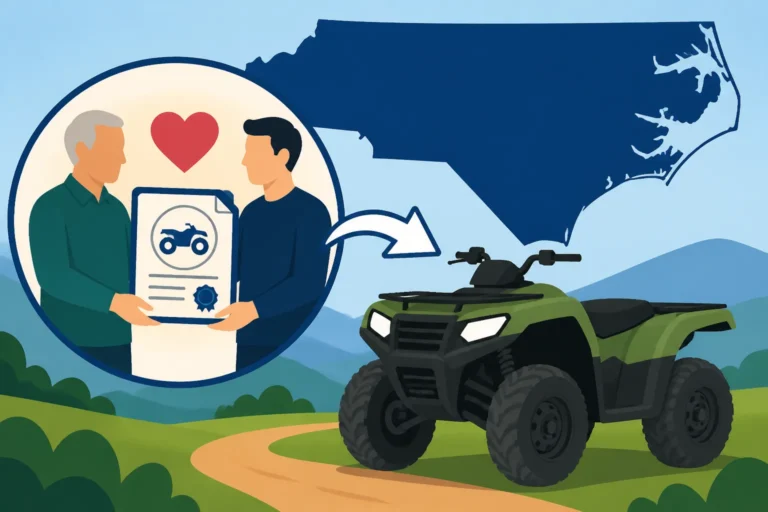
It's a common misconception that if you don't have to register an ATV in North Carolina, you don't need to do anything else official with it. While it's true that [Why North Carolina Has No ATV Registration] for off-road use, titling is a separate beast. The North Carolina Division of Motor Vehicles (NCDMV) offers the option to title your ATV, even if it's strictly an off-road machine that will never see a public road. This option exists because a title is essentially the legal document that proves you are the rightful owner of that particular piece of machinery.
Think of it this way: when you buy a house, you get a deed, right? That deed proves you own the property. An ATV title serves a very similar purpose for your off-road vehicle. Without one, proving ownership can become incredibly difficult if your machine is ever stolen, damaged, or if you decide to sell it. While you might be able to ride your new quad off-road without a title right away, you're leaving yourself vulnerable to potential headaches down the line. It's truly a case where being proactive pays off in the long run, giving you a solid paper trail. A clear title can also be invaluable if you ever need to apply for a loan against your ATV or use it as collateral, as most lenders will insist on a titled machine. [Why a Lender Insists on a Titled Machine]
The Distinction Between Registration and Titling
Let's clear up some common confusion. In many states, "registration" and "titling" go hand-in-hand. You apply for a title, and then you register the vehicle to get plates and tags for road use. North Carolina flips this script for most ATVs. For the vast majority of ATVs and UTVs, there is no system for general public road use registration. You won't be getting a license plate, and you won't be paying annual registration fees to the NCDMV for your typical trail machine. This is [Why There Is No North Carolina Trail Sticker] or any general OHV decal from the state.
Titling, on the other hand, is purely about establishing and documenting legal ownership. It provides an an official record of who owns the ATV, what its vehicle identification number (VIN) is, and any liens that might be on it. So, while you might hear people say "you don't register ATVs in North Carolina," that doesn't mean you can skip establishing clear ownership. Titling is the official way to do that through the NCDMV. There is an exception for "Modified Utility Vehicles" (MUVs) which can be registered for limited road use, but those are a very specific category of UTVs that meet strict requirements, including engine size and dimensions. [North Carolina's Modified Utility Vehicle Route] For most standard ATVs and UTVs, however, titling is the only NCDMV process you'll be concerned with.
The Essential Forms and Documents You'll Need
To successfully title your ATV in North Carolina, you'll need to gather a specific set of documents. Having everything in order before you head to the NCDMV will save you a lot of time and frustration. It's like preparing for a big camping trip; you wouldn't just show up to the trailhead without packing your tent, would you?
The North Carolina Title Application Form MVR-1
This is the cornerstone of your titling process. Form MVR-1, officially titled "Application for Certificate of Title," is where you provide all the crucial details about yourself and your ATV. You'll need to accurately fill in information such as the ATV's make, model, year, and crucially, its Vehicle Identification Number (VIN). The VIN is like your ATV's unique fingerprint, and it's essential for tracking ownership. You'll also include your personal information as the owner, including your name, address, and driver's license number. Be meticulous when filling this out; any errors can lead to delays. [North Carolina Title Application on Form MVR-1]
The form also asks about the purchase price and the date of sale, which are critical for calculating the Highway Use Tax. Don't forget to include the seller's information if you're buying a used machine. If there's a lienholder—meaning a bank or credit union financed your purchase—their information will also need to be clearly listed on the MVR-1 form. Accuracy is paramount here; double-check every box before you submit it.
Proving Ownership: Bill of Sale or Previous Title
How do you prove that you actually own the ATV you're trying to title? This is where your bill of sale or the previous certificate of title comes into play. If you purchased a brand-new ATV from a dealer, they will typically provide you with a Manufacturer's Statement of Origin (MSO) or a dealer's bill of sale. This document acts as the first official proof of ownership. If you bought a used ATV from a private seller, you'll need the previous owner's signed-over title. Make sure their signature is present in the "transfer of ownership" section and that the odometer reading (if applicable to your machine, though less common for ATVs) is correctly recorded.
In situations where the previous owner never titled the ATV, or if it's an older machine and the original title is missing, things can get a bit more complicated. You might need a notarized bill of sale along with a completed [North Carolina Form MVR-59 Explained], which is an "Affidavit of Ownership" for untitled vehicles. This affidavit helps bridge the gap when a formal title transfer isn't possible. For preparing a robust bill of sale, especially if you're selling or buying privately, resources like LawDepot can provide customizable templates that ensure all necessary information is included, giving both parties peace of mind and meeting NCDMV requirements. [North Carolina ATV Bill of Sale Requirements]
Addressing the Highway Use Tax and Why It's Not Sales Tax
One of the most significant costs associated with titling your ATV in North Carolina is the Highway Use Tax (HUT). This isn't your standard sales tax, although it often feels like it. The HUT is a one-time tax imposed when you title a vehicle, and it's calculated at a percentage of the purchase price or the fair market value of the ATV, whichever is greater. [North Carolina's 3 Percent Highway Use Tax] Even though your ATV might never touch a public road, you'll still pay this tax because the funds collected from it help maintain our state's roads and highways.
The NCDMV will use the purchase price listed on your bill of sale or the fair market value if the purchase price seems unusually low or if the ATV was gifted. If you're bringing an ATV into North Carolina from out of state, or if you're titling an inherited machine, you'll still be subject to the HUT based on its appraised value. Be prepared for this fee, as it can be a substantial part of your titling expense. Ensure you have documentation of the purchase price to avoid any discrepancies, and if you used a LawDepot bill of sale, that value will be clearly stated.
The Damage Disclosure Statement Form MVR-1A
If your ATV is less than seven model years old, you'll likely need to complete a "Damage Disclosure Statement" (Form MVR-1A). This form is specifically designed to disclose any damage that exceeds a certain percentage of the vehicle's retail value, excluding hail damage. It's a consumer protection measure, ensuring that buyers are aware of any significant repairs or issues the ATV might have had. [North Carolina Damage Disclosure on Form MVR-1A]
Even if your ATV has no damage to report, you'll still need to complete and sign the form, indicating "none" or checking the appropriate box. This step is crucial, especially when buying a used ATV, as it provides transparency for both the buyer and the seller. Make sure both parties understand their responsibilities regarding this disclosure.
Step-by-Step Guide to Titling Your ATV
Now that you know what you need, let's talk about how to get it all done. The process itself isn't overly complicated, but going in prepared is half the battle.
Gathering Your Paperwork
Before you even think about heading to the NCDMV, create a physical folder for all your documents. You'll need:
- Completed Form MVR-1: The "Application for Certificate of Title."
- Proof of Ownership: Original MSO (for new ATVs) or the previous owner's signed-over title (for used ATVs). If no title, a notarized bill of sale (consider a LawDepot template for clarity) and a completed Form MVR-59.
- Bill of Sale: Even with a previous title, a separate [A North Carolina Bill of Sale for an ATV] is highly recommended for clarity on purchase price, especially if the previous title lacks space for detailed transaction info.
- Damage Disclosure Statement (Form MVR-1A): If your ATV is less than seven model years old.
- Identification: Your valid North Carolina driver's license or state ID.
- Payment: Funds for the titling fee, Highway Use Tax, and any other applicable fees. Be ready for cash, check, or debit/credit card options, though these can vary by location.
- Lien Release (if applicable): If there was a lien on a used ATV you just bought, ensure you have the official lien release from the previous owner's lender. [North Carolina ATV Lien Release]
It's always a good idea to make photocopies of all your documents before you submit the originals. That way, you have a record for your files. Think of it as your backup plan, just in case anything gets misplaced during the process.
Visiting Your Local NCDMV Office
Once your documents are organized, your next stop is your local North Carolina Division of Motor Vehicles (NCDMV) office. While some things can be done online, titling an ATV generally requires an in-person visit, as original documents need to be inspected. You can find your nearest NCDMV license plate agency online; these are typically the offices that handle vehicle titling. While there are sometimes long lines, going prepared can significantly speed up your visit.
It's wise to consider visiting during off-peak hours if possible, such as mid-morning or mid-afternoon on a Tuesday, Wednesday, or Thursday, to avoid the usual Monday morning rush or end-of-week crowds. When you arrive, make sure you know which line to get into for "vehicle titling" or "plate services," as many offices handle multiple types of transactions. Be polite and patient; the clerks are there to help, and having all your paperwork in order makes their job (and your experience) much smoother.
What to Expect During the Process
When you reach the counter, the NCDMV clerk will review all your submitted documents. They'll verify your identification, check the VIN on your MVR-1 against your proof of ownership, and calculate the Highway Use Tax based on your purchase price or their assessed value. They will also collect the titling fee itself. [What a North Carolina ATV Title Costs] The clerk may ask questions to clarify information, so be ready to explain the purchase details. If everything is in order, they will process your application.
You typically won't walk out with a physical title in hand that day. Instead, the NCDMV will process your application, and a new certificate of title will be mailed to you, usually within a few weeks. The clerk will issue you a receipt, which serves as proof that you've applied for the title. Keep this receipt in a safe place, as it's your only official record until the title arrives in the mail. If there are any issues or missing documents, the clerk will inform you right then and there, giving you the opportunity to address them. [How Long the DMV Takes to Mail a Title]
Special Circumstances and Common Hurdles
While the basic process is straightforward, some situations can add layers of complexity. It's important to be aware of these so you can prepare accordingly.
Titling a Used ATV from a Private Seller
Buying a used ATV privately is a fantastic way to save money, but it often comes with a bit more legwork for the titling process. The most critical item you need from the seller is their signed-over original title. Ensure their signature is correct and matches the name on the title, and that they've accurately entered the sale date and purchase price. If the seller doesn't have a title because they never obtained one, you'll likely need that [North Carolina Form MVR-59 Explained] along with a notarized bill of sale. For this, a well-drafted bill of sale is your best friend, and again, resources like LawDepot can provide forms that cover all necessary legal points for both buyer and seller protection.
Always, always inspect the VIN on the ATV itself and compare it to the VIN on the title or bill of sale. Discrepancies here can lead to major problems down the road. It's also a good practice to [Checking a VIN Before a North Carolina Purchase] to ensure it hasn't been reported stolen or salvaged. If the seller still owes money on the ATV, meaning there's a lien, they must provide you with a lien release from their bank. Never buy a used ATV with an active lien without that release in hand, as you could become responsible for the previous owner's debt.
What if You Don't Have a Previous Title?
This is a surprisingly common scenario, especially with older ATVs that might have changed hands multiple times without formal titling. If the ATV you're trying to title has no existing North Carolina title, the NCDMV will require you to complete Form MVR-59, the "Affidavit of Ownership for a Vehicle with No North Carolina Certificate of Title." This form essentially allows you to swear under oath that you are the rightful owner, detailing how and when you acquired the machine.
You'll also need a bill of sale, and it's highly advisable to have it notarized. The NCDMV wants as much documentation as possible to confirm your claim of ownership. They might also require a vehicle inspection to verify the VIN. While it adds a step, it's not an insurmountable hurdle. Just be prepared to provide as much verifiable history as you can for the ATV, including any previous bills of sale or affidavits, even informal ones.
Titling an Out-of-State ATV
Bringing an ATV into North Carolina from another state means navigating a few extra considerations. If the ATV was previously titled in another state, you'll need that original out-of-state title. The process will largely mirror titling a used ATV, requiring the signed-over out-of-state title and an MVR-1 form. Be prepared for the North Carolina Highway Use Tax, which will still apply. [Buying an Out-of-State Machine for North Carolina]
If the out-of-state ATV was not titled in its previous state (some states don't require it for off-road vehicles), then you're back to the "no previous title" scenario, and you'll need Form MVR-59 and a notarized bill of sale. The NCDMV may also have specific requirements for verifying the VIN on out-of-state vehicles, sometimes requiring a law enforcement officer to complete a VIN verification form. Always check with the NCDMV directly before your visit to confirm any unique requirements for your specific situation.
Dealing with Liens on Your ATV
A lien is a legal claim against your ATV, typically held by a bank or financial institution that loaned you money to purchase it. If you financed your ATV, the lienholder's name will appear on your title. They essentially hold a claim on your machine until the loan is fully paid off. When you pay off your loan, the lienholder is legally obligated to release the lien. This is usually done by sending you a "lien release" document.
If you're buying a used ATV and the previous owner had a lien, it's absolutely critical that they provide you with an official lien release form from their lender. Without this document, the NCDMV will not transfer the title into your name, as the previous lien still exists. If you are ever trying to sell an ATV with an active lien, you'll need to satisfy that loan first and obtain the lien release to complete the sale and title transfer. Always confirm the lien status before completing any ATV purchase or sale.
| Document / Step | New ATV (Dealer Purchase) | Used ATV (Private Seller) | No Previous Title (Older Machine) |
|---|---|---|---|
| MVR-1 Application | Required | Required | Required |
| Proof of Ownership | Manufacturer's Statement of Origin (MSO) or Dealer Bill of Sale | Previous owner's signed title | Notarized Bill of Sale + MVR-59 Affidavit of Ownership |
| Bill of Sale | Dealer Bill of Sale | Recommended (even with title); use for HUT calculation | Required (notarized for MVR-59); LawDepot template useful |
| MVR-1A Damage Disc. | Required (if < 7 model years) | Required (if < 7 model years); completed by seller/buyer | Required (if < 7 model years); completed by owner |
| Highway Use Tax | Yes (based on purchase price) | Yes (based on purchase price or market value) | Yes (based on market value/appraisal) |
| Lien Release | N/A (unless financed by third party) | Required if previous owner had a lien | N/A (unless you are paying off an existing loan) |
| VIN Verification | Generally not needed (dealer certified) | Recommended; may be required if discrepancies | May be required (especially for out-of-state/homemade machines) |
| Where to Go | NCDMV License Plate Agency | NCDMV License Plate Agency | NCDMV License Plate Agency |
| Anticipated Wait Time | Weeks for mailed title | Weeks for mailed title | Weeks for mailed title (may take longer with MVR-59 review) |
Disclaimer
This article is for general informational purposes only and does not constitute professional advice. Laws, prices and regulations vary by location and change over time. Consult a qualified professional for guidance on your specific situation.