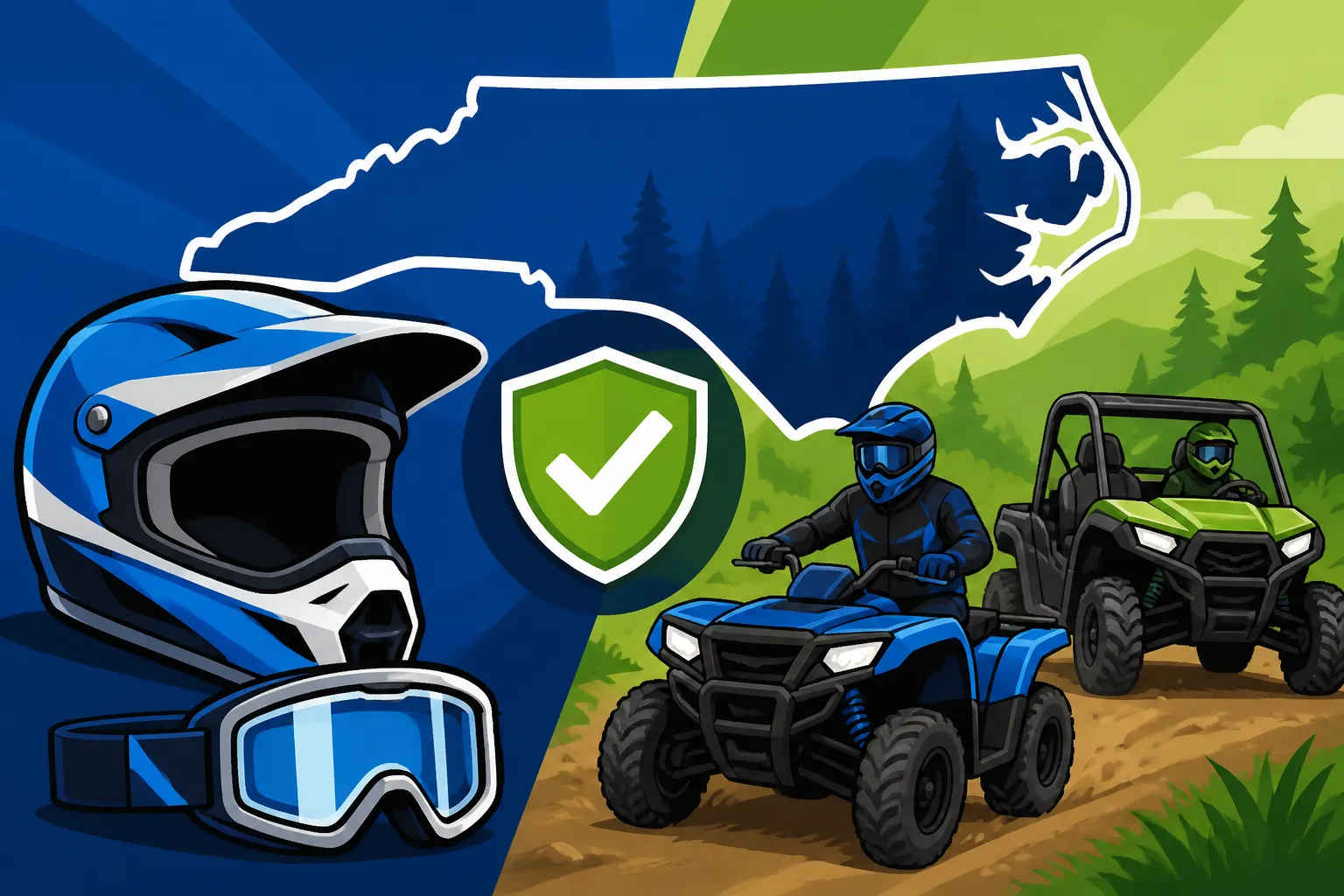
Helmet and Eye Protection Rules in North Carolina
It can be incredibly confusing trying to keep up with all the rules for riding ATVs and UTVs in North Carolina, especially when it comes to safety gear like helmets and eye protection. It feels like the laws are constantly shifting, and what applies to your buddy's teenager might not apply to you on that same trail. This comprehensive guide is here to clear up all that head-scratching confusion, ensuring you know exactly what’s expected to keep yourself and your loved ones safe and legal on the trails across our beautiful state.
The Foundation: Why Helmets and Eye Protection Are Non-Negotiable
Before we even dive into the nitty-gritty of North Carolina's specific laws, let's talk about the absolute truth of off-road riding: safety gear isn't just a recommendation; it's a lifeline. I've seen firsthand how quickly a fun ride can turn serious, and the difference between a minor scare and a life-altering injury often comes down to wearing the right protection. It’s not about being a killjoy; it’s about acknowledging the inherent risks of tearing through the woods or across an open field.
The Harsh Realities of Off-Road Riding
Think about it: when you're out on an ATV or UTV, you're exposed to a dynamic environment. You're dealing with varying terrain, unexpected obstacles, and the sheer physics of a powerful machine moving at speed. A simple tip-over, a sudden stop, or an impact with a hidden stump can send you flying or throw you against the machine itself. Head injuries are, unfortunately, a very real and terrifying risk in these scenarios. Even at lower speeds, a fall can cause significant trauma.
Beyond impacts, consider the constant barrage of smaller hazards. Kicked-up rocks, swirling dust from the rider in front of you, low-hanging branches, insects, and even mud can all become projectiles aimed directly at your face. Just imagine a rock hitting your eye at 30 miles per hour. It’s not just uncomfortable; it can cause permanent damage, blinding you or causing severe lacerations. These aren't far-fetched scenarios; they're common occurrences for riders who aren't adequately protected.
Beyond the Law: Personal Responsibility and Safety Culture
While the law dictates certain requirements, there’s a much broader reason to prioritize helmets and eye protection: personal responsibility. As riders, especially those of us with families, we set an example. If your kids or younger riding buddies see you cutting corners on safety, they're likely to follow suit. Creating a strong safety culture within your riding group or family means everyone understands and values the gear, not just because a rule says so, but because it genuinely protects them.
Moreover, nobody wants to be "that guy" who ends up in the emergency room with a preventable injury, causing worry and stress for their loved ones. Investing in quality gear, maintaining it, and consistently wearing it is a small price to pay for peace of mind. It’s about being prepared for the unexpected, understanding that even the most experienced riders can have an off day or encounter unforeseen circumstances. It's truly a matter of "when," not "if," you'll be glad you had that helmet on.
Deciphering North Carolina's Helmet Laws for ATV Riders
North Carolina's approach to ATV helmet laws can feel a bit like navigating a winding trail – it's not always a straight shot. The key distinction often revolves around age, but as we'll see, where you're riding also plays a huge role. It's vital to understand these nuances to avoid fines and, more importantly, stay safe.
The Under-18 Rule: DOT Helmets for Young Riders
This is perhaps the most critical rule to remember: in North Carolina, any person under the age of 18 operating or riding as a passenger on an ATV must wear a securely fastened safety helmet. And we're not talking about just any helmet; it must be a U.S. Department of Transportation (DOT) approved motorcycle helmet. This isn't just a suggestion; it's a firm legal requirement designed to protect our most vulnerable riders.
The rationale behind this rule is sound. Younger riders, regardless of their skill level, often have less developed spatial awareness, slower reaction times, and are generally more prone to taking risks or misjudging terrain. A serious head injury can have devastating, lifelong consequences for a developing child or teenager. The state, recognizing these vulnerabilities, has put this protection in place. So, if you're hitting the trails with your kids or any minor, make sure their helmet fits properly, is DOT-approved, and is always securely buckled. For more specifics on youth riders, you can check out [North Carolina Rules for Riders Under 16]. This rule even extends to passengers, so if you have a young one riding behind you, they need a helmet too. Don't forget to review [Does a 17-Year-Old Need a Helmet Off-Road?] for clarification on older minors.
The "Manufacturer's Age Warning Label" and Its Impact
Compounding the under-18 rule, North Carolina law also gives significant weight to the manufacturer's age warning labels found on ATVs. Most ATVs come with clear decals stating the minimum age for operation, typically 16 years old for adult-sized machines. While this isn't directly a helmet rule, it reinforces the state's protective stance towards young riders. The law essentially states that no one under the age specified by the manufacturer's warning label for the ATV's engine size and design should operate that machine.
When you combine the explicit helmet requirement for minors with the manufacturer's age guidelines, it creates a robust framework for youth safety. If a minor is riding an ATV that is inappropriate for their age and not wearing a helmet, they are facing multiple legal violations and, more critically, significantly increased danger. This focus on manufacturer warnings is a smart way to ensure that the equipment itself is considered in the safety equation, as different machines pose different risks. Understanding [The Manufacturer's Age Warning Label in North Carolina] can provide even more context here.
Adult Riders: What the Law Doesn't Explicitly Say
Now, here's where it gets a little less clear for adult riders. Believe it or not, for riders 18 years of age and older, North Carolina does not have a statewide law mandating helmets when operating an ATV on private property. This often comes as a surprise to many, especially those moving from states with stricter universal helmet laws. You might think, "Great, one less thing to worry about!" But hold your horses for a second.
While the state might not compel you to wear a helmet on your own land or a friend's private property, that absolutely does not mean it's a good idea to go without one. The risks of head injury remain the same, regardless of your age. Furthermore, this blanket "no helmet law for adults on private land" often has exceptions. Many public riding areas, like those found in national forests or dedicated OHV parks, will have their own rules that often require helmets for all riders, regardless of age. So, while you might be legally clear on your farm in Johnston County, hitting the trails at Uwharrie National Forest will definitely require a helmet, even if you're over 18. Always check the specific rules of your riding location before you go.
Eye Protection: Keeping Your Sight Clear and Safe
Just like helmets, eye protection is a critical piece of safety gear, often overlooked until a branch snaps back or a plume of dust blinds you. North Carolina's laws, again, draw a line based on age, but common sense and the realities of off-road riding dictate that everyone should wear it.
Mandatory for Minors, Recommended for All
Here’s another clear rule for our younger riders: any person under the age of 18 operating or riding as a passenger on an ATV in North Carolina must wear eye protection. This aligns perfectly with the helmet rule for minors, acknowledging that their vision is just as vulnerable, if not more so, to the hazards of off-road riding. These rules are in place to ensure that when a minor is riding, they have the best possible chance of avoiding injury.
For adults, the statewide law doesn't explicitly mandate eye protection on private land. However, this is one of those areas where you really have to ask yourself, "Is it worth the risk?" Imagine riding through a dusty logging road in the Piedmont on a dry summer day. The dust churned up by your machine, or even worse, the machine in front of you, will absolutely get into your eyes without proper protection, impairing your vision and causing irritation. The same goes for branches, bugs, mud splatter, and even harsh sunlight. Wearing proper eye protection isn't just about legality; it's about maintaining clear vision, which is fundamental to safe riding. For those specific questions about minors, make sure to read [Do Seventeen-Year-Olds Need Goggles in North Carolina?].
What Qualifies as "Eye Protection"?
When the law (and good sense!) talks about "eye protection," what exactly does that mean? Generally, it refers to goggles or a full-face helmet with a durable, clear face shield. Regular sunglasses, while they might offer some sun protection, typically don't provide the impact resistance or full coverage needed to protect against flying debris, dust, or branches. They can also shatter, potentially causing more harm in an impact.
Look for goggles that fit snugly around your eyes and the helmet opening, preventing dust and debris from sneaking in. Anti-fog features are a huge plus, especially on humid days or during strenuous rides where your body heat can cause condensation. Many riders prefer dedicated off-road goggles for their superior ventilation, strap systems that work well with helmets, and interchangeable lenses for different light conditions. Some helmets, particularly those from brands that focus on rider safety, come with integrated face shields that offer excellent protection. If you're looking for high-quality, durable options that stand up to the rigors of the trail, checking out brands like SuperATV for their goggles or helmets with strong shields is a smart move. They understand the demands of serious riding and design their gear to match.
Specific Scenarios: From Dust to Rain
The type of eye protection you choose might even vary slightly depending on the conditions you expect to encounter. On a super dusty day, a pair of well-sealed goggles with a tear-off or roll-off system can be invaluable, allowing you to quickly clear your field of vision without stopping. If you're riding through heavily wooded areas with lots of low-hanging branches, a full-face helmet with a robust face shield might offer more comprehensive protection for your entire face, not just your eyes.
When the rain starts falling, clear lenses are a must, and anti-fog coatings become even more crucial. Some riders even carry multiple sets of lenses or different types of eye protection to swap out as conditions change throughout the day. The goal is always the same: maintain unobstructed, clear vision while protecting your eyes from any and all potential hazards. A few moments of impaired vision can lead to an accident, and it’s simply not worth the risk when effective eye protection is so readily available.
Special Considerations: UTVs, Passengers, and Public Lands
While ATVs often get the spotlight, UTVs (side-by-sides) have grown immensely in popularity, bringing with them a new set of questions regarding safety gear. Add in passengers and the complexities of public versus private land, and the rules can quickly become entangled. Let's unpick these specific scenarios.
UTVs and the Helmet/Eye Protection Question
UTVs, with their roll cages, roofs, windshields, and seatbelts, often give riders a false sense of security regarding helmets. Many assume that because it feels more like a small car, helmets aren't necessary. However, North Carolina's laws regarding helmets and eye protection for minors apply equally to UTVs as they do to ATVs. This means any driver or passenger under 18 years old in a UTV must wear a DOT-approved helmet and eye protection. Period.
For adult drivers and passengers in UTVs, the same general rule applies as with ATVs on private land: no statewide mandate for helmets. But again, this is where common sense should prevail. While a roll cage offers significant protection in a rollover, it doesn't guarantee your head won't hit a bar or the ground. Ejection is also a risk, even with seatbelts. Many experienced UTV riders, especially those tackling challenging terrain or higher speeds, opt for helmets and eye protection regardless of the law. The risk of impact or debris remains, and a windshield won't protect you from every hazard.
Passengers: Are They Covered by the Same Rules?
Yes, absolutely. North Carolina law explicitly states that passengers on ATVs and UTVs are subject to the same helmet and eye protection rules as the operators. So, if your child is riding shotgun in your side-by-side or on the back of a two-up ATV, and they are under 18, they must wear a DOT-approved helmet and eye protection. There’s no loophole just because they aren’t driving.
This rule is designed for comprehensive safety. A passenger, particularly a young one, is just as vulnerable to head and eye injuries as the driver. In fact, they might be even more susceptible if they're not bracing themselves correctly or are caught off guard by a sudden bump or turn. Always ensure any passenger, especially minors, is properly equipped and understands the importance of staying inside the machine and keeping all body parts protected. Check out [North Carolina Rules for a Passenger Under 18] for deeper insights into this important aspect of rider safety.
Public Land Regulations: When Forest Rules Override General Law
This is where many riders get tripped up. While North Carolina's statewide laws might be a bit relaxed for adults on private property, things change dramatically when you enter public lands, especially those managed by the U.S. Forest Service or other public agencies. Places like the Uwharrie National Forest or the Brown Mountain OHV Trail System operate under stricter guidelines.
On most designated public OHV trails and forest roads in North Carolina, helmets and eye protection are required for all riders, regardless of age. This is a non-negotiable rule enforced by forest rangers and local law enforcement. These rules are put in place for a few reasons: the nature of shared trails, the potential for higher speeds, and the desire to standardize safety across publicly accessible areas. Ignoring these rules can lead to fines, citations, and even losing your riding privileges. Always, always check the specific rules and regulations for any public riding area before you load up your machine. It’s not just about compliance; it's about respecting the land and ensuring a safe experience for everyone. For specific rules regarding public lands, review [North Carolina Helmet Rules on Forest Trails] and [North Carolina Eye Protection Requirement]. Knowing [Where to Ride an ATV in North Carolina] will also help you identify which areas have these stricter rules.
Choosing the Right Gear: Helmets, Goggles, and Beyond
Selecting the right safety gear isn't just about meeting legal requirements; it's about investing in your personal safety and comfort on the trails. With so many options out there, it can be overwhelming to know what to look for. Let's break down the essentials.
Decoding DOT and Snell Ratings
When it comes to helmets, the most crucial thing to look for is certification. In the U.S., you'll primarily see two major certifications:
- DOT (Department of Transportation): This is the minimum safety standard required by law for helmets used on public roads in the U.S. A DOT-certified helmet has passed tests for impact absorption, penetration resistance, and retention system strength. If a helmet is DOT-approved, it means it meets the basic federal requirements to protect your head in a crash. For minors in North Carolina, this is the legal minimum.
- Snell (Snell Memorial Foundation): This is a more rigorous, voluntary standard that goes beyond DOT. Snell-certified helmets are tested to withstand multiple impacts and more severe forces. While not legally required for off-road use, a Snell rating signifies a higher level of protection, often preferred by serious riders and racers.
Never, ever buy a helmet that doesn't have at least a DOT certification label. Those cheap, uncertified helmets you might find at discount stores offer little to no real protection and are not worth the risk. Always look for the sticker inside the helmet or on the back, confirming its certification. Your brain is worth protecting with the best possible gear.
Fit and Comfort: More Than Just a Number
A helmet, no matter how highly rated, is useless if it doesn't fit correctly. A poorly fitting helmet can shift during a ride, obstruct your vision, or even come off in an accident. Here's how to think about fit:
- Measure Your Head: Use a cloth measuring tape to find the circumference of your head, just above your eyebrows and ears. This will give you a starting point for sizing charts.
- Try It On: Don't just rely on the number. Different brands and models have different internal shapes. The helmet should feel snug all around your head, with no pressure points. It shouldn't wiggle when you shake your head, and it shouldn't be easy to pull off if you try to rotate it from front to back.
- Cheek Pads: Your cheeks should feel a gentle, firm pressure. They shouldn't be squished uncomfortably, but there shouldn't be a lot of slack either.
- Field of Vision: Ensure your peripheral vision isn't excessively restricted.
- Goggle Fit: If you plan to wear goggles, make sure they fit comfortably with the helmet, without creating uncomfortable gaps or pressure.
When it comes to goggles, they should fit snugly against your face, without pinching or leaving large gaps where dust can enter. The strap should be adjustable to fit securely over your helmet. Comfort here is key, as ill-fitting goggles will quickly become a distraction. If you're struggling to find the right fit for both, many brands offer youth-specific sizes for helmets and goggles, which are crucial for our younger riders. Brands like SuperATV understand the importance of diverse sizing and offer a range of options to help you find the perfect, protective fit.
Beyond the Basics: Gloves, Boots, and Body Armor
While helmets and eye protection are paramount, don't forget the other pieces of gear that complete your safety ensemble. They all work together to provide comprehensive protection:
- Gloves: Protect your hands from blisters, abrasions, and impacts. They also improve grip on the handlebars.
- Boots: Over-the-ankle boots with good ankle support are essential. They protect your feet and lower legs from impacts, exhaust burns, and being caught under the machine.
- Long Pants and Long-Sleeved Shirt: Even in warm weather, long clothing made from durable material (like denim or specialized riding gear) provides a crucial barrier against scrapes, cuts, and sun exposure.
- Chest Protectors/Body Armor: For more aggressive riding or racing, chest protectors and other body armor can safeguard your torso, shoulders, and elbows from impacts.
Remember, every piece of gear has a purpose. Don't skimp on any of it. It's all about minimizing risk so you can maximize the enjoyment of your ride.
Consequences of Non-Compliance and Promoting a Safety Culture
Ignoring North Carolina's ATV and UTV safety rules, particularly those concerning helmets and eye protection, carries real consequences. These aren't just minor inconveniences; they can impact your wallet, your riding privileges, and most importantly, your health and future.
Fines, Citations, and Loss of Riding Privileges
Let's talk about the immediate, tangible penalties. If a law enforcement officer or a forest ranger observes a violation, especially concerning a minor, they won't hesitate to issue a citation. This could include significant fines, which can quickly add up, turning a fun day into an expensive headache. For instance, you can face substantial fines for infractions related to ATVs, as discussed in [North Carolina Fines for an ATV Violation] or [What a $200 ATV Infraction Actually Costs].
Beyond the monetary cost, repeated violations or particularly egregious ones, especially on public lands, can lead to the loss of your riding privileges. Rangers have the authority to remove you from trails and even ban you from specific riding areas. Imagine trailering your machine all the way to Badin Lake, only to be turned away at the gate or cited on the trail because your young passenger isn't wearing a helmet. It's simply not worth the hassle or the expense. Adhering to the rules is the easiest way to ensure you can continue to enjoy the incredible riding opportunities North Carolina has to offer.
Injury Risks and Long-Term Impact
While fines are certainly unpleasant, the most severe consequences of not wearing a helmet or eye protection are the personal ones. A head injury can range from a concussion to a traumatic brain injury (TBI) with lifelong effects. These can include cognitive impairment, personality changes, motor skill deficits, and chronic pain. An eye injury can result in partial or total blindness, permanent scarring, or chronic vision problems.
These aren't abstract concepts. I've heard too many stories from riders who thought "it wouldn't happen to me" or who took a "quick ride" without gear, only to find themselves facing months or years of recovery, astronomical medical bills, and a drastically altered quality of life. No thrill from an unprotected ride is worth the potential cost of severe, preventable injury. Your ability to work, care for your family, and enjoy your hobbies could all be jeopardized. This grave risk is precisely why rules for minors exist and why adults should always choose protection.
Educating the Next Generation of Riders
Ultimately, the most powerful tool we have for promoting safety is education. Parents, guardians, and experienced riders have a profound responsibility to instill a strong safety culture in younger generations. This means:
- Leading by Example: Always wear your own helmet and eye protection, even if you're an adult and the law doesn't explicitly require it for your specific private land ride.
- Enforcing the Rules: Be firm and consistent about minors wearing their gear. No helmet, no ride. It's that simple.
- Teaching Proper Riding Techniques: Beyond gear, teach responsible riding, respecting terrain, and understanding machine limitations. This often starts with courses that can provide a [North Carolina Safety Certificate Requirements].
- Explaining the "Why": Don't just say "because I said so." Explain why the gear is important, using real-world examples (without being overly scary, of course).
- Regular Gear Checks: Ensure helmets are still DOT-approved, fit correctly, and aren't damaged. Check goggle straps and lenses. Safety gear isn't a one-time purchase; it requires ongoing attention.
By taking these steps, we don't just comply with the law; we cultivate a community of responsible, safe riders who can enjoy the adventure of off-road riding for years to come.
Here's a quick summary of the North Carolina helmet and eye protection rules:
| Rider Age Category | Riding Location | Helmet Requirement | Eye Protection Requirement | Notes |
|---|---|---|---|---|
| Under 18 | Private Land | Mandatory (DOT-approved) | Mandatory | Appplies to both operator and passenger. Refer to manufacturer's age label on machine. |
| Under 18 | Public Land | Mandatory (DOT-approved) | Mandatory | Appplies to both operator and passenger. Often stricter enforcement on public lands. |
| 18 and Over | Private Land | Not legally mandated by statewide law | Not legally mandated by statewide law | Highly Recommended! Risks of injury remain the same regardless of age. Local ordinances may apply. |
| 18 and Over | Public Land | Mandatory (DOT-approved or similar) | Mandatory | Often required by specific park/forest rules. Always check rules for public OHV areas (e.g., Uwharrie, Brown Mountain). |
Disclaimer
This article is for general informational purposes only and does not constitute professional advice. Laws, prices and regulations vary by location and change over time. Consult a qualified professional for guidance on your specific situation.