North Carolina Trails for a Wide Machine
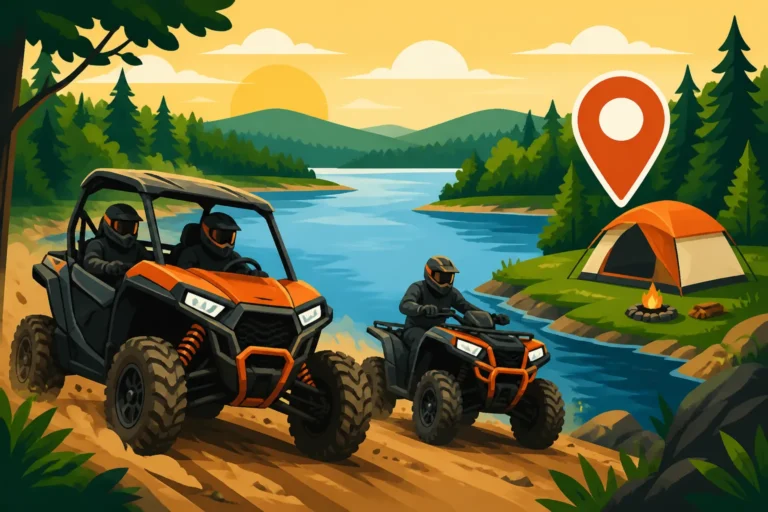
A side-by-side can look perfectly suited to a North Carolina trail until its tires meet a narrow turn, a gate, or a posted vehicle restriction. This guide explains how to assess machine width, compare public riding areas with private parks, and check trail access before you load up. It also covers practical planning steps that can prevent a long drive ending at a trailhead you cannot enter.
How machine width affects trail access
Measure the machine you plan to ride
Start with the machine’s actual overall width, not just the number in a brochure. Manufacturers may list width at the tires, but accessories such as wheel spacers, wider tires, mirrors, or aftermarket bodywork can change the footprint. Measure the widest point on the machine as it will be trailered and ridden.
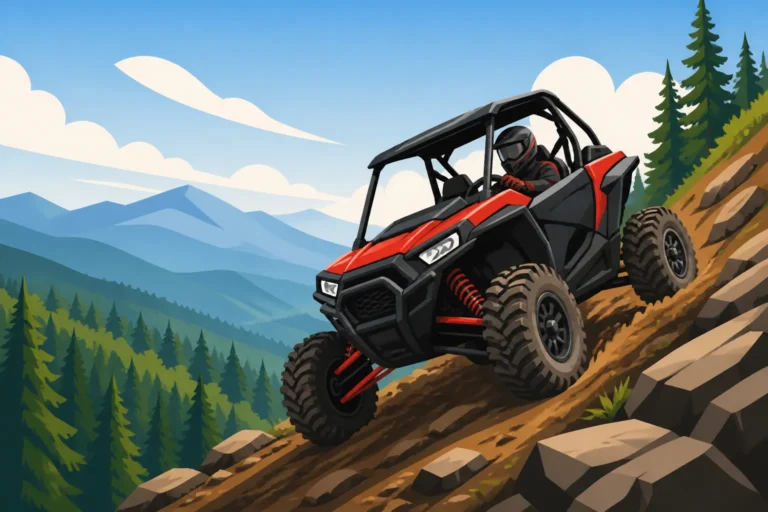
That difference matters on tight forest routes. A side-by-side that technically fits a published width limit may still be awkward where the trail narrows between trees, crosses a drainage, or bends around a rock outcrop. Width can affect whether you can pass other riders, turn around safely, or avoid damaging trail edges.
If you are considering a machine near a posted limit, don’t rely on a quick visual estimate. Write down the measured width and compare it with the current rules for the specific trail system. The overview [North Carolina Rules for a Machine Over 58 Inches] can help you understand why width deserves attention, but it is not a substitute for checking a particular forest or park’s requirements.
A wide machine needs more than a wide trail
A trail may appear broad on a map and still have a narrow entrance, gate, bridge, or staging area. The route itself is only one part of access. Consider the whole ride: the road into the trailhead, the parking lot, the trail’s tightest sections, and any connecting routes you hope to use.
Also distinguish between a route that is physically wide enough and one that is legally open to your machine. Public-land systems may designate trails for particular vehicle types or impose size limits. A wide UTV should not be treated as automatically permitted just because it can travel down a route without getting stuck.
| What to check | Why it matters for a wide machine | Practical next step |
|---|---|---|
| Overall machine width | Accessories and tire setup can change the published measurement | Measure the machine in its riding configuration |
| Vehicle class allowed | An ATV route may not be open to every side-by-side | Check the trail system’s official rules |
| Posted width limit | Restrictions can differ between riding areas and routes | Confirm the limit for the exact destination |
| Gates and trailhead access | A narrow entrance can block a machine before the ride begins | Look for access details and call the managing office if uncertain |
| Current closures | Storm damage or maintenance can change which routes are usable | Check alerts before leaving home |
For background on public-land restrictions, [North Carolina Rules for Riding a Public Street] is not a trail-access guide, but the broader distinction between where a vehicle can physically go and where it is allowed to go is important. For off-road planning, use [North Carolina Forest Trail Maps] alongside the rules for the individual area.
North Carolina riding areas and wide-machine planning
Public forest trails require route-specific checking
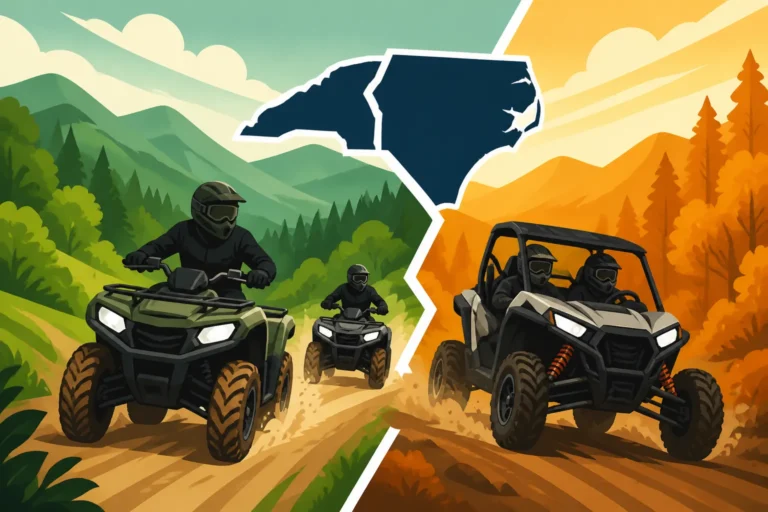
North Carolina has several public riding areas, but there is no safe assumption that every trail in every forest accommodates a wide UTV. Systems such as [Brown Mountain OHV Trail System] and [Badin Lake OHV Trail Complex] have their own trail networks, access arrangements, and operating conditions. Check the current rules for the area you intend to visit, including any vehicle-size restrictions, rather than relying on a general description of the forest.
A useful way to plan is to identify the exact trailhead and intended route before loading. Confirm the allowed vehicle type, any posted width limit, permit requirements, and seasonal operating information. A general map can help you understand the layout, but it may not show a temporary closure or answer whether your particular machine is permitted.
Mapping tools can be useful during that research. For example, onX Offroad can help riders review route information and plan where to go, but treat a digital map as a planning aid rather than final permission to ride. Check the official land-manager information for restrictions and closures, especially when your machine is close to a size limit.
Private parks may offer a better fit
If your UTV is wider than the machines typically suited to narrow forest routes, a private off-road park may be a more comfortable choice. Private properties can have different terrain, access arrangements, and vehicle rules, so confirm directly with the park before traveling. Ask whether your exact machine is allowed—not simply whether “UTVs” are welcome.
When you call, share the machine’s measured width, tire setup, and any accessories that affect its footprint. Ask about the narrowest routes, one-way sections, passing areas, and whether the park has beginner-friendly trails for larger machines. A park may welcome side-by-sides but still have routes that are a poor match for a particularly wide model.
The guide to [North Carolina Private Off-Road Parks] can help you explore this alternative. If you are comparing a public forest trip with a privately operated park, also account for different access procedures and fees. Verify those details with the operator, since policies can vary.
Choose a system based on fit, not reputation
A popular riding area is not necessarily the best one for your machine. A narrow, technical route may be a great fit for a compact ATV but frustrating for a broad side-by-side. Conversely, a wide machine may feel more at home at a park with roomier routes and designated areas for larger vehicles.
Use a map to study the general layout, then look for route descriptions and difficulty information. [North Carolina Trail Difficulty Ratings] can help frame the kinds of terrain you may encounter, but difficulty and width are separate questions. A route described as easy may still include a tight entrance or a constrained bridge.
onX Offroad can be part of a trip-planning routine when you want to review routes before setting out. Compare what you see there with official maps and posted rules, and don’t assume a line displayed in an app guarantees that a wide machine is authorized to travel it. Save the destination details and a backup plan before cell service becomes unreliable.
How to verify that a trail can accommodate your UTV
Check the exact route and the latest notices
Before a trip, confirm the area’s operating status and the rules that apply to your vehicle. Trail systems can close sections for maintenance, weather damage, or other management reasons. A route that worked on a previous visit may not be open or usable now.
Start with the official source for the riding area, then check notices close to departure. [North Carolina Trail Conditions Before You Ride] and [North Carolina Trail Closures to Check First] are useful reminders to make this a routine rather than an afterthought. If a rule is unclear, contact the relevant office or park operator and ask a direct question: “My machine measures this wide at its widest point. Is it allowed on this trail system?”
Keep a note of who or what confirmed the information and when you checked. That small step helps when you are coordinating several machines or planning a trip with friends who have different vehicle sizes. It also reduces the chance of relying on an old forum comment or a map screenshot that no longer reflects current conditions.
Use mapping apps as one layer of research
A map app can help you understand where a route begins, how trails connect, and what alternatives may be nearby. onX Offroad can support that planning, especially when you want to review a ride before towing a machine into a remote area. Still, app data and official access rules serve different purposes.
A practical approach is to compare the app’s route view with official information, then confirm vehicle eligibility and closures with the land manager. If the map suggests a trail looks wide, treat that as an observation—not proof that a wide UTV is permitted or that the route will remain passable after recent rain.
Download or save useful information before leaving home, and bring a backup plan. In areas with limited coverage, it is frustrating to arrive at a junction and discover you cannot load the map or check an update. A saved map helps with navigation, while official notices and posted signs remain essential for access decisions.
Plan around trailhead constraints too
Trailhead parking can be as important as the trail. A long trailer needs room to turn and park without blocking other riders, and a crowded staging area can make unloading a wide machine stressful. Check parking arrangements in advance and arrive with enough time to maneuver safely.
Think through the full day: where you will unload, how the machine gets from the trailer to the permitted route, where you can refuel, and what you will do if a planned section is closed. For a mixed group, choose a meeting point and route that suit the largest machine, not only the narrowest ATV.
A practical checklist before you load
Confirm fit, permission, and paperwork
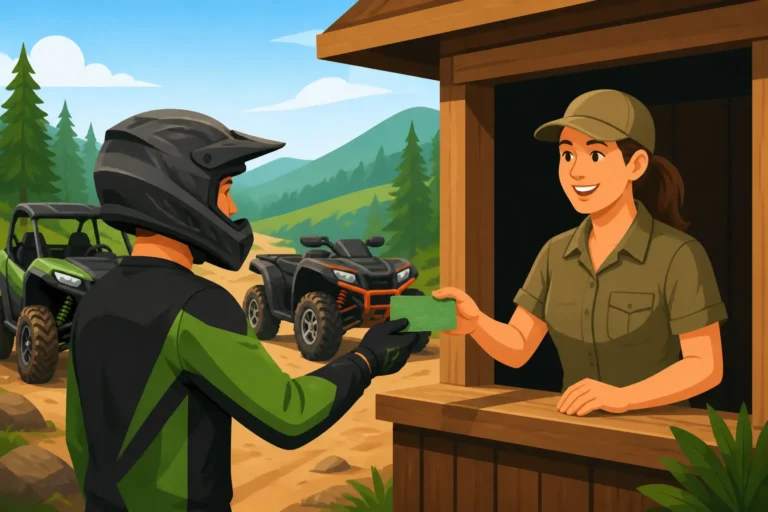
Make a quick pre-trip check for each machine. Measure its width as equipped, confirm that the intended riding area allows its vehicle type, and check route-specific restrictions. If you are riding on public forest land, verify any required permits as well; [North Carolina's Forest Day Permit] explains one part of the permit landscape, but requirements depend on the riding area.
Do not assume that a permit makes every route available to every machine. A permit and a vehicle-size rule address different issues. Read both, and check any posted information at the trailhead when you arrive. If the signs conflict with what you expected, stop and resolve the question before riding.
For a group, collect these details before the trip: each machine’s width, the rules that apply, the planned routes, and a backup location. This prevents the awkward situation where one UTV cannot enter a system after everyone has already driven to the trailhead.
Pack for a change of plan
Wide-machine riders can be especially affected when a trail narrows or a route closes unexpectedly. Bring basic recovery and repair gear appropriate to the machine and terrain, and make sure everyone knows how to regroup if the group has to turn around. A winch or recovery strap can be helpful, but neither makes an unauthorized or unsuitable route safe.
Keep expectations flexible. After heavy rain, narrow sections may become harder to navigate, and a route that was manageable in dry conditions can become a poor choice for a broad vehicle. If the trail looks too tight, damaged, or crowded, turning back is a sensible decision—not a failed ride.
Use onX Offroad or another planning tool to identify alternatives before you leave, then verify those alternatives independently. A backup is only useful if it is open and appropriate for your machine. The best wide-machine ride is one where the route, vehicle, and current conditions genuinely match.
Make the final decision at the trailhead
Before unloading, read the entrance signs and check for closure notices. Confirm that your machine is within any posted limits and that the route you intend to ride is open to it. If you are uncertain, ask the managing office or park staff rather than trying the trail and hoping it works.
A careful check may feel repetitive, especially if you have ridden the area before. But it can save you from a long tow, a blocked gate, or a difficult turnaround on a narrow trail. For a wide ATV or UTV in North Carolina, the reliable formula is simple: measure accurately, check the exact route, verify current access, and keep a suitable backup in mind.
Disclaimer
This article is for general informational purposes only and does not constitute professional advice. Laws, prices and regulations vary by location and change over time. Consult a qualified professional for guidance on your specific situation.