Buying a Pass at the Eldorado Outpost
A ride to Uwharrie can get off to an annoying start if you reach the trailhead and discover you still need a forest OHV permit. Eldorado Outpost near Troy is a familiar place for riders to ask about buying one before heading toward the trails. This guide explains what to check, how to plan the stop, and what the pass does—and does not—cover.
What to Know Before Buying a Pass at Eldorado Outpost
A trail pass is not an ATV registration
Riders often use “pass,” “permit,” and “sticker” interchangeably, but the important distinction is what the document authorizes. A Uwharrie National Forest OHV permit is for riding designated forest OHV trails under the applicable forest rules. It is not a North Carolina ATV registration, a title, or permission to ride anywhere in the state.
That difference matters when you’re packing for a trip. A machine can have its ownership paperwork in order and still need the required forest permit for a permitted OHV trail. Likewise, buying a trail permit does not make a quad street legal or authorize riding on a closed trail, a road where OHVs are prohibited, or someone else’s property. For state-level paperwork questions, see [Do You Need to Register an ATV in North Carolina?] and [North Carolina Rules for Riding a Public Street].
The official terminology and the exact details can depend on the permit being offered, so read the permit information when you buy it. If you’re trying to understand the difference between a day option and a longer-term one, [North Carolina's Forest Day Permit] and [The Forest Season Permit in North Carolina] are useful companion topics.
Why Eldorado Outpost can be a convenient stop
Eldorado Outpost is associated with the Uwharrie riding area and is a practical place to ask about permits before you head for a trailhead. For riders coming through the Troy area or traveling along NC 109, stopping before unloading can be more convenient than discovering at the forest that you need to make another trip for a pass.
Still, treat a retailer as a useful point of sale—not as a guarantee that permits will be available at every moment. Store hours, stock, sales arrangements, and permit details can change. Before making Eldorado Outpost a fixed part of your route, check directly with the business about whether it is selling the permit you need and when you can buy it. That small check can prevent a long detour, especially if your group is arriving early, late, or on a busy weekend.
If you’re new to the area, plan the stop alongside your route rather than assuming the pass is available at the trailhead you choose. The Uwharrie area has more than one access point, and your preferred starting location may not be close to the store. [Where North Carolina Permits Are Sold] offers broader context on permit sales, while [North Carolina's Uwharrie Forest Permit] can help you think through the permit as part of the outing.
Choosing the Permit That Fits Your Ride
Day permit or season permit
The basic decision is usually whether you need a permit for a single outing or want a longer-validity option. A day permit may suit a visitor making one ride, while a season permit may make more sense if you expect to return to the relevant riding area during the permit’s validity period. The right choice depends on your plans, not simply how often you ride in general.
For example, imagine a family driving from Raleigh for one Saturday at Uwharrie. A day option may be the straightforward fit, assuming it is available and covers the intended riding. A local rider planning several trips may want to compare the season option instead. If your schedule is uncertain, ask how the permit’s validity works before buying; do not assume that “season” means a calendar year or that it applies to every forest riding area.
Read the permit terms before you leave the counter. Check its effective dates, where it is accepted, whether it must be attached to a particular machine, and what happens if the trail system closes. For more detail on the distinction, see [North Carolina's Forest Day Permit] and [The Forest Season Permit in North Carolina].
Confirm what the pass covers
A permit is not an all-access ticket to every road, trail, or recreation site in the forest. It is tied to the rules and locations named by the issuing authority. The designated OHV trail, its operating dates, vehicle restrictions, and closures still matter, even if you have a valid pass on your machine.
This is easy to overlook when several riders are traveling together. A group may buy a permit for one machine and assume it covers the trailer load, or one rider may believe a pass from another state works in North Carolina. Don’t make either assumption. Check whether the permit is issued per vehicle and whether a permit from another place is recognized for the specific riding area. The article [Why a Permit Is Per Vehicle in North Carolina] explains why a group should plan permit needs machine by machine.
| Question to check | Why it matters | What to do before leaving |
|---|---|---|
| Is this a day or season permit? | The option must fit your planned rides and dates. | Confirm the validity period and the areas covered. |
| Is a permit needed for each machine? | A group may need more than one permit. | Count the machines that will use the permitted trails. |
| Where must the permit be displayed? | A valid permit may be difficult to confirm if it is hidden. | Ask how it should be affixed and keep it visible as directed. |
| Are the trails open? | A permit does not override a closure. | Check official forest notices before driving to the trailhead. |
| Is the sales location open and selling permits? | Retail availability and hours can vary. | Contact Eldorado Outpost before relying on the stop. |
| Does the machine meet trail rules? | A pass does not waive equipment or access requirements. | Review the riding-area rules for your vehicle. |
A permit does not replace other preparation
A pass solves one part of the planning puzzle. You still need to know where you’re allowed to ride, whether the machine fits the trail rules, and whether the route is open. It’s also worth checking the group’s basic readiness: fuel, protective gear, recovery equipment, a charged phone, and a plan for meeting back at the staging area.
A rider arriving with a permit but no route plan can still lose time at the trailhead. Maps may be hard to interpret on a small screen, and a group can split up more easily than expected on unfamiliar trails. Use a current forest map or other reliable trail information, and agree on a simple plan before anyone rides away from the staging area. Some riders use onX Offroad to review route context and save navigation information before a trip, but an app should supplement—not replace—official signs, closure notices, and local rules.
The same applies to riding conditions. Rain, storm damage, maintenance, and seasonal operations can affect access. Check [North Carolina Trail Conditions Before You Ride] and [North Carolina Trail Closures to Check] close to your departure, rather than relying on an old screenshot or a friend’s recollection from a previous visit.
How to Make the Eldorado Outpost Stop Go Smoothly
Call or check before you build the day around it
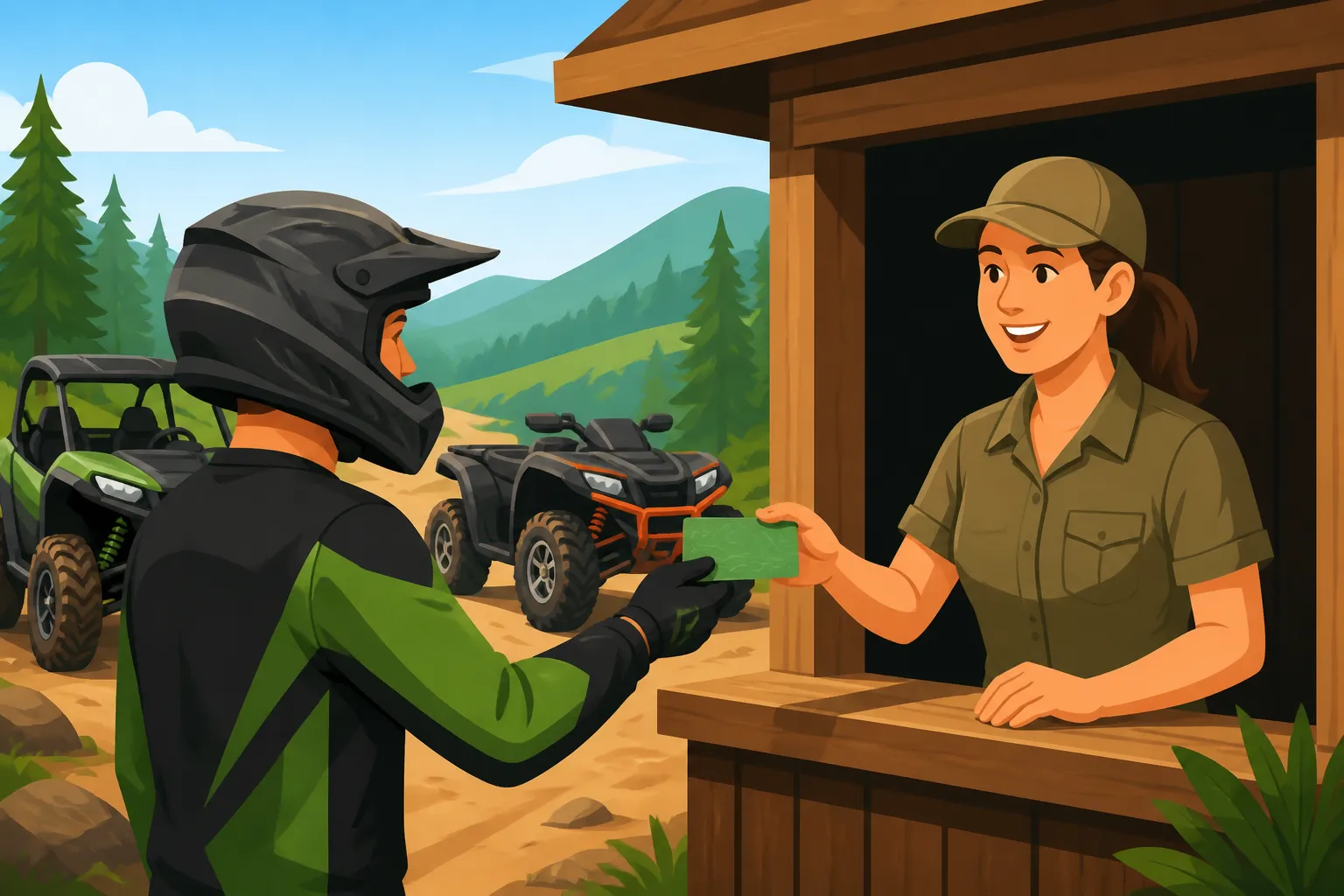
Before setting your route, confirm that Eldorado Outpost is selling the kind of permit you intend to buy. Ask about current availability, hours, accepted payment methods, and whether the permit must be purchased in person. If you’re traveling with several machines, confirm that the store can handle the number of permits your group needs.
A quick call is especially useful on a holiday weekend, during a busy riding period, or when your group plans to arrive early. Avoid assuming that a posted online schedule, an old social post, or a past visit guarantees the same arrangement now. If you cannot reach the store, consider identifying another authorized sales option or checking whether the relevant forest information explains other purchase methods.
It also helps to ask a precise question. Instead of “Do you sell passes?” try: “Are you selling Uwharrie National Forest OHV permits today, and do you have the day option for each machine in our group?” That reduces the chance of talking past one another about a different pass, area, or permit type.
Have the details ready at the counter
Before you enter the store, know how many machines will ride and whether you want a day or season option. If your group is arriving in separate vehicles, agree on who will purchase the permits and how the passes will get to the other riders. A little coordination is much easier than trying to solve it while trailers are parked and everyone is waiting.
Read the permit and any instructions before you leave the counter. Confirm the dates and riding area, then ask how it should be displayed on the machine. If the permit comes with a tag, receipt, or other proof, keep the pieces together until you understand which one must be shown or attached. Avoid placing a sticker where it may be obscured by mud, luggage, or bodywork if the instructions specify a visible location.
If you’re unsure whether a particular machine qualifies for the trail system or whether a modification changes its eligibility, ask before buying. A permit should not be treated as a substitute for vehicle compliance. For route planning after the purchase, [North Carolina Forest Trail Maps] is a relevant next read. Navigation tools such as onX Offroad can also help a group discuss a route before leaving the staging area, but riders should follow marked routes and posted restrictions on the ground.
Build in time for the stop and the trailhead
A common planning mistake is to schedule the store stop as if it were a drive-through errand. Someone may need to park a truck and trailer, wait while a group decides which permit to buy, or ask questions about the riding area. Give yourself a reasonable buffer, especially if you want to unload and start riding early.
Think through the whole sequence: arrive in the area, buy and check the permit, drive to the chosen access point, unload, complete a safety check, and get oriented before riding. If a store stop adds a detour, account for it in daylight and fuel planning. Don’t let a late arrival push the group into rushing through the rules or setting out without confirming trail status.
For groups, designate one person to handle the purchase and another to confirm the route and current forest notices. That division keeps everyone from crowding around a phone while machines are still being unloaded. If someone in the group is unfamiliar with Uwharrie, share the meeting point and a simple turnaround plan before riding. onX Offroad may be useful for saving a planned route or reviewing map context in advance, while official forest information remains the authority for access and closures.
Using the Permit Correctly at Uwharrie
Display and keep proof as instructed
Once you have the permit, follow the specific instructions about attachment or display. Do not assume that keeping a receipt in the glove box is enough if the permit is supposed to be visible on the machine. Conversely, don’t discard paperwork until you have confirmed that it is not needed as proof of purchase or for another part of the process.
Choose a location where the permit can be seen and is less likely to peel away, get covered, or be damaged. A muddy ride can make a poorly placed tag difficult to identify. If the instructions call for a particular location, follow them rather than improvising. For a group, check each vehicle before leaving the staging area; it is easy for one rider to forget the permit while everyone else is ready to go.
Keep your purchase details accessible during the trip. If a forest employee asks about the permit, a clear display and calm, straightforward response make the interaction easier. The permit is one part of following the rules—not a reason to ignore trail signs, travel beyond designated routes, or continue after a closure notice.
Stay on open, designated routes
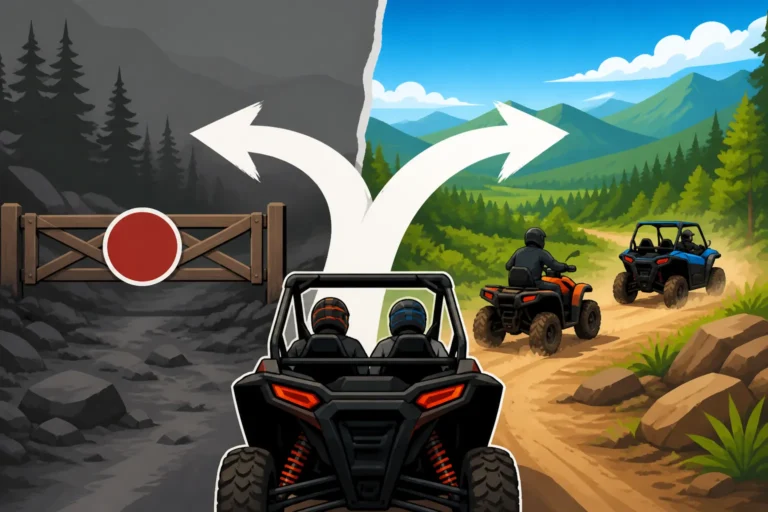
A valid pass does not authorize riding wherever a machine can physically travel. Follow designated OHV routes and observe closure barriers and signs. Cutting around a gate, riding an unmarked path, or entering a closed section can create safety and environmental problems—and may bring enforcement consequences.
At Uwharrie, trail conditions can change with weather and maintenance. A route that was open on a previous visit may not be open on your next one. Check before you leave home and again if you see a notice at the entrance. If the information conflicts, treat the current official direction and posted signs as the guide, not an old map, a social media comment, or a saved route on your phone.
This is where planning apps need a little perspective. onX Offroad can help with orientation and route preparation, but it cannot tell you that a closed gate is safe to pass or that an unofficial track is approved for OHV use. Keep the app’s information secondary to official maps and on-the-ground restrictions. For more on preparing for the drive, [North Carolina Trail Conditions Before You Ride] and [North Carolina Forest Trail Maps] are useful reads.
Respect shared trailhead space
The ride begins at the parking area, where trucks, trailers, families, and other riders are all trying to get organized. Park so other vehicles can maneuver, keep the unloading area clear, and avoid blocking signs or access points. If the lot is crowded, take a moment to agree on where your group will gather rather than spreading gear across the travel lane.
Trailhead etiquette also helps prevent avoidable delays. Secure loose equipment, keep children close while machines are moving, and do a quick walk-around before starting. If you discover that a machine has a problem, move it out of the way where possible and let the rest of the group know before anyone heads onto the trail.
If you’re staging near Badin Lake, parking logistics may differ by access point and crowd level. Review [Parking a Trailer at a Badin Lake Trailhead] before the trip, and avoid assuming that every lot has the same space or layout. The goal is simple: arrive prepared enough that the permit stop, unloading, and first trail decision don’t turn into a stressful scramble.
Common Mistakes and a Practical Pre-Ride Checklist
Mistakes that can derail the outing
The first common mistake is assuming a pass is always available at the point of sale or that a store has the same hours every day. A quick confirmation with Eldorado Outpost can save a wasted detour. The second is buying the wrong type of permit because the group has not decided how many days it will ride or which area it plans to visit.
Another avoidable problem is treating the permit as a universal authorization. It does not automatically cover every machine, every trail, or every public road. It also does not cancel seasonal rules or closures. If a rider is bringing a machine from another state, don’t assume an out-of-state registration or permit replaces the local forest requirement; check the rules that apply to the specific riding area.
Finally, groups sometimes leave the permit in a truck or trailer, or attach it where it cannot be seen. Assign one person to check each machine before the group rides out. That small step is easier than returning to the staging area because someone forgot the pass or cannot show how it was purchased.
A before-you-go checklist
Use this checklist the evening before your trip, then confirm the time-sensitive items again on the day you leave:
- Decide which Uwharrie access point you plan to use.
- Confirm whether Eldorado Outpost is selling the permit you need and verify its hours.
- Choose the day or season option that fits your plan, and confirm its validity and coverage.
- Count every machine that will use the permitted OHV trails.
- Check current trail openings, closures, and any posted requirements.
- Review a current map and agree on a route, meeting point, and turnaround plan.
- Bring the required permit and follow its display instructions.
- Check fuel, protective equipment, machine condition, and recovery gear.
- Leave enough time for the store stop, trailhead parking, unloading, and orientation.
- Follow signs and stay on designated routes once you begin riding.
When a group builds these checks into the plan, buying a pass at Eldorado Outpost becomes one straightforward stop instead of a last-minute obstacle. The permit is important, but the smoother trip comes from pairing it with current trail information, a realistic arrival schedule, and a shared understanding of where the group can ride.
Disclaimer
This article is for general informational purposes only and does not constitute professional advice. Laws, prices and regulations vary by location and change over time. Consult a qualified professional for guidance on your specific situation.