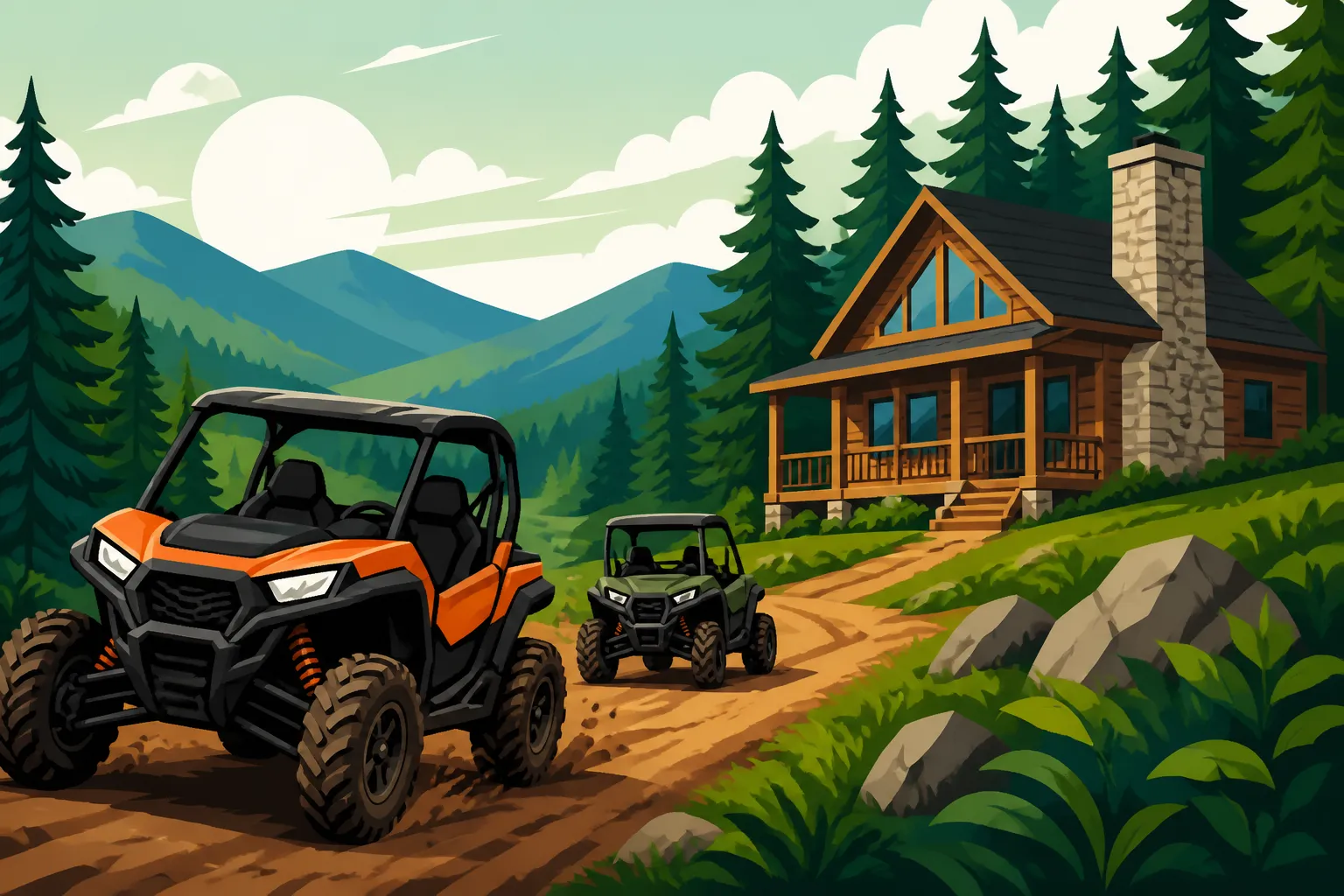
Finding a Cabin Within Reach of Wayehutta
A cabin near Wayehutta can make an off-road weekend feel easy—until you discover the driveway is too steep for your trailer, the trailhead is farther away than expected, or the trails are closed when you arrive. This guide explains how to choose a practical cabin base, plan for your ATV or UTV, and check the details that can turn a relaxing trip into a scramble.
Choose a Cabin Base That Works for Wayehutta
Wayehutta OHV area is in Jackson County, in the Nantahala National Forest, near Cullowhee and Sylva. When looking for a cabin, think beyond the word “near.” You want a place that makes the whole trip manageable: getting to the trail system, parking your vehicle and trailer, and having somewhere comfortable to return to after a dusty or wet ride.
Start with Cullowhee and Sylva
Cullowhee is a natural starting point for a Wayehutta trip because it sits in the same general area as the trail system. Sylva is another useful place to search and can offer a practical base for riders who want access to local services as well as a mountain setting. Listings around these communities may describe themselves as close to Wayehutta, but that wording does not necessarily mean a short, simple drive to the trailhead.
Look at the full route from the cabin to the staging area, not just the map distance. Mountain roads can be narrow, winding, and slower than a highway route. If you’re towing a quad or side-by-side, a drive that looks straightforward on a map may feel very different with a trailer behind you. Check the final approach carefully, especially if your trip includes arriving after dark or in poor weather.
Cabins farther out can still work well, especially if you value privacy or want to combine riding with other activities in the region. The tradeoff is often more time on the road before and after your ride. For a broader look at the area and trail system, start with Wayehutta in Western North Carolina and Riding Wayehutta for a Day.
Compare the whole trip, not just the cabin
A good cabin base should fit your group’s riding plans and your travel setup. Before booking, check whether the property has enough room for your tow vehicle and trailer, whether the driveway is paved or gravel, and whether there is a safe place to turn around. A beautiful cabin can become a frustrating choice if you have to back a long trailer down a steep lane.
Also consider what you’ll need after riding. A place to rinse muddy gear, dry helmets and gloves, and keep equipment out of the weather can make a big difference. If those features are not listed, ask the host directly rather than assuming they are available. Some properties may have strict rules about washing machines or parking trailers, so get permission in writing before arrival.
| Cabin feature | Why it matters for a riding trip | What to confirm |
|---|---|---|
| Trailer parking | A tight lot can make unloading and turning difficult | Space, surface, slope, and turning room |
| Driveway access | Steep or narrow approaches can be awkward with a trailer | Road width, grade, and whether the route is suitable for your rig |
| Gear storage | Wet helmets, boots, and riding clothes need somewhere practical to go | Covered area, entry space, or a place to dry equipment |
| Trailhead route | The shortest route may not be the easiest route | Road conditions, expected drive, and access directions |
| Cabin rules | Parking or cleaning restrictions can affect your plans | Trailer policy, outdoor washing rules, and quiet-hour expectations |
| Connectivity | Reception can be unreliable in some mountain areas | Wi-Fi availability and whether directions can be saved offline |
Plan the Route from Cabin to Trailhead
The cabin is only one part of the logistics. You’ll also need to understand how to reach the riding area, where you can stage your machine, and whether the roads you plan to use are open to your vehicle. That matters even more in the mountains, where road conditions and closures can change your route.
Check access and trail conditions before you travel
Do not assume that a cabin host’s directions, an old review, or a route saved months ago reflects current access. Trail conditions and forest-road access can change because of weather, maintenance, or temporary closures. Before leaving home, check the latest available forest notices and trail information, then recheck before you load the trailer for the day.
Build flexibility into your schedule. If a route is closed or a section is unavailable, you may need more time to reach an alternate staging point or adjust your riding plans. A backup day activity is also useful if rain or a closure prevents riding. For a focused pre-trip checklist, see North Carolina Trail Conditions Before You Ride and Checking a Forest Alert Before You Drive.
Digital maps can help you understand the surrounding roads, but they should not replace posted signs or official closure information. Riders who use onX Offroad can save maps for offline reference before entering areas with weak cell coverage. Use mapping tools to plan and orient yourself, then follow current signs and restrictions on the ground. A route appearing on a map does not by itself mean it is open to motorized use.
Allow extra time for mountain roads and trailer handling
Plan your first drive to the trailhead with a time cushion. Mountain roads may have sharp turns, changing surfaces, limited shoulders, or sections where meeting another vehicle takes patience. Add a trailer and unfamiliar directions, and a short-looking drive can take longer than expected.
If you arrive at the cabin after dark, avoid making your first trailer maneuver in a tight driveway with limited visibility. Ask the host about the best approach and where to park before you arrive. If possible, arrive in daylight, especially when your trailer is wide or your tow vehicle is large. On the morning of your ride, give yourself enough time to unload, check your machine, and get ready without rushing.
Keep a simple plan for the return as well. Save the cabin address and trailhead directions before leaving, and make sure someone in your group knows the intended route. onX Offroad may be useful for offline orientation, but download the information in advance and keep a paper or saved-address backup. Cell service can be inconsistent in mountain terrain, so do not rely on a live connection for every turn.
Match Your Cabin to Your Riding Setup
A cabin that suits a couple traveling in one truck may not work for a family or a group bringing several machines. The more vehicles, trailers, and riders you have, the more important it is to confirm practical details before you book.
Ask specific questions before reserving
Use clear questions rather than relying on broad listing descriptions. “Is there parking?” does not tell you whether a long trailer can fit, turn around, or stay parked without blocking another vehicle. Share the approximate length of your truck and trailer, and ask the host to confirm that the access and parking arrangement will work.
If you’re traveling with a group, confirm how many vehicles are permitted and whether there is enough room for everyone to unload. Ask about quiet hours, outdoor storage, and any restrictions on washing mud from equipment. If the property has a gravel road or steep entrance, ask whether guests commonly bring trailers. A host’s practical answer can reveal details that the listing photos do not show.
For a rental machine, ask the rental company where you are allowed to ride and whether the rental arrangement includes any required trail access permit. Do not assume that a cabin booking, machine rental, or guided outing automatically includes permission to ride on public forest land. If you are arranging a rental near the region, [North Carolina Rentals Near Asheville] may help you compare the kinds of logistics involved in finding a machine and planning a riding trip.
Build a sensible plan for weather and equipment
Mountain weather can make a comfortable cabin especially appealing, but it can also affect roads, trails, and loading plans. Bring clothing that can handle changing conditions, plus a dry set for the ride back. Pack bags or bins for muddy boots and wet gear so you can keep the cabin clean and avoid leaving equipment to dry in a shared living space.
Before the trip, check the machine’s basics: tires, lights, fuel, and any equipment you need for the terrain. If you are hauling your own ATV or UTV, secure it properly and bring the tie-downs and tools you normally use. Keep straps and muddy gear organized when you unload; a small amount of preparation can save time when you are tired at the end of the day.
A cabin is a place to sleep, not a substitute for legal trail access. Do not ride on private roads or property simply because they appear to connect the cabin to a forest route. Ask the landowner or host about any private access claims, and verify that you have permission before using a private road. For a wider look at overnight options and trip planning, see Camping Near North Carolina OHV Trails and North Carolina Trails With Lodging on the Route.
Put Together a Low-Stress Wayehutta Weekend
The easiest riding weekend is usually the one where the less exciting details are handled early. Confirm the cabin’s trailer access, learn the route to the staging area, check for current trail notices, and decide what you’ll do if weather changes your plans.
Use a simple booking checklist
Before you reserve, compare a few cabins using the same questions. This prevents a tempting photo or a vague “close to trails” description from overshadowing practical issues. If you are traveling with children or a larger group, confirm sleeping arrangements and vehicle limits as carefully as you check trailer parking.
A short message to the host can cover the essentials: explain that you are bringing an ATV or UTV on a trailer, ask whether the driveway and parking area can accommodate it, and confirm any restrictions on outdoor gear or washing. Save the reply with your trip details. If the host cannot confirm access, choose a property with clearer information rather than hoping it will work once you arrive.
Use a similar checklist for trail access. Confirm current conditions, know where you intend to stage, and have offline directions available. onX Offroad can help you keep a planned route or nearby landmarks accessible without a connection, but it should be one part of your preparation—not the authority on whether a road or trail is open. For more trip-planning ideas, see Trailering Into the Blue Ridge and North Carolina Trail Closures to Check First.
Keep a backup plan for the day
A backup plan does not have to mean abandoning the trip. If the trail system is affected by weather or a closure, you can take a slower day, explore nearby communities, or simply enjoy the cabin and return to riding when conditions allow. Avoid improvising by taking an unverified road or entering a closed area.
If your riding group has different experience levels, discuss the plan before unloading. Agree on where to meet if anyone gets separated, how you will communicate if service drops, and when you need to be back at the cabin. Carry water, basic tools, and any safety gear appropriate for your machine and route. A little coordination helps everyone enjoy the ride without turning a relaxing mountain weekend into a series of last-minute decisions.
The best cabin for Wayehutta is not necessarily the closest one on a map. It is the one that fits your trailer, gives you a workable route, and leaves enough room in the schedule to respond to real trail and weather conditions. Ask direct questions, check access before you go, and treat cabin logistics as part of the ride plan.
Disclaimer
This article is for general informational purposes only and does not constitute professional advice. Laws, prices and regulations vary by location and change over time. Consult a qualified professional for guidance on your specific situation.