Badin Lake Closing in Mid-December
Badin Lake’s OHV trails close in mid-December, which can catch riders off guard if they are planning a late-season trip to Uwharrie National Forest. The key is to distinguish the seasonal trail closure from access to the wider forest, then check the specific trail and permit notices before loading your machine. This guide explains what the closing means and how to plan around it.
What Badin Lake’s mid-December closing means
The OHV trail season ends on December 15
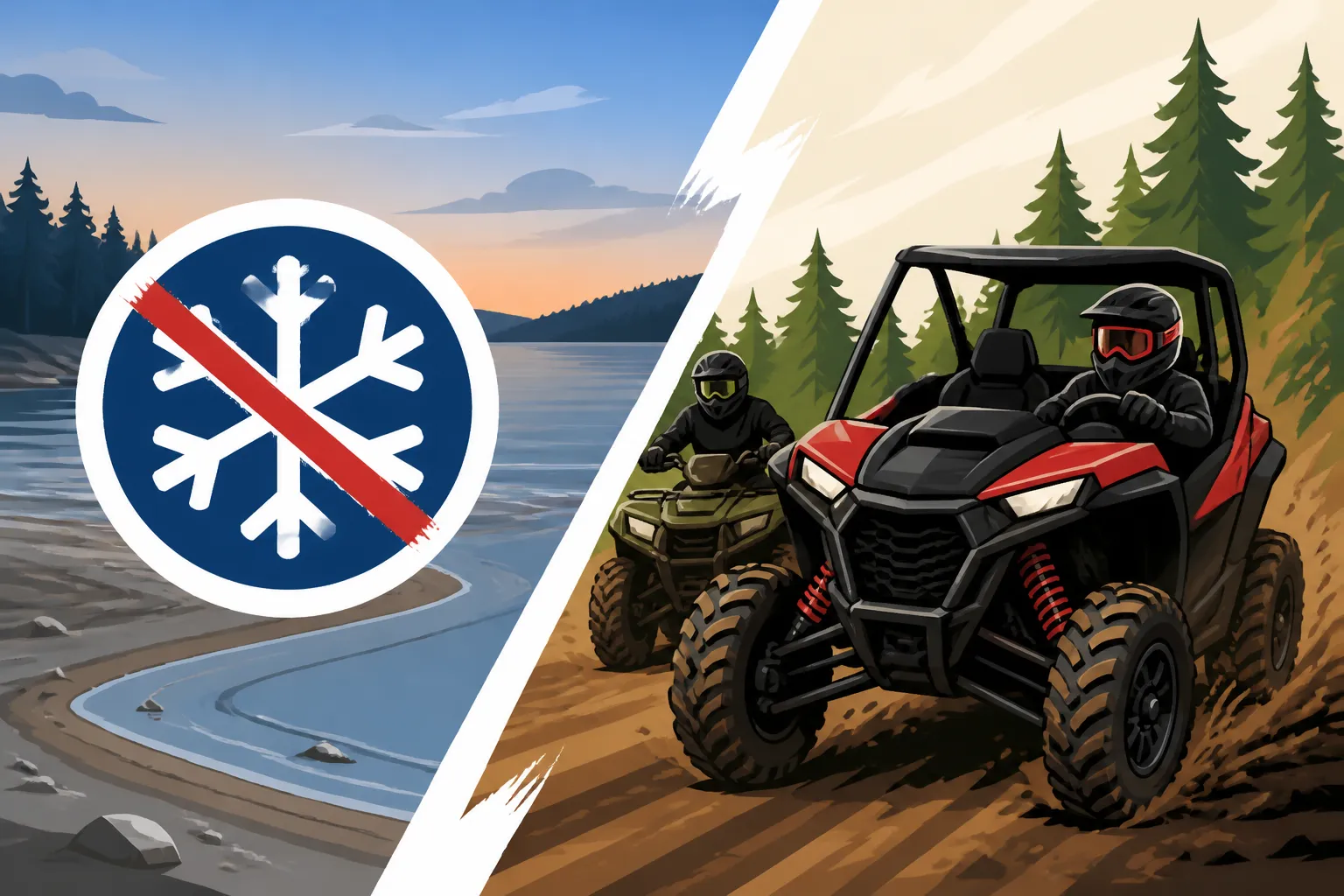
Badin Lake OHV Trail Complex follows a seasonal schedule, with its riding season generally running from April 1 through December 15. The mid-December date marks the end of the season for riding the designated OHV trails. It is not a suggestion to squeeze in one last ride after the deadline: once the trails are closed, riding them is not allowed.
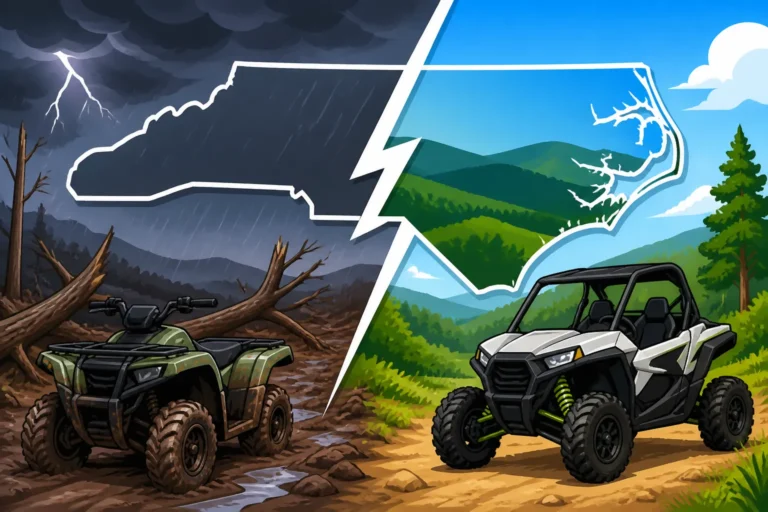
The closure helps protect trails and surrounding land during the wetter, colder part of the year, when repeated traffic can damage the surface and create ruts that are difficult to repair. Even a trail that looks firm at the entrance may have soft, saturated sections farther along. A machine can widen a muddy section quickly, and other riders may follow the new track, making the damage worse.
The dates can feel counterintuitive because a mild December day around Troy or Uwharrie may seem perfect for a ride. But pleasant weather does not override the posted season. For the seasonal dates and how they fit into the wider riding calendar, see [Badin Lake's April to December Season].
The trail closure is not the same as closing the entire forest
A seasonal OHV closure applies to the authorized riding areas. It does not necessarily mean every part of Uwharrie National Forest is closed to every kind of visitor. Hiking, camping, driving on an open public road, or visiting another permitted area may have different rules. The important thing is not to assume that a forest road or parking area is open to OHVs simply because it remains accessible to other users.
This distinction matters if you are staying nearby or visiting with a mixed group. Someone may be able to hike or camp while the OHV trails are closed, but that does not make it lawful to unload a quad or side-by-side and ride from the same location. Check the signs at the trailhead and the current Forest Service notices for the exact place you plan to use.
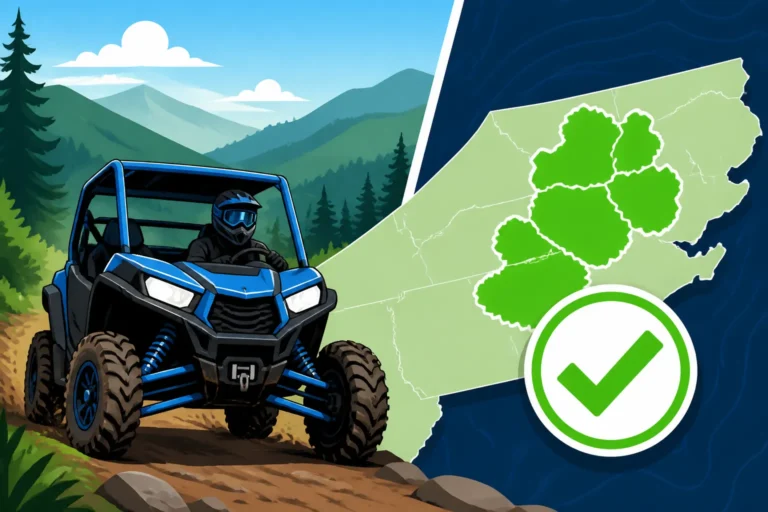
For a broader look at the complex and its access points, [Six Trailheads Around Badin Lake] can help you understand how the riding area is laid out. Still, use current notices to confirm whether a specific trailhead or route is open before you travel.
How to plan a ride before the season ends
Check the date, the trail status, and the permit separately
Before setting out, verify three things: whether the riding season is still open, whether the particular trail or trailhead has an additional closure, and whether you have the required permit for the vehicle. These are related questions, but one answer does not automatically settle the others. A season date may be in effect while a specific trail is temporarily closed, or a trail may be open while a visitor still needs to obtain the correct permit.
Use official forest information for closure decisions and permit rules. A mapping app can be useful for trip planning, but a map display is not permission to ride. For example, onX Offroad can help you review routes and organize a ride, while posted signs and current Forest Service notices should guide your decision about whether you may use a trail that day.
It is worth checking again shortly before leaving home, especially if the trip depends on a narrow window near December 15. A notice can change after you have started planning, and seasonal closures may overlap with storm damage, maintenance, or other temporary restrictions. [North Carolina Trail Closures to Check] and [Checking a Forest Alert Before You Drive] are useful reminders to confirm the current status rather than relying on an old plan or a saved map.
Give yourself a buffer instead of aiming for the final day
Planning for the last open weekend can be tempting, particularly if work or family commitments have pushed the trip back. But a ride close to the seasonal deadline carries more uncertainty: a wet spell may make conditions poor, a temporary closure could affect access, and a small delay can turn a relaxed outing into a rushed one.
A better plan is to choose a date comfortably before the cutoff and treat the final weeks as a weather-dependent opportunity, not a guarantee. Check trail conditions as well as the calendar. Recent rain, standing water, and soft ground can make some routes unsuitable even while the seasonal riding window is technically open. [North Carolina Trail Conditions Before You Ride] offers a useful planning lens for thinking beyond the date alone.
If you are coordinating a group, make sure everyone understands the schedule before they haul machines to the trailhead. Confirm the meeting point, permit arrangements, fuel plan, and a turnaround time that gets the group off the trails well before closing time. A simple plan reduces the chance that one rider’s late arrival pushes everyone into a hurried final loop.
| What to confirm | Why it matters | Where to check |
|---|---|---|
| Seasonal riding dates | The OHV trail season ends in mid-December | Current Forest Service information |
| Specific trail status | A route may have a temporary closure or restriction | Forest alerts and trailhead signs |
| Permit requirements | An open trail does not remove permit requirements | Forest permit guidance |
| Weather and ground conditions | Wet or damaged trails may be unsafe or unsuitable | Recent conditions and official notices |
| Parking and access | A trailhead may have limited space or changing access | Current access information and site signs |
What to do when the trails are closed
Do not ride around a closure
A closed gate, sign, or posted notice should be treated as a clear boundary. Do not go around a barrier, use an unmarked route to reach a trail, or assume that a short ride is harmless because the area looks quiet. A closure applies even if you see tire tracks, another vehicle, or an older map showing the route as open.
Going around a closure can also create practical problems. You may end up on a route that is not designated for OHV use, damage a trail during a vulnerable season, or find yourself without a safe and legal way back to your trailer. If a ranger or other authorized officer encounters you, “the map showed it open” is not a reliable substitute for following current signs and rules.
When planning with a digital map, including onX Offroad, check the app’s information against official notices and trailhead signage. Maps can be valuable for orientation, but they may not reflect a newly posted seasonal closure or a temporary restriction. If the information conflicts, do not ride until you have confirmed the status with the appropriate forest office.
Choose another activity or plan for the next season
If the Badin Lake trails are closed, the simplest option is to reschedule the OHV ride for the next open season. You can still use the off-season to prepare: inspect tires, brakes, lights, and safety gear; service the machine; replace damaged straps; and make sure your trailer is ready. That preparation can make the first trip back much easier.
You might also plan a different kind of visit to the area, provided the activity and location are open to it. Remember that permission to hike, camp, or drive on an open road does not give permission to ride an ATV or UTV on closed OHV trails. Check access rules for the activity you choose rather than treating all forest recreation as interchangeable.
If your group is looking for another riding date, compare the season calendar, travel time, permit arrangements, and trail difficulty before committing. [Riding Badin Lake for a Weekend] can help with trip planning, while [Badin Lake Loops a Stock Machine Can Handle] may be useful when you are choosing routes for a future visit. Keep the eventual plan flexible enough to account for weather and any closures announced before you leave.
A simple checklist for a late-season Badin Lake trip
Before you load the machine
Start with the calendar. Make sure your planned ride falls within the Badin Lake OHV season, and do not rely on a past year’s trip dates or an old social media post. If you are close to the mid-December cutoff, check official information again before departure.
Next, confirm the trail status and permit requirements. Check the route you intend to ride, not only the general name of the complex. Review signs when you arrive, and be prepared to change plans if the access point or trail is closed. If you use onX Offroad to map your route, treat it as a planning aid rather than the final word on current access.
Finally, make sure the basics are covered: fuel, water, protective equipment, a charged phone, trailer tie-downs, and a clear plan for meeting and regrouping. Late-season weather can shift quickly, so bring layers and avoid setting a schedule that depends on rushing through the last part of the ride.
Before you leave the trailhead
Keep an eye on the time and follow any posted operating hours. Start early enough to complete your chosen route without pushing the group to ride fast or skip breaks. If conditions are wet, muddy, or deteriorating, turn around rather than forcing the planned loop.
Before heading home, check that every machine is secured and that your group has collected its gear and waste. If you notice damage, a blocked route, or a confusing closure notice, report it through the appropriate forest channel rather than trying to solve it by making a new route around the problem.
The practical rule is straightforward: plan around the mid-December deadline, confirm current access close to your trip, and stop riding when the trails are closed. That approach protects the riding area and saves you the frustration of towing machines to Badin Lake only to discover that the season has ended.
Disclaimer
This article is for general informational purposes only and does not constitute professional advice. Laws, prices and regulations vary by location and change over time. Consult a qualified professional for guidance on your specific situation.