Camping at Arrowhead Near Badin Lake
Planning a weekend at Arrowhead near Badin Lake can get confusing when the campsite, trail access, vehicle rules, and permits all need separate checking. This guide explains how to make the campground part of a practical Uwharrie riding trip, what to verify before you leave, and how to avoid common problems such as arriving with the wrong permit or an unsuitable trailer plan.
How Arrowhead fits into a Badin Lake riding trip
Understand the campground and riding area as separate parts of your plan
Arrowhead is a camping option in the Uwharrie area, while the Badin Lake OHV Trail Complex is a separate riding destination with its own access points, trail network, and rules. They may work well together in one trip, but staying at a campground does not automatically mean a particular trail is open, nearby, or accessible directly from your campsite. Treat camping and riding as two connected plans that need separate checks.
Start by confirming that Arrowhead is open for your intended dates and that the site you want can accommodate your group and camping setup. Then check the current information for [Badin Lake OHV Trail Complex](Badin Lake OHV Trail Complex) — actually, the required internal-link format is the title in square brackets only, so use [Badin Lake OHV Trail Complex] — and identify the trailhead you expect to use. A map may make two locations look close, but a loaded trailer, forest roads, and access restrictions can make the drive between them less straightforward.
The broader setting is [The Uwharrie National Forest in North Carolina]. Forest conditions and facilities can vary by location, and campground availability should not be assumed from a past visit or an old trip report. Before committing to a route, verify the campground’s current operating details and the forest’s access notices. That simple check can prevent a frustrating arrival after a long drive from Charlotte, Raleigh, or elsewhere in the state.
Match your riding plans to the Badin Lake trail network
Badin Lake has several named trails and access areas, so “we’re riding Badin Lake” is not yet a complete plan. Decide whether your group wants an easy first ride, a longer outing, or a more challenging day, and check trail descriptions and current conditions before selecting a route. Trail difficulty, surface, and machine suitability matter, particularly when a group includes newer riders or different types of vehicles.
Use [Badin Lake's Eight Named Trails] as a starting point for understanding that the area is not one continuous, interchangeable loop. Check the latest official trail map and notices as well. A digital map app such as onX Offroad can help you orient yourself and plan where a route might fit into the day, but it should supplement—not replace—current forest information. Download or otherwise prepare for navigation before you enter areas where cell service may be unreliable.
Be conservative when planning a first ride from a campground base. A route that looks short on a map can take longer when the group stops, encounters rough sections, or needs to regroup. Build in time to return to the trailer or campsite before dark, and avoid choosing a difficult trail simply because it appears to connect conveniently with another route.
What to check before booking and packing
Confirm campground availability, access, and the setup you need
Before you reserve or travel, check the campground’s current dates, reservation process, site restrictions, and arrival instructions. Do not rely on an old blog post or a friend’s memory for details that can change, such as seasonal operations, road access, or site availability. If your group is arriving late, confirm how check-in works and whether your arrival plan is still appropriate after daylight.
Think through the actual space your setup requires. A family tent, a trailer, tow vehicle, and riding machines take up more room than a campsite description may suggest. If you need a particular type of site, have a large group, or are bringing a machine trailer, ask the campground operator about those details before you book. “There should be room” is a risky assumption when a narrow turn or limited parking area is involved.
Also check what the campground does and does not provide. Confirm the facilities available for your dates, whether you need to bring drinking water, and how waste and food should be managed. Prepare for ordinary outdoor conditions: rain can make a campsite muddy, and a wet-weather forecast can affect both loading and access roads. Pack so that camping gear and riding equipment remain easy to separate when everything is dirty or damp.
Check trail status, permits, and machine requirements
Forest trail access is not guaranteed just because a trail appears on a map. Closures, weather damage, maintenance, and seasonal rules can change your options. Review [North Carolina Trail Conditions Before You Ride] shortly before departure, and check the appropriate forest or district notices again on the day you travel. If a trail is closed, do not assume a nearby road or unmarked track is an acceptable substitute.
Permit requirements are another separate item to verify. Review [North Carolina Forest OHV Permits] and confirm which requirements apply to the specific riding area, vehicle, and date. Do not assume a campground booking covers trail access or that one permit covers every machine in the group. If you are unsure what applies, ask the responsible forest office or permit seller before leaving home.
Season dates can matter, too. For example, the Badin Lake riding season and permit details should be checked against the latest official information; [The Badin Lake Season Permit Ends December 15] is a useful topic to review when planning a trip near the end of the year. Keep documentation accessible, and make sure each rider understands the rules that apply to the route. The easiest time to resolve a permit question is before you are parked at a trailhead.
| Planning item | What to confirm | Why it matters |
|---|---|---|
| Campground | Open dates, reservation details, site limits, arrival instructions | Prevents an unsuitable or unavailable campsite |
| Trail area | Open trails, closures, access points, and current notices | A mapped trail may not be open on your trip date |
| Permits | Requirements for each machine and riding location | Camping and trail access may have separate requirements |
| Trailer plan | Parking, turning space, and route to the trailhead | A campsite may not be designed for a large tow setup |
| Navigation | Current official map and offline backup | Cell service may be limited in forest areas |
| Group plan | Rider experience, machine fit, and turnaround time | Helps keep the ride manageable for everyone |
Getting from campsite to trail without a stressful morning
Plan the trailer and staging details ahead of time
A campground is not automatically a trailhead parking lot. Work out whether you will tow your machines from the campsite to a designated staging area or use another permitted arrangement. Check road conditions and access restrictions before taking a large trailer onto unfamiliar forest roads. If you are not sure a route is suitable, call the relevant office rather than discovering the problem at a tight turn or a gate.
Review [Parking a Trailer at a Badin Lake Trailhead] when deciding where you will unload and stage. Your plan should account for trailer length, room to turn around, and whether the staging area can accommodate your group. Avoid blocking roadways, gates, emergency access, or other visitors’ parking. If the trailhead is busy, have a backup staging option that is both legal and practical.
Get organized the evening before. Put permits and identification where you can reach them, check tire condition and fuel, and make sure helmets and other required riding gear are ready. If you need to load or unload in a campground, do it considerately and follow posted rules. A calm morning is much easier when the group is not searching for gloves while a line of vehicles waits behind the trailer.
Build a realistic ride schedule
An early start can help your group avoid a rushed day, but it should be based on campground and trail access rules rather than guesswork. Check when the campground and riding area permit entry, and allow time for everyone to get ready, travel to the staging area, unload, and review the route. [Staging Early at Badin Lake] can help you think through how timing affects parking and the start of a ride.
Choose a turnaround time before setting out. Riders often underestimate how long it takes to regroup, help someone through a rough section, or return to the vehicle after an unexpected delay. Leave enough daylight for loading and the drive back to camp. If the route is unfamiliar, keep the first outing shorter than the group thinks it can manage; you can always extend the plan on a later day if conditions and experience allow.
Navigation preparation matters even when someone in the group knows the area. A person may remember a trail from a previous trip, but closures or access patterns can change. Use current official information first, and consider onX Offroad as a supplementary planning aid for keeping track of route ideas and location. Before the ride, agree on a meeting point and what the group will do if riders become separated.
Camping and riding responsibly near Badin Lake
Keep the campsite and forest clean and low-impact
Pack for the campsite as carefully as you pack for the trail. Store food and rubbish properly, follow posted fire rules, and leave the site in good condition when you go riding or head home. Do not assume that a campground has services or supplies available at the moment you need them. Bring what your group requires and confirm local restrictions before using a fire or disposing of waste.
Noise and shared space are worth thinking about, especially when several families or groups are staying nearby. Avoid unnecessary engine revving in the campground, respect quiet hours, and keep machines on permitted routes. If children are along, set clear boundaries around where they can walk and where vehicles may move. A campground can feel relaxed, but tow vehicles and off-road machines still create hazards.
Carry out what you bring in, including small items that are easy to overlook after a muddy ride. Mud, litter, and damaged vegetation can affect other visitors and the area’s future access. If rain or trail conditions make a route unsuitable, turn around rather than widening a path or riding around a closure. Responsible choices help protect the riding opportunities people travel to Uwharrie to enjoy.
Make the trip comfortable for mixed-experience groups
A trip can include experienced riders, first-timers, children, and people who mainly want to camp. Plan around the least experienced rider rather than expecting everyone to match the fastest person. Choose a route that fits the group’s machines and skills, explain the meeting plan before starting, and make sure everyone knows how to stop safely if they need help.
If a rider is new to the area, explain that maps and trail labels are planning tools, not a promise that every route will feel easy on the ground. Pause at safe locations to regroup, and avoid pressuring anyone to continue when they are uncomfortable. Families should review the rules and safety requirements that apply to young riders before the trip, and provide supervision appropriate to the rider and conditions.
onX Offroad may be useful as a secondary reference for route planning, but make sure the whole group understands the official trail information and carries a dependable backup plan. A phone can lose signal or battery, and one person’s map should not be the only source of direction. Share the route, turnaround time, and emergency plan with someone who is not riding with you.
Use a simple pre-departure checklist
A short checklist can prevent the most common avoidable problems:
- Confirm Arrowhead’s operating details and your reservation.
- Check official Badin Lake trail status and access notices.
- Verify permit requirements for each machine and riding area.
- Confirm that your campsite and trailer setup are suitable.
- Prepare an official map and a navigation backup.
- Check fuel, tires, lights, helmets, and essential recovery gear.
- Agree on the route, regrouping points, and turnaround time.
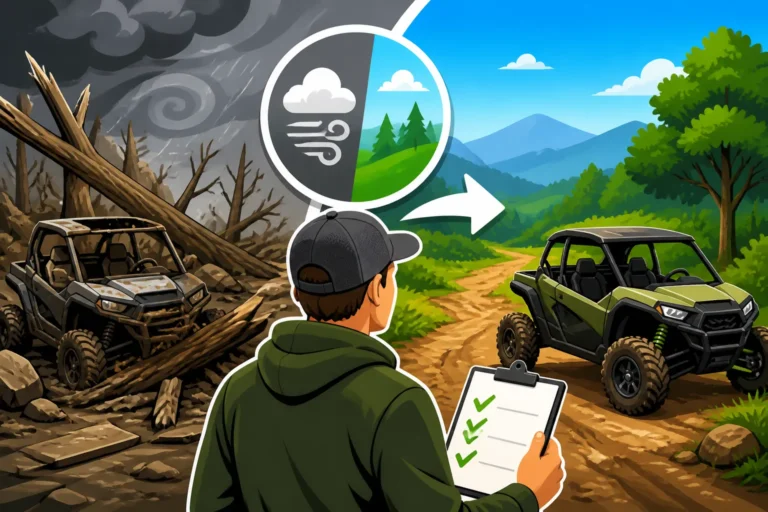
- Recheck weather and closures before leaving for the trail.
Keep the plan flexible. If the campground is full, the road is unsuitable, or a trail is closed, do not force the original itinerary. Check [North Carolina Forest Trail Maps] and official notices for lawful alternatives, then adjust the day around what is actually open. A well-planned trip is not one where nothing changes; it is one where the group can make a safe, informed change without risking a campsite, a machine, or someone’s well-being.
Disclaimer
This article is for general informational purposes only and does not constitute professional advice. Laws, prices and regulations vary by location and change over time. Consult a qualified professional for guidance on your specific situation.